

What if the plumbing material hidden behind your basement drywall is quietly degrading every time you turn on the tap? It’s a reality for many local homeowners, especially those in older neighbourhoods dealing with the uncertainty of Poly-B piping or the unpredictable nature of our freeze-thaw cycles. You likely already realize that effective water damage prevention Calgary residents can trust isn’t just about reacting to leaks after they happen. It’s about securing your investment and your family’s comfort before the next major chinook or spring melt arrives.
We’ll help you gain peace of mind by explaining how to safeguard your property against these specific local plumbing risks. This guide provides a clear path forward, whether you’re worried about basement flooding or confused about the long-term reliability of your pipes. We’ll cover everything from identifying high-risk materials to navigating the 2026 Home Water Savings Rebate Program. You’ll find a practical maintenance checklist and professional advice on preventing sewer backups to keep your home dry and your insurance premiums manageable.
Key Takeaways
- Understand the specific environmental factors that make water damage prevention Calgary a unique challenge, from mineral buildup to rapid temperature shifts.
- Identify the warning signs of failing indoor appliances and learn why regular hot water tank maintenance is your best defence against sudden basement leaks.
- Discover how to properly maintain sump pumps and backwater valves to protect your home from groundwater seepage and sewer backups during heavy rainfall.
- Follow a practical seasonal plan to winterize your plumbing and insulate exposed pipes before the extreme cold weather sets in.
- Learn why Poly-B piping remains a significant risk for many local homes and how a professional inspection can spot hidden issues before they become expensive repairs.
Understanding Calgary’s Unique Water Damage Risks
Effective water damage prevention Calgary homeowners rely on starts with understanding that our local environment is uniquely aggressive toward plumbing. Prevention is more than just a reactive fix for a visible leak. It is a proactive strategy designed to stop structural rot and mould before they take hold in your basement or behind your walls. In a city where the weather can change in an hour, your plumbing system is under constant mechanical stress. Without a clear plan, small issues like mineral buildup or minor pipe fatigue can quickly turn into expensive emergency repairs.
The Role of Calgary’s Hard Water
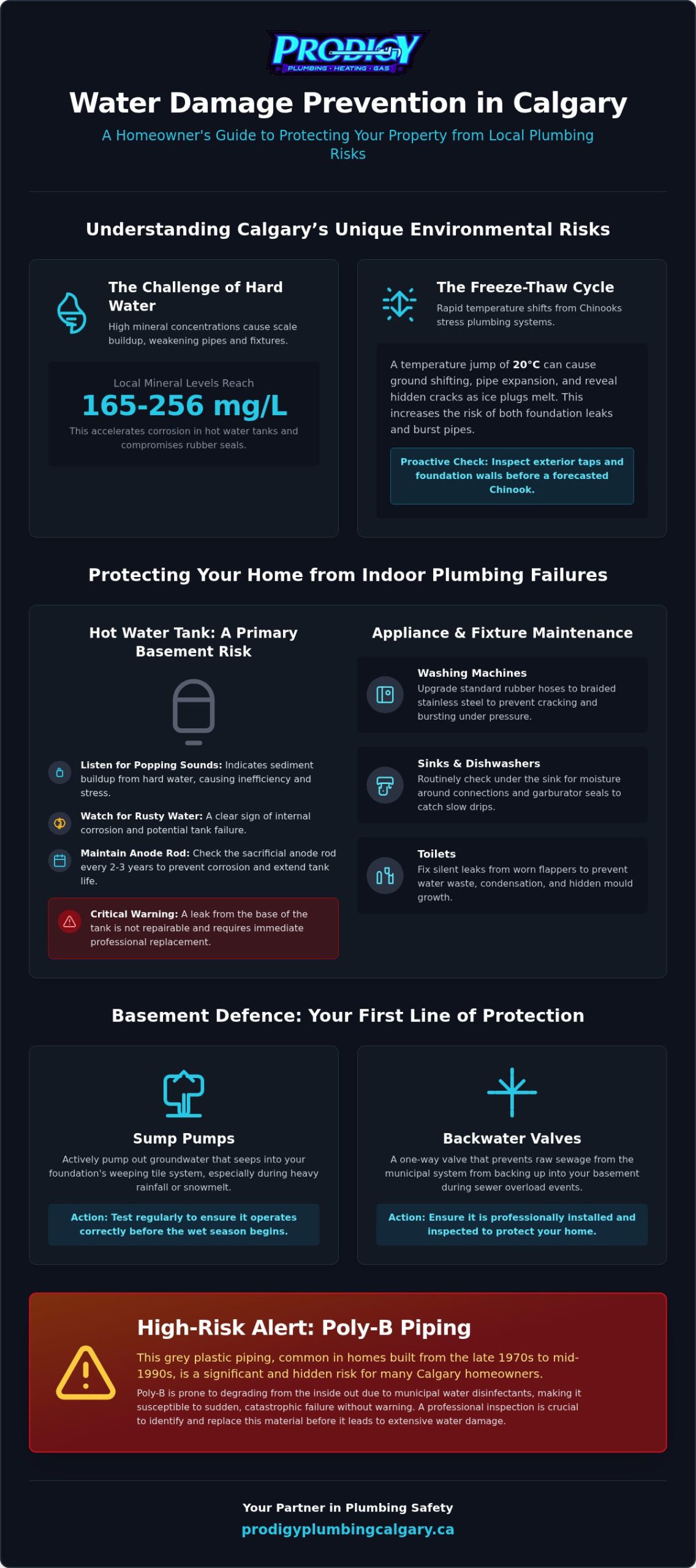
Calgary’s water is famously hard, containing high concentrations of calcium and magnesium. These minerals don’t just leave spots on your dishes; they create a persistent layer of scale inside your pipes and fixtures. Over time, this buildup weakens pipe joints and compromises the rubber seals in your faucets and toilets. Hard water also acts as an insulator inside your hot water tank, forcing the unit to work harder and accelerating the internal corrosion that leads to tank failure. With local mineral levels often reaching between 165 and 256 mg/L, Calgary’s water creates a challenging environment that requires regular descaling and professional monitoring to ensure system longevity.
Chinooks and the Freeze-Thaw Cycle
The rapid temperature shifts caused by Chinooks are a major risk factor for local properties. When the temperature jumps 20 degrees in a single afternoon, the ground shifts and pipes expand rapidly. This cycle can cause ice dams in your gutters, which forces water back under your shingles or into your foundation. More dangerously, a rapid thaw often reveals cracks in pipes that were previously frozen solid. The ice acts as a temporary plug until the warm wind hits; once the ice melts, the water flows freely through the fracture.
To protect your home, you should check your exterior taps and basement walls immediately before a forecasted Chinook arrives. Ensuring you have a functional backwater valve is also a critical part of this defence. This device prevents the city’s sewer system from backing up into your home during periods of heavy snowmelt or intense rain. Regular inspections are essential in our climate because they identify these micro-fractures and scale issues before the next seasonal shift causes a system failure. Taking these steps provides the quiet confidence that your home is prepared for whatever the Calgary weather brings.
Protecting Your Home from Indoor Plumbing Failures
Environmental factors are significant, but many residents find that the most immediate threats are actually located inside the home. Effective water damage prevention Calgary homeowners can implement involves a routine check of everyday appliances. These machines handle hundreds of litres of water daily. A single failed seal or a cracked hose can release enough water to ruin flooring and cabinetry in minutes. Proactive monitoring ensures these small mechanical issues don’t escalate into major household disasters.
Hot Water Tank Health and Longevity
Your hot water tank is a primary concern for basement safety. Calgary’s mineral-rich water causes sediment to settle at the bottom of the tank, which often leads to a popping or rumbling sound during heating cycles. If you notice rusty water coming from your taps, it is a clear sign of internal corrosion. We recommend checking the sacrificial anode rod every two to three years to extend the unit’s life. Once a tank begins to leak from the base, a repair is rarely possible. In these cases, a professional hot water tank replacement Calgary service is the only way to ensure your home remains dry and protected.
Appliance and Fixture Maintenance
Kitchen and laundry appliances are frequent sources of indoor flooding. Rubber washing machine hoses are prone to drying out and cracking under pressure. Swapping these for braided stainless steel hoses is a simple, effective upgrade. In the kitchen, check under the sink for moisture around dishwasher connections and garburator seals. Even a slow drip can rot a subfloor over several months. Toilets are another hidden risk. A silent leak caused by a worn flapper doesn’t just waste water; it can lead to condensation and mould growth in tight spaces. Organizations focused on reducing basement flooding emphasize that small, regular maintenance tasks are the most effective way to prevent catastrophic loss.
Modern technology provides an extra layer of security for your property. Smart water shut-off valves and Wi-Fi-enabled leak detectors can alert you to moisture presence immediately. These systems can even shut off the main water supply automatically if a burst pipe is detected while you are away. This technology offers a level of control that was previously unavailable to homeowners. If you aren’t sure where to start with these upgrades, a professional plumbing inspection can help you identify the highest-risk areas in your specific home layout. Taking these steps now provides the quiet confidence that your indoor plumbing is as reliable as the rest of your home.
Basement Defence: Sump Pumps and Backwater Valves
Your basement is the most vulnerable area of your property when it comes to groundwater seepage and sewer issues. Reliable water damage prevention Calgary homeowners invest in usually centres on two mechanical guards: the sump pump and the backwater valve. While previous sections focused on indoor fixtures, these devices manage the water trying to enter your home from the outside. They are your primary defence against the high costs of sewer backup cleanup, which typically ranges from $2,500 to over $12,000 in 2026. Keeping this equipment in peak condition is a non-negotiable part of property maintenance.
A sump pump works by collecting groundwater from around your foundation and pumping it away from the house. In Calgary, summer storms can be intense and often lead to power outages. This is why a battery backup system is essential. Without power, a standard pump stops working exactly when the water table is at its highest. A backup system ensures the pump continues to operate during a blackout, providing a critical safety net during heavy rainfall.
Sump Pump Maintenance Checklist
Regular testing ensures your pump is ready when the snow melts or a storm hits. You can test the unit by slowly pouring a bucket of water into the sump pit to see if the float switch triggers the motor. It is also important to clear the intake screen of any debris or silt that has settled over time. The City of Calgary recommends replacing sump pumps every 10 years to avoid mechanical failure. If your unit is making grinding noises or cycling too frequently, it is likely nearing the end of its lifespan. A professional spring tune-up can identify these issues before the ground thaws and the water begins to rise.
Backwater Valve Benefits
A backwater valve is a small but powerful device installed on your main sewer line. It allows wastewater to exit your home but features a flap that closes automatically if sewage begins to flow backward from the city lines. This often happens in older neighbourhoods like Sunnyside or Bowness during heavy rain. While newer Calgary builds have these valves by default, older homes often require a retrofit to meet modern safety standards.
You should perform a visual inspection of the valve’s clear cover every few months to ensure no debris is blocking the flap. If you are considering an installation, the City of Calgary offers a subsidy for eligible homeowners that can reimburse a portion of the cost, often between $1,500 and $2,000. It’s important to remember that a plumbing permit is required for this installation. Taking these steps provides the quiet assurance that your basement will remain dry, regardless of the pressure on the municipal system.
Seasonal Maintenance to Prevent Burst Pipes
Calgary winters don’t just test your patience; they test the structural integrity of your entire plumbing system. Effective water damage prevention Calgary homeowners rely on is built around a disciplined seasonal routine. As the temperature drops below freezing, any water trapped in your pipes expands. This pressure can reach thousands of pounds per square inch, easily splitting copper or plastic lines. While our local Chinooks offer a brief reprieve from the cold, the rapid fluctuation in temperature can actually worsen the stress on your plumbing. Preparing your home before the first frost is the most reliable way to avoid a flooded basement in mid-January.
Winterizing Outdoor Faucets
The most common cause of winter water damage is a forgotten garden hose. You should disconnect all hoses and attachments before the first hard frost hits. Even if you have “frost-free” hose bibs, leaving a hose attached traps water inside the faucet body. This water freezes, expands, and splits the internal pipe. You won’t realize there is a problem until you turn the tap on in the spring and water begins spraying inside your walls. For standard taps, locate the indoor shut-off valve, close it, and then open the exterior faucet to drain any remaining water. This simple three-minute task prevents a major headache later.
Pipe Insulation and Heat Tape
Plumbing located in unheated areas like crawlspaces, attics, or garages needs extra protection. You can identify these vulnerable spots by feeling for cold drafts near exterior walls. Foam insulation sleeves are a cost-effective DIY solution that provides a significant thermal barrier. For pipes that consistently freeze in extreme weather, electric heat tape is a professional-grade option. It uses a thermostat to provide gentle heat when temperatures drop. Heat tape must be installed with care to ensure it doesn’t overlap or create a fire hazard. Combining insulation with a steady heat source ensures your water keeps moving, even during a week-long cold snap.
If you plan to head south for the winter, never turn your furnace off completely. Maintain a minimum indoor temperature of 16°C and ask a neighbour to check the house regularly. Despite your best efforts, sometimes the Calgary climate wins. If you discover a burst pipe or a major leak, you need a fast response to minimize the damage. We provide reliable emergency plumbing Calgary services to handle these situations with calm competence. For a comprehensive review of your home’s winter readiness, contact us to book a seasonal inspection today.
Professional Prevention: Poly-B and System Upgrades
While seasonal tasks and appliance checks are essential, the most effective water damage prevention Calgary homeowners can invest in is a structural audit. For many residents, the biggest threat is not a forgotten garden hose but the very pipes carrying water through their walls. If your home was built between 1978 and 1995, you likely have polybutylene (Poly-B) plumbing. This material has become a significant liability in the local real estate market due to its high failure rate and the resulting impact on home insurance eligibility. Addressing these structural risks before they fail is the only way to ensure total property protection.
The Poly-B Replacement Process
Poly-B piping is known to degrade over time due to exposure to chloramine in Calgary’s municipal water supply. This chemical reaction causes the plastic to become brittle and develop micro-fractures from the inside out. Because this damage is internal, a pipe can look perfectly fine on the exterior just days before it bursts. Replacing these lines with modern PEX (cross-linked polyethylene) provides a much more durable and freeze-resistant solution. We focus on full replacements that minimize disruption to your home, ensuring every joint is secure and every line is properly supported. Upgrading from Poly-B piping is often a requirement for securing standard insurance coverage in 2026 and significantly increases your home’s resale value.
Scheduling a Preventative Plumbing Audit
A professional audit goes beyond a simple visual check. We examine high-pressure points and test your Pressure Reducing Valve (PRV). If a PRV fails, the high pressure from the city main can stress your fixtures and cause sudden bursts in older pipe joints. During a professional inspection, we look for subtle signs of moisture or calcification around joints, proper operation of shut-off valves, and potential stress points in the main water service entry.
The cost of proactive maintenance is always lower than the price of emergency restoration and the stress of a flooded basement. A thorough audit allows you to plan for upgrades on your own timeline rather than reacting to a midnight emergency. Investing in these structural upgrades provides long-term peace of mind and protects your family’s comfort for years to come. If you haven’t had your system checked recently, a professional evaluation is the best first step toward a dry and secure home.
Securing Your Home Against the Elements
Taking control of your property’s safety means looking ahead to the next seasonal shift. Whether you are winterizing outdoor taps or finally addressing the risks of older Poly-B piping, every proactive step reduces the chance of a midnight emergency. Effective water damage prevention Calgary residents can rely on isn’t about luck; it’s about maintaining the mechanical systems that keep your basement dry and your family comfortable.
Professional oversight provides the certainty that no small leak or failing valve has been overlooked. With over 15 years of experience in the local industry, our licensed and insured technicians specialize in identifying these hidden vulnerabilities before they escalate. We take pride in our quiet thoroughness and our reputation as specialists in Poly-B replacement and long-term flood prevention.
Protect your home today—book a professional plumbing inspection with Prodigy Mechanical. Investing in your home’s resilience now provides the peace of mind that your investment is secure for years to come.
Frequently Asked Questions
What is the most common cause of water damage in Calgary homes?
The most common cause is a combination of frozen pipes and failed indoor appliances. Calgary’s extreme temperature swings put immense pressure on plumbing lines, especially during the spring thaw. Burst pipes often occur because water was left in exterior lines or because unheated areas weren’t properly insulated. Indoor failures, like old washing machine hoses or leaking hot water tanks, also contribute significantly to local property damage claims every year.
How can I tell if my Calgary home has Poly-B piping?
You can identify Poly-B piping by looking for flexible, grey plastic tubing in your mechanical room or near the water meter. These pipes were common in homes built between 1978 and 1995. Check for copper or plastic fittings secured with metal crimp rings. If you see grey pipes instead of white, clear, or copper ones, it is likely Poly-B. A professional inspection can confirm the material and assess its current condition.
Does home insurance in Alberta cover all types of water damage?
Standard home insurance in Alberta typically covers sudden and accidental damage, like a burst pipe, but often excludes gradual seepage or wear and tear. Sewer backup and overland flooding usually require additional riders for full protection. Many insurers are also becoming stricter about Poly-B piping. Some companies may refuse coverage or increase premiums significantly until the system is replaced with modern, durable materials like PEX.
How often should I test my sump pump?
You should test your sump pump at least twice a year. The best times are in the early spring, just before the major snowmelt begins, and again in the late fall. Pour a bucket of water into the pit to ensure the float switch triggers the motor correctly. Since the City of Calgary recommends replacing these units every 10 years, regular testing helps you spot mechanical fatigue before a major storm arrives.
Can hard water actually cause my pipes to leak?
Yes, Calgary’s hard water is a significant factor in long-term plumbing failure. The high mineral content, often ranging between 165 and 256 mg/L, creates scale buildup inside your pipes and fixtures. This scale eventually compromises the rubber seals and metal joints that keep your system watertight. Over time, this degradation leads to pinhole leaks and weakened connections that can cause substantial damage if they aren’t identified during a routine plumbing audit.
What should I do if I find a slow leak under my kitchen sink?
You should immediately shut off the local isolation valves located under the sink and dry the cabinet thoroughly. Even a minor drip can lead to structural rot and mould growth in as little as 48 hours. Once the area is dry, check the supply line connections and the sink strainer for signs of wear. If tightening the connections doesn’t stop the drip, the seals likely need a professional replacement to prevent further damage.
Why is my water bill suddenly higher than usual?
A sudden spike in your water bill is often a sign of a silent leak. The most common culprit is a leaking toilet flapper, which can waste hundreds of litres of water daily. You can check for leaks by turning off all taps and watching your water meter. If the dial is still moving, water is escaping somewhere in your system. This is a critical part of water damage prevention Calgary homeowners should monitor monthly.
How do I shut off the main water supply in an emergency?
You can shut off your main water supply by locating the master valve, which is typically found in the basement near your water meter. Most homes use a gate valve or a ball valve for this purpose. Turn the handle clockwise until it stops to cut off the flow to the entire house. It’s a good idea to label this valve and ensure everyone in your household knows its location so you can act quickly during an emergency.