

A failing hot water tank rarely gives much warning. One morning everything is fine; the next, you’re standing in a cold shower wondering what went wrong and what it’s going to cost to fix it. If you’re facing a hot water tank replacement in Calgary, that uncertainty is completely understandable, and you’re not alone in feeling it.
Most homeowners share the same concerns: Will this be expensive? Am I choosing the right type of tank? Can I trust the person doing the work? Those are fair questions, and they deserve straight answers rather than vague reassurances.
This guide covers everything you need to make a confident decision. You’ll learn how to recognise the signs that your tank needs replacing, understand what the replacement process actually involves, and know what to look for when choosing a qualified local plumber in Calgary. By the end, you’ll have a clear picture of what to expect, from the first assessment through to a fully installed, properly functioning unit. No guesswork, no surprises.
Key Takeaways
- Knowing the early warning signs of a failing tank can save you from a costly emergency — this guide explains exactly what to watch for before the situation becomes urgent.
- Hot water tank replacement in Calgary involves more than simply swapping one unit for another; understanding the full process helps you avoid delays, unexpected costs, and the wrong equipment choice.
- Tank and tankless systems each suit different households — you’ll learn how to assess which option fits your home, your usage, and your budget.
- Replacement costs in Calgary vary based on several factors, and knowing what drives the price means you can plan realistically rather than be caught off guard by the final bill.
- Choosing the right local plumber matters as much as choosing the right tank — this guide outlines the specific qualities to look for in a qualified Calgary professional.
Understanding Hot Water Tanks: What Homeowners Need to Know
Your hot water tank does quiet, unglamorous work every single day. It heats and stores water at a consistent temperature so it’s ready the moment you turn on a tap, run a dishwasher, or start a load of laundry. Most homeowners don’t think about it until something goes wrong. Understanding how your system works, and what its limits are, puts you in a much stronger position before a problem forces your hand.
Hot water tanks in Canada typically fall into two broad categories: storage tank units and tankless (on-demand) systems. Each has a distinct operating principle, and neither is universally superior. The right choice depends on your household’s size, usage patterns, and budget.
Types of Hot Water Tanks: Which One is Right for You?
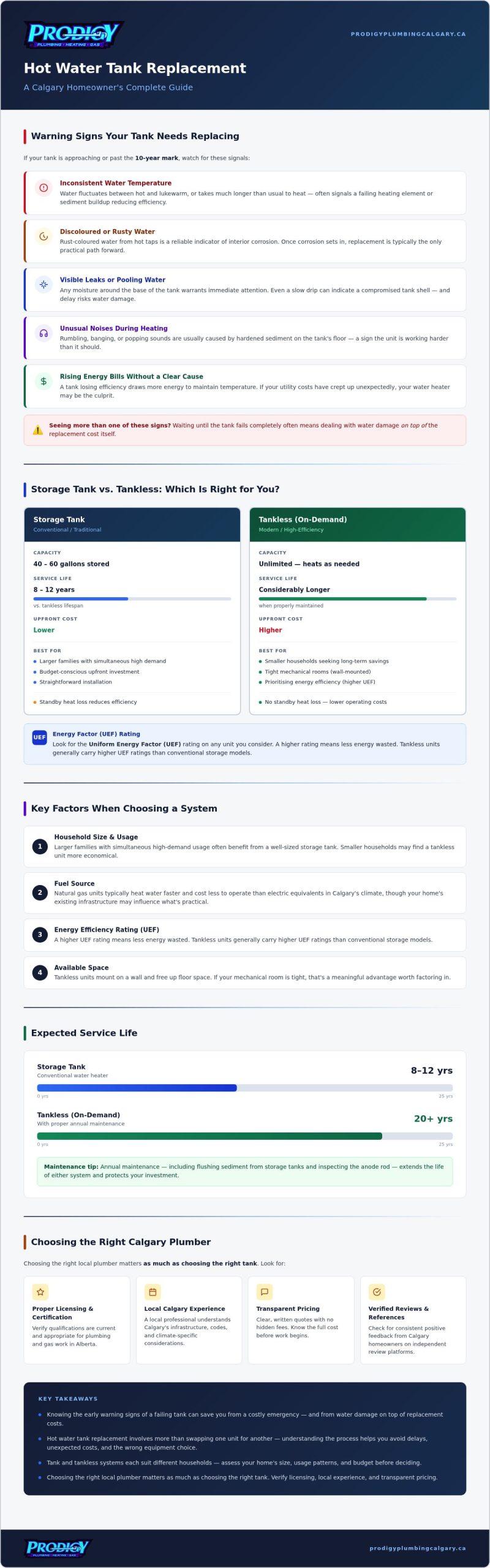
Storage tank water heaters maintain a reservoir of heated water, usually between 40 and 60 gallons, ready for immediate use. They’re familiar, straightforward to install, and generally less expensive upfront. Tankless units heat water directly as it flows through the system, eliminating the standby heat loss that storage tanks produce. That efficiency advantage can translate to lower energy bills over time, though the initial cost of equipment and installation is higher.
When comparing the two, a few factors matter most:
- Household size: Larger families with simultaneous high-demand usage often benefit from a well-sized storage tank. Smaller households may find a tankless unit more economical.
- Energy efficiency: Look for the Energy Factor (EF) or Uniform Energy Factor (UEF) rating on any unit you’re considering. A higher rating means less energy wasted. Tankless units generally carry higher UEF ratings than conventional storage models.
- Fuel source: Natural gas units typically heat water faster and cost less to operate than electric equivalents in Calgary’s climate, though your home’s existing infrastructure may influence which is practical.
- Space availability: Tankless units mount on a wall and free up floor space. If your mechanical room is tight, that’s worth factoring in.
Storage tanks have an average service life of eight to twelve years. Tankless systems, when properly maintained, can last considerably longer. Annual maintenance, including flushing sediment from storage tanks and inspecting the anode rod, extends the life of either system and protects your investment.
Signs Your Hot Water Tank Needs Replacing
Some warning signs are obvious; others are easy to dismiss until the damage is done. If your tank is approaching or past the ten-year mark, pay close attention to the following:
- Inconsistent water temperature: Water that fluctuates between hot and lukewarm, or takes much longer than usual to heat up, often signals a failing heating element or a sediment buildup that’s reducing efficiency.
- Discoloured or rusty water: Rust-coloured water coming from your hot taps is a reliable indicator that the tank’s interior is corroding. Once corrosion sets in, replacement is typically the only practical path forward.
- Visible leaks or pooling water: Any moisture around the base of the tank warrants immediate attention. Even a slow drip can indicate a compromised tank shell. A sudden or significant leak may require emergency plumbing in Calgary to prevent water damage from spreading to flooring, walls, or electrical systems.
- Unusual noises: Rumbling, banging, or popping sounds during heating cycles are usually caused by hardened sediment on the tank’s floor. It’s a sign the unit is working harder than it should.
- Rising energy bills without a clear cause: A tank losing efficiency draws more energy to maintain temperature. If your utility costs have crept up, your water heater may be the reason.
If you’re noticing more than one of these signs, it’s time to have a professional assess the unit. A qualified plumber can tell you whether hot water tank repair will extend the tank’s life meaningfully or whether hot water tank replacement in Calgary is the more practical and cost-effective decision. Waiting until the tank fails completely often means dealing with water damage on top of the replacement cost itself.
The Hot Water Tank Replacement Process: A Step-by-Step Guide
Knowing what to expect before the plumber arrives makes the whole process less stressful. Hot water tank replacement in Calgary follows a clear sequence of steps, and understanding each one helps you prepare properly and avoid unnecessary delays.
The process begins with an honest assessment of your current setup. A qualified plumber will evaluate your existing unit, your household’s hot water demand, and your home’s infrastructure before recommending a replacement. This isn’t a formality. The size, fuel type, and venting configuration of your new tank all need to align with what your home can actually support. Getting this right at the start prevents costly adjustments later. During this assessment, a thorough plumber will also check the condition of your supply lines and flag any concerns — including whether your home contains poly b piping, which is known to deteriorate over time and can affect the reliability of your entire plumbing system.
Once the right unit is selected, installation day follows a logical order:
- Shutting off the water supply and gas or electrical connections to the existing unit safely.
- Draining and removing the old tank, including disconnecting all associated plumbing and venting.
- Positioning and connecting the new unit, including all supply lines, pressure relief valve, and discharge pipe.
- Restoring connections and checking for leaks before the system is brought online.
- Testing the unit through a full heating cycle to confirm it’s operating correctly.
The work typically takes between two and four hours for a straightforward swap. More complex installations, such as switching from a storage tank to a tankless system or relocating the unit to a different area of the home, will take longer. If you want a deeper understanding of what the full process involves, this comprehensive guide to water heater installation in Calgary covers the subject in detail, including what to expect at each stage and how to choose the right unit for your home.
Preparing for Installation: What Homeowners Should Do
A little preparation on your end keeps the job moving efficiently. Clear the area around your existing tank so the plumber has unobstructed access. Know the age of your current unit and whether it’s gas or electric. If you’ve noticed any specific issues, such as unusual sounds or discolouration, mention them at the start. That context helps the plumber make faster, better-informed decisions.
Plan for your hot water to be off for the duration of the installation. For most households, this means scheduling the work at a convenient time rather than during peak morning hours.
Post-Installation: Ensuring Everything Works Properly
Once installation is complete, your plumber should walk you through basic operation and confirm the thermostat is set to a safe and efficient temperature. Most manufacturers recommend 49°C (120°F) as a sensible default. Ask about the warranty on both the unit and the labour, and keep that documentation somewhere accessible.
For long-term performance, plan to flush your storage tank annually to clear sediment buildup, and have the anode rod inspected every few years. These simple steps extend the life of the unit considerably.
If you’d like guidance on which tank suits your home before committing to anything, speak with the team at Prodigy Mechanical for a straightforward assessment with no pressure attached.
Cost Considerations: What to Expect When Replacing Your Hot Water Tank
Cost is usually the first question homeowners ask, and it deserves a direct answer. The challenge is that hot water tank replacement in Calgary doesn’t carry a single fixed price. Several variables shape the final number, and understanding them helps you plan accurately rather than brace for an unwelcome surprise.
The factors that most influence your total cost include:
- Type of unit: Storage tank systems generally cost less upfront than tankless models, both in equipment and installation labour.
- Tank capacity: Larger storage tanks carry higher equipment costs. A 40-gallon unit will cost less than a 60-gallon equivalent from the same manufacturer.
- Fuel source: Gas units typically require more involved venting work than electric models, which can affect labour time and cost.
- Complexity of the installation: A straightforward like-for-like swap is the least expensive scenario. Switching fuel types, relocating the unit, or upgrading venting adds time and materials.
- Permit requirements: In Calgary, hot water tank replacements generally require a permit. This is a non-negotiable step that protects you as the homeowner and ensures the work meets Alberta’s safety codes. Permit fees are a real cost that some quotes omit, so confirm upfront whether they’re included.
- Disposal of the old unit: Responsible disposal of your existing tank isn’t always factored into an initial estimate. Ask about this directly.
Comparing Costs: Traditional vs. Tankless Water Heaters
Storage tank systems carry a lower upfront cost, making them the more accessible option for homeowners managing a tighter budget. Tankless systems require a higher initial investment in both equipment and installation, particularly if your home’s gas line or electrical panel needs upgrading to support the new unit. However, tankless systems operate more efficiently over time, which can reduce monthly utility costs. The payback period depends on your household’s usage and energy rates. It’s worth checking whether any current provincial or federal rebate programmes apply to high-efficiency water heaters before you decide, as these incentives can meaningfully offset the upfront difference. A qualified plumber can help you identify what’s currently available.
Financing Options: Making Replacement Affordable
An unexpected tank failure can strain any budget. Some plumbing companies offer financing arrangements that spread the cost over time, though availability varies by provider. Before committing to any plan, ask for a complete written quote that itemises equipment, labour, permits, and disposal. That transparency makes it easier to compare options and budget accurately. If financing is a priority for you, raise it early in the conversation so your plumber can walk you through what’s available and help you find a workable path forward.
The clearest way to avoid cost surprises is to work with a plumber who explains every line item before the work begins. That’s the standard Prodigy Mechanical holds itself to on every hot water tank replacement Calgary homeowners bring to us.
Choosing a Local Professional for Hot Water Tank Replacement
The quality of your installation matters as much as the quality of your equipment. A well-chosen tank installed poorly will underperform and fail sooner than it should. Choosing the right plumber for your hot water tank replacement in Calgary isn’t a secondary decision; it’s the one that determines whether everything else goes smoothly.
Evaluating Credentials and Experience
In Alberta, plumbers must hold a valid journeyperson licence issued through the province. This isn’t a formality. It means the person working on your system has completed the required training and demonstrated competency to a regulated standard. Before any work begins, ask to see proof of licensing and confirm the company carries both liability insurance and Workers’ Compensation Board (WCB) coverage. These protect you if something goes wrong on your property.
Beyond credentials, look at the plumber’s track record with real customers. Online reviews on Google give you an honest cross-section of other homeowners’ experiences. Pay attention to how the company responds to criticism, not just how many positive ratings it has. A business that handles complaints professionally is one that takes accountability seriously.
Ask directly about warranties before committing. You want to understand what’s covered on the equipment itself and what the plumber stands behind in terms of their own labour. A confident, experienced tradesperson won’t hesitate to answer either question clearly.
The Value of Local Knowledge in Plumbing
Calgary’s climate and municipal requirements shape how hot water tank replacements are handled here. Local plumbers understand Alberta’s building codes, permit requirements, and inspection processes from direct, repeated experience. They know what the City of Calgary expects at each stage and how to keep your installation compliant without unnecessary delays.
There’s also a practical advantage to hiring locally that’s easy to overlook. A Calgary-based plumber can respond quickly if a follow-up issue arises. They’re not a call centre routing you to a contractor two hours away. This same local availability is what makes the difference when you need fast emergency plumbing services in Calgary — a local professional who already knows your home’s plumbing history can respond and resolve the situation far more efficiently than an unfamiliar contractor. Over time, working with the same local professional builds a relationship that pays dividends; they know your home’s plumbing history and can spot potential problems before they become expensive ones.
When evaluating your options, look for a plumber who communicates clearly from the first conversation, explains their process without being prompted, and provides a written quote that covers all costs upfront. That transparency is the clearest indicator that you’re dealing with someone who respects your time and your budget.
Prodigy Mechanical brings over 15 years of Calgary plumbing experience to every job, with licensed technicians and a straightforward approach to every installation. Contact Prodigy Mechanical to discuss your replacement and get a clear, honest assessment of what your home needs.
Final Thoughts: Making the Right Decision for Your Home
Replacing a hot water tank isn’t a decision most homeowners make often, and that’s precisely why it can feel overwhelming when the moment arrives. But it doesn’t have to be. The information in this guide exists to close the gap between uncertainty and confidence, so you can move forward with a clear head rather than a knot in your stomach.
The essentials are straightforward. Know your tank’s age and watch for the warning signs before a failure forces your hand. Understand the difference between storage and tankless systems, and match your choice to your household’s actual needs rather than a trend. Get a complete, itemised quote before any work begins. Confirm your plumber is licensed, insured, and familiar with Calgary’s permit requirements. These aren’t complicated steps. They’re just the right ones, taken in order.
Informed decisions protect you twice over. They protect your budget by eliminating the surprises that come from vague quotes and rushed choices. They protect your home by ensuring the installation is done correctly, to code, by someone who stands behind their work. Hot water tank replacement in Calgary is a significant household investment, and it deserves the same careful consideration you’d give any major home repair.
One thing worth remembering: waiting rarely works in your favour. A tank that’s showing multiple warning signs isn’t going to stabilise on its own. Acting before a failure occurs gives you the time to choose the right unit, compare your options properly, and schedule the work at a time that suits you rather than scrambling in an emergency. If you’re unsure whether your tank needs repair or full replacement, reviewing a comprehensive guide to hot water tank repair for Calgary homeowners can help you make that call with confidence.
Next Steps: Ready to Replace Your Hot Water Tank?
If you’re ready to move forward, or simply want a professional opinion on whether your current unit still has life in it, Prodigy Mechanical is a practical first call. With over 15 years of Calgary plumbing experience and licensed technicians on every job, the team brings the kind of straightforward, no-pressure approach that makes this process easier than it might seem right now.
- Get a quote: Reach out to Prodigy Mechanical for a clear, itemised assessment of your hot water tank replacement in Calgary with no vague estimates.
- Explore your options: Visit prodigyplumbingcalgary.ca for more information on services and to understand what your home might need.
- Book an appointment: Schedule a time with a licensed technician who can assess your current setup and walk you through the right path forward.
The right decision starts with the right conversation. Prodigy Mechanical is ready when you are.
Take the Next Step Towards Reliable Hot Water
Hot water tank replacement in Calgary doesn’t have to be stressful. The key is knowing what to look for, understanding your options, and working with someone you can trust to do the job properly. A well-matched unit, installed correctly and permitted to code, will serve your household reliably for years.
Three things matter most when you’re ready to move forward: choose the right system for your household’s needs, get a complete written quote before any work begins, and confirm your plumber is licensed and experienced with Calgary’s requirements. Get those three right, and the rest follows naturally.
Prodigy Mechanical has been helping Calgary homeowners through this process for over 15 years. Licensed technicians, straightforward communication, and a genuine focus on getting the job done right the first time. You don’t have to figure this out alone.
Contact Prodigy Mechanical today to book your hot water tank replacement assessment. A warmer, more reliable home is closer than you think.
Frequently Asked Questions About Hot Water Tank Replacement in Calgary
What are the signs that my hot water tank needs to be replaced?
The clearest indicators are rust-coloured water from your hot taps, visible moisture or pooling around the base of the tank, and inconsistent water temperatures that don’t improve over time. Unusual rumbling or banging during heating cycles and unexplained increases in your energy bills are also reliable warning signs. If your tank is past the ten-year mark and showing more than one of these symptoms, replacement is likely the more practical path forward.
How much does it typically cost to replace a hot water tank in Calgary?
There’s no single fixed price for hot water tank replacement in Calgary because several variables shape the final cost: the type and capacity of the unit, whether you’re switching fuel sources, the complexity of the installation, permit fees, and disposal of the old tank. Getting a complete, itemised written quote before any work begins is the best way to understand your actual costs and avoid surprises. Ask specifically whether permits and disposal are included.
Can I replace my hot water tank myself?
In Alberta, hot water tank replacements require a permit and must meet provincial safety codes. While the physical work might seem manageable, improper installation can void your equipment warranty, create gas or carbon monoxide hazards, and leave you liable for any resulting damage. A licensed journeyperson plumber has the training and regulatory knowledge to do the job correctly and get it inspected. The cost of professional installation is modest compared to the risks of getting it wrong.
What are the benefits of a tankless water heater?
Tankless systems heat water on demand rather than maintaining a stored reservoir, which eliminates the standby heat loss that storage tanks produce. This generally results in lower energy consumption over time. Tankless units also have a longer service life than conventional storage models and take up considerably less space. The trade-off is a higher upfront cost for both equipment and installation, and some homes may require upgrades to their gas line or electrical panel to support the new unit.
How long does the installation process take?
A straightforward like-for-like replacement typically takes between two and four hours. More involved installations, such as switching from a storage tank to a tankless system or relocating the unit to a different area of the home, will take longer. Your hot water supply will be off for the duration of the work, so it’s worth scheduling the installation at a time that minimises disruption to your household’s routine.
What should I do with my old hot water tank?
Old tanks can’t simply go out with regular household waste. They contain materials that require proper handling, and disposal needs to comply with local municipal guidelines. A reputable plumber will arrange responsible disposal of your old unit as part of the job. If you’re comparing quotes, confirm whether disposal is included, as some estimates leave it out. Don’t assume it’s covered unless it’s explicitly stated in writing.
Are there any warranties or guarantees on new hot water tanks?
Most new hot water tanks come with a manufacturer’s warranty that covers the tank itself, typically ranging from six to twelve years depending on the unit and manufacturer. Separately, a qualified plumber should also warranty their installation labour. Before the work begins, ask for clear confirmation of both: what the equipment warranty covers and for how long, and what the plumber stands behind in terms of their own workmanship. Keep all documentation somewhere accessible after installation.