

A failed water heater has a way of making every other home priority disappear. One cold shower is usually all it takes. If you’re researching water heater installation in Calgary, you’re likely dealing with an ageing unit, a sudden breakdown, or the realisation that your current setup simply isn’t keeping up with your household’s demands. That’s a stressful place to be, especially when the options feel overwhelming and the costs feel uncertain.
You’re right to want clarity before committing to anything. The decisions you make here, from the type of unit you choose to the contractor you hire, will affect your home’s comfort and your wallet for years to come. It’s not a decision to rush, but it doesn’t have to be a complicated one either.
This guide covers everything you need to make a confident, informed choice. You’ll learn about the types of water heaters available to Calgary homeowners, what the installation process actually looks like, what factors shape the overall cost, and what to look for when choosing a licensed professional for the job.
Key Takeaways
- Not all water heaters are the same – this guide breaks down the key differences between tank, tankless, and hybrid units so you can choose the right fit for your home and budget.
- Water heater installation in Calgary involves specific permits and local code requirements that can catch homeowners off guard if they’re unprepared.
- Installation costs vary depending on the unit type, labour, and permitting – knowing what shapes the final number helps you avoid surprises and compare quotes with confidence.
- Hiring a licensed technician isn’t just a formality; it directly affects the safety, warranty, and long-term performance of your new system.
- Understanding the full installation process – from assessing your current setup to final testing – puts you in a much stronger position when working with a plumbing professional.
Understanding Water Heaters: Types and Their Benefits
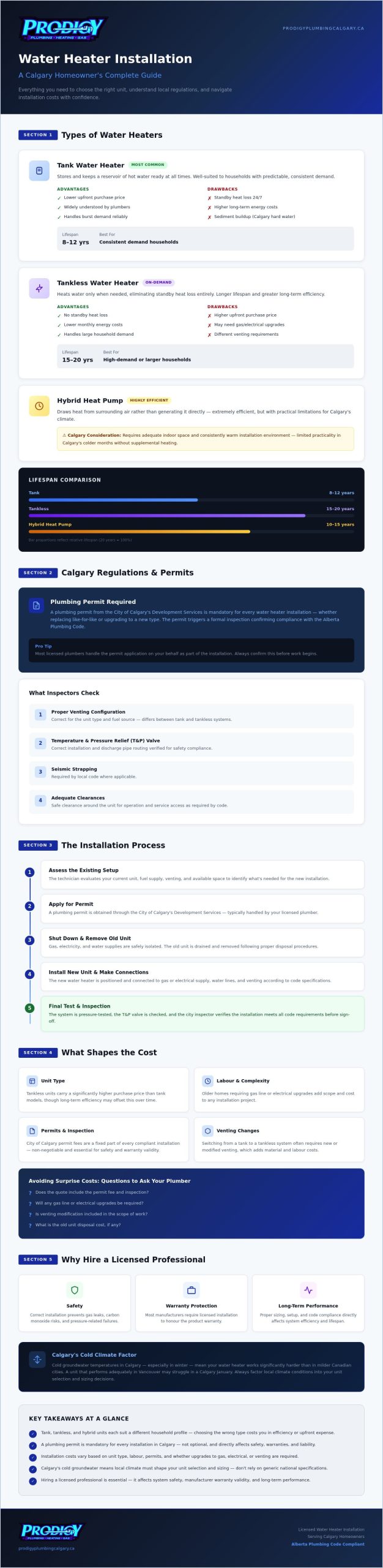
Choosing the right water heater starts with understanding what’s actually available. The three main options for Calgary homeowners are tank water heaters, tankless systems, and hybrid heat pump units. Each one suits a different household profile, and picking the wrong fit can mean paying more than you need to, either upfront or on your monthly energy bill.
Energy efficiency ratings matter here. In Canada, water heaters are rated using an Energy Factor (EF) or Uniform Energy Factor (UEF) score. A higher UEF means the unit converts more of its energy input into usable hot water. For homeowners thinking about long-term operating costs, this number is worth paying close attention to when comparing models.
Calgary’s climate adds another layer to the decision. Cold groundwater temperatures, especially in winter, mean your water heater works harder than it would in a milder region. A unit that performs adequately in Vancouver may struggle to keep up in a Calgary January. That’s a practical reality that should shape which type you choose and which specifications you prioritise.
Tank Water Heaters: Pros and Cons
Tank water heaters remain the most common choice in Calgary homes, and for good reason. They carry a lower purchase price than tankless alternatives, and most licensed plumbers are thoroughly familiar with their installation requirements. A standard tank unit typically lasts between eight and twelve years with regular maintenance, including annual flushing to manage sediment buildup, which is particularly relevant given Calgary’s moderately hard water.
They’re well suited to households with consistent, predictable hot water demand. If your family uses hot water in concentrated bursts, such as back-to-back morning showers, a properly sized tank handles that load reliably. Getting hot water tank sizing in Calgary right is essential here — an undersized unit will struggle during peak demand, while an oversized one wastes energy on standby heat loss around the clock.
Tankless Water Heaters: Efficiency and Savings
Tankless systems heat water on demand, eliminating standby heat loss entirely. That efficiency advantage is meaningful over the life of the unit, which typically runs fifteen to twenty years with proper maintenance. For larger households with high simultaneous demand, a properly sized tankless unit can keep up without running cold.
Installation does require some planning. Tankless units often need upgraded gas lines or electrical capacity, and in older Calgary homes, that can add to the overall project scope. Proper water heater installation in Calgary for a tankless system also involves specific venting requirements that differ from a standard tank setup. These aren’t obstacles, but they’re worth factoring into your budget and timeline from the start.
Hybrid heat pump water heaters are worth a brief mention. They draw heat from the surrounding air rather than generating it directly, making them highly efficient. However, they require adequate indoor space and perform best in consistently warm environments, which limits their practicality in Calgary’s colder months without supplemental heating in the installation area.
Local Calgary Regulations and Considerations for Installation
Regulations aren’t the most exciting part of a water heater project, but they’re the part that can cause real problems if overlooked. Calgary has specific permit and code requirements for water heater installation, and understanding them upfront protects you from failed inspections, voided warranties, and potential liability down the road.
Understanding Permits and Codes
In Calgary, replacing or installing a water heater requires a plumbing permit issued through the City of Calgary’s Development Services. This applies whether you’re swapping a like-for-like tank unit or upgrading to a tankless system. The permit triggers an inspection, which confirms the installation meets the Alberta Plumbing Code and any applicable municipal requirements.
Homeowners can apply for permits directly through the City of Calgary’s online portal, but in practice, most licensed plumbers handle this on your behalf as part of the installation process. It’s worth confirming this before any work begins. A few key compliance points that inspectors typically check include:
- Proper venting configuration for the unit type and fuel source
- Temperature and pressure relief valve installation and discharge pipe routing
- Seismic strapping where required by local code
- Adequate clearances around the unit for safe operation and service access
- Gas line connections that meet TSSA and Alberta safety standards
Skipping the permit isn’t just a technical violation. It can affect your home insurance coverage and create complications when you sell the property. A licensed technician who knows Calgary’s requirements will keep the process straightforward from the start. If you want to verify compliance requirements independently, the City of Calgary’s Development Services website is the authoritative source.
Climate Impact on Water Heater Selection
Calgary’s winters are a genuine performance factor. Groundwater temperatures in Alberta can drop significantly during the coldest months, meaning your water heater must work harder to reach the set delivery temperature. For tankless units in particular, this matters: a unit’s rated flow capacity is based on a specific temperature rise, and colder incoming water reduces effective output. Choosing a model with sufficient capacity for Alberta’s ground temperatures, rather than simply matching a unit to average household demand, is a practical step that pays off in consistent performance.
Year-round efficiency also benefits from a few straightforward habits: insulating exposed hot water pipes in unheated spaces, setting the thermostat to a safe but not excessive temperature, and scheduling annual maintenance to keep the unit operating at its rated efficiency. For water heater installation in Calgary specifically, a technician familiar with local conditions will factor these realities into their recommendations rather than applying a one-size-fits-all approach.
Getting the regulatory and climate details right from the beginning is exactly where local expertise makes a difference. If you’re ready to move forward, speak with a licensed Calgary plumber who understands both the code requirements and the conditions your system will actually operate in.
The Water Heater Installation Process: What to Expect
Knowing what happens before, during, and after installation takes the uncertainty out of the process. Water heater installation in Calgary follows a predictable sequence when handled by a licensed professional, and understanding each phase means you’re never left wondering what comes next.
Preparing for Installation
A little preparation on your end makes the job go smoothly. Before your technician arrives, clear the area around your existing water heater so they have unobstructed access to the unit, the shutoff valves, and any nearby electrical panels or gas lines. Remove stored items, shelving, or anything that would slow down the work.
It also helps to have a few things ready to share with your plumber:
- Your current unit’s make, model, and age if you know it
- Any recent issues you’ve noticed, such as inconsistent temperatures, unusual sounds, or visible corrosion
- Your household’s typical hot water usage, including peak demand times
- Whether any previous permits or inspections were pulled for the existing installation
This information helps your technician assess the existing setup accurately and flag anything that might affect the scope of work before it becomes a surprise mid-job.
Installation Day: Step-by-Step
A straightforward tank replacement typically takes two to four hours. A tankless upgrade or a job involving gas line modifications or new venting will run longer. Your technician will give you a realistic timeframe once they’ve assessed the site.
The installation sequence generally follows this order:
- Shutting off utilities: gas or electrical supply and the cold water inlet are isolated before any work begins
- Draining and removing the old unit: the existing tank is drained and disconnected, then removed from the space
- Inspecting the surrounding infrastructure: gas lines, venting, and water connections are checked for condition and code compliance
- Installing the new unit: the replacement is positioned, connected, and secured according to Alberta Plumbing Code requirements
- Installing the temperature and pressure relief valve: this safety component is fitted and the discharge pipe routed correctly
- Testing and commissioning: utilities are restored, the unit is brought up to operating temperature, and all connections are checked for leaks or irregularities
Before your technician leaves, they should walk you through the new unit’s controls, confirm the thermostat is set to a safe operating temperature, and answer any questions about day-to-day operation. Don’t sign off until you’re satisfied that everything is working as expected.
Post-installation, a few habits will protect your investment. Annual flushing to manage sediment, periodic checks on the anode rod, and keeping the area around the unit clear all extend the system’s service life. A licensed plumber handling water heater installation in Calgary will typically outline these steps before they leave the job.
Costs Associated with Water Heater Installation in Calgary
Cost is usually the first question homeowners ask, and it’s a fair one. The honest answer is that the final number depends on several variables: the type of unit you choose, the condition of your existing infrastructure, labour rates, and permitting. Understanding what shapes the price puts you in a much better position to evaluate quotes and avoid being caught off guard.
Comparing Installation Costs
Tank and tankless systems sit at different price points, and the gap is meaningful. A standard tank replacement is generally the more straightforward job: the unit cost is lower, and installation is typically less complex, particularly in homes where the existing venting and gas connections are already in good condition. Tankless systems carry a higher upfront cost for both the unit and the installation, largely because they often require upgraded gas lines, new venting configurations, or additional electrical work, especially in older Calgary homes.
When you’re comparing quotes, look beyond the headline number. A well-structured quote will separate the unit cost, labour, and permit fees so you can see exactly what you’re paying for. A quote that bundles everything into a single figure is harder to evaluate and easier to misunderstand. Ask specifically whether the permit fee is included, whether disposal of the old unit is covered, and whether any additional work, such as gas line modifications, is scoped into the estimate or billed separately.
Energy efficiency factors into the long-term picture too. A tankless unit with a higher UEF score will cost more upfront but typically delivers lower monthly operating costs over its lifespan. That trade-off is worth calculating across the expected service life of each option rather than comparing purchase prices alone.
Budgeting for Your Water Heater Installation
A realistic budget accounts for more than the unit and labour. Permit fees, disposal costs, and any infrastructure upgrades are line items that can catch homeowners off guard if they’re not anticipated. If your home has older gas lines, corroded connections, or venting that doesn’t meet current code, those issues will need to be addressed as part of the installation, and a reputable plumber will identify them during the assessment rather than after work has begun.
For homeowners weighing financing, some utility providers and provincial programmes offer rebates or incentives for upgrading to high-efficiency equipment. It’s worth checking with your energy provider directly to see what’s currently available before you commit to a unit.
A few practical steps to keep costs predictable:
- Get at least two written quotes before proceeding, and make sure each one itemises the same scope of work
- Ask about permit inclusion upfront, not after the job is booked
- Confirm whether infrastructure upgrades are scoped into the estimate or subject to additional charges
- Factor in ongoing maintenance costs such as annual servicing, which protects both performance and warranty coverage
Transparent pricing is a reasonable expectation, not a luxury. A licensed plumber who handles water heater installation in Calgary regularly will give you a clear, itemised estimate before any work begins. Contact Prodigy Mechanical for a straightforward quote with no hidden fees built in.
Why Choose Prodigy Mechanical for Your Water Heater Needs?
There’s no shortage of plumbers in Calgary. What’s harder to find is a company that combines genuine local knowledge, licensed expertise, and straightforward communication from the first call to the final inspection. That’s the standard Prodigy Mechanical holds itself to on every job.
With over 15 years of experience handling water heater installation in Calgary, the Prodigy team has worked through the full range of situations: aging tank replacements in older inner-city homes, tankless upgrades requiring gas line modifications, and everything in between. That depth of experience means fewer surprises on installation day and more accurate assessments from the start.
Customer Satisfaction and Reliability
Calgary homeowners consistently point to two things when describing their experience with Prodigy Mechanical: the work was done properly the first time, and the pricing matched the quote. That consistency matters. A water heater installation is not a minor transaction, and the anxiety around being overcharged or left with unresolved issues is real. Prodigy addresses that directly through transparent, itemised quotes and follow-through after the job is complete.
Post-installation support is part of the service, not an afterthought. If questions come up after commissioning, whether about thermostat settings, maintenance schedules, or how the new unit is performing, the team is reachable. The job isn’t considered finished until the customer is satisfied and confident in their new system.
Commitment to Quality and Safety
Every installation Prodigy Mechanical completes is handled by licensed technicians who know Calgary’s permit requirements and Alberta Plumbing Code inside and out. Permits are managed as part of the process, inspections are passed without drama, and the workmanship reflects the kind of care that holds up over the long service life of the unit.
Quality materials are used as a matter of course, not as an upsell. That includes proper temperature and pressure relief valve installation, correct venting for the unit type and fuel source, and connections built to last in Calgary’s conditions. Nothing is cut short to save time.
- Licensed technicians with over 15 years of local experience
- Transparent pricing with no hidden fees built into the quote
- Full permit management handled on your behalf
- Post-installation support available after the job is done
- Compliance with Alberta Plumbing Code and City of Calgary requirements on every installation
If you’re ready to move forward with water heater installation in Calgary, contact Prodigy Mechanical for a clear, itemised quote with no pressure and no surprises.
Make Your Next Step Count
Water heater installation in Calgary doesn’t have to be stressful. The right unit, properly installed by a licensed professional who understands local code requirements and Alberta’s climate realities, will serve your household reliably for years. Getting there is a matter of making informed choices at each step: the type of system that fits your demand, a contractor who handles permits as a matter of course, and pricing that’s clear before any work begins.
The core lessons from this guide are straightforward. Match your unit to your household’s actual needs. Don’t skip the permit process. And hire someone whose experience and transparency you can verify, not just assume.
Prodigy Mechanical brings over 15 years of local experience, licensed and insured technicians, and a commitment to honest pricing on every job. There are no hidden fees and no pressure, just reliable work done properly the first time.
Contact Prodigy Mechanical for a free quote on your water heater installation and get your home’s hot water sorted with confidence.
Frequently Asked Questions About Water Heater Installation in Calgary
What types of water heaters are available for installation in Calgary?
Calgary homeowners can choose from three main types: tank water heaters, tankless (on-demand) systems, and hybrid heat pump units. Tank models are the most common and carry a lower upfront cost. Tankless systems heat water only when needed and typically last longer. Hybrid units are highly efficient but require adequate indoor space and consistent ambient warmth to perform reliably.
The right choice depends on your household’s hot water demand, your home’s existing infrastructure, and your budget across both purchase price and long-term operating costs. A licensed plumber can assess your specific situation and recommend the most practical fit.
How long does a typical water heater installation take?
A straightforward tank-for-tank replacement generally takes two to four hours. Tankless installations or jobs involving gas line upgrades, new venting configurations, or infrastructure modifications will take longer. Your technician can give you a reliable timeframe once they’ve assessed the site, so there are no surprises on installation day.
Preparation helps keep things moving. Clearing the area around your existing unit and having basic information about your current system ready, such as the model and any recent issues, allows your plumber to get started without delays.
What should I do if my water heater is leaking?
Turn off the cold water supply to the unit immediately and, if it’s a gas model, shut off the gas supply at the valve near the unit. Don’t ignore even a minor leak; water damage accumulates quickly, and a leaking pressure relief valve can indicate a more serious pressure or temperature issue inside the tank. Contact a licensed plumber as soon as possible to assess whether a water heater repair or full replacement is the right course of action.
Avoid using the unit until a professional has inspected it. A leak doesn’t always mean the unit needs replacing, but that determination should come from someone qualified to make it safely.
Are tankless water heaters worth the investment?
For many Calgary households, yes. Tankless units eliminate standby heat loss, which is the energy wasted keeping a full tank hot around the clock. They also tend to have a longer service life than tank models. The higher upfront cost is real, but when calculated across the unit’s lifespan, the operating savings often close that gap meaningfully.
The honest caveat is that not every home is an ideal candidate. Older properties may need gas line or venting upgrades to support a tankless system, which adds to the project scope. Getting a proper assessment before committing ensures the investment actually makes sense for your specific home and usage patterns.
How can I maintain my new water heater for longevity?
Annual flushing is the single most important maintenance task for tank units, as it removes sediment that accumulates over time and reduces heating efficiency. Calgary’s moderately hard water makes this particularly relevant. Checking the anode rod every few years and replacing it when needed protects the tank’s interior from corrosion. Keeping the area around the unit clear and setting the thermostat to a safe operating temperature are simple habits that also help.
For tankless systems, descaling to remove mineral buildup is the primary maintenance task. Your technician should walk you through the specific maintenance schedule for your unit before they leave the job. Following the manufacturer’s recommendations also protects your warranty coverage.
What permits are required for water heater installation in Calgary?
A plumbing permit issued through the City of Calgary’s Development Services is required for any water heater installation in Calgary, including like-for-like tank replacements. The permit triggers an inspection that confirms the work meets the Alberta Plumbing Code and applicable municipal requirements. Skipping this step can affect your home insurance and create complications when you sell the property.
In practice, most licensed plumbers manage the permit application on your behalf as part of the installation. Confirm this before work begins. If you want to verify current requirements independently, the City of Calgary’s Development Services website is the authoritative source.
What are the signs that I need to replace my water heater?
Age is the most reliable indicator. Tank units typically last eight to twelve years; if yours is approaching or past that range, replacement is worth planning for proactively rather than waiting for a failure. Other clear signals include rust-coloured water from the hot tap, a rumbling or popping sound during heating, visible corrosion around the tank or fittings, and water pooling near the base of the unit.
Inconsistent water temperature and a noticeable drop in hot water capacity are also signs worth taking seriously. These symptoms don’t always mean the unit is beyond repair — if you’re weighing your options, our water heater repair FAQ guide for Calgary covers common issues, the fix-versus-replace decision, and what to expect from a licensed technician. If you’re unsure whether your current tank is the right size for your household, reviewing hot water tank sizing for Calgary homes can help you make a more informed decision before committing to a replacement unit.