

A standard 50-gallon tank in a warmer climate won’t perform the same way in Calgary when winter intake temperatures drop to near freezing. Relying on basic volume charts often leads to cold showers and high energy bills because they don’t account for how hard our local infrastructure has to work. Finding the correct hot water tank sizing Calgary homeowners need requires looking beyond the label and understanding how our unique environment affects recovery times.
It’s frustrating to run out of hot water during the second shower of the morning or to pay for a massive unit that’s larger than you actually need. You want a system that balances daily comfort with monthly costs while standing up to the sediment buildup common in our region. In this guide, we’ll show you how to accurately size your tank for Calgary’s specific conditions in 2026. We will look at “First Hour Ratings,” the impact of 2°C intake water, and how to choose a durable brand that handles hard water without failing early.
Key Takeaways
- Discover why Calgary’s near-freezing winter groundwater and hard water minerals mean you need more heating power than standard sizing charts suggest.
- Learn how to calculate your household’s First Hour Rating (FHR) to ensure your tank can actually keep up with back-to-back morning showers.
- Compare 40, 50, and 60-gallon models to find the ideal balance between energy efficiency and reliable comfort for your family.
- Avoid the “tub trap” by learning how to size your system for high-demand features like large soaker tubs and multi-head rain showers.
- Understand why professional hot water tank sizing Calgary services are essential for matching your home’s plumbing and venting to the 2026 Alberta Building Code.
Why Hot Water Tank Sizing is Different in Calgary
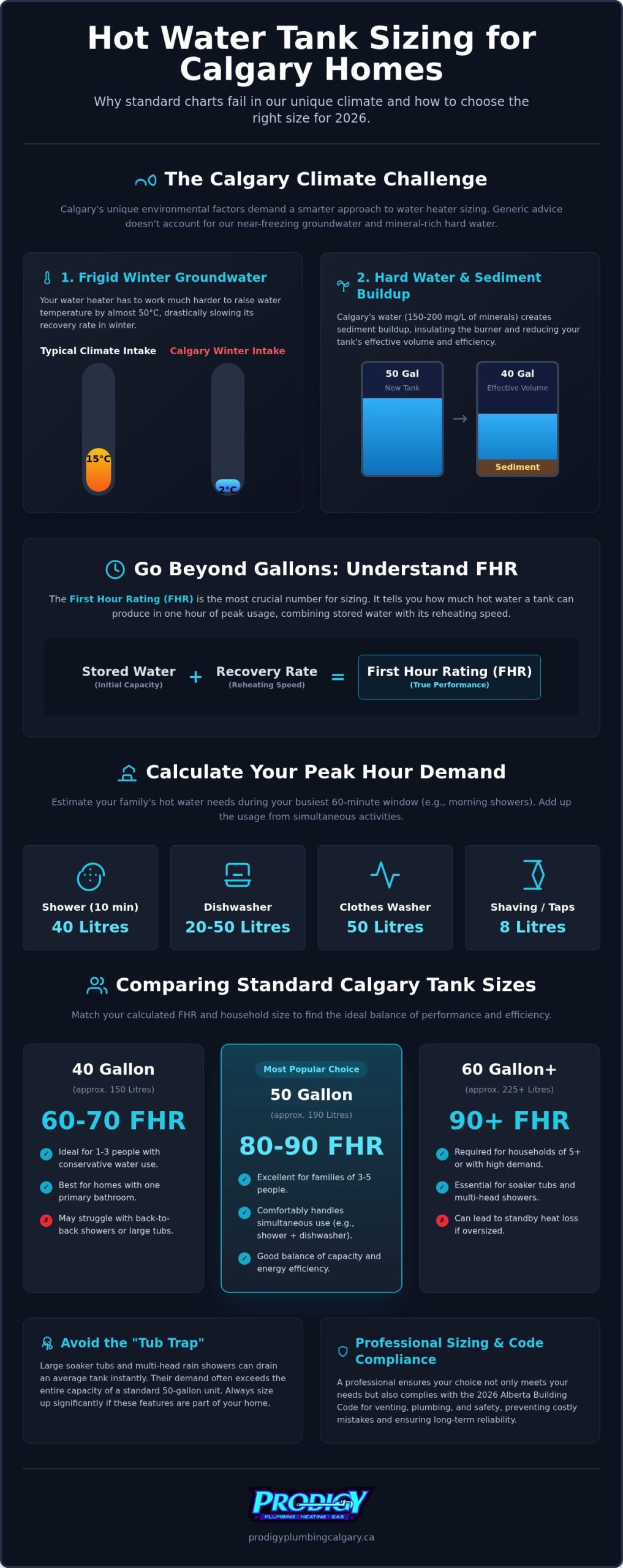
Calgary’s climate dictates how we approach plumbing. Most generic sizing guides are written for moderate climates where the water entering the home is already lukewarm. In Calgary, our groundwater can drop to near 2°C during the coldest months. This puts a massive load on a storage water heater, as it must raise the temperature by nearly 50 degrees just to reach a comfortable shower level. If your tank is too small, it simply won’t have the power to keep up when the mercury drops outside.
Calgary’s Cold Intake Temperature Challenge
“Temperature rise” is the difference between the cold water coming in and the hot water going out. Generic charts often assume an intake of 15°C. When our intake is 11 degrees colder, your tank’s recovery rate slows down significantly. The recovery rate is the speed at which a tank can reheat its full volume of water after being drained. A tank that keeps up in July might leave you with a lukewarm surprise in February because the burner has to run much longer to achieve the same result. This is a critical factor in hot water tank sizing Calgary homeowners often overlook. Gas tanks generally recover faster than electric ones, but both styles struggle when the incoming water is near freezing.
Hard Water and Effective Tank Volume
Calgary is known for its hard water, typically ranging between 150 and 200 mg/L of calcium carbonate. Over time, these minerals settle at the bottom of the tank as sediment. This buildup doesn’t just take up physical space; it acts as an insulating blanket between the burner and the water. If you have several inches of sediment at the bottom, a 50-gallon tank effectively performs like a 40-gallon tank. It takes longer to heat and holds less usable water. You might notice your tank making popping or rumbling sounds, which is a sign that steam bubbles are struggling to escape through that layer of minerals. We always check the anode rod during our evaluations, as it’s the primary line of defence against this mineral-heavy environment. The same hard water that damages your tank can also wreak havoc on your fixtures — understanding the faucet replacement cost Calgary homeowners face is equally important when budgeting for plumbing upgrades in our region.
Picking the wrong size has clear consequences. Undersizing leads to constant stress on the burner or electric elements, which can shorten the equipment’s lifespan and lead to premature failure. Oversizing leads to “standby heat loss,” where you pay to keep a massive volume of water hot even when nobody is using it. The goal of hot water tank sizing Calgary is to find the middle ground. You need enough “First Hour Rating” to handle a busy morning without wasting money on your monthly utility bill. Getting this balance right ensures your family stays comfortable while keeping your energy consumption in check.
How to Calculate Your Household’s First Hour Rating (FHR)
Many homeowners focus only on the gallon capacity printed on the side of the tank. This number is helpful, but it doesn’t tell the whole story. The First Hour Rating (FHR) is a much more accurate measurement for hot water tank sizing Calgary residents should use. It represents the total amount of hot water the unit can provide in a single hour, starting with a full tank. This rating combines the stored water with the “recovery rate,” which is how fast the burner or elements can heat new water entering the system.
Relying on tank volume alone can be misleading in our climate. As we discussed previously, Calgary’s winter water is exceptionally cold. A 50-gallon tank with a slow recovery rate might leave you shivering halfway through the morning rush, while a 40-gallon tank with a high-performance burner could keep up easily. To avoid running out, you need to identify your “Peak Hour.” This is the sixty-minute window each day when your home uses the most hot water, usually during the morning shower scramble or the evening bath and laundry routine.
Step-by-Step: Estimating Your Peak Hour Demand
To find your required FHR, you need to add up the hot water used by every fixture and appliance that might run at the same time. Use these average estimates to build your total:
- Showers: Allow 40 litres (roughly 10 gallons) for every 10-minute shower using a standard low-flow head.
- Shaving: Budget 8 litres for a typical session with the tap running.
- Dishwashers: Factor in 20 to 50 litres per load, depending on the age of your appliance.
- Clothes Washers: A warm-water wash can draw up to 50 litres per cycle.
Don’t forget “hidden” draws like food preparation or a second bathroom being used simultaneously. If your family tends to stack these activities, your peak demand will be significantly higher than a household that spreads usage throughout the day.
Matching Your Demand to the Tank Label
Once you have your peak demand number, you can find the FHR on the yellow EnergyGuide label of any new unit. Industry standards for Professional Sizing and Installation suggest choosing a tank with an FHR that falls within 10 to 15% of your calculated peak. This small buffer accounts for the extra work the heater does when Calgary’s intake water temperatures drop in January. A professional hot water tank replacement Calgary service ensures your FHR matches your home’s unique plumbing profile and usage patterns perfectly. If you aren’t sure which model fits your lifestyle, our team at Prodigy Mechanical can perform a quick on-site evaluation to confirm the right fit for your home.
40, 50, or 60 Gallons? Comparing Standard Calgary Tank Sizes
Selecting the right volume for your home involves more than just picking a number off a shelf. In our local market, three sizes dominate residential installations. The 40-gallon tank remains a popular choice for condos, townhomes, or smaller detached houses with one or two occupants. It provides enough storage for basic needs, but it can struggle if multiple fixtures run at once. For most detached homes in our city, the 50-gallon tank is considered the standard. It offers the “Goldilocks” balance of storage and recovery for a family of four with typical daily routines. When you move into larger homes with high-flow fixtures, a 60-gallon or even a 75-gallon tank becomes necessary to prevent frequent cold-water surprises.
The fuel source you choose also changes how these sizes perform. Gas tanks generally offer a much faster recovery rate than electric models. This is vital for hot water tank sizing Calgary homeowners should consider, as a faster recovery means the tank is ready for the next user sooner. An electric tank relies on heating elements that take longer to reach temperature, often requiring a larger storage volume to compensate for the slower reheat time. If you’re switching from gas to electric, you might need to move up a size to maintain the same level of comfort.
Capacity vs. Recovery Rate Comparison
A tank’s performance is a combination of its storage volume and its BTU (British Thermal Unit) input. High-efficiency power-vent models often have higher BTU ratings than traditional atmospheric vent models. This means a 40-gallon power-vent gas tank can sometimes outperform a 50-gallon atmospheric tank because it heats the water faster. When we evaluate a home, we look at the recovery rate listed on the tank’s data plate. A higher BTU input ensures your “50-gallon” tank is actually ready for the third or fourth shower in a row without a long wait between users.
When to Upgrade Your Tank Size
You’ll know your current tank is too small if hot water runs out during routine tasks, like halfway through a load of laundry or a single bath. If you’re planning a basement suite or your family is growing, upgrading your size during your next hot water tank sizing Calgary project is a smart move. However, space constraints in many Calgary utility rooms can be a hurdle. Older homes often have tight quarters where a larger-diameter tank simply won’t fit. In these cases, we look for “tall” models or high-recovery units that provide more power without requiring a larger physical footprint. We always measure the available space and venting clearance before recommending a size increase to ensure a safe and code-compliant installation. If your existing unit is showing signs of trouble before you’re ready to upgrade, understanding your water heater repair options in Calgary can help you decide whether a fix or a full replacement makes more sense.
Sizing for High-Demand Features: Soaker Tubs and Multi-Head Showers
Standard hot water tank sizing Calgary calculations often fall short when luxury fixtures are involved. A modern home with a deep soaker tub or a multi-head rain shower requires a specialized approach to capacity. These features can drain a standard tank in minutes, leaving the rest of the household without hot water for an hour or more. If you are planning a bathroom renovation or building a new home, matching your heating system to your fixtures is the only way to ensure your investment actually delivers the comfort you expect.
The Math Behind the Soaker Tub
Many homeowners fall into the “tub trap.” They assume a 40-gallon tank can fill a 40-gallon tub. In reality, you only get about 70% of a tank’s rated volume as truly hot water before the incoming cold water begins to drop the temperature significantly. For a 227-litre (60-gallon) soaker tub, you need a tank capacity at least 20% larger than the tub itself just to get a warm bath. We recommend checking the litre capacity of your tub before choosing your next unit. If the tub volume exceeds your tank size, you will never be able to fill it to the brim with hot water.
High-flow fixtures like rain showers and body jets add another layer of complexity. While a standard showerhead uses about 9.5 litres per minute, a luxury rain shower can easily double that. If two people shower simultaneously with high-flow heads, even a 50-gallon tank can be exhausted in less than 15 minutes. The Alberta Building Code also requires the use of mixing valves to prevent scalding. These valves blend hot and cold water at the source. This helps safety, but it also means your tank needs to maintain a higher internal temperature to deliver the same volume of usable warm water at the tap.
Tankless Water Heaters: A Different Sizing Logic
For homes with extreme demand, we often suggest looking at tankless options. Sizing for these units is based on Gallons Per Minute (GPM) rather than total stored volume. However, Calgary’s winter presents a unique challenge for tankless systems. When the intake water is only 2°C, the unit must work twice as hard to reach the target temperature. This can reduce a unit’s rated GPM capacity by up to 50% compared to its performance in a warmer climate. Professional gas-fitting is essential here because these units require a high BTU input to flash-heat water during a Calgary February. If your home has high-demand fixtures, contact Prodigy Mechanical for a precise evaluation of your hot water needs.
Professional Sizing and Installation with Prodigy Mechanical
Selecting the right capacity on paper is only half the battle. Many homeowners attempt a DIY approach based on generic online charts, only to face “buyer’s remorse” when the first cold snap hits. Proper hot water tank sizing Calgary requires a physical assessment of your home’s infrastructure. We often see situations where a homeowner buys a larger tank that their existing gas line or venting system cannot support. Without the correct gas pressure or exhaust capacity, even a high-end 60-gallon tank will fail to reach its rated recovery speed, leaving you with the same cold showers you tried to avoid.
Our process starts with a thorough on-site evaluation. We don’t just look at the old tank; we inspect your plumbing, venting, and gas lines to ensure they meet the demands of your new unit. This is also the time when we ensure full compliance with Calgary municipal permits. A professional installation includes pulling the necessary permits and ensuring the work passes a safety inspection. This step is vital for your home insurance validity and the long-term safety of your family. Skipping these formal steps can lead to significant headaches if you ever decide to sell your property.
We prioritize long-term reliability by recommending brands that are proven to handle our local conditions. Calgary’s hard water is tough on equipment, so we often lean toward brands like Bradford White or John Wood. These manufacturers build tanks with robust internal linings and high-quality anode rods that resist the mineral buildup we discussed earlier. Choosing a durable brand ensures that the “Goldilocks” size we find for your home continues to perform efficiently for its entire 8 to 12-year lifespan.
Expert Advice from Licensed Calgary Gas Fitters
Safety is our primary concern. Larger tanks or high-recovery models often require a higher BTU input, which may necessitate a gas line upgrade. Our team consists of licensed gas fitters who understand the technical requirements of the Alberta Building Code. With 15+ years of industry experience in Calgary, we have seen every possible utility room configuration. We use this expertise to prevent common installation errors, such as improper venting or inadequate clearance, ensuring your system is optimized for both daily comfort and peak energy efficiency.
Ready for Reliable Hot Water?
Don’t guess when it comes to your home’s comfort. A correctly sized tank means lower monthly utility bills, a longer equipment life, and the peace of mind that comes with knowing you won’t run out of hot water mid-shower. We take the guesswork out of the equation by providing a clear, honest assessment of your needs based on your household’s actual usage patterns. If you want to ensure your next system is a perfect fit, contact Prodigy Mechanical for a professional hot water tank assessment in Calgary.
Secure Your Home’s Hot Water Comfort for Years to Come
Getting your hot water tank sizing Calgary project right requires looking beyond a simple gallon count. You have to account for how our freezing winter intake water and local mineral levels impact daily performance over time. By focusing on your household’s actual First Hour Rating and selecting a unit that can handle Calgary’s hard water, you protect your family from the frustration of cold showers and the waste of high energy bills. A correctly sized system provides the perfect balance of immediate comfort and long-term efficiency.
Our team at Prodigy Mechanical brings 15+ years of local experience to every installation. As licensed gas fitters and plumbers, we provide transparent per-job pricing and thorough on-site evaluations to ensure your system meets the 2026 Alberta Building Code. We take the guesswork out of the process, so you can trust that your new heater is optimized for your home’s unique plumbing profile. Book Your Hot Water Tank Sizing Consultation with Prodigy Mechanical today to find the ideal solution for your household. You deserve a plumbing system that works reliably, no matter how cold it gets outside.
Frequently Asked Questions
What is the most common hot water tank size for a family of 4 in Calgary?
A 50-gallon gas tank is the most common choice for a family of four in Calgary. It provides a reliable balance of storage and recovery for typical daily usage patterns. While a 40-gallon unit might work for smaller households, the extra capacity of a 50-gallon model prevents cold showers during the morning rush. It remains the standard for detached homes because it handles multiple fixtures running at the same time.
How do I know if my current hot water tank is undersized?
You’ll know your tank is undersized if you consistently run out of hot water during routine tasks. If the second person in the shower always gets a lukewarm experience, your system isn’t keeping up. Another sign is a long wait time between showers for the water to get hot again. This suggests the recovery rate is too slow to meet your household’s peak demand.
Does a larger hot water tank use significantly more energy?
A larger tank does use more energy because it has more surface area for standby heat loss. You pay to keep that extra water hot even when it isn’t being used. However, modern high-efficiency models use better insulation to minimize this loss. Finding the right hot water tank sizing Calgary homes need means balancing this energy cost against the comfort of never running out of hot water.
Will a 40-gallon tank fill a standard bathtub in the winter?
A 40-gallon tank will struggle to fill a standard bathtub during a Calgary winter. You only get about 70% of a tank’s volume as truly hot water before it begins to cool. With intake temperatures near 2°C, the water in the tank cools down quickly as the tub fills. Since a standard tub often holds 150 litres or more, a 40-gallon unit usually runs cold before the tub is full.
How does Calgary’s hard water affect the lifespan of a 50-gallon tank?
Calgary’s hard water, which contains 150 to 200 mg/L of minerals, causes sediment to settle at the bottom of your tank. This buildup acts as an insulator, forcing the burner to work harder and longer. Over time, this stress can reduce the lifespan of a 50-gallon tank toward the lower end of the 8 to 12-year average. Annual flushing is essential to maintain efficiency and protect the tank.
Is it better to get a larger tank or switch to tankless?
Tankless units are excellent for endless hot water, but they require a higher upfront investment and specific gas line requirements. A larger storage tank is often a more cost-effective choice for families with predictable schedules. If you have high-flow rain showers or a massive soaker tub, tankless might be the better long-term solution. We evaluate your specific plumbing and gas infrastructure to help you decide on the best fit.
What is ‘recovery rate’ and why does it matter in Calgary?
Recovery rate is the speed at which a tank reheats its volume after being drained. It matters in Calgary because our incoming winter water is exceptionally cold. A tank with a high recovery rate can provide more hot water over a single hour, even if the storage volume is smaller. This rating is often more important than the gallon capacity when your household has back-to-back morning showers.
Do I need a permit to change the size of my hot water tank in Calgary?
Yes, the City of Calgary requires a permit for any water heater replacement or size change. This ensures the installation meets the current Alberta Building Code and passes a safety inspection. Proper permitting is also a requirement for your home insurance validity. Our licensed technicians handle the permit process to ensure your installation is fully compliant, safe, and documented for your records. When planning a full plumbing refresh, it’s also worth reviewing the faucet replacement cost Calgary residents can expect in 2026, so you can budget accurately for every aspect of your home’s plumbing system.