

Poly-B piping will not poison your drinking water, but it poses an inevitable threat to your property. When Calgary homeowners ask, is poly B pipe dangerous, they often worry about chemical leaching. The reality is that the danger is entirely structural, as municipal chlorine slowly weakens the pipe walls from the inside out.
Worrying about an unexpected basement flood or opening a policy renewal from your insurer denying water damage coverage is genuinely stressful. If your house was built between 1978 and 1997, that concern is well justified. Systems across Alberta have now operated well past their intended lifespan, leaving many properties vulnerable to sudden failure.
In this guide, you will discover the real physical, financial, and structural hazards of Poly-B piping along with practical steps to safeguard your home. We break down the facts behind drinking water safety versus actual rupture risks, simple methods to inspect your lines, and a clear plan for insurance compliance and modern replacement options.
Key Takeaways
- To understand whether is poly B pipe dangerous, note that the threat is structural rather than toxic, meaning your drinking water stays safe while the pipe walls deteriorate.
- Calgary’s municipal chlorine and continuous hot water exposure weaken polybutylene resin from the inside out, creating micro-fractures with zero exterior warning.
- Canadian insurance providers increasingly refuse water damage coverage or apply steep deductibles to homes with active Poly-B systems.
- Practical home checks, such as inspecting visible lines for discolouration and running overnight meter tests, help detect hidden leaks early.
- Upgrading to modern CSA-certified PEX piping provides a durable, chlorine-resistant solution that secures your home insurance and protects property value.
What Is Poly-B Piping and Is It Dangerous to Your Health?
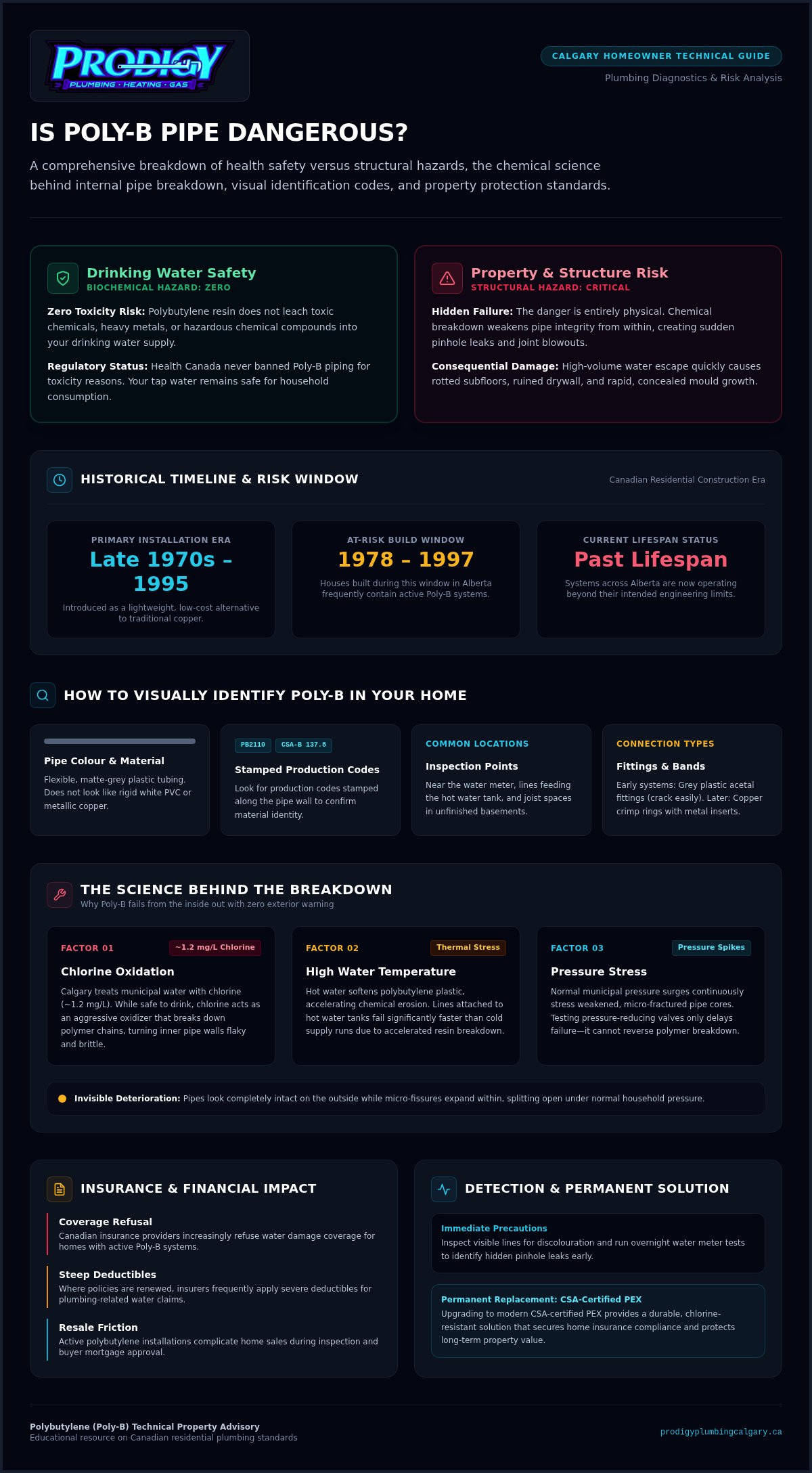
Polybutylene, commonly known as Poly-B, is a flexible grey plastic pipe installed across Canadian homes from the late 1970s up to 1995. When homeowners ask, is poly B pipe dangerous, they often worry about water safety and chemical contamination. You can rest easy on that front. Poly-B does not leach toxic chemicals, heavy metals, or harmful compounds into your drinking supply. Health Canada never banned the pipe for toxicity reasons. To understand What Is Poly-B Piping, look at its original design as a lightweight, low-cost alternative to copper. The real danger isn’t biochemical. It is entirely structural.
Poly-B piping poses zero toxicity danger to humans, but significant structural risk to property.
Drinking Water Safety vs. Property Damage Risks
Your drinking water stays completely clean passing through polybutylene lines. The plastic resin does not break down into hazardous drinking contaminants, which means your family faces no immediate health hazard at the tap. The genuine hazard hides behind your drywall and ceilings. While the water remains safe, the pipe walls slowly lose their physical integrity over years of service. A sudden joint failure or pinhole rupture releases high-volume water into living spaces. That unchecked flow rots subfloors, ruined drywall, and encourages hidden mould growth within hours.
How to Visually Identify Poly-B Pipes in Your Home
Determining whether your home relies on this material takes only a few minutes. Grab a flashlight and check the unfinished utility areas of your property:
- Pipe colour and markings: Look for flexible, matte-grey plastic tubing stamped with the production code “PB2110” or “CSA-B 137.8” along the pipe wall.
- Common locations: Inspect exposed plumbing runs near your water meter, the supply lines running to your hot water tank, and joist spaces in unfinished basements.
- Fittings and bands: Check the connection points. Early installations used grey plastic acetal insert fittings, which crack easily under stress, while later installations utilized copper crimp rings with metal inserts.
Confirming grey pipes in these spaces clarifies whether is poly B pipe dangerous to your specific home. Even if the outer plastic looks intact today, interior wear happens out of sight.
Why Does Poly-B Fail? The Science Behind the Breakdown
Understanding why is poly B pipe dangerous requires a look at water chemistry. Unlike copper, which corrodes evenly over decades, polybutylene suffers from targeted chemical and thermal degradation. The piping looks durable on the outside, but municipal water actively attacks the interior wall structure from day one.
Chlorine, Water Chemistry, and Internal Pipe Degradation
Calgary treats its municipal water with chlorine to eliminate bacteria, maintaining levels around 1.2 mg/L. While safe to drink, chlorine acts as an aggressive oxidizer against polybutylene resin. Chlorine breaks down the polymer chains, turning smooth interior walls flaky and brittle. Micro-fractures spread through the pipe core over years of service. As highlighted in the InterNACHI guide to Polybutylene, these failures develop from the inside out, meaning a pipe can look brand new right up until it splits open under normal line pressure.
The Role of Water Pressure and Excessive Heat
Thermal stress accelerates internal chemical erosion. Hot water lines degrade much faster than cold supply lines, which is why leaks frequently occur on runs connected to your hot water tank. High operating temperatures soften the plastic, giving chlorine faster access to deep resin layers. Normal municipal pressure spikes add constant mechanical stress to these weakened walls. Testing your home’s pressure-reducing valve ensures baseline water pressure stays within safe limits, though pressure management only slows down an inevitable failure.
Plastic Fittings vs. Metal Crimp Rings
The earliest Poly-B installations in Alberta utilized grey plastic acetal insert fittings. Installers often overtightened crimp bands, creating immediate micro-fissures in the brittle plastic. Combined with chlorinated water, these early fittings failed catastrophically across Western Canada. Later installations switched to copper or brass fittings secured with copper crimp rings. While metal fittings solved the issue of cracked joints, they did not fix the degrading pipe walls. Chemical wear still creates pinhole leaks along straight pipe runs. Homeowners looking to protect their property often schedule a full Poly B replacement to remove these failing lines once and for all.
The True Cost of Poly-B: Insurance, Resale, and Calgary Housing
When assessing whether is poly B pipe dangerous, the financial consequences often hit homeowners before physical leaks appear. Water damage represents the single largest source of Canadian property insurance payouts, driving providers to enforce strict underwriting rules. For local communities built through the 1980s and 1990s, active polybutylene plumbing creates immediate transactional friction. You can explore regional trends and impacted communities in our comprehensive guide to Poly-B piping in Calgary.
Navigating Canadian Home Insurance Underwriting Rules
Insurance questionnaires now routinely ask if domestic supply lines contain polybutylene. Insurers assess these aging systems as high-risk liabilities, responding with several restrictive measures:
- Outright coverage denials: Underwriters frequently refuse comprehensive water protection policies until all Poly-B lines are eliminated.
- Mandatory replacement clauses: New home buyers may receive conditional approval requiring verified repiping within 30 to 60 days of closing.
- Severe deductibles and exclusions: Policies that accept older lines often attach separate water damage deductibles running into thousands of dollars, or exclude accidental plumbing discharge entirely.
These terms leave homeowners carrying substantial financial exposure if a rupture occurs.
Impact on Calgary Real Estate Transactions and Resale Value
During property transactions, certified inspectors specifically check mechanical rooms and joists for grey piping. A home inspection report noting polybutylene can halt negotiations quickly. Buyers routinely ask for substantial repair credits, demand financial holdbacks at closing, or walk away from conditionally accepted purchase contracts. Knowing that an unexpected rupture could flood a finished basement creates hesitation. Proactive replacement eliminates these listing complications, providing buyers with clean inspection reports and clear proof of plumbing integrity.
Planning a scheduled replacement provides predictable timelines and lets you protect finished drywall. Waiting for an overnight rupture turns a manageable home project into an expensive emergency remediation involving emergency mitigation teams, torn subfloors, and complex insurance negotiations. Addressing old domestic supply lines early gives you complete control over your home’s protection.
Warning Signs and Immediate Precautions for Homeowners
Living with legacy plumbing requires steady vigilance. Because polybutylene deteriorates internally, pipes rarely give obvious warnings before leaking. Knowing the early warning signs helps answer why is poly B pipe dangerous to ignore, giving you a chance to act before moisture ruins finished spaces.
You can run a straightforward overnight leak test using your municipal water meter. Before going to bed, make sure all water-using appliances, taps, and humidifiers are completely off. Record the exact meter reading. Check the dial again first thing in the morning before using any water. If the meter digits moved or the low-flow indicator triangle spun, water is escaping somewhere in your system.
Visual and Operational Warning Signs of Imminent Failure
Physical inspections around exposed plumbing runs reveal key warning indicators:
- Surface defects: Look closely at visible pipe runs for a powdery white residue, surface flaking, or small localized bulges in the grey plastic.
- Connection stress: Examine crimp joints for hairline cracks or green corrosion banding on copper fittings.
- Subtle structural clues: Watch for discoloured drywall patches, peeling paint along baseboards, or persistent damp odours in finished basements.
- Operational shifts: Pay attention to sudden drops in household water pressure when running single fixtures.
Temporary Risk-Reduction Measures While Planning Replacement
If you are coordinating a long-term repipe, several practical adjustments help reduce mechanical stress on your lines:
- Regulate system pressure: Test your main pressure-reducing valve and set baseline household water pressure below 60 psi to prevent hydraulic strain.
- Dial back water heater output: Lower the thermostat on your hot water tank slightly, which curbs the intense thermal breakdown along nearby branch lines.
- Exercise the shut-off valve: Test your main shut-off valve annually to confirm it closes tightly by hand during an emergency.
- Deploy moisture alarms: Place smart battery-powered leak sensors near laundry machines, below hot water tanks, and under bathroom vanities.
- Isolate lines during travel: Shut down the main water supply entirely whenever leaving the home for holidays or extended weekends.
When unexpected pipe failures happen, access fast containment advice through our trusted guide on emergency plumbing in Calgary. If you spot signs of localized moisture, contact our team to inspect your plumbing before a minor drip becomes severe property damage.
Permanent Solutions: Full Poly-B Replacement with Modern PEX
Spot repairs on polybutylene lines only patch an immediate issue while leaving degraded piping behind your walls. For homeowners asking whether is poly B pipe dangerous over the long haul, piecemeal fixes offer false security. A complete repipe using cross-linked polyethylene (PEX) remains the industry standard, permanently eliminating rupture risks and restoring standard home insurability. To see how clean supply lines connect with the rest of your home, consult our complete plumbing guide.
Why PEX-a Has Replaced Poly-B Across North America
Modern residential plumbing relies primarily on high-grade PEX-a tubing certified to CSA B137.5 standards. PEX-a offers exceptional material memory and flexibility. Where Poly-B turned brittle from municipal chlorine exposure, PEX-a resists oxidative chemical breakdown and internal mineral scaling completely. The tubing expands significantly before contracting back to size, providing superior freeze protection during harsh Calgary cold snaps. Cold-expansion sleeves create permanent mechanical seals without the stress points seen in older crimp systems, backed by dependable 25-year manufacturer warranties.
What to Expect During a Professional Repiping Project
A methodical whole-home repipe is far less disruptive than most homeowners expect. Skilled technicians plan the workflow carefully to keep your home running smoothly:
- Strategic access cuts: Plumbers map pipe pathways in advance, making small, rectangular incisions in drywall inside closets or behind doors to protect visible living areas.
- Maintained water service: Technicians install temporary bypasses or stage the project so your family maintains running water at the end of each workday.
- Rigorous pressure testing: Every newly installed line undergoes static pressure testing and City of Calgary plumbing inspection to guarantee water tightness.
- Clean finish: Cut drywall sections are neatly backed and patched, leaving your home tidy and secure.
Replacing outdated lines restores property equity and satisfies insurance underwriters completely. Contact Prodigy Mechanical for an honest, professional Poly-B evaluation tailored to your home.
Protect Your Calgary Home Against Hidden Plumbing Risks
Deciding whether is poly B pipe dangerous comes down to distinguishing between water toxicity and physical structural risk. Your drinking water is safe, but aging grey lines past their design life put your property at constant risk of sudden water leaks and insurance complications. Replacing compromised piping with modern PEX protects your living space, secures full insurance coverage, and preserves your hard-earned equity.
You don’t have to wait for a pinhole leak to take control of your plumbing. Backed by over 15 years of dedicated Calgary plumbing experience, our licensed and insured mechanical technicians complete repiping methodically to keep drywall disruption minimal. We deliver transparent per-job pricing with no hidden charges, giving you total clarity from start to finish. Schedule a professional Poly-B assessment with Prodigy Mechanical today and enjoy reliable peace of mind under your roof.
Frequently Asked Questions
Is drinking water from Poly-B pipes dangerous to my family?
No, drinking water from polybutylene plumbing is not harmful to human health. The resin does not leach chemical contaminants, microplastics, or toxic metals into your potable supply. When answering whether is poly B pipe dangerous, the hazard relates entirely to structural deterioration and unexpected flooding rather than health risks at your kitchen tap.
How long does Poly-B pipe typically last before bursting?
Poly-B piping carries an engineered operating lifespan of 10 to 25 years. Because installation in Canadian homes ceased in 1995, every active polybutylene system in Calgary has now exceeded its original design expectations. System failures and interior hairline splits become significantly more frequent once the resin passes 25 years of service.
Can I replace only the leaking section of Poly-B pipe?
You can repair an active leak with mechanical transition couplings, but localized repairs provide only a short-term patch. Municipal chlorine degrades the entire piping network evenly from within. Clamping one pinhole often increases hydraulic pressure on nearby brittle sections, causing secondary leaks shortly down the line. A full replacement remains the only permanent fix.
Will insurance companies cover water damage caused by Poly-B in 2026?
Major Canadian insurance providers increasingly decline new policies or drop standard water damage endorsements on properties containing Poly-B. Underwriters who agree to cover these homes often introduce mandatory repiping conditions, apply separate water deductibles exceeding standard policy terms, or specifically exclude damage resulting from sudden domestic pipe ruptures.
How do I know if my Calgary home has Poly-B plumbing?
Check the exposed plumbing near your hot water tank, water meter, or unfinished basement ceiling. Look for flexible, matte-grey plastic tubing stamped with the code “PB2110” or “CSA-B 137.8”. If your property was built between 1978 and 1997, you likely have legacy polybutylene supply lines hidden behind finished walls.
Is Poly-B pipe illegal or against the building code in Canada?
Existing Poly-B lines are not illegal to have in an older home, but the material was officially removed from the National Plumbing Code of Canada in 2005. Plumbers cannot use polybutylene in new construction or permitted renovation projects. The City of Calgary requires unapproved supply lines to be upgraded during permitted alterations.
Does having Poly-B affect my property resale value?
Yes, legacy polybutylene plumbing regularly influences real estate transactions across Calgary. Licensed home inspectors flag grey piping as a critical concern in buyer reports. Prospective purchasers frequently negotiate the repiping expense off their initial offer, request closing holdbacks, or cancel purchase contracts outright to avoid future water remediation risks.