
You notice a small, discoloured patch on your basement ceiling during a routine weekend cleaning. It’s easy to ignore, but that single damp spot often signals a much larger issue hidden behind your drywall. Most homeowners view their plumbing as an “out of sight, out of mind” system until a puddle appears or a drain stops working. It’s natural to feel a sense of dread when these problems arise. Between the fear of structural damage and the confusion of technical terms like Poly-B or backflow, many Calgary residents feel overwhelmed by their own pipes.
This guide changes that by giving you a clear, honest understanding of your home’s “circulatory system.” You’ll learn how your plumbing works, how to identify common Calgary-specific issues, and when it’s time to call in a professional to protect your property. We’ll walk through the basics of system function, the early warning signs of failure, and the steps you can take to maintain your home with confidence. By the end, you’ll have the knowledge needed to spot trouble early and choose a reliable local partner when the job requires a skilled hand.
Key Takeaways
- Gain a clear understanding of your home’s “circulatory system” and how it manages the flow of fresh water and waste.
- Learn how to safeguard your pipes against Calgary’s extreme winter temperatures and the effects of local hard water.
- Discover how routine maintenance, such as flushing your water heater, can prevent sediment buildup and extend the life of your appliances.
- Identify the warning signs that indicate you need a professional for your plumbing and why per-job pricing offers the best transparency.
- Understand the value of hiring licensed journeyman plumbers to ensure all work is completed safely and according to provincial standards.
What is Plumbing? Understanding Your Home’s Circulatory System
Think of your home as a living structure. If the framing is the skeleton, then the plumbing is the circulatory system. It is a complex network of pipes, valves, and fixtures that manages the flow of water and gas throughout your property. This system performs two vital roles. It brings clean resources into your living spaces and safely carries waste away. Without this constant, controlled movement, modern life would be impossible. It protects your health through sanitation and safeguards your property from the destructive power of water.
The Evolution of Modern Plumbing
The word itself comes from the Latin word “plumbum”, which means lead. In the past, lead was the standard material for pipes, but we now know the health risks it posed. Today, systems have evolved to use safer, more durable materials like copper and PEX. In Calgary, building codes have also matured to keep pace with technology. The National Plumbing Code of Canada 2020, which Alberta adopted in 2023, ensures that every installation meets strict safety and efficiency standards. Modern systems now prioritize water conservation. Low-flow toilets and faucets reduce waste without sacrificing performance, helping homeowners manage their environmental footprint while keeping utility costs under control.
Why Homeowners Should Care About Their Pipes
Most of your home’s piping remains hidden behind walls or beneath floorboards. This “out of sight, out of mind” nature is exactly why plumbing requires proactive attention. A small, undetected leak can lead to extensive mould growth and structural rot before you ever see a drop of water. Neglecting these systems often results in high repair costs that could have been avoided with simple inspections. When you understand how these hidden lines function, you can spot the subtle signs of failure before they become emergencies.
A well-maintained system provides several tangible benefits:
- Property Protection: Preventing water damage keeps your home’s structure sound and prevents rot.
- Health and Safety: Proper venting and drainage prevent sewer gases and bacteria from entering your living space.
- Increased Value: Updated fixtures and certified piping, like replacing Poly-B, make your home more attractive to future buyers.
- Operational Efficiency: Modern appliances and clear lines reduce your monthly utility bills and improve water pressure.
For a Calgary property owner, plumbing is a managed asset that requires steady care to ensure long-term reliability and comfort.
The Three Pillars of Your Home’s Plumbing System
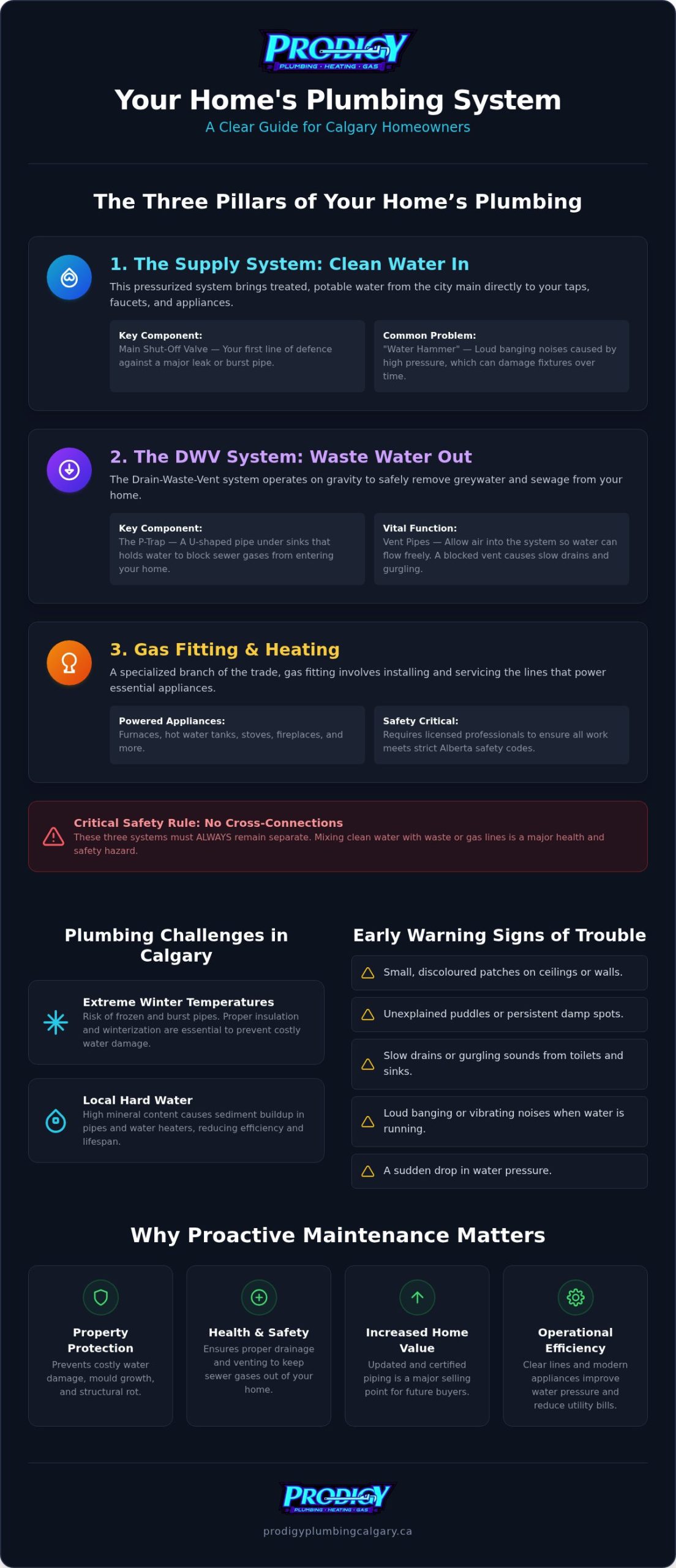
Understanding your home’s plumbing starts with recognizing that it isn’t just a random collection of pipes. It’s a cohesive network built on three distinct pillars. Each system has a specific job. The supply side brings fresh water in. The drain side takes waste out. The gas side powers your appliances. A critical rule in the trade is cross-connection control. These systems must never mix. If they do, your clean water becomes contaminated, which is a major health risk for your family.
The Supply Side: Clean Water on Demand
Your potable water system is always under pressure. It brings treated water from the city main or a private well directly to your taps. The most important component for any resident is the main shut-off valve. You should locate this valve immediately. If a pipe bursts, turning this handle is the only way to stop the flooding and prevent thousands of dollars in damage. Many Calgary homes also use pressure regulators. These devices keep the incoming water at a safe level. Without them, high pressure can cause “water hammer,” which creates loud banging noises and eventually destroys your fixtures.
The DWV System: Removing Waste Safely
The Drain-Waste-Vent (DWV) system works on the principle of gravity. It removes greywater from sinks and sewage from toilets. Every drain has a P-trap. This U-shaped pipe holds a small pool of water that acts as a seal. It blocks foul sewer gases from entering your living space. Venting is just as vital. These pipes usually exit through your roof to allow air into the system. Without air, water cannot flow freely. If you notice slow drains or gurgling sounds, it’s a sign of a venting issue or a developing clog. Consistent Preventative Plumbing Maintenance can catch these problems before root intrusion or grease buildup causes a complete backup. Kitchen drains in particular benefit from proper appliance connections; a correctly performed garburator installation Calgary homeowners rely on can reduce food waste buildup and help keep your DWV system flowing freely.
Gas Fitting and Heating Systems
In Alberta, gas fitting is a specialized branch of the trade. Licensed professionals manage the lines that power your furnace, stove, and hot water tank. This expertise extends to hydronic heating systems, where water is used to distribute warmth through radiators or in-floor tubing. Safety is the primary focus of these installations. Proper gas line sizing and venting prevent carbon monoxide leaks and ensure your appliances run efficiently. If you haven’t checked your main shut-off or gas connections recently, a thorough review of your home’s plumbing and heating can ensure everything is operating safely.
Unique Plumbing Challenges for Calgary Homeowners
Calgary’s environment puts unique stress on residential plumbing. Between deep freezes and mineral-heavy water, your pipes face challenges that homeowners in milder climates never encounter. Our dry Prairie air also plays a role; fluctuating humidity levels can cause rubber seals and gaskets to dry out and crack over time. These environmental factors require a specific maintenance approach to ensure your home remains protected throughout the year. Understanding these local issues is the first step toward preventing costly property damage.
Winterizing Your Plumbing in Calgary
Calgary winters regularly hit -30°C. This extreme cold can freeze water inside pipes located in unheated areas like garages, attics, or crawlspaces. When water freezes, it expands and creates enough pressure to rupture metal or plastic lines. To prevent this, add foam insulation to exposed pipes and seal any drafts near your rim joists. Disconnecting garden hoses before the first frost is also vital. If a hose stays attached, trapped water can freeze back into the house and burst the interior tap. If you suspect a pipe has frozen, open the tap and apply gentle heat with a hair dryer or space heater. Never use an open flame to thaw a pipe.
Poly-B Piping: A Calgary-Specific Concern
Many Calgary homes built between the 1970s and 1990s contain poly b piping. These grey plastic lines are prone to sudden, hairline fractures that cause significant water damage. Because of this history, many insurance companies now refuse to cover properties with original Poly-B or charge much higher premiums. Replacing these lines with modern PEX standards is a reliable way to protect your investment. It removes the anxiety of a hidden leak and ensures your home remains insurable. A professional replacement involves removing the old grey pipe and installing durable, flexible lines that meet current building codes.
Managing Hard Water and Scale
Calgary’s water is naturally hard, meaning it has a high mineral content. Over time, these minerals settle at the bottom of your appliances and inside your pipes. This buildup significantly shortens the lifespan of your unit, often leading to an early hot water tank replacement Calgary. You might notice white scale on your showerheads or a drop in water pressure as the diameter of your pipes narrows. Installing a water softener or a filtration system helps manage this buildup effectively. These systems keep your water flowing smoothly and protect the internal components of your dishwasher and laundry machines from premature failure.
Preventative Maintenance: How to Avoid a Plumbing Emergency
Prevention is the only way to keep your home’s “circulatory system” running without interruption. Small leaks under a kitchen sink or behind a washing machine often go unnoticed until they cause significant rot. By performing regular checks, you protect your property and your wallet. Most plumbing emergencies start as minor issues that were simply ignored or overlooked. A steady maintenance routine ensures that small drips don’t turn into catastrophic floods.
The Homeowner’s Monthly Inspection Checklist
Spend fifteen minutes each month reviewing high-risk areas in your home. Start with your toilets. Drop a few drops of food colouring into the tank and wait twenty minutes without flushing. If colour appears in the bowl, you have a “silent” leak that’s wasting hundreds of litres of water. Next, inspect the flexible hoses on your dishwasher and washing machine. Look for cracks, bulges, or dampness at the connections. Finally, check your water meter when no taps are running. If the dial is moving, you have a hidden leak somewhere in your system that needs immediate attention.
Professional Maintenance vs. DIY Fixes
Knowing when to pick up a tool and when to pick up the phone is a critical skill for any homeowner. You can safely use a plunger or a hand-held snake to clear minor sink clogs. However, you should avoid chemical drain cleaners. These harsh liquids often corrode your pipes from the inside out, leading to brittle lines that eventually burst. For deep clogs or recurring backups, it’s better to seek drain cleaning near me to clear the lines safely without damaging your infrastructure.
Never attempt DIY gas fitting or complex rough-in work. In Alberta, these tasks require specific licensing because errors in gas lines or venting can lead to carbon monoxide poisoning or fire hazards. Regular professional check-ups, especially for your water heater and sump pump, save thousands in long-term repair costs. Flushing your water heater annually is particularly important in Calgary to remove the sediment buildup caused by our hard water. As the spring thaw approaches, test your sump pump by pouring water into the pit to ensure the float trigger activates the pump. You should also check your backflow preventer to ensure it’s clear of debris before the heavy rain season begins. Scheduling routine heating services Calgary professionals recommend is equally important, as your furnace and boiler work hardest during the same cold months that put the most stress on your pipes.
If you haven’t had your system inspected recently, you can schedule a professional review of your home’s plumbing to catch potential issues before they become expensive repairs.
Choosing a Reliable Calgary Plumber for Your Home
Selecting a partner for your home’s plumbing needs should be a steady, methodical process. You aren’t just looking for someone with a wrench; you need a professional who understands the specific building codes and permit requirements of the City of Calgary. Hiring a licensed journeyman ensures that the work meets provincial safety standards and is backed by proper insurance. This is especially important for your long-term protection, as uncertified work can lead to complications with insurance claims or future home sales. A tradesperson who carries both plumbing and gas-fitting credentials offers the most value, as they can safely manage everything from a bathroom fixture swap to a complex hot water tank installation.
Transparency in pricing is another indicator of a reliable business. Many companies charge by the hour, which can lead to anxiety as you watch the clock during a difficult repair. We prefer a “per-job” pricing model. This approach provides a clear, upfront cost before any work begins. It removes the guesswork and ensures you aren’t penalized for the time it takes to do a job thoroughly and correctly. When a plumber is willing to commit to a price, it signals confidence in their skills and honesty in their process.
Questions to Ask Before Hiring
Before you invite a technician into your home, ask a few direct questions to gauge their professionalism. Start by confirming if they are licensed to work specifically within the City of Calgary. Ask for a written estimate that outlines the scope of work clearly so there are no surprises. It is also helpful to understand their experience with emergency plumbing calgary. Knowing they have a history of handling high-pressure situations with calm competence gives you peace of mind during a crisis. A professional who communicates clearly about their process and expectations is someone you can trust with your property.
The Prodigy Mechanical Difference
At Prodigy Mechanical, we approach every task with the quiet self-assurance that comes from over 15 years of industry experience in Calgary. Our team specializes in everything from simple fixture swaps to full Poly-B replacements and custom rough-in work. We understand that your home is your most significant investment, so we treat every property with care and precision. We focus on minimizing disruption to your daily routine or commercial operation, ensuring we leave no mess behind once the job is finished. Our reputation is built on honesty and consistency rather than loud claims. We believe in transparency, so you always know exactly where you stand. Whether you need a routine inspection or a major system upgrade, we provide the steady hand and technical expertise required to keep your home safe.
Ready to protect your home? Contact Prodigy Mechanical for a professional quote today.
Securing Your Home’s Long-Term Comfort and Safety
Managing your home’s infrastructure doesn’t have to be a source of anxiety. By understanding the three pillars of your system and staying ahead of Calgary’s specific environmental challenges, you can prevent major property damage before it starts. Whether you’re winterizing for -30°C temperatures or considering a critical Poly-B replacement, proactive care is the most effective way to maintain your home’s value. Consistent maintenance ensures that your plumbing remains reliable and efficient for years to come.
When the job requires professional precision, choosing a partner with deep local roots makes the difference. Prodigy Mechanical brings over 15 years of industry experience to every project. Our team consists of licensed Calgary gas fitters and specialists in Poly-B replacement who prioritize honesty and thoroughness. We provide transparent, per-job pricing so you can move forward with confidence. Request Your Professional Plumbing Quote from Prodigy Mechanical. Taking these small steps today ensures a drier, safer, and more comfortable home for your family tomorrow.
Frequently Asked Questions
Is it normal for my pipes to make a banging noise when the water turns off?
That banging noise is known as water hammer. It occurs when high-pressure water suddenly stops or changes direction, causing a shockwave that rattles your pipes. While common, it can eventually damage your joints and fixtures. Installing a water hammer arrestor or checking your pressure-reducing valve often solves the issue. This protects your home’s infrastructure from the stress of constant vibration and potential leaks.
How often should I flush my hot water tank in Calgary?
You should flush your hot water tank at least once a year. Calgary’s water is naturally hard, meaning it contains high levels of calcium and magnesium. These minerals settle at the bottom of your tank as sediment, which reduces efficiency and causes the metal to overheat. Regular flushing prevents this buildup, extending the lifespan of your appliance and keeping your home’s plumbing system running efficiently.
Can I replace my own kitchen faucet or should I hire a plumber?
You can legally replace your own kitchen faucet in Calgary for personal use. However, hiring a professional for plumbing fixture swaps ensures a watertight connection and prevents hidden leaks under your cabinetry. A professional also checks for any existing corrosion in your shut-off valves that might fail during the installation. This provides peace of mind that your new fixture is installed correctly without risking water damage.
What should I do if I smell gas in my home?
Leave your home immediately and do not use any electronic devices or light switches if you smell a rotten egg odour. Once you are safely outside, call the ATCO Gas emergency line or 911. Gas leaks are extremely dangerous and require professional attention from a licensed gas fitter. Never attempt to locate or repair a gas leak yourself, as it poses a significant risk of fire or explosion.
Why is my water pressure suddenly lower than usual?
Sudden drops in water pressure often signal a hidden leak, a failing pressure regulator, or significant mineral buildup in your aerators. If the pressure loss is restricted to one tap, cleaning the screen usually helps. However, if the entire house is affected, you may have a larger issue in your main supply line. Checking with neighbours can also help determine if the City of Calgary is performing local water main repairs.
Is Poly-B piping really as dangerous as people say?
Poly-B piping is a serious concern because it is prone to sudden, hairline fractures that occur without warning. These grey plastic pipes were common in Calgary homes built between the 1970s and 1990s. Because of their high failure rate, many insurance companies will not cover homes with original Poly-B. Replacing these lines with modern PEX is a critical preventative measure to protect your property from catastrophic water damage.
How do I prevent my outdoor taps from freezing in the winter?
Disconnect all garden hoses before the first frost to prevent frozen taps. If a hose remains attached, water stays trapped in the pipe and freezes back into your house, causing a burst. If your home has interior shut-off valves for outdoor taps, turn them off and drain the remaining water by opening the exterior faucet. This simple routine is vital for surviving a Calgary winter without emergencies.
What is the difference between a plumber and a gas fitter?
A plumber manages water and waste systems, while a gas fitter is licensed to work on gas lines and appliances. In Alberta, many professionals carry both certifications to manage comprehensive mechanical needs. This dual expertise is essential for safely installing water heaters and boilers, where both water and gas connections are required. Choosing a technician with both licenses ensures your entire system meets provincial safety standards.