

Did you know that as of 2026, every single polybutylene plumbing system in Calgary has officially outlived its intended service life? If your home was built between 1978 and 1997, you might be living with a piping material that insurance companies are increasingly unwilling to cover. Most local homeowners only start asking how to tell if my pipes are poly B after receiving a policy non-renewal notice or a surprise water damage exclusion rider. It’s a stressful situation, and the confusion between different types of plastic piping only adds to the worry.
We understand the anxiety that comes with the fear of a sudden flood. You deserve to know exactly what’s behind your walls without the guesswork. This guide will show you the specific visual cues, embossed stamps, and key locations to identify Poly-B in your home. You’ll learn how to distinguish it from modern PEX and understand the specific risks Calgary’s water chemistry poses to aging grey plastic. By the end, you’ll have a clear, professional path forward to secure your home’s value and safety.
Key Takeaways
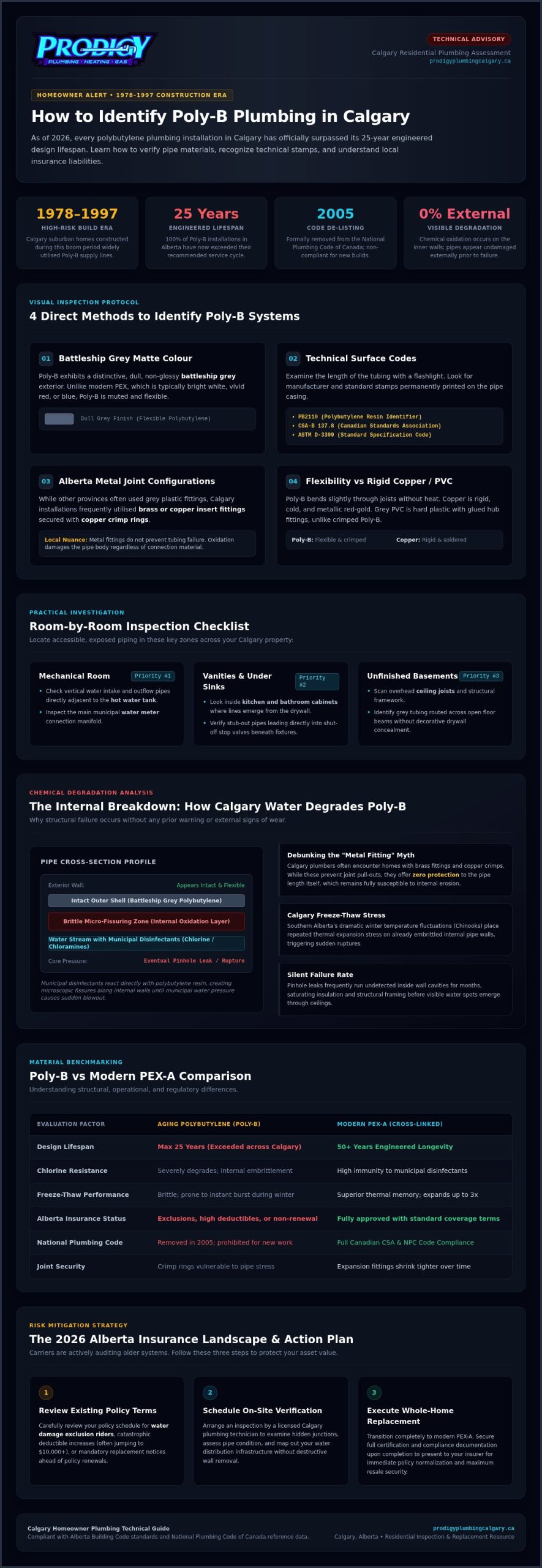
- Learn how to tell if my pipes are poly B by identifying the signature battleship grey colour and specific technical stamps like PB2110 or CSA-B 137.8.
- Discover the most common locations in your Calgary home to find exposed plumbing, including the mechanical room and beneath kitchen or bathroom vanities.
- Understand the 2026 Alberta insurance landscape and why many carriers now require a full replacement before issuing or renewing water damage coverage.
- Compare the differences between aging polybutylene and modern PEX-A to realize why the latter offers superior protection against Calgary’s freeze-thaw cycles.
- Get a clear roadmap for professional inspection and replacement to eliminate the risk of sudden leaks and maintain your property’s market value.
What is Poly-B Plumbing and Why Is It a Concern in Calgary?
Polybutylene, or Poly-B, is a flexible grey plastic resin that was the standard for residential water supply lines for two decades. If you’re trying to figure out how to tell if my pipes are poly B, you’re likely in a home built between 1978 and 1997. During this era, Calgary’s suburban expansion was in full swing. Poly-B was the go-to material because it was cost-effective and easy for builders to install. However, the polybutylene piping history and properties show a significant vulnerability to the very chemicals used to keep our drinking water safe.
The problem is largely internal. Chlorine and other disinfectants in Calgary’s water supply react with the polybutylene resin, causing the pipe walls to become brittle and develop microscopic cracks over time. Because this degradation happens on the inside, a pipe can look perfectly fine on the outside right up until the moment it fails. This widespread reliability issue eventually led to its official removal from the National Plumbing Code of Canada in 2005. Since then, it hasn’t been permitted for use in new Canadian builds.
The Alberta Difference: Fittings and Rings
Calgary homeowners often hear a common myth: if you have metal fittings, your pipes are safe. When homeowners ask our team how to tell if my pipes are poly B, we often start by looking at the connection points. It’s true that many Alberta installations used copper or brass fittings with copper crimp rings, rather than the failure-prone grey plastic fittings found in other provinces. While these metal connections are sturdier, they only protect the joints. The main runs of the pipe remain susceptible to internal oxidation. Even with high-quality brass fittings, the flexible tubing itself eventually loses its structural integrity, leading to pinhole leaks or catastrophic bursts.
Why 2026 is a Turning Point for Poly-B Systems
As of 2026, every Poly-B system in Calgary has officially surpassed its maximum engineered lifespan of 25 years. We’re now seeing a surge in end-of-life failures across the city. This reality hasn’t escaped the notice of Canadian insurance companies. Many providers now treat Poly-B as an unmanageable risk. They’re increasingly applying heavy surcharges or refusing water damage coverage entirely until a full replacement is completed. When you combine aging plastic with Calgary’s intense winter temperature swings, the risk to your property’s value and safety is at an all-time high. It’s a situation that requires a calm, organized approach to replacement to ensure your home remains protected.
4 Ways to Identify Poly-B Pipes in Your Home
Identifying the plumbing in your walls doesn’t require a trades ticket, just a flashlight and a bit of patience. If you’re wondering how to tell if my pipes are poly B, start by looking for a dull, matte, “battleship grey” colour. Unlike modern PEX, which is often bright white, red, or blue, Poly-B has a distinctively flat finish. It’s a flexible plastic tubing, which makes it easy to distinguish from rigid, metallic copper pipes that are hard to the touch and reddish-gold in appearance.
Check for technical stamps printed directly on the pipe surface. You’ll often see codes like PB2110, ASTM D-3309, or CSA-B 137.8. In Calgary homes, look closely at the joints where two pipes meet. You’ll likely see brass or copper connectors held in place by a copper crimp ring that looks like a small, circular band. These metal rings were standard in Alberta and are a key visual marker. For more technical details on these markings, the Alberta Municipal Affairs Poly-B safety guide provides a reliable breakdown of what to look for and the history of these systems in our province.
Where to Look: A Room-by-Room Checklist
The best way to confirm your pipe material is to find where the plumbing is exposed. Start in your mechanical room. Check the intake and outflow lines near your hot water tank and water meter. Next, open the cabinets under your kitchen and bathroom vanities. If the supply lines coming out of the wall are grey plastic rather than chrome or copper, you’ve likely identified the material. Finally, if you have an unfinished basement, look up at the ceiling joists. Builders often ran Poly-B through these spaces, and you can see the grey lines weaving between the wood beams without any obstructions.
Distinguishing Poly-B from Other Grey Pipes
Not all grey pipes are Poly-B, though it’s the most common in Calgary homes built during the 80s and 90s. Grey PVC or early PEX can sometimes look similar to the untrained eye. However, Poly-B is officially defined by its specific CSA-B 137.8 stamp. While inspecting, look for “weeping” or white, crusty mineral deposits around the copper crimp rings. These deposits are a clear signal that the pipe or fitting is starting to fail from the inside out. If you notice these signs, it’s wise to have a professional Poly-B inspection to assess the risk level before a leak occurs. Catching these small signs early can save you from the stress of a major flood later.
Poly-B vs. PEX: Understanding the Risks and Alberta Regulations
Once you’ve confirmed your material, the next step is understanding why the industry moved on. PEX, or cross-linked polyethylene, became the Canadian standard in the early 2000s specifically to address the widespread failures seen in polybutylene. While you are learning how to tell if my pipes are poly B, it’s helpful to know that PEX is engineered with superior chemical stability. It possesses a much higher resistance to the chlorine and heat that destroy Poly-B from within. This chemical resilience is why PEX is now the trusted choice for Calgary’s potable water systems.
The difference in longevity is stark. Poly-B systems were designed with a 20 to 25 year service life. By 2026, every existing installation in Calgary has exceeded this engineered threshold. In contrast, modern PEX-A is rated for 50 years or more under standard operating conditions. For a deeper look at how these regulations and material standards have shifted locally over the decades, you can read our Poly-B piping in Calgary: Complete 2026 Guide.
The Real Risk of “Wait and See”
Poly-B is a “silent” failure material because it degrades from the inside out. According to the InterNACHI polybutylene inspection guide, the exterior of the pipe often remains smooth and flexible even as the inner walls develop deep fractures. Calgary’s municipal water pressure, which sits higher than in many other Canadian regions, puts constant stress on these thinned walls. This often results in catastrophic bursts rather than slow, manageable drips. This risk is amplified during the city’s frequent freeze-thaw cycles, which can cause embrittled plastic to snap under pressure.
Alberta Plumbing Code and Your Home
Under the National Building Code; 2023 Alberta Edition, Poly-B is no longer an approved material for new installations. While your existing system is legally grandfathered, any permitted renovation will likely trigger a mandatory upgrade. If you decide to finish your basement or remodel your kitchen, Calgary safety codes inspectors typically require all exposed Poly-B to be replaced with certified materials like PEX. This ensures the new work meets current safety standards and protects your investment.
Quick Comparison: Poly-B vs. PEX
| Feature | Poly-B (Legacy) | PEX (Modern Standard) |
|---|---|---|
| Expected Lifespan | 25-30 Years | 50+ Years |
| Chlorine Resistance | Low (Causes brittleness) | High |
| Code Status | Grandfathered only | Fully Compliant |
| Primary Colours | Grey (Matte) | White, Red, Blue, or Clear |
What to Do If You Find Poly-B: Inspection and Insurance Steps
Discovering that your home contains polybutylene can be unsettling, but it’s a manageable situation. If you’ve finished your investigation on how to tell if my pipes are poly B and the answer is yes, your first step is to stay calm. While these pipes are prone to failure, they don’t usually burst the second you identify them. Begin by visually assessing any exposed lines for signs of stress, such as white mineral buildup or weeping at the joints. This initial check gives you a baseline before calling in a professional.
Once you’ve done a preliminary check, review your home insurance policy. In 2026, many Alberta providers have implemented strict riders for homes with Poly-B. You might find that your water damage deductible has been raised to a range between C$5,000 and C$10,000. In some cases, coverage is excluded entirely for failures involving these specific pipes. Knowing where you stand with your provider is essential for protecting your finances and planning your next steps.
The Insurance Reality in Calgary for 2026
Insurance companies in Calgary are no longer treating Poly-B as a minor concern. Many carriers now refuse to issue new policies or renew existing ones unless the system is replaced within a set timeframe, often 30 to 90 days of home closing. You may also notice a significant surcharge on your annual premiums. To clarify your home’s status, a professional plumbing and heating Calgary inspection can provide the necessary documentation for your insurer. This report offers a clear picture of your system’s current health and helps you avoid surprise policy cancellations.
Selling a House with Poly-B Piping
If you plan to sell your property, Poly-B will almost certainly become a point of negotiation. In the current Calgary market, home inspectors flag these systems immediately. Buyers frequently request price concessions or holdbacks to cover the future cost of a PEX repipe. Some purchase contracts are even made conditional on the seller replacing the pipes before the closing date to satisfy insurance requirements.
Being proactive can save the sale. Having a professional assessment done early allows you to present potential buyers with a fixed-price quote or proof of replacement. This transparency builds trust and prevents last-minute deal-breakers during the inspection period. If you’re ready to get a clear look at your system, you can book a Poly-B inspection with our team to understand your options and secure your home’s value.
Professional Poly-B Replacement Services in Calgary
Once you’ve used the visual cues to determine how to tell if my pipes are poly B, the path forward becomes clear. A full replacement, or “re-pipe,” is the only permanent solution to eliminate the risk of internal degradation and insurance surcharges. This process involves a systematic removal of all legacy polybutylene lines and replacing them with high-grade PEX-A. Upgrading to modern materials restores your peace of mind and ensures your home remains compliant with 2026 Alberta safety standards. We focus on a steady, methodical workflow that prioritizes the long-term protection of your property.
The transition from aging grey plastic to modern PEX is a significant investment in your home’s health. Beyond the obvious benefit of preventing floods, a professional replacement often leads to lower insurance premiums and higher resale value. We understand that the idea of a whole-home project can feel overwhelming, which is why we’ve refined our process to be as unhurried and organized as possible. Our goal is to leave your home in better condition than we found it, with a plumbing system that you won’t have to worry about for decades.
What a Full Replacement Looks Like
We use a methodical, minimal-disruption approach to access your plumbing. Our technicians identify the most efficient paths through your walls and ceilings, keeping drywall cuts to a minimum. We treat your property with respect, using floor protection and dust barriers to maintain a clean environment throughout the project. Once the new PEX lines are in place, the system is pressurized and thoroughly tested to ensure every connection is secure. This is also an ideal time to evaluate other aging components; many homeowners choose to coordinate this work with a hot water tank replacement Calgary to modernize their entire mechanical system at once. We prioritize keeping your home functional, ensuring you have active water service at the end of every working day so your routine isn’t interrupted.
Why Choose Prodigy Mechanical?
With over 15 years of experience in the Calgary market, we’ve seen the long-term effects of Poly-B failure firsthand. We don’t just swap pipes; we provide a complete restoration of your home’s safety. Our team is owner-operated and accountable, meaning we take the time to protect your floors, manage the cleanup, and communicate clearly at every stage. We understand the anxieties surrounding major home repairs, so we focus on steady, reliable work that stands up to the city’s unique climate and water conditions. Every technician on our crew is a specialist in Calgary home systems, ensuring that your new plumbing is installed with precision and care. Trust is earned through this kind of consistency and attention to detail.
Taking action before a leak occurs is the best way to protect your property’s value. Whether you are preparing to sell or simply want to secure your family’s home, we are here to help. You can Request a professional Poly-B assessment from Prodigy Mechanical to get a clear, honest evaluation of your plumbing system and a straightforward plan for replacement.
Secure Your Calgary Home’s Future
Gaining clarity on how to tell if my pipes are poly B is the first step toward protecting your property from the risks of aging plastic. By identifying the signature grey colour and technical stamps like PB2110, you can move past the uncertainty and make an informed plan for your plumbing. With every polybutylene system in the city now past its engineered service life, taking action is essential for maintaining your insurance coverage and protecting your home’s resale value.
Prodigy Mechanical offers the quiet confidence that comes from over 15 years of local Calgary experience. Our licensed and insured technicians are specialized Poly-B replacement experts who prioritize the cleanliness and integrity of your home. We understand the anxieties these legacy systems cause, and we’re here to help you navigate the process with transparent advice and professional care. We ensure every step is handled with precision so your new system provides decades of reliable service.
Book Your Poly-B Inspection with Prodigy Mechanical Today. Restoring your plumbing system is a permanent investment in your family’s peace of mind and your property’s safety.
Frequently Asked Questions
Is Poly-B plumbing illegal in Calgary?
No, it isn’t illegal to have Poly-B in your home, but it’s no longer permitted for new installations or repairs under the National Plumbing Code of Canada. Existing systems are grandfathered. However, if you apply for a renovation permit, the City of Calgary often requires all exposed Poly-B to be replaced with PEX to meet current safety standards. It remains a legal material to own, but it’s no longer considered code-compliant for active construction.
Will my insurance cover a flood caused by Poly-B pipes?
Coverage depends entirely on your specific policy and insurance provider. In 2026, many Alberta insurers have added water damage exclusion riders or significantly higher deductibles for homes with these systems. Some carriers may even refuse to renew your policy unless the pipes are replaced. It’s essential to check your schedule of coverage for any limitations. Often, if a leak occurs, the cleanup might be covered, but the repair to the pipe itself is excluded.
How much does it cost to replace Poly-B in a standard Calgary home?
The total investment depends on your home’s size, the number of bathrooms, and whether the basement is finished. Factors like the complexity of the pipe runs and the amount of drywall restoration required will influence the final cost. While industry averages for Calgary exist, every property is unique. We provide detailed, per-job estimates that cover the full scope of the removal and replacement to ensure there are no surprises during the project.
Can I just replace the visible Poly-B pipes in the basement?
Partial replacement is generally not recommended because it leaves the highest-risk areas behind your walls and ceilings. While replacing visible lines in the mechanical room is a start, internal degradation happens throughout the entire system. Insurance companies rarely lower premiums or remove exclusion riders for partial work. A full re-pipe is the only way to ensure total peace of mind and satisfy the requirements of most Canadian insurance underwriters and mortgage lenders.
How long does a full Poly-B replacement take?
A professional crew can typically complete a whole-home repipe in a standard Calgary residence within two to three working days. Our team organizes the workflow so that your water service is restored at the end of every day. This methodical approach minimizes disruption to your family’s routine. The timeline includes the initial pipe removal, the installation of new PEX lines, and the final pressure testing to certify the system’s integrity before we finish the project.
What is the most common sign that Poly-B is about to fail?
Pinhole leaks are the most common warning sign, but they’re difficult to spot because the pipe degrades from the inside out. You might notice small, white mineral deposits or weeping around the copper crimp rings in your mechanical room. If you’re investigating how to tell if my pipes are poly B, look for these crusty buildups. However, because failures are often sudden and catastrophic, visual signs shouldn’t be the only factor in your decision to replace them.
Do all grey pipes in Calgary homes need to be replaced?
Not every grey pipe is Poly-B, though it’s the most common legacy material in Calgary. Some early PEX or grey PVC systems exist and may not carry the same risk. You can confirm your material by checking for the CSA-B 137.8 stamp. If your pipes are confirmed as polybutylene, replacement is strongly advised because every system in the city has now exceeded its engineered 25-year lifespan. Modern PEX-A is the current industry standard for reliability.
Does Poly-B affect the quality of my drinking water?
Poly-B itself doesn’t typically leach harmful chemicals into your water, but internal degradation can create a rougher interior surface where sediment can collect. The primary concern isn’t toxicity; it’s the structural integrity of the pipe. As the plastic becomes brittle from chlorine exposure, the risk of a burst increases significantly. Upgrading to PEX-A provides a smoother, more durable path for your water, ensuring consistent pressure and long-term reliability for your household’s potable water supply.