

What if the most expensive mistake in your home renovation is a pipe buried three inches under a finished concrete floor that fails inspection? It is a common fear for homeowners because the rough in plumbing Calgary stage is the skeleton of your house. Once the walls are closed and the floor is poured, there is no going back without significant cost. We realize that the uncertainty around moving drain lines or navigating the 2026 City of Calgary permit process can be overwhelming. You want a home that functions perfectly and meets every safety standard without the stress of failed inspections.
This guide provides a clear roadmap for your project. You will learn exactly what the rough-in stage involves, from the latest Alberta Plumbing Code requirements to the “3-foot rule” that often dictates your budget. We will preview the specific steps needed for a smooth City inspection and explain how to organize your timeline to ensure your new build or basement development stays on track. By the end, you will have the confidence to manage your project with the quiet self-assurance of a professional.
Key Takeaways
- Recognize why the rough-in stage is the most critical part of your renovation, serving as the hidden skeleton for your home’s water and waste systems.
- Discover how to navigate the City of Calgary permit process and ensure your project complies with the latest Alberta Plumbing Code requirements.
- Learn the technical differences between kitchen, bathroom, and basement rough in plumbing Calgary, including how to manage concrete floor installations.
- Understand the importance of pressure testing and professional inspections to avoid the high cost of reopening finished walls to fix leaks.
- Gain a clear timeline of the rough-in process so you can coordinate with other trades and keep your project on schedule.
What is Rough-In Plumbing and Why is it Critical for Your Calgary Home?
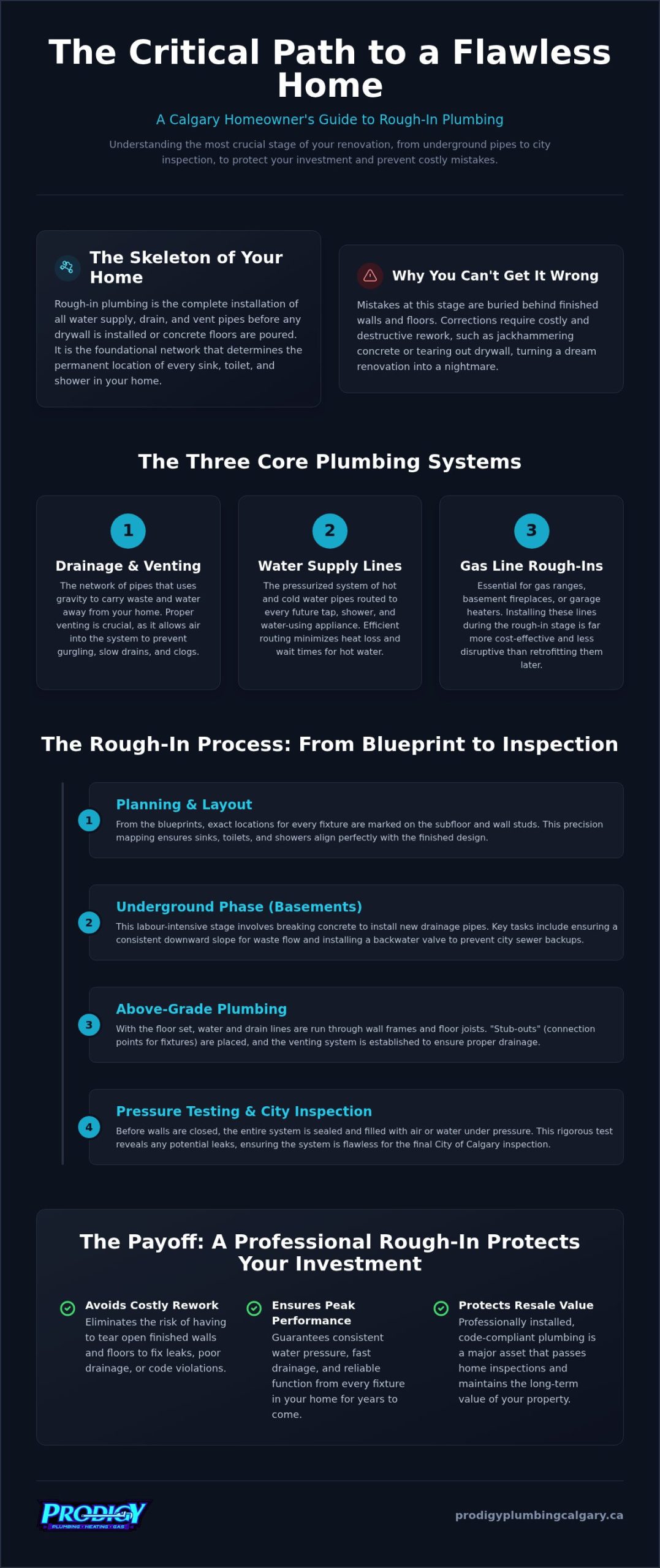
Rough-in plumbing is the stage where all the pipes are installed and connected before the drywall goes up or the concrete floor is poured. It is the foundation of modern plumbing systems. For rough in plumbing Calgary projects, this phase determines where every sink, toilet, and shower will eventually sit. It is a permanent decision. Unlike the “trim-out” stage, where fixtures like faucets and showerheads are attached, the rough-in involves the heavy lifting of routing lines through studs and under slabs.
In Calgary, most homes feature deep basements. This adds a layer of complexity because much of the rough in plumbing Calgary work happens beneath a concrete slab. If a drain line is off by even an inch, you might have to jackhammer the floor to fix it later. Getting it right the first time is about precision and foresight. It is the skeleton of your home; if the bones aren’t straight, the rest of the house will feel the impact for years.
The Three Main Components of a Rough-In
A complete rough-in involves three distinct systems working together to ensure your home stays dry and functional:
- Drainage and venting lines: These pipes carry waste away and allow air into the system. Proper venting ensures water flows smoothly without gurgling or slow drains.
- Water supply lines: This is the network of hot and cold pipes routed to every future tap and appliance. We focus on routing these efficiently to minimize heat loss and wait times for hot water.
- Gas line rough-ins: Many homeowners plan for gas ranges, basement fireplaces, or garage heaters. Installing these lines during the rough-in stage is much more cost-effective than trying to retro-fit them later.
Why You Can’t Afford to Get This Stage Wrong
Cutting corners during a rough-in leads to expensive headaches. Once the drywall is finished and painted, finding a leak or a poorly vented pipe means tearing your home apart. We realize that “opening walls” is a homeowner’s worst nightmare. A precise rough-in also ensures consistent water pressure and fast drainage throughout the house.
In the Calgary real estate market, unpermitted or poorly executed plumbing is a major red flag for home inspectors. A professional, code-compliant rough-in protects your investment. It ensures your home’s future resale value remains high and your daily life remains uninterrupted by plumbing failures. We take pride in doing this work with a level of care that means you never have to think about your pipes once the walls are closed.
The Rough-In Process: From Blueprints to City Inspection
The journey of a successful rough in plumbing Calgary project begins with a set of blueprints and a wax pencil. We start by marking the exact locations of every fixture on the floor and studs. This step ensures that the drain for your toilet and the supply lines for your vanity are exactly where they need to be before the concrete is poured or the walls are closed. Precision at this stage prevents the need for costly adjustments once the finishing work begins.
Understanding the ‘Underground’ Phase
For Calgary homeowners, the underground phase is often the most labour-intensive part of a basement development. This involves breaking existing concrete to reach the main sewer line and installing new drainage pipes. We prioritize proper sloping; gravity is the only thing moving waste out of your home, so every pipe must have a consistent downward grade. We also install a backwater valve during this phase. This device is a critical defense for Calgary basements, as it prevents city sewer backups from entering your home during heavy rainfall or system failures.
The ‘Rough-In Above Grade’ Phase
Once the floor is set, the work moves into the framing. This phase involves running the main stacks and branch lines through the walls and floors. We take care to drill through studs and joists without compromising the structural integrity of your home. Every fixture requires a “stub-out,” which is the short section of pipe that will eventually connect to your sink or toilet. Proper venting is also established here. Every fixture needs to breathe to prevent vacuums that cause slow drains and clogs. If you are planning a new bathroom or kitchen, our team can handle these complete rough-in plumbing stages with the quiet competence your project deserves.
Before the City of Calgary inspector arrives, the entire system undergoes a rigorous pressure test. We seal the lines and fill them with air or water to ensure there are zero leaks in the joints. This step is non-negotiable for us. We realize that a single loose fitting can cause thousands of dollars in water damage once the house is finished. We ensure every installation aligns with the National Plumbing Code of Canada. This adherence to national standards guarantees that your system is safe, efficient, and ready to pass the mandatory city inspection on the first try. A passed inspection tag is your signal that the “skeleton” of your home is sound and ready for drywall.
Basement vs. Kitchen vs. Bathroom Rough-Ins: Key Differences
While the basic principles remain the same, the logistical hurdles of a rough in plumbing Calgary project change significantly depending on the room. A basement bathroom requires different tools and planning than a second-storey kitchen island. Understanding these differences helps you set a realistic timeline and budget for your build. We realize that every home has its own quirks, especially in older Calgary neighbourhoods where existing lines might not be where you expect them.
Basement Development Challenges in Calgary
Most newer Calgary homes come with a basic basement rough-in provided by the builder. These are the PVC pipes sticking out of your concrete floor. However, these are rarely in the perfect spot for a custom layout. Moving them requires cutting into the slab and carefully rerouting lines to maintain the proper slope. We often recommend Professional Drain Cleaning for older homes before starting a basement rough-in. This ensures the existing main lines are clear of roots or debris before we connect new pipes. Also, many Calgary developments require a sump pump to manage ground water. This must be integrated into your initial plumbing plan to prevent future flooding.
Kitchen and Laundry Room Specifics
Kitchens present unique challenges, particularly with the popularity of island sinks. Since an island has no wall for a standard vent, we must install a specific loop vent to meet Alberta code. We also plan for modern conveniences like dedicated lines for refrigerator ice makers and high-capacity drains for dishwashers. In the laundry room, we always suggest a floor drain. It’s a simple safety feature that protects your home from a burst washing machine hose. There’s also the matter of clearance; we ensure there’s enough space for today’s deeper sinks, which sit lower than traditional basins.
Bathroom rough-ins are a puzzle of venting. In a small space, you have a toilet, shower, and often double vanities all competing for room within the studs. Proper layout here is vital to ensure every fixture drains quickly without pulling water from nearby traps. For commercial rough in plumbing Calgary projects, the requirements shift again. Retail spaces or offices often need grease interceptors or specific fixture counts based on occupancy. We handle these complex layouts with the same detail-oriented approach as our residential work, ensuring your business meets every municipal standard.
Planning Your Rough-In: Permits, Costs, and Calgary Code Compliance
Planning a rough in plumbing Calgary project involves more than just a layout. It requires strict adherence to the Alberta Plumbing Code and City of Calgary bylaws. While some homeowners consider the DIY route, the complexity of code compliance often leads to failed inspections and costly rework. We realize that the permit process can feel like a hurdle. It is actually your best protection against future leaks and safety issues.
Navigating City of Calgary Permits
The City of Calgary offers homeowner and trade permits. A homeowner can only pull a permit if they live in the home and do the work themselves. For 2026, the fee for a homeowner plumbing permit is $116.50. However, trade permits are mandatory for secondary suites and commercial spaces. During the rough-in inspection, the official looks for proper venting and the results of your pressure tests. You must pass this stage before insulation or drywall begins. If you cover the pipes too early, the inspector will likely require you to tear the walls down to reveal the work.
Budgeting for Your Plumbing Rough-In
Budgeting for a rough-in is primarily based on the number of fixtures. Each toilet, sink, and floor drain counts as a fixture unit. Moving an existing main stack is significantly more expensive than simply tapping into a line that is already in place. This is also the ideal time to check your home for Poly-B Piping. Since the walls are already open, replacing these problematic grey pipes is much more affordable now. If you are developing a basement, expect a building permit fee of approximately $333.84 for new developments or $205.92 for existing house renovations.
Most residential rough-ins take between two and five days to complete. This timeline depends on whether we are working with an open timber frame or a concrete basement floor. We coordinate closely with your other contractors to ensure the plumbing stage doesn’t bottleneck your renovation. If you need a team that understands the local permit landscape, you can reach out for professional rough in plumbing Calgary. We handle the technical details so your project moves forward without delay.
Why Professional Rough-In Plumbing Saves You Money and Stress
Professional rough-in plumbing is an investment in the long-term health of your home. Prodigy Mechanical brings over 15 years of industry experience to every project in the Calgary area. We have seen the consequences of DIY mistakes and cut corners, which is why we approach every job with quiet thoroughness. Choosing a licensed professional for your rough in plumbing Calgary project ensures that the most critical part of your home’s infrastructure is handled by someone who has seen it all before. We don’t just install pipes; we build the foundation for your daily comfort.
One of the greatest benefits of hiring our team is the peace of mind that comes with a system tested under pressure. We don’t consider a job done until we have verified that every joint and fitting is completely watertight. This process prevents the stress of discovering a leak after your beautiful new tile or drywall has been installed. By passing city inspections the first time, we help keep your entire renovation on schedule. We realize that delays in plumbing can ripple through your project, holding up framers, insulators, and drywallers. Our goal is to ensure your project moves forward without a single hitch.
The Prodigy Approach to Quality
Our team uses durable, high-quality materials that often exceed the minimum standards of the Alberta Plumbing Code. We believe in doing the job right the first time so you never have to open a wall to fix an avoidable error. We also maintain clean and organized work sites. Your home is not just a construction zone; it’s your living space. We treat it with respect, ensuring that we leave the site tidy at the end of each day. Communication is also a pillar of our service. We provide clear, honest updates so you always know exactly where your rough-in stands.
Ready to Start Your Calgary Project?
Coordination is vital for a smooth build. We work closely with your general contractor and other trades to ensure our work is completed at the optimal moment in the construction sequence. This seamless integration is why local homeowners trust Steve and the Prodigy team for their “hidden” plumbing needs. We take pride in our craft and our integrity, ensuring that no step is skipped and no detail is overlooked.
If you are looking for more tips on managing your renovation, feel free to explore our Complete Plumbing Guide. We are here to provide the steady, reliable service you need for a successful build. Contact us for a detailed rough in plumbing Calgary estimate today and move forward with your project with total confidence.
Secure Your Home’s Infrastructure with Confidence
A successful renovation depends on the quality of the work you can’t see. By prioritizing a code-compliant rough-in, you protect your home’s value and ensure a smooth path through City of Calgary inspections. We realize that the technical details of drainage slopes and venting are complex, but getting these right today prevents the high cost of repairs tomorrow. Whether you are developing a basement or building a custom kitchen, the “skeleton” of your plumbing must be precise and durable.
Prodigy Mechanical brings over 15 years of industry experience to every project. Our licensed and insured technicians maintain an A+ reputation for clean, reliable work that stands up to the most rigorous pressure tests. We take pride in our quiet competence and detail-oriented approach. If you’re ready to move forward with your build, Request a Professional Rough-In Quote from Prodigy Mechanical today. We are here to help you organize your rough in plumbing Calgary project with the steady, dependable service your home deserves. Your vision for a perfect home starts with a foundation that is built to last.
Frequently Asked Questions
How much does rough-in plumbing cost for a basement in Calgary?
The cost for a basement rough-in depends on the number of fixtures and whether we need to break concrete. For a standard three-piece bathroom, industry averages in Calgary typically range between $1,500 and $4,000. Moving existing main lines or adding a sump pump will increase the total. We provide detailed quotes based on your specific layout to ensure there are no surprises once the project begins.
Do I need a permit for a bathroom rough-in in Calgary?
Yes, a plumbing permit is mandatory for any project involving the installation or relocation of pipes. This includes adding a new basement bathroom or moving a kitchen sink. The City of Calgary requires these permits to ensure all work meets the National Plumbing Code of Canada. A passed inspection is necessary before you can close your walls with insulation or drywall, protecting your home’s future resale value and safety.
How long does a typical plumbing rough-in take to complete?
Most residential rough in plumbing Calgary projects take between two and five days to complete. The exact timeline depends on the complexity of the job, such as whether we are working in an open timber frame or cutting through a concrete basement floor. We coordinate with your other trades to keep the schedule moving. Once the pipes are installed and pressure tested, we schedule the city inspection to keep your renovation on track.
Can I do my own rough-in plumbing and have it inspected?
Homeowners in Calgary can obtain their own plumbing permits if they reside in the home and perform the work themselves. However, the work must still pass a rigorous city inspection based on the latest Alberta Plumbing Code. It is important to realize that gas permits must always be pulled by a qualified contractor. Many homeowners choose professional installation to avoid the stress of failed inspections or the high cost of fixing code violations later.
What is the difference between rough-in and finish plumbing?
Rough-in plumbing involves installing the “hidden” components of your system, such as drain lines, vents, and water supply pipes, while the wall studs are still exposed. This stage is the skeleton of your home. Finish plumbing, or “trim-out,” occurs after the walls are closed and painted. This is when we install the visible fixtures like faucets, toilets, and showerheads. Both stages are critical, but the rough-in requires the most structural planning and technical precision.
What happens if my plumbing rough-in fails inspection?
If a rough-in fails inspection, the city inspector will provide a report detailing the specific code violations. You must correct these issues and schedule a re-inspection before you can proceed with the rest of your renovation. Common reasons for failure include improper pipe sloping or incorrect venting. Our team focuses on precision from the start to ensure your rough in plumbing Calgary project passes on the first visit, preventing costly construction delays.
Should I replace Poly-B pipes during a rough-in renovation?
We strongly recommend replacing Poly-B piping whenever you have the walls open for a rough-in. These grey plastic pipes are known for deteriorating and causing sudden water damage in many Calgary homes. Replacing them during a renovation is significantly more cost-effective than doing it as a standalone project later. It is a proactive step that protects your new finishes and provides long-term peace of mind for your family and future buyers.
Does rough-in plumbing include the gas lines?
A complete rough-in often includes gas lines if you are planning for a gas range, fireplace, or garage heater. While these are technically separate from the water and waste lines, they are best installed during the same phase while the framing is accessible. Our licensed technicians handle both plumbing and gas fitting, ensuring all energy sources are safely routed and meet current safety codes. This integrated approach saves time and simplifies your project management.