

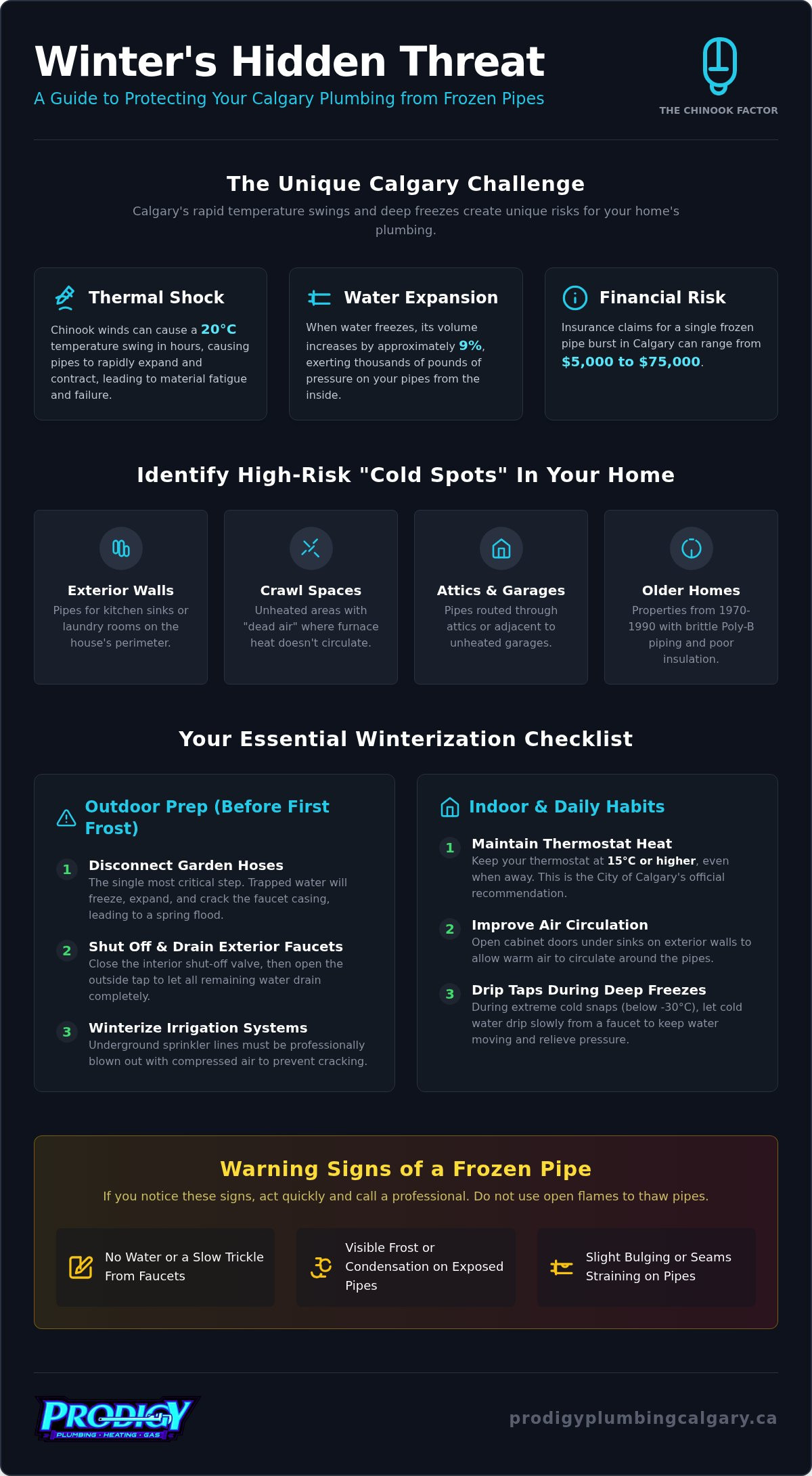
A single Calgary Chinook can swing the temperature by 20 degrees in hours, creating a cycle of thermal shock that is often more dangerous to your plumbing than a steady deep freeze. With insurance claims for frozen pipes ranging from $5,000 to $75,000, the stakes for your home are high. Learning how to prevent frozen pipes Calgary winter is about more than just surviving the next cold snap; it is about protecting your largest investment from avoidable water damage.
We understand the frustration of hearing conflicting advice about dripping taps or thermostat settings while the temperature drops below -30°C. You deserve clear, professional guidance that cuts through the confusion. This guide outlines the exact steps to winterize your property, including the City of Calgary’s recommendation to keep your thermostat at 15°C or higher. We provide a practical checklist for both indoor and outdoor pipe protection, giving you peace of mind whether you are at home or away. You will also learn how to identify the signs of a freeze before a pipe bursts, so you know exactly when to call for professional help.
Key Takeaways
- Learn why disconnecting garden hoses before the first September frost is the most critical step in protecting your exterior plumbing.
- Master the daily habits that explain how to prevent frozen pipes Calgary winter, including when to drip your taps and how to improve air circulation in cold spots.
- Identify the best insulation materials for your home’s unique layout, focusing on vulnerable dead air spaces like crawl spaces and basements.
- Understand how Calgary’s rapid Chinook temperature swings create pipe fatigue and why maintaining a minimum thermostat setting of 15°C is essential.
- Recognize the early warning signs of a frozen pipe and learn safe thawing techniques to avoid causing further damage or expensive repairs.
Understanding the Risks: Why Calgary Winters Are Harsh on Plumbing
Calgary’s climate is unique, and so are the challenges it presents to your home’s water systems. When water freezes, it expands by approximately 9% in volume. In the confined space of a copper or plastic line, this expansion exerts thousands of pounds of pressure per square inch. This force is often enough to rupture even the strongest materials. Learning how to prevent frozen pipes Calgary winter starts with recognizing that the ice itself isn’t what usually causes the burst; it is the immense water pressure trapped between the ice blockage and a closed faucet.
The “Chinook Factor” adds another layer of risk. Calgary is famous for rapid temperature swings where the mercury can jump 20 degrees in a single afternoon. These cycles cause pipes to expand and contract repeatedly, a process known as thermal shock. Thermal expansion in Calgary residential plumbing is the physical increase in volume that occurs when water or pipe materials react to our city’s extreme temperature shifts. Over time, this constant movement fatigues the joints and fittings, making them more likely to fail during the next deep freeze. In Calgary, the frost line typically reaches depths of seven to eight feet, meaning any shallow service lines or pipes near the foundation are under constant threat during the frost prevention program period from December to March.
The Problem with Older Calgary Homes
Homes built between 1970 and 1990 face specific vulnerabilities. Many of these properties were constructed with poly b piping, a material known to become brittle over time. When you combine aging plastic with Calgary’s thermal cycles, the risk of a catastrophic leak increases significantly. Different types of plumbing pipes react differently to cold, but older grey polybutylene is particularly susceptible to stress cracks. Additionally, the insulation in older rim joists often sags or degrades. This allows “micro-drafts” of -30°C air to blow directly onto the main water lines where they enter your home, freezing them in minutes despite the house being warm inside.
Common Vulnerability Points
To effectively manage how to prevent frozen pipes Calgary winter, you must identify the “cold spots” in your specific floor plan. Plumbing located in the following areas requires the most attention:
- Exterior Walls: Kitchen sinks or laundry lines located on the outer perimeter of the house.
- Unheated Crawl Spaces: Areas with “dead air” where heat from the furnace doesn’t circulate.
- Attic-Routed Lines: Pipes that run through the attic can freeze if ice damming blocks proper ventilation or if insulation is disturbed.
- Garage-Adjacent Plumbing: Bathrooms or wet bars located above or beside an unheated garage often lack a sufficient thermal barrier.
Essential Outdoor Winterization Steps Before the First Frost
In Calgary, the first overnight frost often arrives as early as September. Disconnecting your garden hoses is the single most effective way to begin your winterization process. If a hose remains attached, it traps a column of water inside the faucet assembly. Even a “frost-free” hydrant, which is designed to shut off deep inside the warm interior of your home, will fail if the water cannot drain out. When that trapped water freezes, it expands and splits the internal copper casing, often leading to a flooded basement the following spring when you first turn the water back on.
Outdoor kitchens and irrigation systems require similar diligence. Underground sprinklers must be professionally blown out with compressed air to clear the lines, as any residual moisture will crack the plastic piping when the ground reaches Calgary’s deep frost line. For outdoor sinks, ensure the supply lines are shut off internally and the taps are left in the open position to allow for thermal expansion. Taking these proactive steps is a core part of learning how to prevent frozen pipes Calgary winter and avoiding the high costs of emergency repairs.
Managing Exterior Faucets
Properly draining your hose bibs involves more than just turning a handle. You must first locate the internal shut-off valve, which is typically found in the basement or utility room near the ceiling. Once you have closed this valve, go outside and open the exterior tap fully to let the water drain. To ensure the line is completely empty, return to the internal valve and open the “bleeder valve.” This is the small metal cap on the side of the valve body. Have a small bucket ready to catch the few ounces of water that will drain out. This technique breaks the vacuum lock and ensures no water remains to freeze. Many homeowners find that these small, methodical steps are the most reliable way to protect your plumbing from freezing during extreme cold snaps. If you find your shut-off valves are seized or difficult to reach, a professional plumbing inspection can help you organize these systems properly before winter.
Sealing the Envelope
Cold air infiltration is a silent threat to your plumbing. Even a small crack in your home’s foundation can allow -30°C air to whistle directly onto a water line. Inspect your foundation for any gaps, especially where cable lines, gas pipes, or electrical conduits enter the home. Use outdoor-rated caulk or expandable spray foam to seal these entries. Check your dryer vent to ensure the flap closes tightly when not in use, as a stuck vent can act as a straw, pulling freezing air into your laundry room. By sealing these drafts, you maintain a consistent internal temperature and reduce the strain on your heating system during the coldest months.
Interior Protection: Insulating and Securing Your Home’s Plumbing
While exterior steps are your first line of defence, interior protection is what keeps your water flowing during a sustained -35°C cold snap. In Calgary, many older homes still rely on Poly-B piping. Unlike modern PEX, which has a small amount of flexibility, older Poly-B is rigid and prone to longitudinal splitting if the water inside expands. This makes interior insulation mandatory for these systems. Learning how to prevent frozen pipes Calgary winter involves identifying where your plumbing meets “dead air” spaces, such as unheated crawl spaces, basements, and the dark corners under kitchen sinks.
Choosing the right material is the first step in a successful winterization strategy. Pre-slit foam sleeves are the standard for straight pipe runs in accessible basements. For irregular fittings or large valves, fiberglass wrap provides better coverage. In high-moisture areas, rubber tape is an excellent choice because it provides a moisture barrier that prevents condensation from freezing on the pipe surface. Your plumbing and heating calgary systems must work in tandem; if the furnace cannot push warm air into a specific floor joist, the insulation alone may not be enough. For these high-risk lines, we often recommend electric heat trace cables that provide a consistent, low-wattage heat source directly to the pipe.
Insulating High-Risk Pipe Runs
Pipes located near rim joists or basement windows are the most vulnerable. These areas often experience the highest rate of heat loss through the foundation. When applying foam pipe sleeves, don’t just slide them on. Mitre the corners at a 45-degree angle to ensure a tight, seamless fit at every elbow. Any gap in the insulation near an exterior wall junction acts as a thermal bridge. This allows a localized freeze that can stop water flow to the rest of the house. Following professional standards for preventing and thawing frozen pipes ensures that these thermal bridges are eliminated before the temperature drops.
The Role of the Utility Room
The heart of your home’s freeze protection is the utility room. A furnace failure in January can lead to frozen pipes within hours. Regular servicing ensures your heating system won’t quit when you need it most. Similarly, keeping an eye on your hot water tank replacement Calgary needs is vital. An efficient tank maintains the temperature of your hot water lines, which helps radiate heat into wall cavities. We also recommend installing a smart leak detector near the main water shut-off. This provides an early warning if a pipe does fail, allowing you to act before significant damage occurs.
Daily Habits and Travel Tips to Keep Water Flowing in Sub-Zero Temps
When the forecast drops below -20°C, your daily routine becomes your best defence. Sustained cold creates a cumulative cooling effect on your home’s foundation and wall cavities. One of the simplest ways to manage how to prevent frozen pipes Calgary winter is to open cabinet doors under kitchen and bathroom sinks. This allows the ambient heat from your furnace to reach plumbing that is otherwise tucked away in cold, dark corners. It is a small adjustment that can prevent a localized freeze in an exterior-facing wall.
Maintaining a consistent internal temperature is equally vital. While it’s tempting to lower your thermostat at night to save on energy, drastic “set-backs” increase the risk of pipes reaching the freezing point during the coldest hours of the morning. The City of Calgary recommends keeping your thermostat set to at least 15°C. This baseline ensures that even if your furnace works hard to keep up, the air in your utility spaces stays warm enough to protect your water lines.
The “Drip” Strategy: Done Correctly
Running a tap is a proven method for preventing a burst, but it must be done with precision. The goal is to keep water moving through the pipes most vulnerable to the cold. Choose the tap furthest from where the main water line enters your home. A pencil-thin, continuous stream of cold water is sufficient. This movement makes it harder for ice to form; however, it also provides a critical pressure relief valve. If a freeze does start elsewhere in the line, the open tap prevents the pressure build-up that leads to a rupture. Always ensure your drain is clear before starting a drip. A slow drain can quickly turn a preventative measure into an accidental basement flood. Under the City of Calgary’s Frozen Pipes Prevention Program, which runs from December 1 to March 31, metered residents are charged a flat usage rate of 7 m3 per month for the period they are required to keep a tap running.
Vacation Prep for Calgary Homeowners
If you are planning a winter getaway, your preparation should include more than just packing. Insurance providers in Alberta often have strict clauses regarding home checks during the winter. If you are away for more than 48 hours, the safest course of action is to shut off your main water valve and drain the remaining water from your taps. Set your thermostat to a minimum of 16°C to account for potential furnace fluctuations. Arrange for a reliable neighbour or professional house sitter to check your home daily. They should verify that the heat is still running and check the taps to ensure everything is functioning correctly. If you aren’t sure where your main shut-off is located or how to drain your system, book a professional plumbing inspection to ensure your property stays protected while you are away.
When to Call a Calgary Plumber: Professional Winterization and Emergency Support
Recognizing a frozen pipe early can save you thousands in restoration costs. If you turn on a tap and only a trickle comes out, or nothing at all, you likely have a blockage. Inspect your exposed copper or plastic lines for frost build-up or visible bulging. These are clear signs that the ice has already expanded to a dangerous level. Understanding how to prevent frozen pipes Calgary winter includes knowing when a situation has moved beyond DIY measures. If you see water spraying or a hairline crack in the pipe, shut off your main water valve immediately. For situations where the pipe is intact but frozen, Prodigy Mechanical provides emergency plumbing Calgary services to thaw lines safely and inspect for hidden damage.
The value of a professional plumbing inspection before the winter season cannot be overstated. A licensed plumber can identify subtle risks that homeowners might miss, such as a failing shut-off valve or a “frost-free” hydrant that isn’t draining correctly. We have seen many cases where a simple twenty-minute fix in October prevented a five-thousand-dollar flood in January. Our team brings over 15 years of experience to every call, ensuring that your home is prepared for the specific thermal cycles that Calgary’s climate creates.
The Safe Thawing Process
Before applying any heat, you must open the affected faucet. This allows the melting ice and steam to escape, preventing a pressure burst that could rupture the line. Use a hairdryer or a portable space heater on a low setting to warm the pipe slowly, but never leave these devices unattended. Avoid using propane torches or any open flame; the risk of starting a house fire is far greater than the benefit of a quick thaw. If the pipe is located behind a wall, you may need to increase the room’s temperature significantly or use an infrared heat lamp. If the water doesn’t return within 30 to 45 minutes of gentle heating, the blockage is likely deeper in the system and requires a professional with specialized thawing equipment.
Long-Term Solutions and Upgrades
Once the immediate threat of a cold snap has passed, consider more permanent upgrades to your home’s infrastructure. If a specific pipe run freezes every year despite your best efforts, it may need to be rerouted away from an exterior wall during your next renovation. Upgrading older copper or brittle Poly-B to modern PEX piping is another wise investment. PEX is significantly more resilient to expansion and can often withstand a freeze-thaw cycle without rupturing. Scheduling a seasonal Winterization Audit with a licensed technician allows us to identify these vulnerabilities before the December frost. We check your insulation, test your internal shut-off valves, and ensure your home is truly ready for the extreme cold, giving you one less thing to worry about when the temperature drops.
Protecting Your Property Through the Calgary Winter
Managing a home during an Alberta winter requires a proactive approach to your plumbing system. Disconnecting garden hoses before the first frost and maintaining a consistent thermostat setting above 15°C are the foundations of a safe winter. Learning how to prevent frozen pipes Calgary winter is about consistency and attention to detail. Whether you are insulating vulnerable Poly-B lines or setting up a “drip” during a record-breaking cold snap, these small steps preserve your home’s integrity. You don’t have to wait for a crisis to secure your property.
If you are unsure about your shut-off valves or need a thorough assessment of your home’s vulnerabilities, our team is ready to assist. Our licensed Calgary technicians bring over 15 years of industry experience to every call. We are specialists in leak prevention and Poly-B pipe replacement, which means we know exactly where older Calgary homes tend to fail. Request a professional winterization inspection from Prodigy Mechanical to get ahead of the frost. Stay warm and rest easy knowing your home is prepared for whatever the season brings.
Frequently Asked Questions
Is it better to drip cold or hot water to prevent frozen pipes?
Drip cold water rather than hot to protect your plumbing. Cold water is sufficient to keep the line moving and provide the necessary pressure relief. Using hot water wastes energy and can deplete your hot water tank quickly during a cold snap. The primary goal is to prevent the standing water from reaching a freezing state and to ensure there is an open path for pressure to escape if ice begins to form.
At what temperature do pipes freeze in Calgary homes?
Pipes typically begin to freeze when the outside temperature stays below -7°C for several consecutive hours. However, in Calgary, the risk to interior plumbing increases significantly when the outdoor temperature drops below -20°C. At these extremes, even pipes inside your home can reach the freezing point if they are located in unheated areas or near drafts. Maintaining your thermostat at a minimum of 15°C helps mitigate this risk.
Will my insurance cover a burst pipe if I was away on vacation?
Most Alberta insurance policies require you to have a competent person check your home daily or every 48 hours if you are away during the heating season. If you fail to arrange these checks or don’t shut off your water supply, your claim for water damage may be denied. Always check your specific policy’s vacation clause to ensure you are meeting the requirements for coverage during a Calgary winter.
Can pipes freeze if the heat is on in the house?
Yes, pipes can freeze even if your thermostat is set correctly. This often happens in dead air zones like crawl spaces, attics, or kitchen cabinets against exterior walls where warm air from the furnace cannot circulate. If a draft of cold air hits a pipe directly through a foundation crack, it can freeze regardless of the room’s temperature. This is why opening cabinet doors is a key part of how to prevent frozen pipes Calgary winter.
How do I find my main water shut-off valve in a Calgary basement?
Your main water shut-off valve is almost always located in the basement, near the front of your house. Look for the water meter; the valve will be situated on the pipe leading into the meter from the floor or wall. It usually features a bright handle, either a round wheel or a lever. Knowing this location is vital so you can act quickly if you discover a leak or a burst pipe during a freeze.
Is PEX piping completely frost-proof?
PEX piping is not entirely frost-proof, though it is much more resilient than copper or Poly-B. Its cross-linked structure allows the material to expand slightly as water freezes, which can prevent a rupture during a minor freeze. However, sustained extreme cold or repeated freeze-thaw cycles can still cause PEX to fail. It is always better to focus on prevention rather than relying on the pipe’s material strength to survive an Alberta winter.
What should I do if I find a crack in my pipe after it thaws?
If you discover a crack after the line thaws, you must shut off the main water valve immediately. Do not attempt to use the fixture or patch the pipe with tape or putty. Even a small hairline fracture can fail catastrophically under normal house pressure. Contact a licensed plumber to cut out the damaged section and perform a professional repair to ensure your system is safe and leak-free for the long term.
Does a Calgary Chinook increase the risk of pipes bursting?
A Calgary Chinook definitely increases the risk of plumbing failures. The rapid warming causes ice plugs to shift and melt unevenly, which can lead to sudden pressure surges. Additionally, the cycle of freezing and thawing creates thermal shock, which fatigues pipe joints and older materials like Poly-B. These temperature swings are often when weakened pipes finally give way, leading to unexpected leaks once the deep freeze subsides and the water begins to flow again.