
What if the secret to a comfortable Calgary winter isn’t a more powerful furnace, but a system that doesn’t rely on blowing air at all? Most local homeowners accept dry skin, itchy eyes, and noisy ductwork as the standard price for staying warm. You likely recognize the frustration of uneven room temperatures and the steady climb of Alberta’s natural gas rates. Hydronic heating offers a different path by using water to move heat through your home, providing a level of consistent comfort that traditional forced-air systems simply can’t match.
It’s a reliable solution that prioritizes your health and your monthly budget. In this complete 2026 guide, you’ll discover how these water-based systems operate and the specific options available for your property. We will also look at the latest building codes and provincial permit requirements to help you decide if a retrofit is a practical choice for your Calgary home.
Key Takeaways
- Learn why water-based systems provide more consistent warmth and better air quality than traditional forced-air furnaces.
- Compare different hydronic heating options like radiant floor systems and radiators to find the best fit for your home’s layout.
- Discover how to reduce energy waste by organizing your home into custom heating zones that only warm the rooms you use.
- Determine if your existing Calgary property is a candidate for a retrofit or if these systems are best reserved for new construction.
- Understand why licensed gas-fitting expertise is essential for a safe installation and long-term system reliability.
What is Hydronic Heating? Understanding Water-Based Comfort
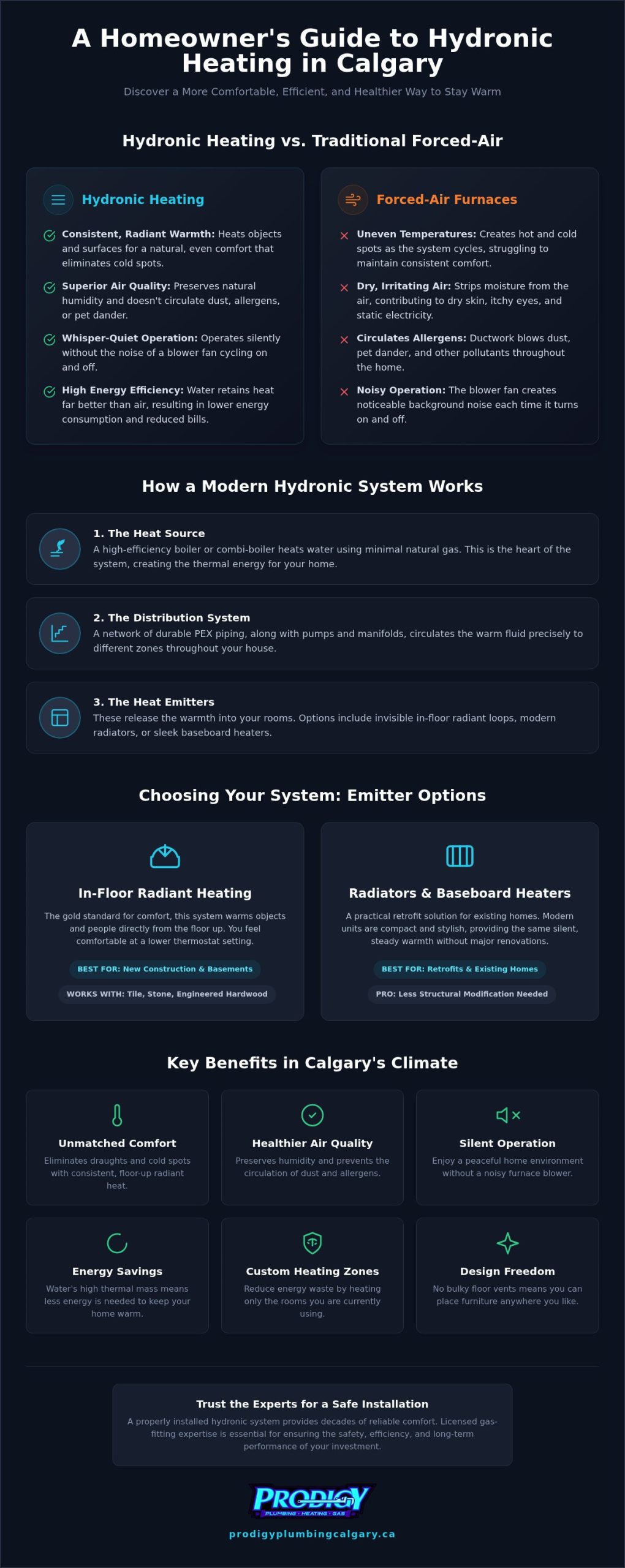
Hydronic heating is a method that uses liquid to distribute warmth via pipes to radiators or floor loops. It relies on a closed-loop system where water, or sometimes a glycol mixture to prevent freezing, circulates through your home. Unlike a tap that uses water once, this system cycles the same fluid repeatedly. It moves thermal energy from a central boiler to various rooms without losing volume. This process is highly efficient because water has a much higher thermal mass than air. Once the water is heated, it retains that temperature for a long time, providing a steady and reliable source of warmth.
To understand What is Hydronic Heating? and why it’s gaining popularity in Alberta, you have to look at how it interacts with the structure of your home. Instead of simply warming the air, it warms the objects and surfaces in a room. This creates a more natural feeling of comfort, similar to the way the sun warms your skin on a clear winter day in Calgary.
Hydronic vs. Forced Air: A Quick Comparison
Most Calgary homes rely on forced-air furnaces that blow heated air through a network of ducts. This often leads to a “dry air” problem, which is already a struggle in our semi-arid climate. Furnaces tend to strip moisture from the air, leading to dry skin and static electricity. Hydronic systems don’t move air, so they help preserve your home’s natural humidity levels. They also eliminate the problem of circulating dust, pet dander, and allergens throughout your living spaces. Without a loud blower fan turning on and off, your home remains significantly quieter, offering a peaceful environment even during the coldest nights.
The Components of a Modern Hydronic System
A functional hydronic heating setup consists of three main parts that work together to maintain comfort. Each component plays a specific role in the movement of heat:
- The Heat Source: This is typically a high-efficiency boiler or a combi-boiler. These units are designed to heat water quickly while using minimal natural gas.
- The Distribution: Flexible PEX piping carries the warm fluid. Pumps and manifolds act as the traffic control system, directing the right amount of heat to specific zones in the house.
- The Emitters: These are the parts you actually see or feel. They include radiators, baseboard heaters, or in-floor radiant loops tucked beneath your flooring.
By choosing high-quality components and professional installation, you ensure the system operates smoothly for decades. This setup allows for precise control over your home’s environment, making it a dependable choice for the local climate.
Types of Hydronic Heating Systems for Modern Homes
Choosing the right delivery method for your home depends on whether you are building new or updating an existing space. The flexibility of water as a medium means your hydronic heating system can be tailored to your specific layout. While some homeowners prefer a completely invisible setup, others opt for modern wall units that provide targeted warmth. Understanding the different Types of Hydronic Heaters and emitters helps you maximize both efficiency and comfort.
In-Floor Radiant Heating
Radiant floor heating is the gold standard for comfort, particularly in Calgary basements where concrete floors can feel like ice for half the year. This system uses thermal radiation to warm the objects and people in a room directly, rather than just heating the air. Because the heat starts at your feet, you feel comfortable at a lower thermostat setting. This method is highly compatible with tile and stone, which hold heat exceptionally well. It also works with many engineered hardwoods designed for radiant loops. For new builds, this is the most popular choice as it eliminates the need for floor vents and allows for total freedom in furniture placement.
For older Calgary homes where a full floor tear-out isn’t feasible, baseboard and radiator systems offer a practical retrofit path. Modern radiators are much more compact than the heavy cast-iron units of the past. They provide the same silent, steady warmth without the dust circulation of a furnace. These systems are easier to install in finished spaces because they require less structural modification than in-floor loops.
Boilers and Combi-Units
The boiler acts as the heart of the system, and modern technology has made these units incredibly efficient. High-efficiency condensing boilers are often wall-mounted, which frees up valuable floor space in your mechanical room. Many Calgary homeowners are now moving toward combi-boilers. These versatile units provide both space heating and domestic hot water on demand, eliminating the need for a separate storage tank. When evaluating your upgrade, you might want to compare these systems with a standard Hot Water Tank Replacement Calgary to decide which setup offers the best return on investment for your specific needs.
If you prefer a hybrid approach, hydronic air handlers are another option. These units use hot water from your boiler to warm air that is then moved through your existing ductwork. This provides a “softer” heat that feels less dry than a traditional gas furnace. If you are unsure which system suits your property, our team can help you evaluate your current heating footprint and recommend a reliable solution.
The Benefits of Hydronic Heating in Calgary’s Climate
Calgary winters demand more from a heating system than basic operation. Traditional furnaces often lose significant energy through leaky ductwork. Hydronic heating eliminates this waste by moving heat through sealed pipes. This transition to water-based delivery can lead to energy savings of 20% to 40% compared to forced-air systems. Because the heat is transferred via radiation rather than blowing air, you also avoid the “burnt dust” smell that often accompanies the first cold snap of the year. It’s a cleaner way to stay warm that doesn’t circulate allergens or pet dander through your home.
You gain precise control through zoned comfort. Instead of one thermostat for the whole house, you can set the bedroom to a cooler temperature while keeping the living room warm. This prevents wasting energy on empty rooms. Boilers are also known for their impressive longevity within a hydronic heating system. A standard furnace might last 15 years, but a well-maintained boiler can often serve a home for much longer. It’s a steady, long-term investment in your property’s infrastructure that provides consistent comfort year after year.
Managing Calgary’s Extreme Cold
When temperatures drop to -30°C, consistency is everything. Hydronic systems use thermal lag to their advantage. As a furnace cycles on and off, it often creates “cold spots” between cycles. A water-based system holds its temperature longer, providing a more even heat throughout the day. For pipes located near exterior walls or in colder zones, we often use a glycol-water mix. This antifreeze protection ensures the system remains safe even during prolonged Calgary cold snaps. It provides peace of mind when the weather is at its worst.
Calgary’s Hard Water and Your Boiler
Our local water is known for its high mineral content. This mineral-rich water can lead to scale build-up inside heat exchangers, which reduces efficiency over time. We use closed-loop filtration and specific water treatments to protect the internal components from damage. Calgary’s water hardness requires specific boiler maintenance to ensure 20+ years of service. Regular check-ups help prevent property damage and keep the system running at peak performance. By managing the water quality, you protect the heart of your home’s heating system and ensure it operates reliably for decades. If your boiler is already showing signs of reduced output or unusual cycling, reviewing a comprehensive boiler repair Calgary guide can help you identify whether a tune-up or a component replacement is the right next step.
Is Hydronic Heating Right for Your Calgary Home?
Deciding to install a new system depends heavily on your property’s current state and your long-term goals. For new builds, hydronic heating is a simple choice because the installation happens before the floors are poured or the walls are finished. Retrofitting an older home requires more strategy but offers a significant return on investment. Over a 15-year period, the reduction in natural gas consumption often helps offset the initial setup costs. If you own a home built between the late 1970s and mid-1990s, you likely have specific piping concerns. Upgrading your heating is the best time to consult our Poly-B Piping in Calgary Guide to see if you should replace your domestic water lines at the same time. Doing both jobs together saves on labour and prevents future leaks from damaging your new heating investment.
Evaluating Your Current Infrastructure
You need to look at what’s already behind your walls before choosing a system. If you have existing ductwork, you might keep it for a hybrid system or remove it entirely to gain ceiling height in a basement. We also check your electrical panel. Modern boiler pumps and controls require dedicated circuits. If your panel is already full, you might need a small upgrade to handle the new mechanical load. Basements are usually the easiest place to start because the concrete slab is accessible. It’s often the first step for Calgary homeowners looking to test the comfort of radiant heat before committing to a whole-house conversion.
The Retrofit Challenge
Upper floors present a different set of obstacles, but they aren’t insurmountable. You don’t always need to tear up hardwood to get the benefits of water-based heat. Slim-line radiators are a popular choice for bedrooms because they provide quiet warmth without a major renovation. For existing basements, the “over-pour” method involves laying thin pipes on top of the old concrete and covering them with a thin layer of specialized floor topping. This adds very little height to your floor but provides maximum comfort. If a full conversion feels too complex, a hydro-furnace serves as a reliable middle ground. It uses your boiler to heat air, giving you a softer warmth while using your existing vents. This allows you to transition to a boiler-based system without abandoning your current ductwork.
If you’re ready to see what’s possible for your property, contact our licensed team for a thorough site evaluation. We’ll help you determine the most efficient path forward for your specific home layout.
Professional Installation and Maintenance in Calgary
In Alberta, installing or altering a hydronic heating system is a regulated task that requires a specific Hydronic permit. This isn’t just an administrative hurdle; it ensures the safety and integrity of your home’s infrastructure. All work involving natural gas must be performed by a certified, licensed mechanical contractor. Homeowners aren’t permitted to perform this work themselves. At Prodigy Mechanical, we bring over 15 years of experience to every project, ensuring your plumbing and heating in Calgary meets the highest standards of the 2024 Alberta Building Code.
Our approach starts with a detailed heat-loss calculation. We don’t rely on guesswork or generic square-footage estimates. Instead, we analyze your home’s insulation, window surface area, and orientation to determine the exact boiler size required. Once the system is installed, we perform a final balancing to ensure every room receives the correct amount of heat. This methodical process ensures your system operates at peak efficiency from day one. For a deeper look at what this process involves from start to finish, our guide to boiler installation in Calgary covers the latest 2026 efficiency regulations and the technical requirements for a precision setup.
The Importance of Heat-Loss Calculations
Guessing the boiler size is a common mistake that leads to short-cycling, where the unit turns on and off too frequently. This wears out components and drives up gas bills. Calgary’s altitude and extreme design temperatures mean that standard settings rarely provide peak performance. A true hydronic specialist understands how to adjust for our thin air and -30°C cold snaps. This precision is what separates a specialized installation from a standard plumbing job. It ensures your hydronic heating system provides the comfort you expect without wasting energy.
Protecting Your Home
Modern systems include emergency shut-off features and sophisticated leak detection sensors to protect your property. These components provide an extra layer of security for your mechanical room. While these systems are incredibly reliable, knowing you have access to Emergency Plumbing Calgary provides essential peace of mind. Our team is familiar with the complexities of water-based heat and can respond quickly if a component requires attention. For issues specific to your boiler, our detailed resource on boiler repair in Calgary outlines the most common failure points and what to expect from a qualified technician.
Annual maintenance is the key to a 20-year system life. A professional boiler tune-up involves cleaning the heat exchanger, testing the water chemistry, and verifying pump operation. This proactive care identifies small issues before they become expensive repairs. Contact Prodigy Mechanical today for a hydronic heating consultation to discuss your home’s specific needs and start your journey toward a more comfortable, efficient winter.
Investing in Lasting Comfort for Your Calgary Home
Investing in a water-based system is a commitment to a higher standard of living in our unique climate. By choosing hydronic heating, you eliminate the dust and dry air associated with traditional furnaces while gaining precise, zoned control over your home’s temperature. Whether you are planning a new basement development or looking to modernize an older property, the efficiency and longevity of a high-efficiency boiler system provide a reliable return on your investment.
Prodigy Mechanical brings over 15 years of local experience to every project. As licensed Calgary gas fitters, we specialize in the technical precision required for these advanced systems. We focus on thorough heat-loss calculations and careful system balancing so your home stays warm even during our harshest winter cold snaps. Our team is ready to help you navigate the transition from noisy ductwork to silent, radiant comfort.
Take the first step toward a more efficient and comfortable home today. Request a Professional Hydronic Heating Quote and let our specialists design a system that works for your specific needs. We look forward to helping you protect your property and improve your indoor environment.
Frequently Asked Questions
Is hydronic heating more expensive to run than a gas furnace in Calgary?
Hydronic heating is typically more cost-effective to operate than a traditional gas furnace because it eliminates heat loss through ductwork. While natural gas remains the fuel source for most boilers, the system’s ability to maintain steady temperatures means the unit cycles less frequently. This efficiency helps lower your monthly energy bills, especially during long Calgary winters. You also gain savings through zoning, which ensures you aren’t paying to heat unused rooms in your home.
Can I add radiant floor heating to an existing home without ripping up floors?
You can add radiant comfort to an existing home using the over-pour method on concrete slabs or by installing slim-line radiators. These options avoid the need for a total floor tear-out. For upper levels, specialized panels can be installed under certain flooring types, though this depends on your home’s structural capacity. It’s often easier to start with a basement retrofit where the concrete is accessible, providing a warm foundation for the rest of your living space.
Do hydronic heating systems ever leak inside the walls or floors?
Leaking is extremely rare when a system is installed correctly using modern PEX piping and professional manifolds. These materials are designed to be durable and flexible, resisting the corrosion that affected older metal systems. Modern boilers also include pressure sensors and automatic shut-off valves to protect your property. Regular maintenance by a licensed specialist ensures that connections remain secure, preventing property damage and giving you long-term, much-needed peace of mind.
How long does a typical hydronic boiler last compared to a furnace?
A high-quality hydronic boiler often lasts 20 years or more, whereas a standard gas furnace typically requires replacement after 15 years. The longevity of a boiler comes from its robust construction and fewer moving parts that are subject to wear. With consistent annual service, these units remain efficient for decades. This extended lifespan makes the initial investment in a water-based system a practical choice for Calgary homeowners looking for long-term reliability and value.
Does hydronic heating work with air conditioning systems?
Hydronic systems do not provide cooling directly because they lack the ductwork needed to move chilled air. Homeowners usually install a separate ductless mini-split system or keep existing ducts for a standalone air conditioner. Another option is a hydro-furnace, which uses a boiler to heat air that travels through vents. This allows you to use the same ductwork for both your heating and your cooling needs while still enjoying the efficiency of a boiler.
What kind of maintenance does a hydronic system require annually?
Annual maintenance involves a comprehensive boiler tune-up to ensure the heat exchanger is clean and the burners are firing correctly. A specialist will also test the water chemistry and the concentration of glycol to prevent internal corrosion or freezing. We check the expansion tank, circulating pumps, and zone valves to verify everything is moving smoothly. This proactive care prevents unexpected breakdowns during cold snaps and keeps your system running at peak performance for years.
Can I use hydronic heating to melt snow on my Calgary driveway?
You can definitely use a specialized hydronic snow-melt system to keep your Calgary driveway and walkways clear. These systems circulate a warm glycol-water mixture through tubes embedded in the concrete or asphalt. A sensor detects falling snow or ice and activates the boiler automatically. It eliminates the need for shovelling or harsh salt, protecting your landscaping and your concrete surfaces from damage while providing a safe, ice-free path to your front door.
Is hydronic heating compatible with smart thermostats like Nest or Ecobee?
Modern hydronic systems are fully compatible with smart thermostats like Nest or Ecobee. These devices allow you to manage multiple heating zones from your phone, which maximizes your energy savings. Because boilers operate differently than furnaces, a specialized relay or wiring adapter is sometimes required to ensure the thermostat communicates correctly with the zone valves. Our team can organize the setup to ensure your smart home technology integrates perfectly with your high-efficiency hydronic heating system.