

You wake up at midnight to the sound of rushing water and find your basement floor is already disappearing under a cold, grey pool. It’s a moment of pure panic that every homeowner dreads; the fear of a ruined home and a massive repair bill can be overwhelming. We understand that when you’re facing a plumbing emergency, the first few minutes are the most critical for protecting your property and your wallet. You don’t have to be a master plumber to take control of the situation before help arrives.
In this guide, you’ll learn how to identify the source of the leak, manage the immediate crisis, and mitigate expensive water damage with a clear, step-by-step checklist. We’ll show you how to locate your main water shut-off valve, assess whether the problem is a minor leak or a major burst, and organize your space to minimize repair costs. By following these practical steps, you can move from uncertainty to action, ensuring your home is stabilized while you wait for a professional to arrive and finish the job.
Key Takeaways
- Learn to distinguish between a manageable fixture leak and a high-priority crisis that requires immediate intervention.
- Protect your property during a plumbing emergency by quickly locating the main shut-off valve and turning off your water heater.
- Discover how Calgary’s unique environmental factors, like hard water and rapid temperature shifts, contribute to sudden pipe and tank failures.
- Assemble a simple home readiness kit with the specific tools and safety gear needed to mitigate damage while help is on the way.
- Save on long-term costs by prioritizing licensed professionals who provide per-job pricing transparency rather than unpredictable hourly rates.
Is it a Plumbing Emergency? The Essential Identification Checklist
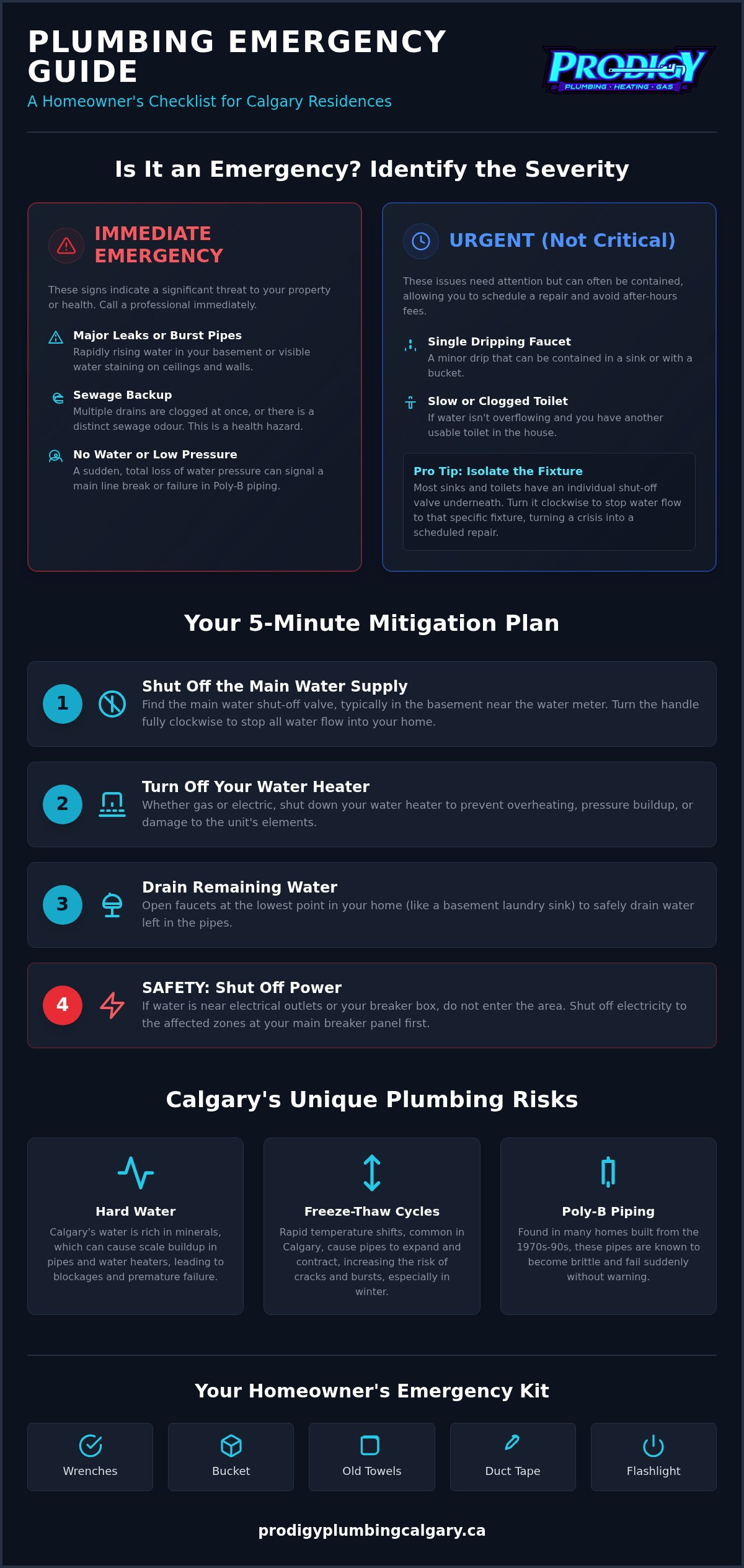
When water starts pooling or a pipe suddenly bursts, your first instinct is to call for help immediately. However, not every plumbing issue requires an immediate dispatch. A true plumbing emergency involves a significant risk to your property’s structure, a complete loss of essential services, or a direct threat to your family’s health. Understanding the complexity of plumbing systems helps you realize that while some problems look scary, they are often manageable in the short term if you know how to stabilize them.
Don’t ignore the “silent” signs of trouble. The faint smell of rotten eggs could indicate a gas leak near your water heater; a sewage smell in the basement often points to a main line backup. These situations, along with a sudden drop in pressure that might signal a failure in older Poly-B piping, require a rapid response. In Calgary, many homes built between the 1970s and 1990s still have these grey plastic pipes. A small damp spot on the drywall could be the first sign of a system-wide failure that needs professional attention before it becomes a total home flood.
Signs of an Immediate Crisis
Rapidly rising water levels in your basement or crawlspace are the clearest indicators of a crisis. If you see water staining on your ceilings or walls, it means a pipe has likely failed behind the drywall and is actively leaking. You should also watch for multiple clogged drains. When your kitchen sink, shower, and toilet all stop draining at once, you are likely facing a main sewer line blockage. This is a health hazard that cannot wait for a convenient appointment.
Urgent vs. Emergency Situations
Many homeowners struggle to distinguish between “urgent” and “emergency.” If you have a single dripping faucet or a slow toilet, you can usually isolate that specific fixture by turning its individual shut-off valve. This simple action turns a midnight crisis into a scheduled repair for the next morning. By waiting for standard business hours, you avoid the higher dispatch fees associated with after-hours calls.
If the water flow is contained and you still have access to other sinks or toilets, the situation is urgent but not an active plumbing emergency. This calm assessment protects your home while keeping your repair costs predictable. We always recommend checking if the problem is limited to one area before making that emergency call. Taking a moment to breathe and evaluate the situation can save you hundreds of dollars in service fees.
Immediate Steps Before Your Calgary Plumber Arrives
Once you have confirmed a plumbing emergency and called for assistance, the next thirty minutes are vital for protecting your property. You don’t have to wait idly for a technician to arrive. Taking proactive steps can significantly reduce the cost of repairs and the time needed for cleanup. Your priority is to stop the source of the water and protect the surrounding structure from secondary damage like mould or warped subfloors.
First, locate your main water shut-off valve. In most Calgary homes, this is found in the basement, often near the water meter or where the main line enters the house. Turn the handle clockwise to stop the flow entirely. After the water is off, you must address your water heater. Whether it’s gas or electric, shut it down to prevent pressure build-up or damage to the internal elements. Once the system is deactivated, open the faucets at the lowest point in your home, such as a laundry tub, to drain any remaining water safely into the sewer.
During this time, document everything. Take clear photos of the burst pipe or the pooling water before you start cleaning up. These records are essential if you need to file an insurance claim later. If you’re dealing with Calgary’s winter weather, you might also want to review how to prevent pipes from freezing to avoid future repeats of this situation. Managing a plumbing emergency effectively requires a balance of speed and safety.
The 5-Minute Mitigation Plan
Focus on containing the spread. Move area rugs, electronics, and small furniture to a dry part of the house. If the water is near electrical outlets or your fuse box, do not step in the pool; go to your breaker panel and shut off power to those zones first. Use old towels and blankets to create barriers that direct water away from finished flooring or cabinets. If you need a hand with a complex situation, the team at Prodigy Mechanical can help you stabilize your system with professional care.
Dealing with Specific Clogs or Leaks
If the issue is limited to a single fixture like a toilet, look for the small silver valve behind the base and turn it off. This isolates the problem without cutting water to the rest of the house. Never pour chemical cleaners into a standing backup. These liquids are highly corrosive and create a safety hazard for the technician who has to clear the line. Instead, jot down a quick timeline of when the issue started and what happened just before the failure. This information helps your plumber diagnose the root cause much faster.
Calgary’s Unique Plumbing Risks: Hard Water and Freeze-Thaw
Calgary’s environment is notoriously tough on residential infrastructure. Between the high mineral content in the Bow and Elbow Rivers and the extreme temperature shifts of an Alberta winter, your home’s pipes are under constant stress. These local factors often turn a small maintenance oversight into a sudden plumbing emergency. Understanding why our geography and climate impact your home helps you spot trouble before it leads to a flooded basement or a failed water heater.
The Impact of Calgary Hard Water
Calgary’s water is classified as “very hard,” typically measuring between 155 and 191 parts per million. This mineral density leads to rapid scale buildup inside your pipes and appliances. In hot water tanks, this sediment settles at the bottom, creating an insulating layer between the burner and the water. You might hear a distinct “kettling” or popping sound as water bubbles through this sediment layer. This isn’t just a noise; it’s a sign that your tank is overheating and losing efficiency. If you notice these sounds or a drop in hot water volume, it’s wise to consult a Hot Water Tank Replacement Calgary guide to understand your options before a leak develops.
Beyond the water chemistry, Calgary’s “Chinook” weather patterns present a physical challenge. Rapid temperature swings of 20 degrees or more in a single day cause materials to expand and contract quickly. This movement puts immense pressure on pipe joints and seals. For homes built between the 1970s and 1990s, this stress is particularly dangerous for Poly-B piping. These grey plastic lines are known to become brittle over time, and the mechanical stress of a Chinook can be the final trigger for a major system failure.
Alberta Winter Preparedness
Prevention is your best defence against a winter plumbing emergency. Every autumn, ensure your outdoor garden hoses are disconnected. If a hose remains attached, water stays trapped in the hose bib; when it freezes, the ice expands back into the house, often bursting the pipe inside the wall. You won’t realize there’s a problem until you turn the water on in the spring and find water spraying behind your drywall.
Check unheated areas like garages or rim joists for exposed lines. Adding foam insulation sleeves is a simple, cost-effective way to protect these vulnerable spots. If you suspect a pipe is frozen because a faucet has stopped flowing, never use an open flame to thaw it. Use a space heater or hair dryer to apply gentle heat while keeping the faucet open. If you can’t restore flow or see a visible crack in the line, shut off your main water valve immediately and call for professional help.
The Homeowner’s Emergency Preparedness Kit
Preparation is the difference between a controlled situation and a total disaster. Having a dedicated kit ready means you aren’t searching for a flashlight or a wrench while your basement floor is disappearing under water. A plumbing emergency is stressful enough; don’t let a lack of basic supplies make it worse. You don’t need a truck full of professional gear, but a few specific items will help you stabilize your home until help arrives.
Your kit should include a high-quality flange plunger for toilets and a standard cup plunger for sinks. A basin wrench is also helpful for reaching the mounting nuts on faucets in tight spaces. For safety, keep heavy-duty rubber gloves and eye protection on hand. These are essential if you’re dealing with a sewage backup or if someone previously poured harsh chemicals down a drain. Modern homeowners should also consider smart leak sensors. Placing these small devices near your water heater, sump pump, or dishwasher provides an early warning that can prevent a crisis entirely.
Hardware Staples to Keep on Hand
Keep a roll of Teflon tape (also called pipe tape) in your kit. While it isn’t a permanent fix for a burst pipe, it can help improve the seal on a dripping threaded joint. You should also have several five-gallon buckets and a stack of heavy-duty shop towels. These towels absorb significantly more water than standard kitchen rolls and won’t fall apart when wet. Ensure you have a reliable LED flashlight with fresh batteries. Most plumbing emergency situations happen in dark corners, crawlspaces, or during power outages, so good visibility is vital for a safe repair.
Professional Knowledge as a Tool
The most valuable tool in your kit is knowing your home’s specific layout. Take the time to identify the exact location of any Poly-B piping in your house, as these lines require extra care during a freeze. You should also locate your sewer clean-out, which is usually a capped pipe sticking out of your basement floor or near the front of your property. Knowing where this is helps a technician clear a main line blockage much faster.
Learn how to read your water meter to check for hidden leaks. If you turn off all your faucets and the meter’s low-flow indicator is still spinning, you have water escaping somewhere in the system. If you’re unsure about the condition of your pipes or want a professional to help you organize your home’s defences, you can book a plumbing inspection with our team to identify vulnerabilities before they fail.
Choosing a Reliable Calgary Plumber for Emergency Repairs
Selecting a partner to handle your plumbing emergency is a decision that impacts your home’s long-term health. In a crisis, it’s tempting to hire the first available person, but verifying licensing and insurance is a step you can’t skip. A “cheap” unlicensed repair often leads to secondary failures that your insurance provider may not cover. You want a professional who understands that a quick fix isn’t a real solution. A licensed technician brings the quiet self-assurance needed to stabilize the situation correctly the first time.
Transparency in pricing is essential during high-stress situations. While some firms charge by the hour, per-job pricing offers a clear, upfront cost that doesn’t change if the repair takes longer than expected. This honesty reflects a business that values its reputation over a quick profit. Additionally, ensure your plumber is well-versed in local standards. Calgary follows the 2020 National Plumbing Code of Canada, and a technician with deep roots in the city will ensure every repair meets these specific safety requirements. At Prodigy Mechanical, we approach emergency plumbing Calgary with the calm competence that comes from over 15 years of local experience.
Red Flags to Avoid
Watch for vague pricing estimates that seem to shift once the technician is inside your home. A reliable professional should be able to provide a clear explanation of the work required before they begin. Another red flag is a plumber who refuses to explain the “why” behind a failure. If they can’t identify the root cause, such as a specific Poly-B weakness or mineral scale from hard water, the repair is likely just a temporary patch. You deserve a technician who treats your home with the same care they would their own.
The Prodigy Mechanical Difference
We pride ourselves on being an owner-operated business where accountability matters. When you reach out to us, you’re communicating directly with skilled technicians rather than a distant call centre. This direct line ensures that the person arriving at your door already understands the nuances of your situation. We don’t believe in quick, temporary patches that fail a month later. Instead, we focus on long-term solutions, providing the thoroughness and precision that Calgary homeowners have relied on for more than a decade. Our goal is to leave your home in better condition than we found it, ensuring your system operates smoothly for years to come.
Protecting Your Property with Confidence
Managing a plumbing emergency effectively comes down to the actions you take in the first thirty minutes. By locating your main shut-off valve and recognizing the specific risks posed by Calgary’s hard water and freeze-thaw cycles, you can significantly reduce potential damage. You’ve learned how to stabilize your system, assemble a basic preparedness kit, and distinguish between a minor leak and a major crisis. This knowledge ensures that you stay in control of your home’s safety even when the unexpected happens.
When you need professional support, look for a technician who values transparency and precision as much as you do. Prodigy Mechanical brings over 15 years of industry experience to every call. Our licensed and insured technicians use a per-job pricing model to ensure you never face hidden fees during a stressful repair. If you need a skilled hand to restore your home’s plumbing, contact Prodigy Mechanical for a reliable emergency response. With the right preparation and a trusted expert on your side, you can handle any pipe or fixture failure with quiet self-assurance.
Frequently Asked Questions
What is considered a plumbing emergency in Calgary?
A plumbing emergency is any situation involving active flooding, a total loss of water, or health hazards like sewage backups. This includes burst pipes caused by Calgary’s freeze-thaw cycles or a water heater that’s actively leaking. If the problem threatens your home’s structure or prevents you from using essential services, it requires immediate attention. Issues like a single dripping faucet are usually urgent but don’t qualify as a full crisis.
How do I shut off the main water valve in my house?
You can shut off the main water valve by locating the point where the water line enters your home, typically near the water meter in the basement. Most modern Calgary homes use a lever-style ball valve that you turn 90 degrees or a round gate valve that you turn clockwise until it stops. Closing this valve kills the pressure to your entire house. It’s the fastest way to stop a plumbing emergency from causing more damage.
Will insurance cover my plumbing emergency and water damage?
Most Alberta homeowner policies cover sudden and accidental water damage, such as a burst pipe or a failed tank. However, insurance companies often deny claims for gradual leaks or damage caused by a lack of maintenance. You should document the area with clear photos and call your agent immediately. They’ll confirm if your policy includes sewer backup riders or coverage for older materials like Poly-B piping.
Why are my pipes making a loud banging noise during an emergency?
Loud banging noises, known as water hammer, happen when water pressure changes suddenly or air gets trapped in the lines. During a plumbing emergency, a burst pipe or a failing valve can cause these pressure surges. The noise signals that the pipes are physically shifting against their supports. Shutting off the main water valve usually stops the banging and prevents the mechanical stress from causing more joints to fail.
Can I use a chemical drain cleaner for an emergency clog?
You shouldn’t use chemical drain cleaners during a total backup or a plumbing emergency involving a clog. These liquids are highly corrosive and can damage your pipes, especially older metal or plastic lines. If the cleaner doesn’t clear the blockage, it sits in the pipe as a pool of caustic acid. This creates a severe safety risk for the technician who has to dismantle the pipe to clear it.
How much does an emergency plumber cost in Calgary?
The cost of an emergency plumber depends on the severity of the issue and whether the call happens during standard business hours or late at night. Most reputable companies charge a dispatch fee plus the cost of the repair. We recommend choosing a firm that offers transparent per-job pricing. This ensures you know the total cost before the work begins, protecting you from unpredictable hourly rates during a crisis.
What should I do if I smell gas near my water heater?
If you smell gas near your water heater, you must evacuate your home immediately and leave the door open. Don’t turn any lights on or off, as a small spark could ignite the gas. Once you’re safely outside, call your local gas provider or emergency services. Gas leaks are life-threatening situations that require professional detection equipment to resolve safely before any plumbing repairs can begin on the unit.
How do I know if my burst pipe is caused by Poly-B?
You can identify Poly-B piping by its distinct grey colour and the “PB2110” code stamped on the side of the line. If your burst occurred at a joint where a grey pipe met a copper fitting, it’s a common sign of failure. These pipes are notorious for becoming brittle over time. If one section has failed, it often indicates that the entire system is at risk for another plumbing emergency.