

Imagine waking up to the sound of rushing water in your basement, only to find that a single grey pipe has quietly failed behind your drywall. For many homeowners in Calgary, this isn’t just a bad dream; it’s the daily reality of living with poly b plumbing. You likely bought your home for its character or location, not to worry about the hidden chemistry of your pipes. It’s stressful to deal with rising insurance premiums or the threat of a cancelled policy just because of the materials used when your house was built between 1978 and 1995.
We want to help you regain control and protect your investment. This guide will show you exactly how to identify these pipes, explain why Calgary’s water chemistry makes them a unique risk, and outline the steps for a professional assessment. From spotting the “PB2110” stamp to understanding your insurance options, you’ll find everything you need to secure your home’s future and find peace of mind. Knowing the state of your plumbing is the first step toward keeping your property dry and your coverage intact.
Key Takeaways
- Learn how to identify grey polybutylene pipes in your mechanical room using a simple five-step visual inspection.
- Understand why Calgary’s water treatment chemicals can accelerate pipe degradation and why internal wear is often invisible from the outside.
- Discover the specific insurance requirements for poly b plumbing in Calgary and how proactive management helps maintain your home’s coverage.
- Get practical maintenance tips for regulating water pressure and temperature to reduce the immediate risk of leaks in your system.
- Explore the surgical replacement process designed to restore your home’s plumbing health with minimal disruption to your drywall and daily routine.
What is Poly-B Plumbing and Why Was It Used in Calgary?
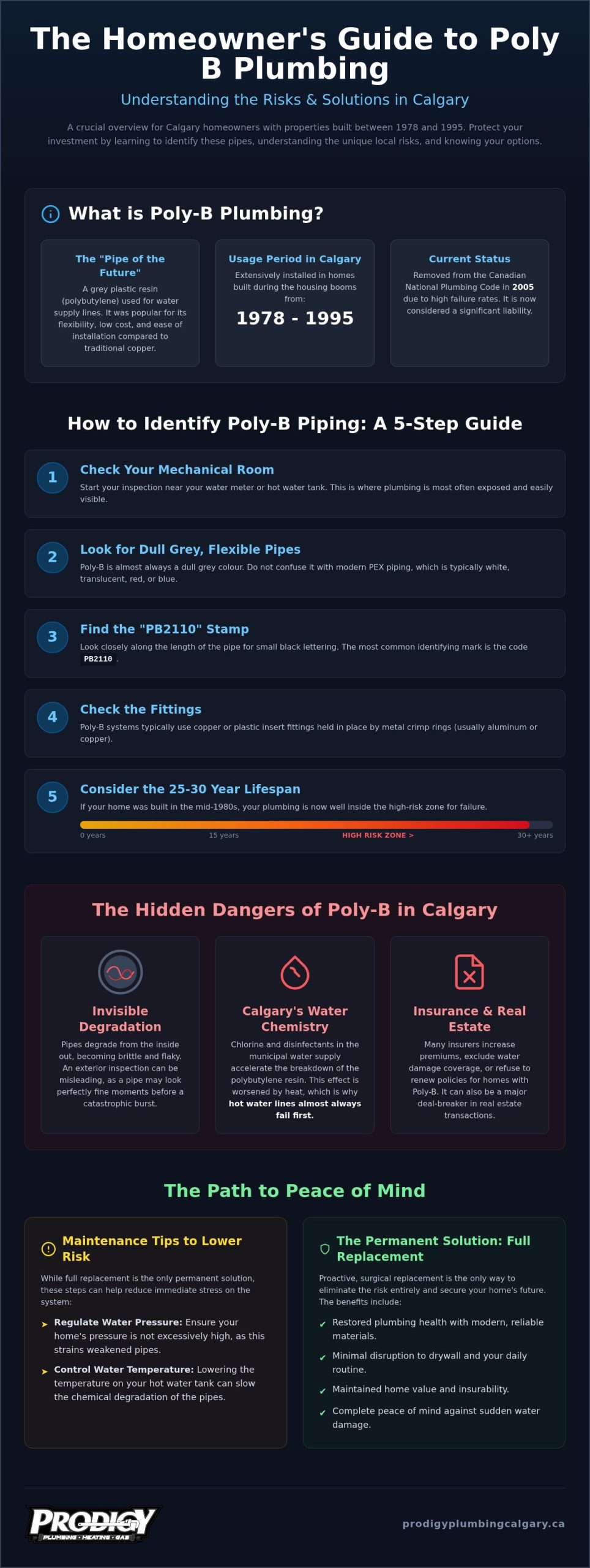
Polybutylene, commonly known as poly b plumbing, is a grey plastic resin used for water supply lines in residential construction. If you’ve asked What is Poly-B Plumbing, it’s a material that was once hailed as the “pipe of the future” because it was flexible, easy for crews to install, and far more affordable than traditional copper. Developers in growing neighbourhoods across the city used it extensively to keep up with the housing demand during the building booms of the eighties and early nineties. If your home was built between 1978 and 1995, there’s a strong chance this material is behind your walls.
While it seemed like a practical solution then, the industry’s perspective shifted as failures began to surface. The Canadian National Plumbing Code officially removed polybutylene as an approved material in 2005. This wasn’t a sudden government mandate for immediate removal, but it signalled that the industry no longer viewed the material as a reliable long-term choice for pressurized water systems. Today, it’s primarily seen as a legacy material that requires careful monitoring.
How to Recognize Poly-B Pipes
Identifying this material is straightforward if you know where to look. Start in your mechanical room or near your water meter. You are looking for a distinct, dull grey flexible pipe. Don’t confuse it with PEX, which is usually white, translucent, red, or blue. To be certain, look for the “PB2110” stamp printed in small black letters along the side of the pipe. You’ll also likely see copper or grey plastic insert fittings held in place by metal crimp rings, which were the standard connection method for these systems in Calgary homes.
The 30-Year Lifespan Warning
Most plumbing systems have a natural expiration date, and for poly b plumbing, that window is typically 25 to 30 years. This puts many Calgary homes built in the mid-1980s directly in the high-risk zone right now. Over time, the plastic resin loses its structural integrity, becoming brittle from the inside out. This degradation is cumulative; the longer the pipes are under pressure, the more likely they are to develop micro-fractures. Because this happens internally, a pipe can look perfectly fine on the outside just days before a sudden failure occurs.
The Risks: Why Poly-B Pipes Are a Concern for Your Home
The danger of poly b plumbing isn’t always visible. Unlike copper pipes that might show green oxidation or slow pinhole drips, polybutylene degrades from the inside out. This means a pipe that looks smooth and grey on the exterior could be riddled with microscopic fractures internally. These cracks grow until the pipe’s structural integrity fails completely. This leads to a sudden, high-volume burst rather than a manageable leak that you can catch early.
Calgary’s municipal water treatment plays a significant role in this process. The chlorine and disinfectants used to keep our water safe for drinking react chemically with the polybutylene resin. Over years of exposure, these chemicals cause the plastic to become brittle and flaky. This internal scaling is highlighted in the Government of Alberta safety notice, which details how these systems have historically struggled with longevity. When the resin loses its flexibility, it can no longer handle the constant pressure of a modern home.
Calgary Water and Chlorine Sensitivity
The chemical reaction between chlorine and polybutylene is significantly accelerated by heat. This is why hot water supply lines are almost always the first to fail in local homes. While the cold water lines might remain flexible for longer, the pipes carrying water from your heater are under constant thermal and chemical stress. Additionally, many Calgary neighbourhoods built on hills experience higher than average municipal water pressure. This extra force pushes against already weakened pipe walls, increasing the likelihood of a catastrophic failure.
Insurance and Real Estate Complications
Maintaining your home’s value and protection becomes difficult once insurers identify the presence of these pipes. Many Canadian insurance providers now view poly b plumbing as an unmanaged risk. You might find your premiums rising sharply or receive a notice that your water damage coverage has been excluded entirely. In some cases, insurers may even refuse to renew a policy until the system is replaced.
In the real estate market, these pipes often become a deal-breaker. A home inspection that flags polybutylene can lead to buyers walking away or demanding a price reduction that far exceeds the cost of a proactive upgrade. Some homeowners believe their system is “grandfathered” because it met the building code at the time of construction. However, insurance companies are under no obligation to cover legacy materials that they deem high-risk. If you are concerned about your home’s eligibility, considering a full poly-b replacement can help secure your property’s future and your peace of mind.
The financial trade-off is clear. The cost of restoring a flooded basement, replacing ruined drywall, and mitigating mould is often double or triple the investment of a planned replacement. Taking action before a burst occurs is the most reliable way to protect your equity and avoid the stress of a sudden plumbing emergency.
How to Identify Poly-B Piping in Your Calgary Home: A 5-Step Guide
Confirming the presence of poly b plumbing doesn’t require a trades ticket, but it does require knowing exactly where to look. Most of your plumbing is hidden behind finished walls, so you need to find the “exposed” points where the system is visible. Follow these five steps to conduct your own home assessment.
- Step 1: Check the water meter. Head to your basement mechanical room and find where the main water line enters your home. Look at the pipe exiting the meter and heading into your ceiling.
- Step 2: Inspect the hot water tank. Look at the lines connecting to the top of your water heater. Because these pipes handle the highest thermal stress, they are often the first place homeowners spot the telltale grey tubing.
- Step 3: Look under your sinks. Open the cabinets in your kitchen and bathrooms. Check the pipes that come out of the wall and connect to your faucets. While some builders used copper “stubs” through the drywall, many used grey flexible tubing right to the shut-off valve.
- Step 4: Search for the “PB2110” stamp. Wipe away any dust or grime on the side of a grey pipe. You are looking for a black printed code that includes “PB2110.” This specific resin was at the heart of the class action suit that eventually led to the material’s removal from the Canadian plumbing code.
- Step 5: Examine the fittings. Look for copper or black metal rings crimped around the pipe joints. While some systems used plastic fittings, the combination of grey pipe and metal crimp rings is a definitive indicator of a polybutylene system.
Distinguishing Poly-B from Modern PEX
It’s easy to confuse different types of plastic piping. Poly-B is almost always a solid, matte grey. Modern PEX, which is the reliable industry standard today, is typically white, translucent, red, or blue. You can also tell by the texture. Older poly pipes often develop a chalky or brittle appearance over time, especially in Calgary homes where they have been in service for thirty years. PEX remains much more flexible and doesn’t show the same surface degradation as it ages.
When to Call a Professional for a Plumbing Audit
A visual DIY check is a helpful first step, but it only reveals a small fraction of your home’s water lines. The majority of your system is tucked away behind drywall and under floorboards where you can’t see developing cracks. A professional Poly-B piping audit provides a complete picture of your home’s health. We don’t just look for the colour of the pipe; we evaluate the integrity of the connections and crimp rings. Since these fittings are often the primary point of failure, a professional assessment is the only way to truly understand your level of risk.
Living with Poly-B: Maintenance Tips to Lower Your Risk
If you’ve confirmed your home has poly b plumbing but aren’t ready for an immediate replacement, you can take specific steps to reduce the likelihood of a burst. These actions focus on minimizing the physical and chemical stressors that cause polybutylene to fail. While these tips won’t fix the underlying material issues, they can help buy you some time while you plan for a permanent solution.
- Dial back the heat. High water temperatures accelerate the brittleness of the plastic resin. Adjust your hot water tank to 125°F (roughly 52°C). This is hot enough for household use but significantly less damaging to your pipes than higher settings.
- Monitor your water pressure. High pressure puts constant tension on weakened pipe walls. Check your home’s pressure-reducing valve (PRV) to ensure it is functioning and set below 60 psi. A failed PRV can allow municipal pressure spikes to blow out aged connections.
- Stop using caustic drain cleaners. The harsh chemicals in liquid clog removers can react with the internal scaling of the pipes and accelerate degradation. Use a plunger or a manual drain snake to clear blockages instead.
- Upgrade plastic fittings. If you see grey plastic fittings at your joints, consider having them replaced with copper or brass alternatives. The joints are often the weakest point of the system and are prone to sudden failure.
The Limits of Maintenance
Maintenance is a band-aid solution, not a cure for a systemic problem. We often follow the “one leak rule” in the trade: if a system has failed in one location, the rest of the pipes are in the same state of decay. Partial repairs are often a wasted investment in 2026 because they fail to address the cumulative degradation occurring throughout the entire plumbing network. Patching a single spot doesn’t protect the other hundreds of feet of piping hidden behind your walls.
Preparing for the Inevitable
Every member of your household should know the location of the main water shut-off valve. In a polybutylene failure, every second counts. You might also consider installing a smart leak detection system. These sensors can automatically shut off your water if they detect an unusual flow, providing a layer of protection when you aren’t home. Since many homeowners choose a hot water tank replacement Calgary service at the same time as their repiping, it’s worth evaluating your entire mechanical system at once. If you’re unsure about the current state of your system, you can book a professional plumbing audit to get a clear, honest picture of your home’s health.
Full Poly-B Pipe Replacement: The Prodigy Mechanical Process
Once you decide to move past temporary fixes, the replacement process begins with a detailed consultation. We map out every run of poly b plumbing in your home, from the main shut-off to the furthest fixture. This planning phase is critical. It ensures that no legacy piping is left behind to cause trouble later. We take a surgical approach to the work, using our knowledge of Calgary home construction to find the most efficient routes for new lines. This precision allows us to minimize drywall cuts, preserving your home’s interior as much as possible.
We replace your old system with high-grade PEX (cross-linked polyethylene). This material is the modern industry standard for a reason. It is flexible, durable, and completely resistant to the chemical degradation caused by municipal water disinfectants. After the new lines are in place, we perform a comprehensive pressure test. We also provide the necessary certification to prove your home is now insurance-ready and fully compliant with modern standards.
What to Expect During Replacement
A standard single-family home in Calgary typically requires three to five days for a full repipe. We understand that living through a renovation is a challenge, so we manage the project in stages. We strategically plan water shut-offs to ensure you have access to water during the evenings and mornings. Our team consists of licensed Red Seal plumbers who understand the complexities of these projects. This level of professional oversight ensures the job is done right the first time, with no shortcuts taken on connections or fittings.
Long-Term Benefits of Replacement
The most immediate benefit is the restoration of your home’s insurance eligibility. Most providers will offer improved coverage options and lower premiums once they receive proof of a professional repipe. There is also a significant impact on resale value. In the Calgary market, buyers are wary of older plastic piping; having a certified PEX system removes a major hurdle in the sales process.
You also gain the quiet confidence that comes from working with a team that has 15 years of specialized experience. We treat your property with the same care we would our own, ensuring a clean workspace and a reliable result. If you’re ready to protect your home’s future, get a detailed quote for Poly-B replacement today.
Protecting Your Calgary Home for the Long Term
Identifying poly b plumbing is the first step toward securing your property and your peace of mind. By checking your mechanical room and looking for the distinct grey colour, you can move from uncertainty to a clear plan of action. While maintenance like lowering water temperature offers a temporary safeguard, a professional replacement is the only way to satisfy insurance requirements and prevent sudden water damage.
At Prodigy Mechanical, we bring over 15 years of Calgary plumbing experience to every project. Our licensed and insured technicians use specialized replacement techniques to upgrade your system with minimal disruption to your home’s interior. We focus on providing a reliable, long-term solution that restores your home’s integrity and resale value. You can trust our team to handle the process with the quiet competence your home deserves.
Don’t wait for a leak to dictate your schedule. Take a proactive step today to ensure your plumbing system is dependable for years to come. We are here to help you navigate this transition with honesty and professional care.
Book Your Calgary Poly-B Inspection with Prodigy Mechanical
Frequently Asked Questions
Is Poly-B plumbing the same as PEX?
Poly-B and PEX are entirely different materials. While both are plastic, poly b plumbing is made from polybutylene resin, which is prone to chemical degradation from chlorine. PEX is cross-linked polyethylene, a much more durable material that has become the industry standard. PEX remains flexible and strong over time, whereas older grey pipes become brittle. Switching to PEX is the most reliable way to secure your home’s water system.
How much does it cost to replace Poly-B plumbing in Calgary?
The cost of replacing your system depends on several factors, including the size of your home and the number of plumbing fixtures. A larger house with multiple bathrooms or a finished basement will require more labour and materials than a smaller property. We provide a thorough assessment to give you an accurate price for your specific home. This professional quote ensures you know exactly what to expect before the work begins.
Will my insurance company cancel my policy if I have Poly-B?
Your insurance provider may choose to cancel or non-renew your policy if they identify poly b plumbing. Many Canadian insurers now consider this a high-risk material due to the potential for catastrophic water damage. If they don’t cancel your coverage, they might significantly increase your deductible or exclude water damage claims entirely. Replacing the system is often the only way to maintain standard coverage and manageable premiums.
Can I just replace the fittings instead of the whole pipe system?
Replacing only the fittings is not a reliable solution for your home’s safety. While the original plastic fittings were a common failure point, the pipe walls themselves degrade and become brittle over time. If you only swap the fittings, you are still left with hundreds of feet of high-risk piping behind your walls. A full replacement is the only method that ensures long-term protection and meets modern building standards.
How long does a full Poly-B replacement take?
A full replacement for a typical single-family home in Calgary usually takes three to five days to complete. This timeframe allows our team to map the system, install the new lines with minimal drywall disruption, and conduct thorough pressure testing. We work methodically to ensure every connection is secure before we finish. The exact duration may vary slightly depending on the accessibility of your home’s plumbing runs.
Do I have to move out of my house during the replacement process?
You do not need to move out of your home while we work. We understand the importance of your daily routine and plan the project to keep your home functional. We typically ensure that water is available for your use in the mornings and evenings. Our team works cleanly and respects your space, allowing you to go about your life with minimal interruption while we upgrade your system.
Does Poly-B always leak eventually?
While not every pipe fails at the same time, the material has a recognized functional lifespan of roughly 25 to 30 years. The chemical reaction between Calgary’s treated water and the polybutylene resin makes failure highly likely over time. Because the pipes degrade from the inside out, they often look fine until the moment they burst. Proactive replacement is the most effective way to avoid a sudden emergency.
Is there a class-action lawsuit for Poly-B in Canada?
There was a major class-action settlement in Canada that provided compensation for homeowners with failing polybutylene systems. This lawsuit highlighted the widespread issues with the material and its tendency to fail prematurely. While the deadlines for most original claims have passed, the legal history of the product continues to influence how insurance companies and real estate professionals view these homes. It remains a significant factor in property valuations today.