

A cold shower on a Calgary winter morning isn’t just uncomfortable – it’s a signal that something is wrong. Most homeowners don’t think about their hot water tank until it stops working, and by then, a small repair has often become a much bigger problem.
That frustration is completely understandable. Whether you’ve noticed water pooling around the base of your tank, your energy bills creeping up without explanation, or hot water that runs out faster than it used to, these aren’t issues to sit on. Hot water tank repair is one of those things where timing genuinely matters. Catching a failing anode rod or a faulty thermostat early can add years to your tank’s life and save you the cost of a full replacement.
This guide is written specifically for Calgary homeowners who want straight answers. You’ll learn how to recognise the most common hot water tank problems, understand which issues you can monitor yourself, know when it’s time to call a licensed plumber, and pick up practical maintenance habits that keep your system running reliably through every season.
Key Takeaways
- Recognising early warning signs – such as rust-coloured water, unusual noises, or pooling around the base of your tank – can mean the difference between a straightforward hot water tank repair and a full replacement.
- Not every issue requires a professional call-out, but certain problems, including active leaks, pressure concerns, and persistent temperature failures, should never be left to chance.
- Understanding what happens during a professional repair visit helps you ask the right questions, set realistic expectations, and avoid being caught off guard by the process or the cost.
- Simple, consistent maintenance habits – particularly annual flushing to clear sediment – can meaningfully extend the life of your tank and keep energy costs from quietly climbing.
- Choosing a licensed, experienced Calgary plumber with a transparent approach to pricing protects you from unnecessary repairs and ensures the work is done correctly the first time.
Understanding Hot Water Tanks: Common Issues and Signs of Failure
Most hot water tanks give plenty of warning before they fail completely. The problem is that homeowners often misread the signs, or dismiss them as minor inconveniences, until the situation becomes urgent. Knowing what to look for, and understanding why it matters, puts you in a much stronger position.
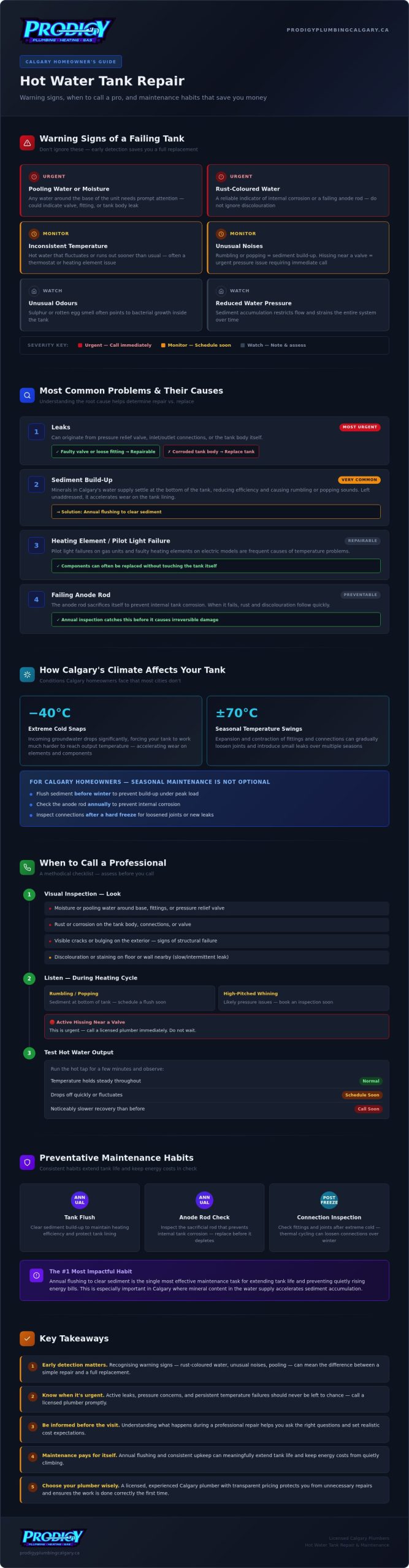
The most common complaints Calgary plumbers encounter include:
- Inconsistent water temperature – hot water that fluctuates or runs out sooner than it used to
- Rust-coloured or discoloured water – a reliable indicator of internal corrosion or a failing anode rod
- Unusual odours – a sulphur or rotten egg smell often points to bacterial growth inside the tank
- Reduced water pressure – sediment accumulation can restrict flow and strain the system
- Pooling water or moisture – any visible water around the base of the unit needs prompt attention
None of these symptoms should be ignored. Each one signals a specific underlying issue, and most are far more manageable when caught early.
Common Problems with Hot Water Tanks
Leaks are among the most urgent issues a tank can develop. They can originate from the pressure relief valve, the inlet and outlet connections, or the tank body itself. A corroded tank body typically means replacement is necessary; a faulty valve or loose fitting is often a straightforward hot water tank repair. Sediment build-up is another common culprit. Minerals dissolved in Calgary’s water supply settle at the bottom of the tank over time, reducing heating efficiency and causing the rumbling or popping sounds that many homeowners notice. Left unaddressed, heavy sediment accumulation accelerates wear on the tank lining. Pilot light failures on gas-fired units, and faulty heating elements on electric models, are also frequent causes of temperature problems. These components can often be replaced without touching the tank itself, making timely diagnosis genuinely worthwhile.
How Climate Affects Hot Water Tanks in Calgary
Calgary’s climate creates conditions that most other Canadian cities don’t face in the same combination. Extreme cold snaps push incoming groundwater temperatures down significantly, which means your tank works harder to reach the same output temperature. That added strain accelerates wear on heating elements and tank components over time. Temperature swings between seasons also affect the expansion and contraction of fittings and connections, which can gradually loosen joints and introduce small leaks. For Calgary homeowners, seasonal maintenance isn’t optional. Flushing sediment before winter, checking the anode rod annually, and inspecting connections after a hard freeze are practical habits that protect your investment and reduce the likelihood of needing emergency hot water tank repair when temperatures drop.
It’s also worth noting that Calgary’s cold intake temperatures affect how hard a tank has to work to meet daily demand — which is one reason that hot water tank sizing in Calgary requires more careful consideration than standard volume charts suggest.
Checklist: When to Call a Professional for Hot Water Tank Repair
Knowing something is wrong is only half the equation. The other half is understanding how serious it is, and whether it needs a licensed plumber today or can wait for a scheduled visit. A methodical approach saves time, reduces anxiety, and helps you communicate clearly when you do make that call.
Assessing Your Hot Water Tank Issues
Start with a simple visual inspection. Walk around the unit and look for:
- Moisture or pooling water around the base, on fittings, or near the pressure relief valve
- Rust or corrosion on the tank body, inlet and outlet connections, or the valve itself
- Visible cracks or bulging on the tank exterior, which signal structural failure
- Discolouration or staining on the floor or wall nearby, indicating a slow or intermittent leak
Next, listen. A low rumbling or popping during heating cycles typically points to sediment accumulation. A high-pitched whining or whistling sound often indicates pressure issues. Both deserve attention, but active hissing near a valve is urgent and warrants an immediate professional call.
Check your hot water output. Run the hot tap for a few minutes and note whether the temperature holds steady, drops off quickly, or fluctuates without explanation. If your tank is recovering noticeably slower than it used to, that’s a meaningful change worth reporting.
Finally, trust your nose. A sulphur smell from the hot tap specifically, not the cold, points to bacterial activity inside the tank. Don’t ignore it.
Signs That Warrant Immediate Attention
Some situations shouldn't wait. Call a licensed plumber promptly if you notice:
- Active water pooling around the tank base
- The pressure relief valve releasing water or steam
- Complete loss of hot water with no obvious cause
- A gas smell near a gas-fired unit
- Discoloured water that persists after running the tap for several minutes
Preparing for Your Repair Call
A little preparation makes the conversation with your plumber more efficient and helps them arrive ready for the job. Before you call, note down:
- The tank’s make, model, and age (usually on the label near the top of the unit)
- Whether it’s gas or electric
- Exactly when the problem started and whether it came on gradually or suddenly
- Any sounds, smells, or visual changes you’ve observed
- Whether you’ve had recent work done on the tank or your plumbing generally
Describe symptoms in plain terms. “The hot water runs out after about five minutes” is more useful than “the tank isn’t working properly.” Specificity helps a plumber diagnose the issue before they arrive, which means faster, more accurate hot water tank repair.
If you’re not sure whether your situation is urgent, it’s always worth a quick call to get a professional read on it. Reach out to Prodigy Mechanical to describe what you’re seeing and get straightforward guidance on your next step.
The Repair Process: What to Expect When You Call a Plumber
Most homeowners have never watched a plumber work through a hot water tank repair from start to finish. That unfamiliarity can make the whole experience feel uncertain, even when the fix itself is straightforward. Knowing what actually happens during a service visit removes that uncertainty and helps you feel confident throughout the process.
What Happens During a Repair Visit
A licensed plumber will begin with a thorough assessment before touching anything. That means checking the tank’s age and condition, testing water temperature output, inspecting connections, valves, and fittings, and identifying the root cause of the problem rather than just the visible symptom. This step matters more than it might seem. A rushed diagnosis often leads to a repair that addresses the surface issue while missing the underlying one.
Once the assessment is complete, the plumber will walk you through what they’ve found and what they recommend. A good technician explains the options clearly, including what happens if a repair is deferred, so you can make an informed decision. From there, the actual work begins. Depending on the issue, this might involve:
- Replacing a faulty anode rod or heating element
- Reseating or replacing a pressure relief valve
- Tightening or resealing inlet and outlet connections
- Flushing sediment from the tank
- Relighting or repairing a gas pilot assembly
Simpler repairs, like a heating element swap on an electric unit, can often be completed within an hour. More involved work, such as valve replacement combined with a full flush, typically takes two to three hours. The plumber should leave the area clean and test the system before calling the job done.
Understanding Repair Costs
Repair costs vary based on several factors: the type of repair required, the parts involved, the age and accessibility of the tank, and whether the issue is isolated or part of a broader problem. Labour rates in Calgary reflect local market conditions, and parts pricing depends on the make and model of your unit.
The most reliable way to get an accurate cost is to ask for a written quote after the initial assessment, not before. A quote given over the phone without a proper inspection is rarely precise. What you should expect from a trustworthy plumber is a clear breakdown of labour and parts, with no vague line items or unexplained fees.
Transparency around pricing is a reasonable standard to hold any tradesperson to. Before work begins, ask specifically whether the quoted price is fixed or subject to change, and under what circumstances. A plumber who is comfortable answering that question directly is one worth trusting with the job.
Preventative Maintenance: Keeping Your Hot Water Tank in Top Shape
Repairs are easier to avoid than they are to schedule. A consistent maintenance routine costs far less than an emergency call-out, and it significantly extends the working life of your tank. For Calgary homeowners dealing with mineral-heavy water and demanding winters, that routine isn’t optional – it’s the difference between a tank that lasts eight years and one that lasts fifteen.
Routine Care for Your Hot Water Tank
The single most impactful thing you can do is flush your tank once a year. Sediment accumulates at the bottom of every tank over time, and Calgary’s water supply accelerates that process. To flush the tank, turn off the heating element or gas supply, connect a garden hose to the drain valve, and let the water run until it clears. It’s straightforward work that takes under an hour and noticeably improves heating efficiency.
The anode rod deserves equal attention. This sacrificial metal rod sits inside the tank and corrodes slowly, protecting the tank lining from doing the same. Once it’s depleted, the tank itself becomes the target. Check it every two to three years; replace it when it’s worn down to the core wire or heavily coated in calcium. Skipping this step is one of the most common reasons tanks fail prematurely.
Temperature settings also matter more than most homeowners realise. The standard recommendation is 49°C (120°F). Settings above that accelerate mineral buildup and increase wear on internal components without meaningfully improving your hot water supply.
Scheduling Professional Maintenance
Annual professional inspections are worth scheduling even when nothing seems wrong. A licensed plumber can assess components that aren’t visible or accessible during a DIY check: the pressure relief valve, the dip tube, internal corrosion levels, and gas connections on fuel-fired units. Catching a marginal anode rod or a valve that’s beginning to weep is far less disruptive than dealing with the failure that follows.
Tanks that are more than seven years old, or units in homes with known hard water, benefit from more frequent attention. If you’ve already needed hot water tank repair in the past two years, that’s a signal to shorten the gap between inspections rather than wait for the next problem to surface.
When choosing a plumber for ongoing maintenance, look for someone who explains what they’ve checked and why, not just what they’ve done. A reliable technician leaves you better informed after every visit.
To arrange a maintenance inspection with a licensed Calgary plumber, contact Prodigy Mechanical and book a time that works for you.
Why Choose Prodigy Mechanical for Your Hot Water Tank Repair?
Choosing who handles your plumbing isn’t a decision to make lightly. The technician working on your hot water tank has access to your home, your mechanical systems, and ultimately your family’s comfort. That trust needs to be earned, not assumed.
Prodigy Mechanical has been working in Calgary homes for over 15 years. That kind of tenure in a local market doesn’t happen by accident. It’s built through consistent, honest work and a reputation that holds up over time.
Local Expertise and Reliability
Calgary’s plumbing environment has its own particular demands. Hard water, cold groundwater temperatures, and the stress that seasonal temperature swings place on fittings and connections are all factors that a technician with genuine local experience understands at a practical level. Prodigy Mechanical’s team has worked through Calgary winters long enough to know what fails, when it fails, and why.
That local knowledge shapes how every job is approached. It’s not just about fixing the visible problem; it’s about recognising the conditions that caused it and addressing those too. Homeowners across the city have come to rely on that thoroughness, and that consistency is what drives referrals and repeat calls.
Commitment to Quality and Satisfaction
Every hot water tank repair starts with a proper inspection. No assumptions, no shortcuts. The goal is to understand the full picture before any work begins, so the recommendation you receive is accurate and the repair holds.
Pricing is communicated clearly before work starts. Labour and parts are broken down in plain terms, and there are no vague line items added after the fact. That approach reflects something straightforward: homeowners deserve to know what they’re paying for and why.
The job isn’t considered done until the system has been tested and you’re satisfied with the result. If something needs a follow-up, it gets one. That’s not a policy statement; it’s just how the work is done.
Prodigy Mechanical’s services cover the full range of plumbing needs, from drain cleaning and fixture swaps to complete rough-in work and emergency plumbing. Whatever the scope, the standard stays the same.
If your hot water tank is giving you trouble, don’t wait for a small issue to become an urgent one. Contact Prodigy Mechanical today to book an inspection with a licensed Calgary plumber you can count on.
Take Control of Your Hot Water Before It Becomes an Emergency
Hot water tank repair doesn’t have to be stressful. The homeowners who handle it well are simply the ones who pay attention early, act on what they notice, and work with a plumber they can trust to give them a straight answer.
The core lessons from this guide come down to three things: recognise the warning signs before they escalate, understand what a proper repair process looks like so you can hold your tradesperson to that standard, and commit to the basic maintenance habits that keep your tank running reliably through Calgary’s demanding seasons.
Prodigy Mechanical has been doing this work in Calgary for over 15 years. Licensed technicians, transparent pricing, and a genuine focus on customer satisfaction aren’t claims to fill a page; they’re what a 15-year local reputation is built on.
If your tank is showing signs of trouble, don’t wait for a small problem to become an urgent one. Contact Prodigy Mechanical today to book your hot water tank repair with a Calgary plumber you can count on.
Your comfort at home is worth protecting. The right help is closer than you think.
Frequently Asked Questions About Hot Water Tank Repair
What are the most common issues with hot water tanks?
The most common problems are sediment build-up, failing anode rods, faulty heating elements, and pressure relief valve issues. Sediment accumulates at the bottom of the tank over time, reducing efficiency and causing rumbling sounds during heating cycles. Anode rod depletion is particularly common in areas with hard water, as the rod sacrifices itself to protect the tank lining from corrosion.
Pilot light failures on gas-fired units and thermostat faults on electric models are also frequent culprits behind temperature inconsistencies. Most of these components can be repaired or replaced without requiring a full tank replacement, provided they’re caught before the damage spreads.
How can I tell if my hot water tank needs repair?
The clearest indicators are rust-coloured water, unusual sounds during heating cycles, hot water that runs out faster than it used to, and any visible moisture around the unit. A sulphur smell from the hot tap specifically points to bacterial growth inside the tank, which requires prompt attention.
If you notice your energy bills rising without any obvious explanation, that’s also worth investigating. A tank working harder than it should, often due to sediment or a failing heating element, consumes more energy to reach the same output. Don’t wait for a complete failure before calling a licensed plumber.
What should I expect during a hot water tank repair?
A licensed plumber will begin with a thorough inspection before any work starts. That means testing water temperature output, checking valves and fittings, and identifying the root cause rather than just the visible symptom. Once the assessment is complete, you’ll receive a clear explanation of what’s needed and a written quote covering both labour and parts.
Simpler hot water tank repair jobs, like replacing a heating element, can often be completed within an hour. More involved work, such as a valve replacement combined with a full flush, typically takes two to three hours. The system should be tested before the technician leaves, and the work area should be left clean.
How often should I perform maintenance on my hot water tank?
Flushing your tank annually is the most impactful routine maintenance you can do. It clears sediment that builds up at the bottom of the tank and restores heating efficiency. The anode rod should be inspected every two to three years and replaced when it’s worn down to the core wire or heavily coated in mineral deposits.
A professional inspection once a year is also worthwhile, even when nothing seems wrong. A licensed plumber can assess components that aren’t visible during a DIY check, including the dip tube, internal corrosion levels, and the pressure relief valve. Tanks older than seven years, or units in homes with hard water, benefit from more frequent attention.
What is the average cost of hot water tank repair in Calgary?
Repair costs vary depending on the type of issue, the parts required, and how accessible the unit is. A straightforward component replacement will cost considerably less than a job involving multiple faults or a tank that hasn’t been maintained in years. Labour rates in Calgary reflect local market conditions, and parts pricing depends on the make and model of your specific unit.
The most reliable approach is to get a written quote after a proper on-site assessment, not before. Any trustworthy plumber should be able to break down labour and parts clearly, with no vague line items. Ask upfront whether the quoted price is fixed or subject to change, and under what circumstances.
Can I repair my hot water tank myself?
Some basic tasks, like flushing sediment or adjusting the thermostat setting, are within reach for a reasonably handy homeowner. Anything involving the pressure relief valve, gas connections, or internal components carries real risk if handled without proper training and tools. An incorrect repair can void your warranty, create a safety hazard, or cause more damage than the original problem.
For anything beyond routine flushing, a licensed plumber is the right call. It’s not just about safety; it’s also about accuracy. A professional diagnosis identifies the actual cause of the problem, not just the symptom, which means the repair holds and doesn’t need to be revisited in a few months.
How long do hot water tanks typically last?
Most conventional storage tanks last between eight and twelve years with regular maintenance. Tanks that are flushed annually, have their anode rod replaced on schedule, and receive professional inspections tend to reach the upper end of that range. Units that are neglected often fail well before the eight-year mark, particularly in areas with hard water.
If your tank is approaching or past the ten-year mark and you’re starting to notice performance issues, it’s worth having a licensed plumber assess whether repair or replacement makes more sense. In some cases, investing in a hot water tank repair on an older unit is a sound short-term fix; in others, a replacement delivers better long-term value. Before committing to a new unit, it’s also worth reviewing the hot water tank sizing Calgary homeowners need to consider to ensure the replacement unit is properly matched to your household’s demand and local conditions. If you’re weighing that decision, our guide to water heater installation in Calgary covers the types of units available, what to expect from the process, and how to choose the right contractor for the job.