

The water heater promising endless hot water isn’t automatically the better fit for a Calgary home. The right choice in the tankless vs tank water heater Calgary decision depends on more than efficiency claims. Your household’s peak demand, the home’s existing gas, venting and electrical connections, and the upkeep each system needs all matter. It’s reasonable to wonder whether a tankless unit can keep up or whether switching could involve extra work.
This guide explains how tank and tankless systems heat water, then compares the practical trade-offs for Calgary homes. You’ll learn what to consider about simultaneous hot-water use, cold incoming water, scale, maintenance and installation conditions. Before requesting an assessment, gather details about your current heater, household size, hot-water habits and any known connection or venting constraints. That information can help clarify which option may suit your home and what questions to ask next.
Key Takeaways
- In the tankless vs tank water heater Calgary comparison, the best fit depends on household demand and the home’s existing setup, not efficiency claims alone.
- Consider how often showers and appliances run at the same time when assessing whether a tankless system can meet your hot-water needs.
- Compare installation requirements and ongoing maintenance alongside space and hot-water delivery before choosing a system.
- Record your household size, peak-use patterns, current heater details and available installation space to make a professional assessment more useful.
- Prodigy Mechanical offers hot-water tank installation and replacement in Calgary. Ask about service availability for any system you’re considering.
Tankless vs. tank water heaters in Calgary: what changes for your home?
Replacing a water heater is a chance to compare what your home already supports with how your household uses hot water. There’s no single winner in the tankless vs tank water heater Calgary decision. The right fit depends on equipment sizing, daily demand and installation conditions. Compare the expected work and system requirements rather than assuming one type will always be simpler or more suitable.
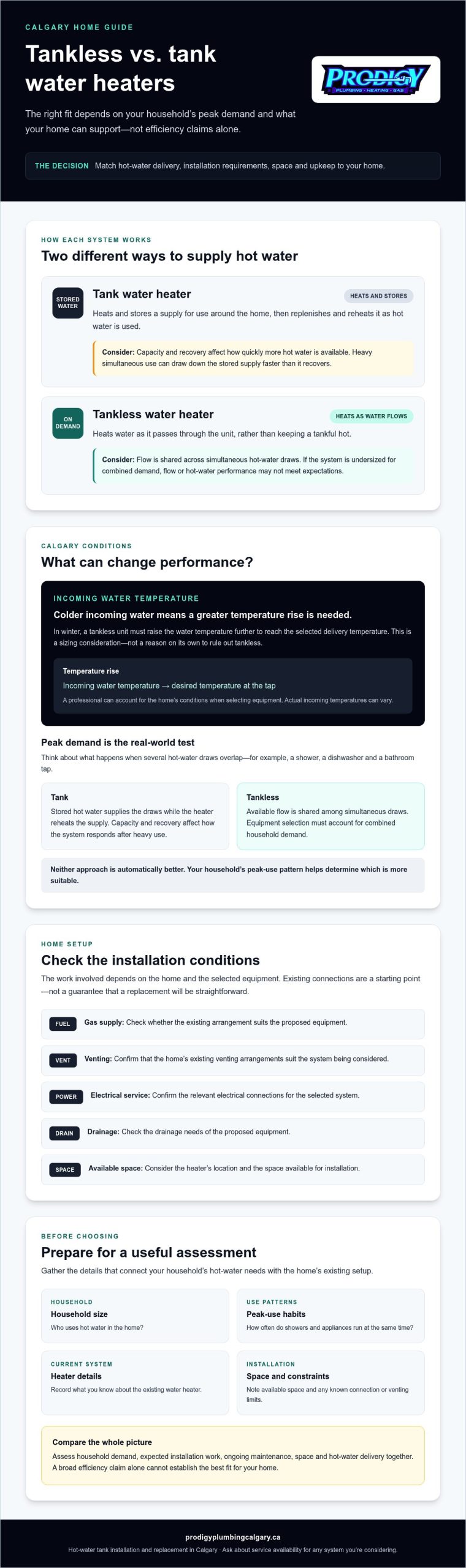
The difference: A tank water heater stores a supply of heated water for use around the home. A tankless water heater heats water as it flows through the unit, rather than keeping a tankful hot.
How does a tank water heater supply hot water?
A tank heats and stores water, then replenishes and reheats the supply as hot water is used. The heater’s recovery rate and capacity affect how quickly it can provide more hot water, but those details vary by unit. If several people shower or an appliance uses hot water at the same time, the stored supply may be drawn down faster than it recovers.
When replacing a tank with another tank, the current location and connections offer a starting point for assessing the work. The replacement still needs to suit the household and the home’s setup. Note the existing heater’s details and any changes to the space or hot-water use before discussing options.
How does a tankless water heater heat water?
A tankless unit heats water on demand as it passes through a heat exchanger. Its flow rate matters in everyday use: if several fixtures need hot water at once, an undersized system may not deliver the expected flow to each one. This overview of tankless water heaters explains the basic operating principle, but performance in a particular home depends on equipment selection and installation.
In Calgary, incoming water is colder during the winter, so the heater must raise its temperature further to deliver hot water. An assessment should also check the home’s fuel supply, venting and connection requirements. These site details can affect whether a tankless option is practical and what work it would involve.
For either type, compare how the equipment will meet your household’s peak use, not just how it works in theory. Reviewing the existing setup and installation scope gives you a more useful basis for choosing than a broad efficiency claim alone.
How Calgary conditions affect tankless and tank water-heater performance
A water heater needs to match both the home and the way people use hot water. In Calgary, colder incoming water can mean a tankless unit has to work harder to reach the selected delivery temperature. That’s a sizing consideration, not a reason to rule out tankless systems. For the tankless vs tank water heater Calgary decision, household demand and installation conditions deserve as much attention as equipment claims.
Why incoming-water temperature matters in Calgary
Temperature rise is the difference between the incoming water temperature and the temperature you want at the tap. It helps determine whether a tankless unit can heat water at the required flow. The colder the incoming water, the greater the temperature rise the unit must provide. A professional can account for the home’s conditions when selecting equipment. Avoid relying on a general seasonal average, as actual incoming temperatures can vary.
What household demand means for flow and recovery
Consider this illustrative example: one person is showering while a dishwasher draws hot water and someone else turns on a bathroom tap. A tankless heater’s available flow is shared across those simultaneous draws. If the system is undersized for the combined demand, its flow or hot-water performance may not meet expectations.
A tank works differently. Its stored hot water provides a supply while the heater reheats water as that supply is used. Capacity and recovery affect how the system responds after heavy use. A busy period can draw down stored hot water faster than it recovers, while a tankless unit is limited by the flow it can heat at a time. Neither approach is automatically better. The household’s peak-use pattern helps determine which is more suitable.
Before choosing, have the existing installation assessed. The required work can depend on the home’s:
- Venting and gas supply: Check whether existing arrangements suit the proposed equipment.
- Electrical service and drainage: Confirm the relevant connections and drainage needs for the selected system.
- Available space: Consider the heater’s location, access and room for installation.
These details shape the practical installation scope. A professional review of your household’s peak demand and site conditions can make the comparison specific to your home. If you’re considering a tank replacement, learn more about hot-water tank installation and replacement and discuss what your current setup may require.
Tankless vs. tank water heater: a Calgary homeowner’s comparison
A useful comparison looks beyond the equipment label. Tank and tankless systems deliver hot water differently, and their suitability depends on household routines, existing connections and the work required at the installation site. Efficiency claims alone can’t establish which option is right for a particular home.
| Factor | Tank water heater | Tankless water heater |
|---|---|---|
| Delivery method | Stores heated water for use, then reheats water as the supply is drawn down. | Heats water on demand as it flows through the unit. |
| Simultaneous demand | Stored capacity and recovery affect how the system handles heavy use and replenishes its supply. | Available flow depends on unit sizing and the number of hot-water draws at once. |
| Space | Needs room for the storage tank and access for installation and service. | Can have a smaller physical footprint, but still needs suitable mounting and service access. |
| Installation checks | Existing connections and site conditions affect replacement work. | Fuel, venting, electrical, drainage and connection requirements need to be assessed for the home and unit. |
| Maintenance | Upkeep depends on the unit and conditions; sediment may need attention. | Upkeep depends on the unit and water conditions; scale may need attention. |
Which water heater handles busy household use better?
Neither type is automatically better for a busy home. With a tank, back-to-back showers may use stored hot water faster than the heater can recover it. With a correctly sized tankless unit, water is heated on demand, but the system’s flow capacity still limits how much it can supply across simultaneous draws.
Think about your household’s actual routine: showers running together, laundry, or kitchen use during the morning rush. A professional should assess those peak-use patterns before recommending equipment. The tankless vs tank water heater Calgary choice should reflect what your home needs at its busiest, not just its average daily use.
Which system needs more space or installation changes?
A storage tank takes up floor or utility-room space. A tankless unit may use less floor area, but its mounting location and service access still matter. During a replacement, existing connections can influence the work. Switching system types may involve different site requirements.
Have a professional check the home’s venting, gas supply, electrical service, drainage and available installation space. Confirm exact permit and code requirements against current City of Calgary and Alberta rules for the specific project. Include maintenance in the comparison, too: water conditions and equipment design can affect the attention each system needs. Weigh these practical trade-offs alongside efficiency rather than treating one claim as the deciding factor.
How to choose a water heater for your Calgary home
A clear decision starts with what your household needs and what the property can support. Use this five-step checklist to prepare for an assessment and keep the tankless vs tank water heater Calgary choice grounded in your home’s conditions.
- 1. Assess demand. Record household size, peak-use patterns and which fixtures or appliances commonly need hot water at the same time.
- 2. Inspect the current setup. Note the existing heater type, age if known, fuel, location and available installation space. Include visible access or connection constraints.
- 3. Compare system fit. Consider how stored capacity and recovery, or tankless flow, may match your household’s busiest periods. Don’t decide on efficiency claims alone.
- 4. Confirm requirements. Have fuel availability, venting, electrical service, drainage and connection needs checked on site. Ask a qualified professional to confirm current City of Calgary permit and Alberta requirements for the proposed work.
- 5. Request a clear scope. Ask what work is proposed, which site conditions inform the recommendation and whether any changes are needed. Review the explanation before approving work.
What information should you gather before requesting an assessment?
Along with the heater details, write down recurring hot-water shortages, unusual noise, leaks or other symptoms. Describe when they occur rather than trying to diagnose the cause. For example, note whether a shortage happens during back-to-back showers or when an appliance is running. These observations help connect equipment options to real household use. For replacement planning, see this hot water tank replacement guide.
What should a professional check at the property?
A site assessment should consider household demand, equipment sizing, existing connections, venting and access. Ask the professional to explain any proposed changes in plain language, including what they address and why they’re part of the scope. Permit and code details can depend on the work, so confirm current requirements rather than relying on general advice. For broader home-service context, read the Calgary plumbing and heating guide.
If your assessment points toward replacing a tank, contact Prodigy Mechanical about hot-water tank replacement and installation in Calgary. A review of your existing setup and household needs can help make the next step more straightforward.
Replacing a Calgary water heater: practical next steps with Prodigy Mechanical
Once you’ve compared the options, the next step is a site-specific review, not a commitment to a particular system. Your notes on household hot-water use, the existing heater and the installation space can help a professional understand what the home needs. In the tankless vs tank water heater Calgary decision, those details are more useful than a blanket recommendation based on one feature.
Prodigy Mechanical provides hot-water tank installation and replacement in Calgary. Its licensed technicians handle the work and bring more than 15 years of industry experience. An assessment can review the current setup, household demand and the work a tank replacement would involve. Tankless installation isn’t confirmed in the available service information, so ask directly about service availability if you’re considering that option.
What to expect when arranging a hot-water tank replacement
The process can begin with a discussion of your existing system, its location and any problems you’ve noticed. A site assessment can then identify relevant connections, access and other installation conditions. Review the proposed scope and clarify what the quoted job includes, including any changes or related work, before approving it. This helps you understand the plan without assuming every replacement follows the same path.
Keep the comparison practical. Share when hot-water shortages occur, how the household uses hot water during busy periods and whether the existing setup has visible constraints. If you’re still weighing options, ask which recommendations are based on the property’s conditions and which details need further checking. The aim is a clear scope that reflects your home, not pressure to select one system.
When to contact a Calgary plumbing professional
Arrange an assessment if you notice a leak, inconsistent hot water or a system that no longer meets your household’s needs. You can safely note where a leak or unusual noise appears and when the hot-water issue occurs. Don’t adjust gas or electrical connections yourself. Share your observations with the professional so they can assess the cause and explain appropriate next steps.
For replacement planning, review this hot water tank replacement guide. If you’re considering replacing a tank, contact Prodigy Mechanical about a hot-water tank replacement assessment. Discuss the existing system and household needs, then review the proposed scope before deciding how to proceed.
Make your next water-heater decision with confidence
The tankless vs tank water heater Calgary choice comes down to how your household uses hot water and what your home’s existing setup can support. Compare peak demand, installation conditions and maintenance needs rather than relying on efficiency claims alone. A site-specific assessment can clarify the practical scope and help you make a decision that fits your property.
Prodigy Mechanical provides hot-water tank installation and replacement in Calgary. Its licensed technicians bring more than 15 years of industry experience to the work. If you’re considering a tank replacement, contact Prodigy Mechanical to discuss your Calgary hot-water tank replacement. Share your household’s needs, review the proposed work and decide on your next step with clearer information.
A careful comparison is a solid start. With the right details and professional guidance, you can move forward with greater confidence in a water-heater choice suited to your home.
Frequently Asked Questions
Is a tankless water heater better than a tank water heater in Calgary?
Neither type is automatically better for every Calgary home. The tankless vs tank water heater Calgary decision depends on household demand, installation conditions, available connections and maintenance needs. A tank stores heated water, while a tankless unit heats water as it flows through. Compare how each could serve your busiest hot-water periods, then have a qualified professional assess the home before choosing.
Can a tankless water heater run out of hot water?
A tankless heater doesn’t store a limited supply in a tank, but it can still struggle to meet demand if too many fixtures draw hot water at once or the unit isn’t sized for the home. For example, simultaneous showers and kitchen use may exceed its available flow. Ask a professional to assess the number of fixtures and your household’s peak-use routine.
How much does it cost to switch from a tank to a tankless water heater in Calgary?
The cost depends on the equipment selected and the work the home requires, so a site-specific scope is needed for a useful estimate. A change from a tank system may involve different connection, venting, fuel or electrical requirements. Ask the contractor to explain what the quoted work includes and identify any proposed changes before approving it. Avoid relying on a general estimate that hasn’t considered your property.
What happens if my Calgary home does not have enough gas capacity for a tankless unit?
A qualified professional should assess the home’s gas supply and the proposed unit’s requirements before planning installation. If the existing capacity isn’t suitable, additional work may be needed, or another system may fit the property better. Don’t adjust gas connections yourself. Ask the assessor to explain any proposed changes, how they affect the scope and whether the home can support the equipment safely.
Is a tank water heater more reliable than a tankless water heater?
Reliability depends on the specific equipment, installation, household use and maintenance, so one type isn’t universally more dependable. A tank’s stored supply and a tankless unit’s on-demand operation have different performance considerations. Ask about the maintenance each option requires and how local water conditions may affect it. A professional can also review the current setup and help match the system to your household’s needs.
Can a tankless water heater provide enough hot water for multiple bathrooms?
It can if the unit is properly selected for the home’s required flow and expected simultaneous use. Multiple bathrooms don’t necessarily use hot water at the same time, so household routines matter as much as fixture count. Tell the assessor how often showers, taps and appliances overlap. They can evaluate the combined demand and explain whether the proposed system is sized to serve those draws.
Does Calgary require a permit to replace a water heater?
Permit requirements can depend on the specific replacement work and the home, so confirm the current City of Calgary requirements before work begins. Ask the qualified professional to clarify which permits and applicable Alberta requirements relate to the proposed scope. Don’t assume that replacing a similar unit and changing system types follow identical requirements. Confirm who is responsible for checking the requirements as part of planning the job.