

The shower turns cold just as the day gets started, and suddenly washing, cooking, and household routines become harder. If you’re searching for “no hot water Calgary,” the cause could be a power issue, a problem with the water heater, or something in the plumbing. Start with safe checks rather than assuming what needs replacing.
It’s reasonable to want a quick answer, especially when you’re unsure whether the problem involves the tank, electricity, gas, or plumbing. This guide covers simple checks you can make safely, warning signs that mean it’s time to stop, and details to share when you call a plumber. A gas odour or active leak needs prompt attention. Don’t continue troubleshooting in those circumstances.
You’ll learn how to describe what’s happening, including whether the issue affects every tap and when the hot water stopped. If basic checks don’t identify the cause, a professional assessment can help clarify the next step. Prodigy Mechanical provides hot-water tank installation and replacement in Calgary, but replacement shouldn’t be assumed. The cause should be assessed first.
Key Takeaways
- For no hot water Calgary, first note whether one tap or every hot-water fixture is affected. This can help narrow down where the issue may be.
- Power or gas supply interruptions can have different signs from a water-heater component problem. Use what you observe to guide safe checks, not to diagnose a fault remotely.
- A visible leak or suspected gas issue calls for a different response than cold water alone. Know when to stop troubleshooting and seek help.
- Before contacting a plumber, note when the hot water stopped, which fixtures are affected, and any changes you’ve noticed.
- A technician can assess the water heater and related plumbing before recommending next steps. Replacement is one possible outcome, not a foregone conclusion.
No hot water in Calgary? Start with these safe checks
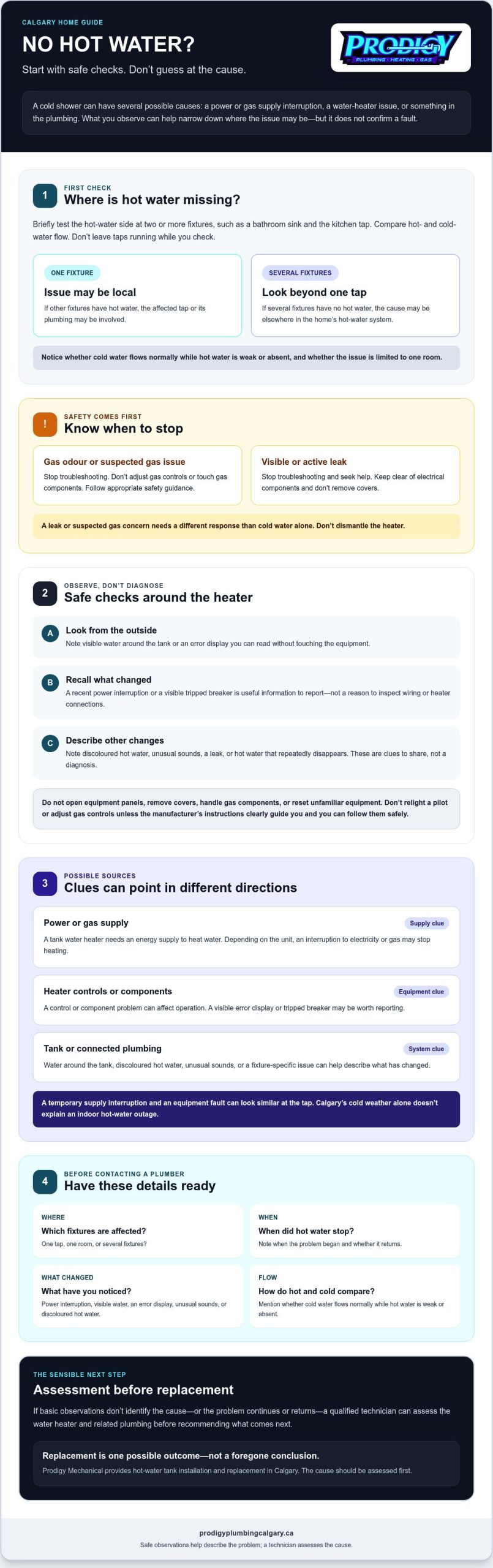
A cold shower can disrupt the whole household, but you don’t need to guess at the cause or take equipment apart. A few safe observations can help narrow down whether the issue is limited to one fixture or affects the entire property. If you searched “no hot water Calgary,” begin by checking where hot water is missing and looking for visible warning signs.
Many homes use conventional storage water heaters, which heat and hold water in a tank. The checks below don’t require opening the unit or handling its connections. They’re meant to help you describe the problem clearly, not diagnose a fault.
Is the problem at one tap or throughout the home?
Briefly test the hot-water side at two or more fixtures, such as a bathroom sink and the kitchen tap. Don’t leave taps running while you check. If only one fixture is affected, the issue may be local to that tap or its plumbing. If several fixtures have no hot water, the cause may be elsewhere in the home’s hot-water system.
Compare hot- and cold-water flow at each fixture. Does cold water flow normally while hot water is weak or absent? Is the problem limited to one room? These details help distinguish a fixture-specific symptom from a wider outage without assuming what has failed.
What can you safely check before calling?
Look around the outside of the water heater. Note any visible leak, unusual water around the tank, or error display you can read without touching the equipment. If you see water, keep clear of electrical components and don’t remove covers. Never open equipment panels or handle gas components. If you suspect a gas issue, stop troubleshooting and follow appropriate safety guidance.
Think about what changed before the hot water stopped. A recent power interruption is useful information to report, but don’t open the heater or reset unfamiliar equipment. Write down when the problem began and which fixtures are affected.
- Check hot-water flow at more than one fixture.
- Compare hot- and cold-water flow at each one.
- Look for visible water or an error display without touching the unit.
- Note any recent power interruption and when the issue started.
These checks give a Calgary plumber a clearer starting point if the cause remains uncertain. Stop if you notice a leak or suspect a gas-related concern, and don’t dismantle the heater in an attempt to restore hot water.
What can cause a Calgary home to lose hot water?
If there’s no hot water in Calgary, the pattern of the outage can offer clues, but it can’t confirm the cause. A brief interruption to the power or gas supply may affect a tank water heater differently from a problem with the heater’s controls, components, or connected plumbing. Note what you observe instead of trying to diagnose the equipment yourself.
Calgary’s cold weather alone doesn’t explain an indoor hot-water outage. A leak, unusual noise, or hot water that repeatedly disappears is worth reporting for assessment. These signs can point to different issues, so a qualified technician should assess the equipment before recommending a specific repair or replacement.
Could the issue be power, gas, or a water-heater control?
A tank water heater needs an energy supply to heat water. Depending on the unit, an interruption to electricity or gas may stop heating. A control problem can also affect operation. If you can see a tripped breaker on your electrical panel, treat it as a clue to report, not an invitation to inspect wiring or the heater’s electrical connections.
Don’t relight a pilot or adjust gas controls unless the manufacturer’s instructions clearly guide you and you can follow them safely. If you smell gas or suspect a gas-related concern, stop troubleshooting and follow appropriate safety guidance. Avoid opening panels or touching gas components.
Could the tank or plumbing be the source?
Look for signs, not a diagnosis. Water around the tank may indicate a leak, while discoloured hot water or unusual sounds can help describe what has changed. Note whether these signs appear alongside a full loss of hot water or only at certain fixtures. Don’t remove covers or attempt to inspect internal parts.
The source could involve the tank, its controls, or connected plumbing. A temporary supply interruption and an equipment fault can look similar from the tap, so a technician’s assessment is the sensible next step if the problem continues or returns. Replacement may be considered if the assessment supports it, but it shouldn’t be assumed in advance.
- Power clue: Note any recent interruption or visible tripped breaker. Don’t handle wiring.
- Gas concern: Don’t adjust controls or relight a pilot if you’re unsure. Stop if you suspect a gas issue.
- Tank or plumbing clue: Record leaks, unusual sounds, or discoloured hot water, and where you noticed them.
Clear observations help move diagnosis forward. If an assessment indicates replacement is needed, hot-water tank installation and replacement in Calgary is among the services Prodigy Mechanical offers.
No hot water: how to judge urgency without guessing
A loss of hot water on its own doesn’t always mean there’s an emergency. The next step depends on what else you notice. Cold water is different from water leaking near the heater or a suspected gas odour. Use the signs below to decide whether to stop troubleshooting, seek urgent help, or arrange an assessment.
| Symptom | Immediate precaution | Suggested next step |
|---|---|---|
| No hot water, with no other warning signs | Avoid opening panels or adjusting heater controls. | Note which fixtures are affected and arrange an assessment if the problem persists or returns. |
| Lukewarm or inconsistent hot water, or a displayed fault | Record what you see without removing covers or changing settings. | Share the details with a qualified professional. |
| Visible leak, especially near electrical equipment | Keep clear. Don’t touch wet equipment or enter standing water near electrical components. | Contact a qualified professional. If there’s an immediate danger, contact emergency services. |
| Suspected gas odour | Leave the area. Don’t operate appliances or switches inside. | From a safe location, contact emergency services or the gas utility’s emergency line. |
Which warning signs should make you stop troubleshooting?
Stop if you see an active leak, water contacting electrical equipment, or suspect a gas odour. Don’t touch wet electrical equipment or try to operate an appliance you believe may be faulty. In a suspected gas situation, leave the area and call for help from a safe location. For other equipment concerns you can’t identify safely, leave the unit alone and contact a qualified professional.
When might a routine service call be appropriate?
If there are no immediate hazards but hot water remains unavailable, keeps cutting out, or returns only lukewarm, arrange an assessment rather than repeatedly adjusting the equipment. A displayed fault is also useful information to report. Note what the display says without opening the unit or attempting a reset you’re unsure about.
Urgency depends on the symptoms and your household’s immediate needs. A persistent outage without a leak or gas concern is different from a visible hazard, but recurring problems still deserve attention. If you’re dealing with no hot water Calgary homeowners can’t explain, describe the symptoms clearly when arranging service. That helps a professional understand what needs assessing without guessing at the cause.
What to tell a Calgary plumber before booking service
A clear description helps a plumber understand what’s happening before arriving. If you’re dealing with no hot water in Calgary, gather the details you can observe safely. You don’t need to identify the fault yourself. Focus on what changed, when it started, and where you notice the problem.
What details help a technician assess the problem?
Before calling, make a short list. Include whether the hot water stopped completely or became lukewarm or intermittent, and which fixtures are affected. Mention any visible leak, unusual noise, error indicator, or recent power interruption. If you can see the heater’s type or model information without moving it or removing a cover, note that too.
- When the problem began, and whether it has continued or come and gone
- Which taps, showers, or other fixtures are affected
- What you noticed, such as a leak, sound, or display message
- Whether the property is residential, commercial, or strata
- Any access details that could help the technician locate the heater
Don’t open equipment panels or move a leaking unit to find its label. If you can’t safely see the model information, leave it for the technician to check.
What should you ask before work begins?
Ask what the assessment includes and what the findings could mean for next steps. Before authorizing work, request a clear explanation of the proposed work and any job-specific charges. If replacement is recommended, ask what in the assessment supports that option and what it involves. A loss of hot water doesn’t automatically mean the tank needs replacing.
For separate urgent plumbing situations, Prodigy Mechanical’s Emergency Plumbing Calgary guide offers relevant information. If the assessment points to replacement, you can review the hot water tank replacement Calgary guide to learn more about that option.
When you’re ready to discuss the hot-water tank and the symptoms you’ve recorded, contact Prodigy Mechanical about hot-water tank service in Calgary. A clear conversation about the assessment and proposed work helps you make an informed decision before anything proceeds.
Getting hot water restored with a qualified Calgary technician
If safe checks haven’t explained why there’s no hot water, the next step is a professional assessment, not a guess about what to replace. A technician can review the symptoms and assess the water heater and related plumbing before recommending work. The findings help determine which options are suitable for the equipment and the problem.
Prodigy Mechanical provides plumbing services in Calgary and has more than 15 years of industry experience. Its listed services include hot-water tank installation and replacement. Ask about service details when you contact the company, as the timing and work required depend on the situation.
What can happen during a professional assessment?
Be ready to describe when the outage started, which fixtures are affected, and whether you’ve noticed lukewarm water, a leak, unusual sounds, or an error display. A technician can use those observations, along with an inspection of the water heater and related plumbing, to assess possible causes. The exact assessment depends on the equipment and symptoms.
Before work proceeds, ask the technician to explain the findings, proposed scope, and any job-specific charges. Clarify which options are available and what each involves. You should understand the recommendation before authorizing work, especially if it involves replacing equipment.
When does water-heater replacement become part of the conversation?
Replacement may be considered if the tank’s age, condition, recurring faults, or assessment findings support that option. There isn’t one age that makes replacement necessary in every home, and a cold tap alone doesn’t establish that the tank has failed. Ask what the assessment shows and why replacement is being recommended rather than assuming it’s the only solution.
For more information on the decision and what to consider, read the Calgary hot water tank replacement guide. It can help you prepare questions and understand the replacement process.
If you still have no hot water in Calgary and the cause isn’t clear, contact Prodigy Mechanical to discuss your symptoms and ask about service details. A measured assessment can help you understand the next step before deciding on work.
Take the next step toward restoring hot water
If you’re facing no hot water Calgary, start with what you can safely observe. Check whether the problem affects one fixture or several, note any changes or warning signs, and stop troubleshooting if you suspect a leak near electrical equipment or a gas issue. These details help a plumber understand the situation without relying on guesswork.
A professional assessment can help identify whether the issue involves the water heater or related plumbing. Replacement is one possible next step, but it should follow the findings, not be assumed from cold water alone. Before work begins, ask what the assessment covers and request a clear explanation of the proposed work and job-specific charges.
Prodigy Mechanical serves Calgary and has more than 15 years of industry experience. Its licensed technicians provide plumbing, heating, and gas services. For service details about your hot-water problem, contact Prodigy Mechanical.
With safe checks and a clear assessment, you can move toward a practical solution with greater confidence.
Frequently Asked Questions
Why is there no hot water in my Calgary home?
Possible causes include a power or gas supply interruption, a water-heater control or component issue, or a problem with connected plumbing. If only one tap is affected, the cause may be local to that fixture. If several fixtures have no hot water, the issue may be farther upstream. These signs can help narrow down what to report, but they can’t confirm the fault without an assessment.
What should I check first when my hot water stops working?
Check whether hot water is missing at one fixture or several by briefly testing more than one tap. Compare hot- and cold-water flow, then look for visible leaks or an error display without touching or opening the heater. Note when the problem began and whether there was a recent power interruption. Don’t handle gas components or electrical wiring. Stop if you notice a hazard.
Is no hot water considered a plumbing emergency?
No hot water alone isn’t always an emergency, but a leak, water near electrical equipment, or suspected gas odour changes the situation. Keep away from wet electrical equipment. If you suspect gas, leave the area and contact emergency services or the gas utility’s emergency line from a safe location. For a persistent outage without immediate hazards, arrange a professional assessment and explain the symptoms clearly.
Can I reset or relight my water heater myself?
Don’t reset unfamiliar equipment, open heater panels, relight a pilot, or adjust gas controls unless the manufacturer’s instructions clearly cover the task and you can follow them safely. A visible error display or tripped breaker can be useful information to report, but it isn’t a reason to inspect wiring or dismantle the unit. If you’re unsure, leave the equipment alone and contact a qualified professional.
How long can a home go without hot water?
There isn’t one safe or comfortable timeframe for every household. The outage may be brief or continue until its cause is assessed and addressed. Consider your household’s immediate needs, especially if someone depends on hot water for care or health reasons. If the outage persists or returns, arrange an assessment rather than repeatedly adjusting the heater. Any leak or suspected gas issue needs prompt attention.
Will a plumber need to replace my hot water tank?
Not necessarily. A technician should assess the symptoms, tank condition, and related plumbing before recommending work. The decision may depend on the tank’s age, condition, recurring faults, and assessment findings. No hot-water symptom alone proves that replacement is needed. Ask what the assessment shows and why a particular option is being recommended. Replacement is one possible outcome, not an assumption before diagnosis.
How much does it cost to fix no hot water in Calgary?
The cost depends on the cause, the work required, and whether the assessment identifies a need for hot-water tank replacement. There isn’t enough information from the symptom alone to give a reliable figure. Before authorizing work, ask what the assessment includes, what work is proposed, and which job-specific charges apply. Prodigy Mechanical charges per job, so confirm the details for your situation directly.