

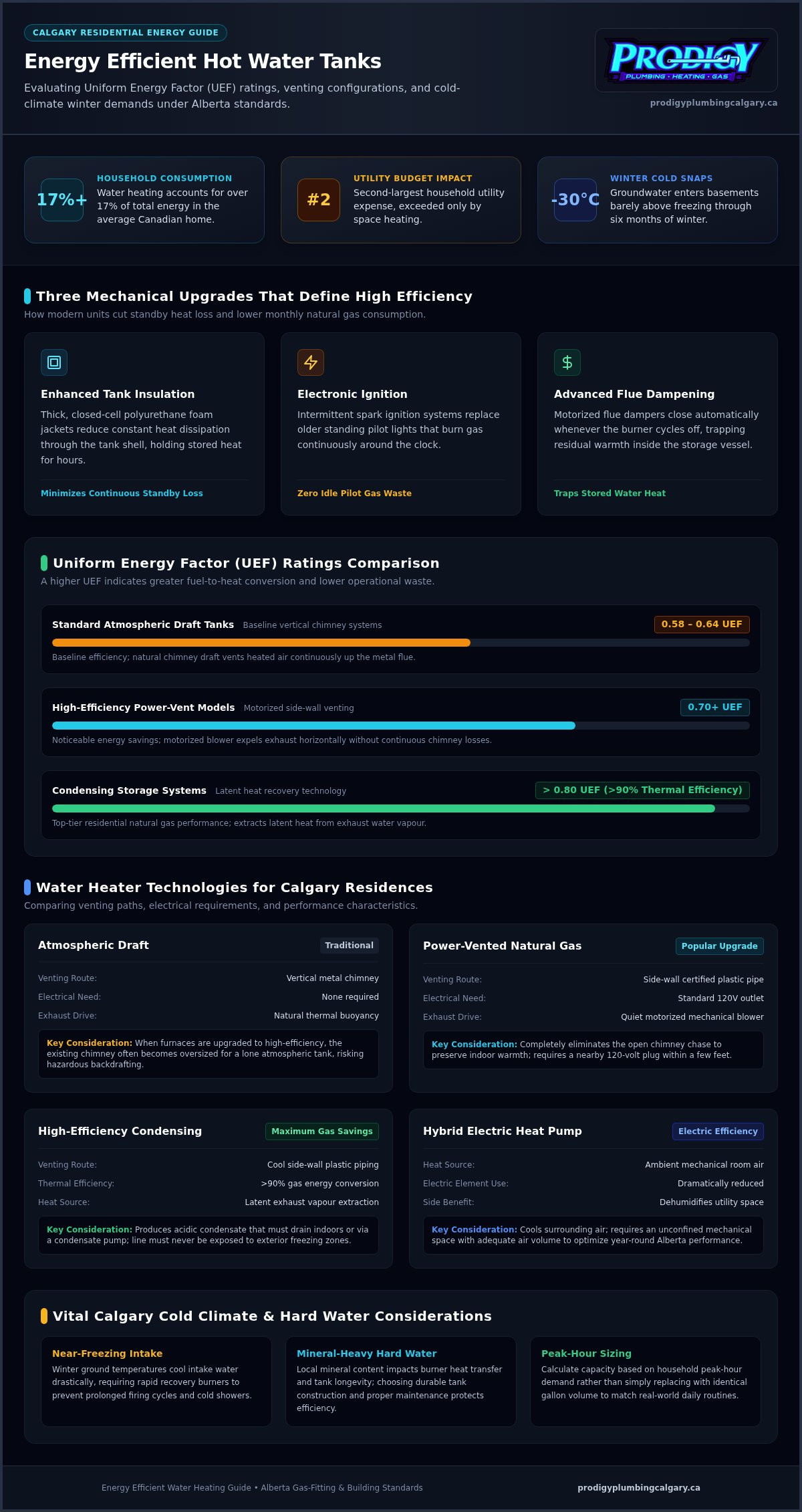
Water heating accounts for over 17 percent of the energy consumed in the average Canadian home, making it your second-largest utility expense after space heating. In our climate, where winter groundwater enters your basement barely above freezing, installing the right energy efficient hot water tank Calgary homes need involves far more than picking the highest sticker rating.
Most local homeowners know the frustration of watching natural gas bills spike through six straight months of winter, along with the lingering dread of an old tank failing across a finished basement floor. It is easy to feel stuck between standard atmospheric units, power-vent models, and newer hybrid systems, especially when sorting through venting requirements and electrical needs. This guide walks you through realistic utility savings, Uniform Energy Factor ratings, and venting considerations under current Alberta building standards. You will gain the exact clarity needed to choose a dependable setup that delivers steady hot water straight through our deepest minus-thirty cold snaps.
Key Takeaways
- Learn how Uniform Energy Factor ratings translate into practical monthly savings when selecting an energy efficient hot water tank Calgary basements require.
- Understand the essential venting and electrical differences between standard atmospheric units and modern power-vent systems.
- Discover how Calgary’s mineral-heavy water and sub-zero intake temperatures impact burner recovery and overall tank durability.
- Follow a straightforward sizing method based on peak-hour household demand rather than simply matching your existing tank capacity.
- Identify the key building code and gas-fitting standards necessary to ensure a smooth, compliant equipment installation.
What Defines an Energy Efficient Hot Water Tank in Calgary?
An energy-efficient hot water tank delivers optimal thermal transfer while cutting standby heat loss to a bare minimum. Natural Resources Canada evaluates domestic systems against strict standards to ensure appliances handle Canadian winters without wasting fuel. For local homeowners facing climbing utility rates and carbon levies, installing an energy efficient hot water tank Calgary builds depend on provides a reliable buffer against elevated monthly operational costs.
Modern high-efficiency tanks achieve these gains through three practical mechanical upgrades:
- Enhanced tank insulation: Thick polyurethane foam jackets reduce heat dissipation through the tank shell.
- Electronic ignition: Intermittent spark ignition systems eliminate continuous-burning pilot lights that consume gas around the clock.
- Advanced flue dampening: Motorized dampers close automatically when the burner cycles off, trapping heat inside the storage vessel.
Decoding the Uniform Energy Factor (UEF) Rating
The Uniform Energy Factor (UEF) replaced older Energy Factor ratings to measure real-world performance under standardized daily usage patterns. A higher UEF number signifies greater fuel conversion and less wasted energy. While standard atmospheric draft tanks typically score between 0.58 and 0.64 UEF, high-efficiency power-vent units reach 0.70 UEF or higher, and condensing systems lead residential categories above 0.80 UEF.
Standby Loss vs. Thermal Recovery Performance
Selecting an energy efficient hot water tank Calgary homeowners can trust requires balancing standby retention with burner power. Standby loss occurs constantly as heated water sits idle in your basement. Modern manufacturing counters this with dense, closed-cell foam insulation that holds stored heat for hours. Meanwhile, rapid recovery burners ensure that incoming winter water is brought up to setpoint temperature quickly, avoiding long, continuous burner cycles. Understanding the fundamentals of water heating technologies clarifies why pairing heavy insulation with precise burner firing provides the most dependable, cost-effective domestic hot water supply.
Comparing Water Heater Technologies for Calgary Residences
Most older Calgary properties rely on standard atmospheric draft water heaters connected to a central metal chimney. Upgrading to an energy efficient hot water tank Calgary homes need today requires looking closely at how combustion air enters and exhaust gases exit the mechanical room. Choosing the right platform comes down to your home layout, available venting corridors, and utility connections.
Atmospheric Draft vs. Power-Vented Natural Gas Tanks
Atmospheric tanks rely purely on natural buoyancy to draw exhaust fumes up a vertical chimney pipe. These systems need no electricity, but they allow conditioned indoor air to escape up the flue year-round. When homeowners upgrade to a high-efficiency furnace, the existing chimney often becomes oversized for a lone atmospheric water heater, risking backdrafting.
Power-vented units solve this problem directly. A quiet, motorized blower pushes exhaust gases horizontally through dedicated, certified plastic venting out a side wall. This setup eliminates the open chimney chase entirely, preserving indoor warmth. It does, however, require a standard 120-volt electrical outlet within a few feet of the tank location.
High-Efficiency Condensing Water Heaters
Condensing storage units maximize efficiency by extracting latent heat from exhaust water vapour before venting. These units routinely reach thermal efficiencies above 90 percent, translating to measurable drops in monthly gas usage. Because the flue gases cool significantly during heat extraction, they vent safely through side-wall plastic piping. The primary mechanical consideration is the acidic condensate created during operation. Technicians must route this discharge to an indoor floor drain or install a condensate pump, ensuring the line never exposes drainage water to exterior freezing zones.
Hybrid Heat Pump Water Heaters in Alberta Climate
Hybrid electric heat pump units pull ambient heat from the surrounding utility space and transfer it into the storage water. They cut electricity consumption dramatically compared to traditional electric elements. Because they cool and dehumidify the surrounding room, they require an unconfined mechanical space with adequate air volume to function properly. In an Alberta basement, pairing them with an insulated utility room ensures optimal year-round performance.
Evaluating your venting routes and electrical capacity early prevents surprises during installation. If you are weighing an upgrade from an old atmospheric tank, scheduling a professional hot water tank replacement ensures your new equipment matches your floor plan and meets current gas safety codes.
Calgary Cold Climate and Hard Water: Vital Tank Considerations
Living along the eastern slopes of the Rockies creates operating conditions that test water heating equipment daily. Selecting an energy efficient hot water tank Calgary homes can rely on requires accounting for our severe winter frost depths and river-fed municipal supply. When freezing ground temperatures chill city water mains, your water heater works considerably harder than units installed in milder Canadian regions.
Managing Severe Inlet Water Temperature Drops
Deep-winter frost lines push incoming municipal water temperatures down to near-freezing levels, often hovering between two and four degrees Celsius. Raising that near-ice water to a safe domestic setting of fifty-five degrees Celsius requires an enormous temperature rise. Standard atmospheric tanks struggle during continuous morning demands, resulting in lukewarm showers and extended burner cycles that waste gas. In contrast, high-efficiency units feature advanced heat exchangers and higher-input burners that transfer heat directly into the water column. This rapid heat transfer restores tank temperatures quickly, ensuring uninterrupted domestic hot water even during persistent minus-thirty-degree cold spells.
Combating Mineral Scale on Heat Exchangers
Municipal water drawn from the Bow and Elbow rivers carries heavy concentrations of dissolved calcium and magnesium. When this hard water heats up, minerals precipitate out of solution and settle as solid scale across the base of the tank. This build-up acts like an unwanted insulation blanket between the burner flame and the water reserve.
This barrier forces the burner to run longer to transfer heat through the crust, driving up utility bills and causing localized overheating that weakens the steel tank bottom. Protecting an energy efficient hot water tank Calgary properties use involves three simple maintenance habits:
- Annual tank flushing: Draining several litres from the bottom drain valve expels loose sediment before it hardens into scale.
- Sacrificial anode rod inspections: Checking the magnesium or aluminium rod every two to three years prevents aggressive minerals from corroding the inner steel lining.
- Whole-home water softening: Removing hardness minerals before they enter the water heater preserves factory efficiency ratings and extends tank service life.
Five-Step Selection Guide for Calgary Homeowners
Selecting an energy efficient hot water tank Calgary properties require involves a practical assessment of your mechanical space and daily habits. Replacing an existing unit with an identical model often overlooks shifts in family size or recent heating retrofits. Walking through five deliberate steps ensures your investment matches your actual requirements.
- Audit peak-hour consumption: Determine how much hot water your home uses during its busiest sixty-minute stretch rather than focusing solely on overall tank volume.
- Map mechanical room venting routes: Verify whether your home uses an existing vertical chimney chase or has an open exterior rim joist path for side-wall PVC or polypropylene pipe.
- Verify electrical supply: Confirm the presence of an accessible 120-volt grounded electrical receptacle near the tank footprint for power-vent blowers or electronic controls.
- Weigh operating costs against upfront equipment: Balance fuel efficiency ratings against long-term natural gas and electrical utility bills to determine the best return.
- Secure safety code compliance: Ensure all work includes required City of Calgary gas permits, proper gas line sizing, and post-installation combustion testing.
Calculating Household Peak-Hour Demand
First-hour rating (FHR) measures how many litres of hot water a unit produces in one hour, starting with a fully heated tank. A family of four running two morning showers alongside a dishwasher cycle can easily draw over 250 litres in sixty minutes. While a 40-gallon or 50-gallon tank suits most residences, high-recovery power-vent systems reheat incoming cold water rapidly, delivering superior continuous output during busy periods without running cold.
Inspecting Venting Routes and Electrical Supply
Switching from an atmospheric model to power venting requires running dedicated side-wall exhaust lines to the home’s exterior. Technicians must inspect floor joist pathways to ensure clear, code-compliant clearance from windows, air intakes, and property lines. If an older furnace was previously switched to high-efficiency side-wall venting, leaving an oversized metal chimney pipe connected only to a water heater creates draft failure risks. Transitioning the water heater to side-wall venting allows the old chimney to be properly capped and decommissioned.
Navigating Local Utility Rebates and Permitting
Under the National Building Code – 2023 Alberta Edition, all replacement service water heating systems must match or exceed the efficiency of the units they replace. Alberta safety regulations require a certified gas permit for any new water heater gas line connection. Homeowners cannot pull their own gas permits in Calgary; work must be performed by a certified professional. To evaluate your mechanical room setup and receive an upfront, transparent quote, contact Prodigy Mechanical for hot water tank installation.
Professional Water Heater Installation with Prodigy Mechanical
Proper installation determines whether an appliance achieves its laboratory efficiency rating or underperforms from day one. Prodigy Mechanical brings over fifteen years of trade experience to every job, delivering meticulous residential plumbing and gas-fitting across the city. Homeowners deal directly with licensed technicians who understand local venting transitions and piping geometry, ensuring each energy efficient hot water tank Calgary properties rely on operates safely for years to come.
Instead of high-pressure sales pitches or complicated financing tiers, the work follows a straightforward per-job pricing model. You receive a clear, complete estimate before any tools leave the truck, eliminating surprise labour additions when the installation wraps up.
Meticulous Installation and Clean Workspace Standards
Every replacement begins with floor protection along walkways and across the utility area. Old equipment is drained completely, disconnected, and removed from the property for proper metal recycling. Technicians replace aged isolation valves, fit new brass shut-offs, install certified gas flex connectors, and integrate thermal expansion protection suited to your domestic water pressure. When the mechanical connections are secure, the entire workspace is swept clean, leaving your basement tidy.
Comprehensive System Commissioning and Homeowner Briefing
Commissioning involves more than merely turning on the gas and lighting the burner. Technicians verify line pressure using digital manometers to guarantee clean, soot-free combustion. Exhaust vent joints are checked under operating pressure, and water temperature dials are calibrated to strike the right balance between household safety and domestic bacteria prevention. Before departing, your technician walks you through shut-off procedures, drain valve operation, and basic care steps in plain English.
Seamless Booking for Calgary Water Heater Upgrades
Upgrading your water heating system protects your home against sudden basement leaks while locking in dependable thermal performance through deep Alberta winters. Review our detailed hot water tank replacement Calgary guide for additional insights into lifespan indicators and equipment types. When you are ready for dependable, transparent service from local tradespeople who stand behind their craft, book your water heater service with Prodigy Mechanical.
Secure Dependable Hot Water for Winters Ahead
Upgrading your mechanical room is one of the most practical investments you can make for your household comfort and monthly utility budget. Finding the right energy efficient hot water tank Calgary homes need means pairing solid tank insulation with rapid recovery power and safe, code-compliant venting. Managing local mineral hardness through simple regular maintenance ensures that efficiency lasts for the full life of the appliance.
With over 15 years of trusted Calgary residential plumbing and heating experience, Prodigy Mechanical delivers dependable workmanship across every neighbourhood. Our fully licensed plumbing and gas-fitting journeypersons handle every aspect of your installation with care, backed by transparent per-job quoting with zero hidden equipment or call-out fees. When you are ready for steady warmth, lower operating costs, and genuine peace of mind, upgrade to an energy-efficient hot water tank with Prodigy Mechanical.
Frequently Asked Questions
How much energy does an energy efficient hot water tank actually save in Calgary?
Upgrading to a high-efficiency power-vent or condensing tank can reduce water heating energy consumption by 10 to 25 percent compared to an aging atmospheric unit. Because water heating accounts for over 17 percent of residential energy consumption, these efficiency gains directly lower natural gas bills. Installing an energy efficient hot water tank Calgary homeowners select also mitigates the ongoing financial impact of provincial carbon levies over the equipment’s lifespan.
Can I replace my old chimney-vented tank with a power-vented hot water tank?
Yes, you can replace a chimney-vented unit with a power-vented model by installing dedicated side-wall plastic piping. A licensed gas-fitter must route certified venting through the exterior rim joist while maintaining code-compliant clearance from windows and gas meters. The old metal chimney flue must then be properly capped or decommissioned, and a standard 120-volt electrical outlet must be available nearby to power the exhaust blower fan.
What size of energy efficient hot water tank does an average Calgary family require?
A 40-gallon or 50-gallon tank satisfies the daily needs of an average family of three to five people. In Calgary, recovery rate matters more than raw storage volume because winter groundwater arrives near freezing. Modern high-efficiency power-vent tanks feature higher first-hour delivery ratings. This allows a 50-gallon high-recovery unit to match the domestic output of older, larger atmospheric units during back-to-back morning showers and appliance cycles.
Is a tankless water heater better than an energy efficient storage tank in Calgary?
Tankless systems provide continuous hot water and eliminate standby losses, but they aren’t automatically superior for every home layout. Calgary’s near-freezing winter inlet water demands massive burner power, which often requires upgrading gas lines and electrical panels. An energy efficient hot water tank Calgary properties install provides reliable hot water without extensive mechanical renovations, making high-efficiency storage tanks an exceptionally practical, cost-effective choice for many families.
What happens if the power goes out with a power-vented hot water tank?
A power-vented water heater cannot operate during a power outage because its motorized exhaust blower and electronic controls require electricity. The burner shuts down safely until power returns. However, the tank’s dense polyurethane foam jacket keeps the existing hot water warm for several hours. Once grid power is restored, the unit automatically restarts the exhaust fan and reignites the burner without requiring manual pilot lighting.
How does Calgary hard water affect the efficiency of high-efficiency water heaters?
Dissolved calcium and magnesium precipitate out of heated water, creating a solid layer of mineral scale along the tank base. This mineral blanket insulates the water from the burner flame, forcing the system to fire longer to reach setpoint temperatures. Left unaddressed, scale build-up causes noisy operation, lowers thermal transfer efficiency, and can cause tank failure. Annual draining and routine sacrificial anode inspections prevent this damage.
Do I need a City of Calgary permit to replace my hot water tank?
Yes, Alberta safety regulations require a certified gas permit for replacing or installing a natural gas water heater. In Calgary, homeowners cannot pull their own gas permits; the permit must be obtained by a qualified, licensed gas-fitter. Professional tradespeople pull the required permit, perform gas pressure calibration and combustion testing, and ensure the entire installation strictly satisfies the National Building Code – 2023 Alberta Edition.