

Choosing the cheapest pipe for a backyard fire pit or a new kitchen range often leads to higher labour costs and unnecessary holes in your drywall. While it’s tempting to focus only on the initial quote, a professional gas line installation in Calgary requires a balance of material durability and installation efficiency. Most homeowners feel a sense of unease when dealing with gas. It is natural to worry about safety hazards, confusing provincial permits, or whether you are choosing the right energy source for your property.
You deserve a home that is safe, efficient, and fully up to code. This 2026 comparison guide clarifies the process by evaluating the best piping materials, such as black iron and flexible CSST, against the latest CSA-B149.1:25 standards. We will look at the practical differences between natural gas and propane setups, explain how to plan for indoor or outdoor hook-ups, and provide the details you need to hire a licensed gas fitter with confidence. By the end, you will have a clear path forward for a project that prioritizes long-term reliability over quick fixes.
Key Takeaways
- Understand why a City of Calgary gas permit is mandatory for all projects and how it ensures your home remains safe and up to code.
- Compare the long-term durability of black iron pipe with the installation efficiency of flexible CSST for modern home renovations.
- Learn how to plan indoor and outdoor routes that minimize damage to your property while maximizing the performance of your gas appliances.
- Discover what to look for in a professional quote for gas line installation Calgary to ensure every safety test and permit is handled correctly.
- Realize the energy density benefits of natural gas versus propane to determine the most efficient fuel source for your Calgary property.
Natural Gas vs. Propane: Comparing Efficiency for Calgary Homes
Residential gas fitting is the methodical process of installing specialized piping to transport fuel to your appliances safely. In Alberta, this usually involves choosing between natural gas and propane. While both are effective, they differ significantly in how they are delivered and how they perform over time. A professional gas line installation in Calgary ensures these systems meet strict provincial safety codes and operate with maximum reliability.
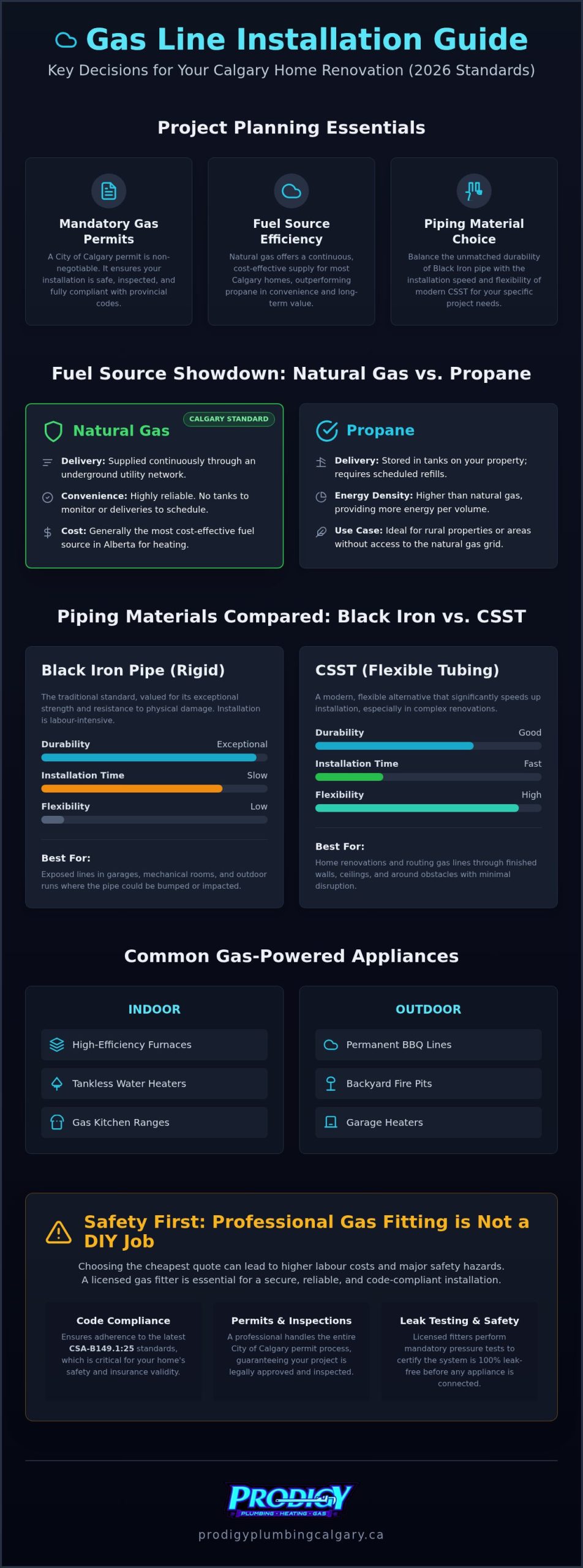
Natural gas is delivered through a permanent underground utility network. Propane, by contrast, is stored in tanks on your property and requires regular refills. For a broad Fuel Gas Overview, it’s useful to understand that propane has a higher energy density, meaning it contains more energy per volume than natural gas. However, Calgary’s established infrastructure makes natural gas the more practical and common choice for most homeowners. It eliminates the need for bulky storage tanks and the logistics of scheduling deliveries.
The Long-Term Benefits of Natural Gas
Choosing natural gas for your home provides several practical advantages. It’s generally the most cost-effective fuel source in Alberta, especially compared to the price of propane refills or the higher costs of electric heating. This makes it an efficient choice for large-scale heating needs. A continuous supply is another major factor. You won’t have to worry about running out of fuel during a week-long cold snap in January. This reliability offers peace of mind that a propane tank simply cannot match. Additionally, gas-ready homes often see a boost in property value. Buyers in the Calgary market appreciate the convenience and lower operating costs of a home already equipped for high-efficiency gas appliances.
Common Gas-Powered Appliances in YYC
Many homeowners start with a furnace and then realize they can expand their gas usage to other areas of the property. A professional gas line installation in Calgary can support a wide range of appliances:
- Indoor: High-efficiency furnaces, tankless water heaters, and precise gas kitchen ranges.
- Outdoor: Permanent BBQ lines, fire pits, and the essential Calgary garage heater for winter projects.
- Commercial: Heavy-duty boilers and large-scale kitchen equipment for local restaurants and businesses.
Switching to gas for these items often leads to faster heating times and better temperature control. Whether you’re upgrading your kitchen or making your backyard more functional, the right gas infrastructure is the foundation of a comfortable home.
Black Iron vs. CSST: Comparing Gas Piping Materials
Selecting the right material for a gas line installation in Calgary involves more than just looking at the price per foot. It requires an understanding of how the pipe will interact with your home’s structure and your long-term goals. For decades, rigid black iron was the only option available to tradespeople. Today, flexible stainless steel has changed the workflow for many residential projects, offering a different set of benefits and requirements.
Material choice directly affects the labour time and overall complexity of your project. While some materials are faster to install, others offer superior protection against physical impact. Choosing between them depends on where the line is being run and whether you are working with an open frame or a finished basement. If you are planning a renovation, our team can help you select the most efficient material for your custom plumbing work.
Traditional Black Iron Pipe
Black iron remains the industry standard for a reason. It is incredibly durable and resistant to mechanical damage. This makes it the best choice for exposed lines in garages, mechanical rooms, or outdoor runs where the pipe might be bumped or kicked. However, installing it is labour-intensive. Every section must be measured precisely, cut, and then threaded with a heavy machine. This process creates a very strong and rigid system, but it also takes more time to navigate around tight corners or through existing joists.
Corrugated Stainless Steel Tubing (CSST)
CSST is a flexible, yellow-jacketed tubing that has become popular for home renovations and basement completions. Because it bends easily, it can be pulled through walls and ceilings much like electrical wire. This significantly reduces the number of joints and fittings needed, which lowers the risk of potential leaks at connection points. While the material itself often costs more than black iron, the reduced labour time can balance the total project cost.
Safety is the primary consideration when using flexible tubing. CSST requires specific bonding and grounding to the home’s electrical system to prevent damage from electrical arcs or lightning strikes. The Canadian Gas Association Safety standards emphasize that these installations must follow strict provincial codes to protect the property. A professional gas line installation in Calgary ensures that these technical requirements are met, providing a level of security that DIY attempts cannot offer. We prioritize these details to ensure your system is grounded correctly and protected from mechanical wear.
Indoor vs. Outdoor Gas Lines: Planning Your Installation
Planning a gas line installation in Calgary requires a clear understanding of your property’s layout and the total energy demand of your appliances. The logistical approach for an interior hook-up differs significantly from an exterior extension. Inside the home, the priority is often minimizing disruption to finished surfaces. Outside, the focus shifts to environmental protection and meeting Alberta’s specific burial depth requirements. Every project begins with sizing the line correctly. We calculate the total British Thermal Units (BTUs) required by your appliances to determine the necessary pipe diameter. This ensures that your furnace, stove, and fireplace all receive steady pressure even when running simultaneously.
A new installation often occurs alongside other upgrades like a hot water tank replacement Calgary homeowners frequently undertake. In these cases, we evaluate the existing manifold to see if it can support the additional load without starving your other equipment. Choosing the right route through your joists or along the foundation can save hours of drywall repair and keep your utility room organized. Homeowners undertaking major infrastructure work should also be aware of their underground drainage systems; if you notice slow drains or backups during your renovation, reviewing a sewer line repair near me diagnostic checklist can help you identify whether a separate issue needs attention before it becomes a costly emergency.
Indoor Installations: Ranges, Dryers, and Fireplaces
Kitchen upgrades are the most common reason for interior gas work. Many homeowners realize that a gas range offers superior temperature control compared to electric models. When running these lines, we look for the most direct path from the main supply to the kitchen. Laundry rooms also benefit from gas-powered dryers, which are generally more efficient. These require careful planning for both the fuel line and the essential venting system. Adding a gas fireplace insert is another excellent way to provide zone heating, reducing the strain on your central furnace during chilly autumn evenings.
Outdoor Living: BBQs and Fire Pits
Installing a permanent gas line for your BBQ eliminates the frustration of empty propane tanks in the middle of a meal. For outdoor fire pits or patio heaters, we often run underground lines. Alberta code requires these lines to be trenched at specific depths to protect them from frost heave and accidental damage. We also place shut-off valves in accessible locations, making it simple to winterize the system or shut it down for maintenance.
The Calgary Garage Heater Special
Garage heaters are a staple in our climate, turning a frozen storage space into a functional workshop. Planning a gas line installation in Calgary for a garage involves running a line from the main meter to the secondary structure. You generally choose between overhead unit heaters or radiant tube heaters. Unit heaters are compact and warm the air quickly, while radiant tubes heat the objects in the room, making them very efficient for large spaces. We ensure the gas pressure is regulated correctly for the distance to the garage, providing reliable heat all winter long.
Professional Gas Fitting vs. DIY: The True Cost of Safety
DIY projects are a common way for Calgary homeowners to save money, but gas work is not a hobby. The Alberta Safety Codes Act is very clear: you need a valid permit and a certified professional for any gas line installation in Calgary. Taking a “handyman” approach might save a few dollars upfront, but the legal and physical risks are immense. A single poorly threaded joint or an incorrect pipe size can lead to slow leaks that are difficult to detect without specialized equipment. Our team prioritizes safety over speed, ensuring that every connection is verified before the system is pressurized.
Beyond the immediate safety threat, uncertified work creates a massive financial liability. If a fire or explosion occurs and the subsequent investigation finds unpermitted gas work, your homeowner’s insurance provider will likely void your policy. You could be left responsible for the entire cost of property damage out of your own pocket. Professional gas line installation in Calgary includes a documented pressure test, which serves as your proof that the system was built to the highest standard. This methodical approach protects your family and your investment.
What a Licensed Gas Fitter Brings to the Job
A professional gas fitter understands the physics of fuel delivery. We don’t just “hook things up”; we calculate the exact pressure drops to prevent your furnace from starving when the kitchen range is on. We also ensure that all clearance distances from windows and air intakes meet current 2026 codes. Our team uses calibrated electronic leak detectors and high-grade manometers to verify that every connection is airtight. This level of precision is something a standard toolkit simply cannot provide.
The Inspection and Permit Process
The journey to a safe installation follows a steady, organized path. It starts with a permit application through the City of Calgary. Once the work is complete, a municipal inspector visits the site to perform an independent review. Only when they are satisfied do they issue a “green tag,” which is the official signal that your system is safe for use. This process is your best defence against faulty workmanship. Investing in a proper setup now is the best way to avoid needing emergency plumbing Calgary services later. If you want to ensure your home is handled with care, you can contact our licensed gas fitters today to discuss your project.
Choosing the Right Gas Fitter for Your Calgary Property
A comprehensive quote for a gas line installation Calgary project should be transparent. It needs to include the municipal permit fee, all piping materials, and the final pressure test. You should avoid quotes that are vague about who pulls the permit. If a contractor asks you to pull it as a homeowner, they are usually trying to avoid accountability. A professional team handles the paperwork to ensure the work is recorded correctly with the city.
Calgary’s climate creates unique challenges for gas infrastructure. Frost heave can shift underground lines if they aren’t buried at the correct depth. We realize that 15 years of local experience matters when navigating these geological factors. Soil conditions in different parts of the city can also affect how we trench outdoor lines for fire pits or garage heaters. The same Calgary soil conditions that challenge underground gas lines can also stress your home’s drainage infrastructure, so if you ever notice warning signs of pipe deterioration, consulting a sewer line repair near me resource for Calgary homeowners can help you catch problems before they escalate.
Prodigy Mechanical is an owner-operated business. This means Steve is directly accountable for every project. You aren’t dealing with a revolving door of technicians or a corporate call centre. This personal touch ensures that no step is skipped and the job site is left clean. We take pride in methodical workmanship that prioritizes your family’s safety. You can contact our team to discuss your specific needs.
Transparency and Reliability
We use a per-job fee structure. This provides clarity and prevents surprises when the final invoice arrives. You will always know exactly who is coming into your home. This direct line of communication is essential for building trust. With over 15 years in the trade, we have seen every type of routing challenge. We can solve complex issues without creating unnecessary damage to your home’s structure.
Booking Your Calgary Gas Line Project
Contacting us is the first step toward a safer home. Before the technician arrives, it is helpful to have the BTU ratings of your new appliances ready. This information is usually found on the manufacturer’s plate. It helps us size your gas line installation Calgary project accurately from the start. The process typically moves from an initial assessment to permit filing, installation, and the final municipal inspection. We manage the entire timeline so you can focus on enjoying your new gas range or garage heater.
Securing Your Home with Professional Gas Infrastructure
Building a safe and efficient home requires more than just picking the right appliances. It involves a methodical approach to your gas line installation Calgary project, ensuring that every pipe run and connection point meets the latest provincial safety standards. Whether you choose the rugged durability of black iron or the modern flexibility of CSST, the focus remains on a reliable fuel supply that protects your family and your property investment. Skipping steps or ignoring permit requirements is never worth the risk when dealing with combustible fuel.
Prodigy Mechanical brings over 15 years of industry experience to every job site. As an owner-operated business, we provide the accountability and methodical workmanship your home deserves. Our licensed Calgary gas fitters handle the technical details, from initial sizing to the final municipal inspection. You can Request a Professional Gas Line Assessment from Prodigy Mechanical to ensure your next indoor or outdoor project is handled with precision. We take pride in delivering results that offer long-term peace of mind and smooth operation for all your gas-powered appliances.
Frequently Asked Questions
Do I need a permit for a gas line installation in Calgary?
Yes, a municipal permit is mandatory for every gas line installation in Calgary. This requirement ensures that all work is recorded and eventually inspected by a City of Calgary safety codes officer. While a homeowner can apply for a permit if they are a certified journeyman living in the home, most residents must hire a licensed contractor to pull the permit. This process protects your property and ensures your insurance remains valid.
How much does it cost to install a gas line for a BBQ in Calgary?
Project costs depend on the distance from your gas meter and the complexity of the route through your home or yard. Factors such as whether the line is run through a finished basement or requires trenching for an underground run will influence the final quote. A professional assessment includes the cost of the City of Calgary permit, high-quality materials, and a mandatory pressure test to ensure the system is leak-free and ready for use.
What is the difference between a plumber and a gas fitter?
A plumber primarily manages water supply and drainage systems, while a gas fitter is specifically trained and licensed to work with fuel gases like natural gas and propane. In Alberta, gas fitting is a compulsory trade, meaning it’s illegal to perform this work without proper certification. Many skilled tradespeople hold dual certifications, allowing them to handle both your kitchen plumbing and the gas line for your new professional-grade range safely.
Can I run a gas line myself if I buy the materials at a hardware store?
No, you cannot legally install or modify gas lines yourself in Calgary unless you’re a certified journeyman gas fitter. Hardware stores sell the materials, but the Alberta Safety Codes Act requires a licensed professional to perform the installation and obtain the necessary permits. Attempting DIY gas work poses severe safety risks, including fire or carbon monoxide leaks, and it’ll almost certainly void your homeowner’s insurance policy if a problem occurs.
How long does a typical gas line installation take?
Most residential gas projects, such as a BBQ hook-up or a kitchen range conversion, are completed within a single day. A simple interior line extension might take only three to five hours, while complex outdoor runs involving trenching or multiple appliances can take longer. This timeline includes the physical installation and the mandatory pressure test. We coordinate the municipal inspection afterward, which usually happens on a separate day based on city availability.
What happens during a gas line inspection in Calgary?
During the inspection, a City of Calgary safety codes officer verifies that the work matches the permit and meets all current provincial codes. They check the pressure gauge to ensure the line has held its test pressure without dropping, which proves there are no leaks. The inspector also reviews material choices, clearance distances from windows or air intakes, and proper venting. Once satisfied, they issue a “green tag” to authorize the gas turn-on.
Is CSST gas piping safe to use in my home?
Corrugated Stainless Steel Tubing (CSST) is safe and effective when installed by a professional who understands modern grounding requirements. Because it’s flexible, it reduces the number of joints where leaks could occur. However, it must be properly bonded to your home’s electrical grounding system to prevent damage from electrical surges or lightning strikes. When these safety protocols are followed, CSST is a reliable alternative to traditional rigid black iron pipe for a gas line installation in Calgary.
Can I convert my wood-burning fireplace to natural gas?
Yes, many Calgary homeowners successfully convert wood-burning fireplaces to natural gas using a certified gas insert. This project requires running a new gas line to the fireplace hearth and ensuring the existing chimney is suitable for a new venting liner. Converting to gas provides more consistent heat and eliminates the mess of wood and ash. It’s an efficient way to add zone heating to your main living area while increasing your home’s overall value.