

Planning commercial water heater replacement Calgary property managers can rely on is easier before the existing unit fails. For Calgary building operators, the challenge is choosing equipment that can meet demand while keeping hot water available for tenants, staff, and customers.
Questions about sizing, downtime, and installation are understandable. Start with how your building uses hot water, then account for the work needed to fit a replacement into existing operations. This practical guide explains what to consider at each stage.
You’ll learn how to assess changing demand, plan installation around building operations, and understand requirements that can affect the work. Prodigy Mechanical provides commercial plumbing and hot water tank replacement in Calgary. With more than 15 years of industry experience, our licensed technicians plan each project around the property’s needs and work to limit avoidable disruption.
Key Takeaways
- Recognize when recurring breakdowns, inconsistent hot water, or changing building demand point to a replacement project.
- Match system capacity to measured use and peak periods, then compare storage and on-demand options against your building’s operating pattern.
- Plan commercial water heater replacement Calgary around site access, equipment location, and building schedules to help limit disruption.
- Use a practical checklist to account for maintenance access, affected users, and hot-water continuity during the work.
- Prodigy Mechanical’s commercial plumbing experience supports a clear process, from understanding site needs through replacement and operational review.
Commercial water heater replacement in Calgary: when is a project needed?
Unreliable hot water can disrupt daily operations in offices, retail spaces, and strata buildings. Staff may lose access to sinks, customers may face reduced service, and residents may have trouble using shared or in-suite fixtures. Planning a commercial water heater replacement Calgary businesses can depend on starts with identifying the problem and understanding how the building uses hot water.
Recurring breakdowns, inconsistent temperatures, and shortages during busy periods are useful signals to investigate. They don’t automatically mean the water heater must be replaced. A professional assessment can help determine whether repair is suitable or whether the equipment’s condition or the building’s needs point towards replacement.
Age alone isn’t enough to make that decision. The unit’s condition, service history, performance, and current demand all matter. Commercial buildings also have different operating patterns from homes, so this guide focuses on facility needs and project planning. For household considerations, see the Calgary hot water tank replacement guide.
What commercial water heater problems warrant an assessment?
Track repeated service calls, fluctuating water temperatures, or hot water running short during peak use. These patterns help show whether an issue is persistent and when it affects operations. Leaks or visible deterioration around the unit call for prompt professional assessment because water can damage nearby areas and the underlying cause needs to be identified. No single symptom proves replacement is necessary. An assessment should consider the equipment’s overall condition and performance.
How does the building’s hot-water demand shape the project?
Assessment starts with how the building operates: occupancy, operating hours, fixture use, and peak-demand periods. An office may have concentrated use around breaks, while a retail property’s needs can follow customer and staff activity. A multi-unit building may have demand spread across homes and shared facilities. Understanding water heating systems provides useful background, but the right replacement plan depends on the building’s actual use.
Before planning, document recurring shortages and operating concerns. Note when they happen, which areas or fixtures are affected, and whether occupancy or building use has changed. These details give the plumbing team a clearer basis for assessing capacity and replacement options, rather than relying on the old unit as the only measure of what the building needs.
How to select commercial water heater capacity and system type
The right system is one that can meet the building’s actual hot-water demand and suit its operating conditions. For commercial water heater replacement Calgary properties need more than a match to the old unit’s size. Changes in occupancy, fixtures, or operating hours can make the previous setup a poor guide to future needs.
Gather information that will help shape an assessment:
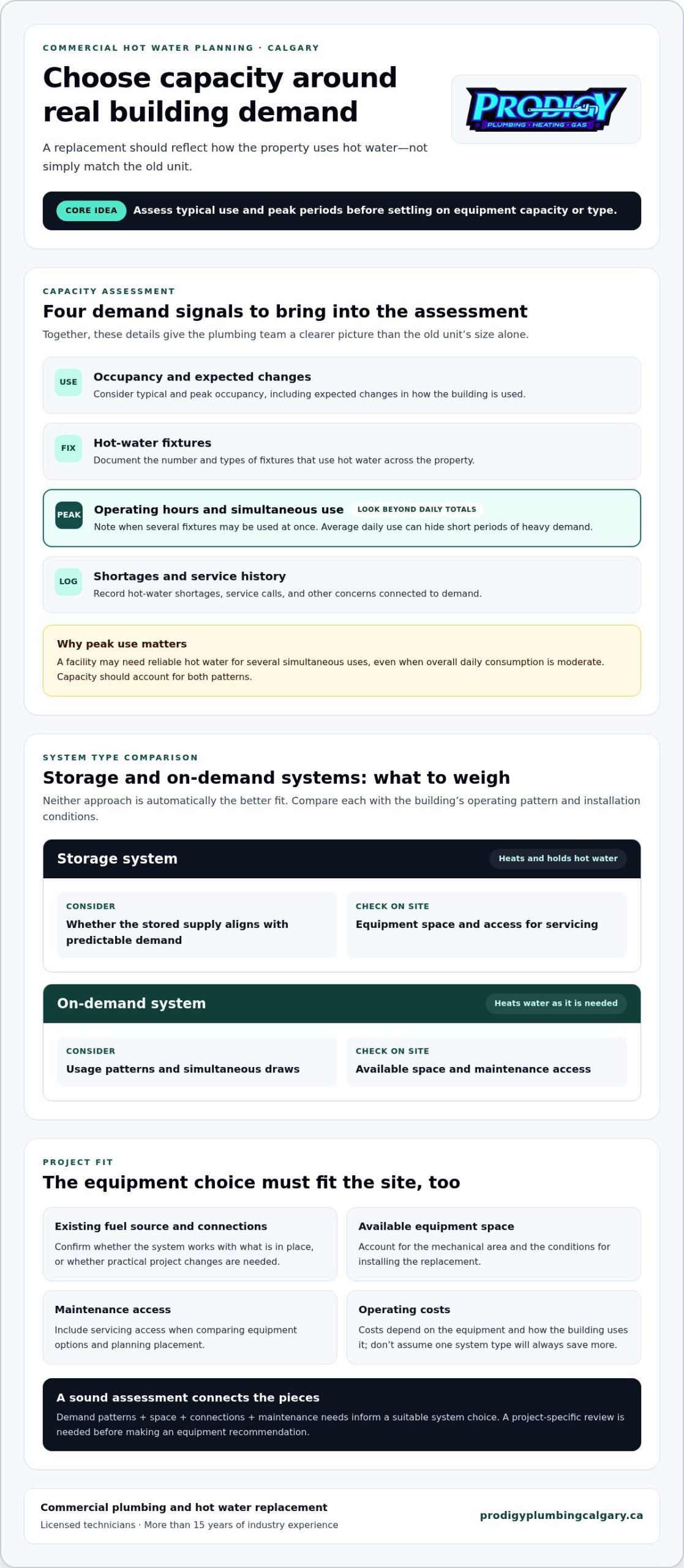
- Typical and peak occupancy, including any expected changes.
- The number and type of fixtures that use hot water.
- Operating hours and periods when several fixtures may be used at once.
- Records of shortages, service calls, and other demand-related concerns.
Average daily use matters, but it can hide short periods of heavy demand. A facility may need reliable hot water for several simultaneous uses, even if overall daily consumption is moderate. A qualified assessment should consider both patterns before determining capacity. The building’s existing fuel source, connections, available space, and installation conditions also affect which options are suitable.
How should a business compare storage and on-demand systems?
Storage systems heat and hold a supply of hot water. They may suit predictable demand when there is room for the equipment and access for servicing. On-demand systems heat water as it is needed, so equipment space and simultaneous use are considered differently. Neither approach is automatically the better fit. Maintenance access, peak-use patterns, and the building’s operating priorities all matter.
Use these suitability factors as a starting point for discussion, not as a final equipment recommendation:
Storage approach: Consider how the stored supply aligns with predictable demand, available equipment space, and servicing access.
On-demand approach: Consider usage patterns, simultaneous draws, available space, and maintenance access.
Both system types need to work with the building’s existing fuel source and connections, or with changes that are practical for the project. Operating costs also depend on the equipment and how the building uses it, so don’t assume one type will always save more. A project-specific review connects demand, space, connections, and maintenance needs to a suitable choice.
Prodigy Mechanical’s licensed technicians handle commercial hot water tank installations and replacements in Calgary. Prodigy Mechanical’s commercial plumbing services include work for commercial properties as you plan the project.
How to plan replacement around Calgary building operations
A well-organized replacement accounts for the building as well as the equipment. Access to the mechanical area, the unit’s location, existing connections, and the daily schedule all shape the work plan. Coordinating early with tenants, staff, and building representatives helps everyone understand what to expect. Actual downtime depends on site conditions and project scope, so discuss it as part of planning rather than assuming a timeline in advance.
What happens during commercial replacement planning?
Planning begins with a review of the existing equipment, connections, access route, and relevant building requirements. The findings help define the scope and establish a practical work sequence. A site with restricted access or equipment in a shared mechanical room may need different coordination from a site with clear access. The schedule and expected service interruption can be discussed once these conditions are understood.
A commercial water heater replacement Calgary project can be organized in six steps:
- Assess: Review the existing unit, site conditions, access, and building requirements.
- Scope: Define the replacement work and identify the sequence needed for the site.
- Schedule: Coordinate the work with building operations and communicate expected service interruptions.
- Replace: Complete the installation according to the agreed scope and work plan.
- Test: Check the system’s operation after installation.
- Hand over: Review the completed work and share relevant operating information with the building representative.
How can a Calgary property prepare for installation?
Good preparation helps the work proceed in an orderly way. Arrange access to the equipment and any areas needed to reach it. Name a property contact who can coordinate with the installation team and communicate decisions to the right people. If tenants, staff, or customers may be affected by a temporary interruption, share the expected impact and timing once the project schedule is established.
Before work begins, identify the requirements that apply to the project’s scope and location. Calgary and Alberta rules can depend on the work involved, so don’t treat every replacement as identical. The project plan should account for applicable permitting, inspection, and other building requirements after they have been verified for the specific job.
These steps give building representatives a clear sequence to follow while leaving room for actual site conditions. Careful coordination can help limit avoidable disruption without promising a fixed completion time before the work is assessed.
Commercial water heater replacement checklist for Calgary decision-makers
A clear checklist helps building representatives keep practical needs in view while reviewing a replacement plan. Use it to capture how the building operates and what the installation must account for. A commercial water heater replacement Calgary project is shaped by its scope and site conditions, so a written plan is more useful than assumptions based on a standard installation.
- Demand: Record hot-water needs, busy periods, and any known changes in occupancy or building use.
- Equipment location: Note where the existing unit sits and whether the area allows room for the proposed work and future servicing.
- Access: Identify routes to the equipment, access arrangements, and any areas that need coordination.
- Operating priorities: Clarify which services are essential and how the building will manage a temporary interruption.
- Affected users: Identify tenants, staff, customers, or building representatives who may need advance notice.
- Continuity planning: Document how the property will communicate and respond if hot-water service is interrupted during the work.
What should a commercial replacement scope make clear?
A written scope should summarize the assessment findings, the planned work, and how the replacement relates to existing equipment connections. It should also describe the expected work stages and handover expectations, so building representatives know what information they’ll receive when the project is complete. Clear communication helps align property managers, maintenance staff, and other stakeholders before installation begins.
The scope should reflect the actual site rather than rely on assumptions. Equipment location, access constraints, and building requirements can affect how the work is organized. These details also help explain why project plans and costs depend on scope and site conditions, rather than on a generic price range.
How can decision-makers compare project plans?
Review how each plan addresses building demand, equipment access, and possible disruption to operations. A useful plan sets out a clear work sequence and identifies a communication contact for the property. That makes it easier to coordinate updates, prepare affected users, and understand how questions will be handled as the work progresses.
Compare the clarity of the plan, not just its summary. Does it connect the assessment to the proposed work? Does it account for maintenance access and the building’s operating priorities? A careful review helps decision-makers understand what is planned and where coordination is needed.
Calgary commercial plumbing project information from Prodigy Mechanical can help inform your planning.
How Prodigy Mechanical handles commercial water heater replacement in Calgary
Commercial water heater replacement needs to account for the building, not just the equipment. Prodigy Mechanical works with commercial and strata properties in Calgary, including offices and retail spaces. With more than 15 years of industry experience, the team brings practical plumbing knowledge to projects where hot-water demand, access, and daily operations all matter.
The process starts with understanding the site and the concern behind the project. Recurring service issues, changing building use, or plans to replace ageing equipment each call for a clear review of the property’s needs. From there, the work is planned around the existing setup and the building’s operating priorities. Licensed technicians complete the installation or replacement, then review the system’s operation with the property representative.
What can commercial clients expect from the project?
Expect practical communication about the work scope, equipment access, and operational considerations. These details help building representatives prepare for the project and coordinate with staff, tenants, or other affected users. The plan is shaped around the building’s hot-water needs and site conditions, rather than assuming every facility has the same requirements.
Clear planning also helps set expectations about the stages of work and any potential service interruption. The actual project details depend on the equipment and site, so the plan should reflect what is found at the property. For a broader overview of plumbing services in the city, see the Calgary plumbing and heating guide.
What is the next step for a Calgary property?
Start with the building type and the current hot-water concern. A property manager can outline how the system is used, what problems have come up, and any operating requirements the project should consider. Details such as access and the equipment’s location also help inform the assessment and replacement plan.
Prodigy Mechanical provides commercial plumbing and hot water tank replacement for Calgary facilities. A clear summary of the site and current hot-water concern helps establish a practical starting point for planning.
Request commercial water heater replacement service in Calgary.
Plan your next replacement with confidence
A dependable commercial water heater starts with a clear understanding of the building’s hot-water demand. Review how use changes through the day, then choose equipment and capacity based on actual operating needs rather than simply matching the old unit. A well-defined scope, coordinated schedule, and communication with affected building users can also help limit avoidable disruption.
Every property has different requirements. Prodigy Mechanical provides commercial plumbing service for Calgary properties, with licensed technicians and more than 15 years of industry experience. The team can help assess site needs, plan the replacement work, and review system operation after installation.
If you’re considering commercial water heater replacement Calgary, share your building type and current hot-water concern to start a practical project discussion. Discuss your commercial water heater replacement project with Prodigy Mechanical.
Frequently Asked Questions
When should a commercial water heater be replaced instead of repaired?
Replacement may make sense when recurring breakdowns, inconsistent temperatures, leaks, or shortages keep affecting building operations, but no single symptom proves the unit must go. A qualified assessment should consider the equipment’s condition, service history, repair needs, and the building’s current demand. Age alone isn’t enough to decide. The assessment can clarify whether repair is practical or replacement better suits the property’s needs.
How is a commercial water heater sized for a Calgary building?
Commercial water heater sizing should reflect the building’s actual hot-water use, not just the capacity of its existing unit. An assessment considers occupancy, fixture types and numbers, operating hours, and peak periods when several hot-water draws may happen together. Changes in building use can also affect demand. For commercial water heater replacement Calgary properties need, a qualified assessment should determine final sizing and account for the existing system and site conditions.
How long does commercial water heater replacement take?
There isn’t one reliable completion time for every commercial replacement. The schedule depends on the project scope and site conditions, including equipment access, its location, and the connections involved. A straightforward replacement and a project requiring changes to existing connections may involve different work. A site assessment helps establish a realistic sequence and schedule. Building representatives can then coordinate with affected tenants or staff based on the project plan.
Can a commercial water heater be replaced without shutting down the building?
The building may be able to continue operating, but hot-water service could need to be interrupted during some or all of the work. Whether other operations can continue depends on the equipment location, project scope, and how the building uses hot water. Planning should identify affected areas and users, set out expected interruptions, and coordinate communication. Don’t assume service can remain uninterrupted until the site and work sequence have been assessed.
Should a business choose a storage or tankless commercial water heater?
The better fit depends on demand patterns, available space, existing fuel source and connections, and maintenance access. A storage system holds heated water for use, while a tankless system heats water as it is drawn. Consider whether hot-water demand is predictable or involves simultaneous draws, and how each option fits the building’s operations. Neither system is right for every property, and operating savings shouldn’t be assumed without a project-specific assessment.
What information should I prepare before requesting commercial water heater replacement?
Prepare the building type, current hot-water concern, and any history of breakdowns, temperature changes, or shortages. Helpful details include occupancy, operating hours, fixture use, and when demand peaks. Note the equipment’s location, access arrangements, and any known changes to the building’s use. Identifying affected users and a property contact can also help shape communication and planning. These details give the assessment a practical starting point.
Does commercial water heater replacement require permits in Calgary?
Permit needs depend on the work involved. In Calgary, work on a gas line, including installing or replacing a gas-fired water heater, requires a gas permit obtained by a qualified gas fitter. A plumbing permit is required for plumbing alterations or extensions; a like-for-like replacement may not require one. Structural changes or a change in business activity may also require a building permit. Requirements should be verified for the project with the City of Calgary.