

A water heater doesn’t always announce trouble with a sudden breakdown. A change in hot-water supply, a new sound, or moisture near the tank can be an early clue. For homeowners searching for water heater maintenance Calgary, knowing what to check, and what to leave alone, can help distinguish routine observation from a repair concern.
It’s reasonable to want a reliable supply of hot water without taking on work that could be unsafe or damage the equipment. Calgary’s hard water can contribute to sediment buildup, but symptoms can have different causes, and not every maintenance task is suitable for a DIY approach.
This checklist explains which visual checks are sensible, how to follow care guidance for your specific water heater, and which tasks should be handled by a qualified plumber. It also covers warning signs such as leaks, unusual noises, and inconsistent hot water, plus when a professional assessment may help clarify whether repair or replacement is worth discussing.
Key Takeaways
- Use your water heater’s manufacturer guidance as the starting point, since care varies by equipment type, fuel, age, and use.
- Include simple visual observations in your water heater maintenance Calgary routine, and note changes in hot-water supply, sounds, or visible moisture.
- Leave work involving valves, burners, wiring, or internal components to a qualified professional. Don’t dismantle the equipment or adjust gas components yourself.
- Keep a maintenance log with dates, symptoms, service details, and technician recommendations to help track changes over time.
- If a warning sign persists or you’re unsure what it means, seek an assessment to understand whether repair or replacement should be discussed.
Water heater maintenance in Calgary: what homeowners should check
Noticing a change early gives you useful information, although routine checks can’t prevent every breakdown. Water heater maintenance Calgary homeowners can manage starts with observation and the manufacturer’s care instructions. If something seems wrong, or a task falls outside your comfort level, seek a professional assessment.
Maintenance isn’t one procedure that suits every unit. It combines model-specific care with simple checks of the equipment’s surroundings and operation. A conventional tank stores heated water, while a tankless unit heats water as it flows through the system, so their maintenance needs can differ. This overview of storage water heaters explains the basic tank design.
A quick visual check around the water heater
Look at the floor and visible exterior surfaces for moisture, corrosion, or unusual staining. Notice any changes around accessible connections without touching or tightening them. Keep the area around the unit clear so you can see it and reach it safely. Record new sounds, such as repeated popping or rumbling, and any unusual odour.
Keep your hands away from gas fittings, wiring, and hot components. Don’t remove access panels or investigate inside the unit. If you notice a gas-like odour, move away from the equipment and contact the appropriate gas professional or utility for guidance.
Use the manual, not a one-size-fits-all schedule
Find the equipment label and record the make, model, and fuel type. Look for the owner’s manual or the manufacturer’s care instructions. If the paperwork is missing, the model information can help you locate the correct guidance. A tank and a tankless heater may call for different procedures, and requirements can vary between models.
Don’t assume every Calgary home needs the same flushing or inspection schedule. The right interval and method depend on the unit, its installation, and the manufacturer’s instructions. Calgary’s hard water can contribute to mineral or sediment buildup, but that alone doesn’t establish a safe procedure or schedule for your heater.
Before attempting maintenance beyond observation, check the manual for clear homeowner instructions. If a step involves draining the unit, operating a valve, opening a panel, or handling gas or electrical components, pause and seek qualified advice rather than improvising. A professional can assess an unfamiliar condition and explain whether routine service, a repair, or a discussion about replacement is appropriate.
How Calgary conditions and heater type shape water heater care
Water heater care depends on more than where you live. The equipment’s design, fuel type, age, household use, and installation all affect which checks or service procedures apply. Manufacturer guidance is the best starting point, not a schedule borrowed from another home or heater model. That distinction keeps water heater maintenance Calgary advice practical without assuming every unit needs the same work.
Sediment buildup is the gradual accumulation of minerals or other particles inside a water heater; how much is present and whether it matters depends on the unit and its water conditions. A sound or change in operation may be worth recording, but it doesn’t confirm sediment is the cause. Avoid drawing conclusions or attempting a flush without checking the manual or getting qualified advice.
Tank and tankless water heaters need different care
A storage tank holds heated water, while tankless equipment heats water on demand. Their components and service procedures differ. A tankless unit may also have model-specific indicators or instructions, so don’t assume a light or code means the same thing across brands. Check the manual for your exact model, fuel, and maintenance guidance. If the instructions are unclear, ask a qualified technician before attempting service.
Check the installation area and visible venting
Keep the space around the heater clear so you can see the accessible exterior and surrounding floor. In Calgary’s cold winters, a unit tucked into a difficult-to-reach utility area may be harder to observe, so note access problems rather than moving the equipment. Look for visible moisture or damage, and report concerns around gas-unit venting. Don’t adjust vent components or touch gas fittings, wiring, or hot surfaces.
Age and use matter, too. A heater serving a busy household may see a different pattern of demand than one used occasionally, while an older unit may warrant closer attention to new or changing symptoms. Record what you notice and compare it with the manufacturer’s guidance. Concerns involving combustion, gas, or electrical connections call for professional assessment, not homeowner troubleshooting.
If an assessment points to a repair or replacement discussion, Prodigy Mechanical lists hot water tank repair and replacement among its services. A qualified professional can help interpret the condition and explain appropriate next steps for the equipment.
Routine checks versus plumber service: know what not to DIY
A homeowner can notice and record changes without diagnosing the cause. Water heater maintenance Calgary residents do themselves should stay within safe visual observation and the manufacturer’s clear instructions. Don’t dismantle the unit, open covers, adjust gas components, or work on wiring, valves, burners, or internal parts. If a task or control is unfamiliar, leave it alone and ask a qualified professional.
A routine observation records what you can see or notice; a technician’s diagnosis identifies the likely cause and appropriate next step. A mark, sound, or performance change is useful information, but it doesn’t confirm a specific fault.
What homeowners can safely observe
Without removing covers or operating unfamiliar controls, note:
- Changes in how much hot water is available or how consistently it reaches the taps.
- Visible moisture, leaks, corrosion, or staining around the unit and accessible connections.
- New or recurring sounds, such as popping, rumbling, or repeated clicking.
- Error indicators shown on the unit’s display, if it has one. Record the code or message rather than attempting a repair.
Write down when a change started and whether it happens repeatedly. Stop investigating and seek advice if there’s a gas smell, an active leak, or another unsafe condition. Don’t touch the equipment to confirm what’s wrong.
When a qualified plumber should assess the heater
Arrange a professional assessment for recurring changes in hot-water supply, visible corrosion, persistent moisture, or an error that continues to appear. A qualified professional should also handle work involving the pressure-relief valve, gas system, electrical connections, burners, and internal components. These parts aren’t appropriate for trial-and-error troubleshooting.
Visible wear doesn’t automatically mean the heater needs immediate replacement. A technician can consider its condition and the symptoms you’ve reported, then explain whether repair is appropriate or replacement should be discussed. The hot water tank replacement guide can help you understand the factors involved in that decision. Share your observations and any error messages so the assessment can start with clear, useful information.
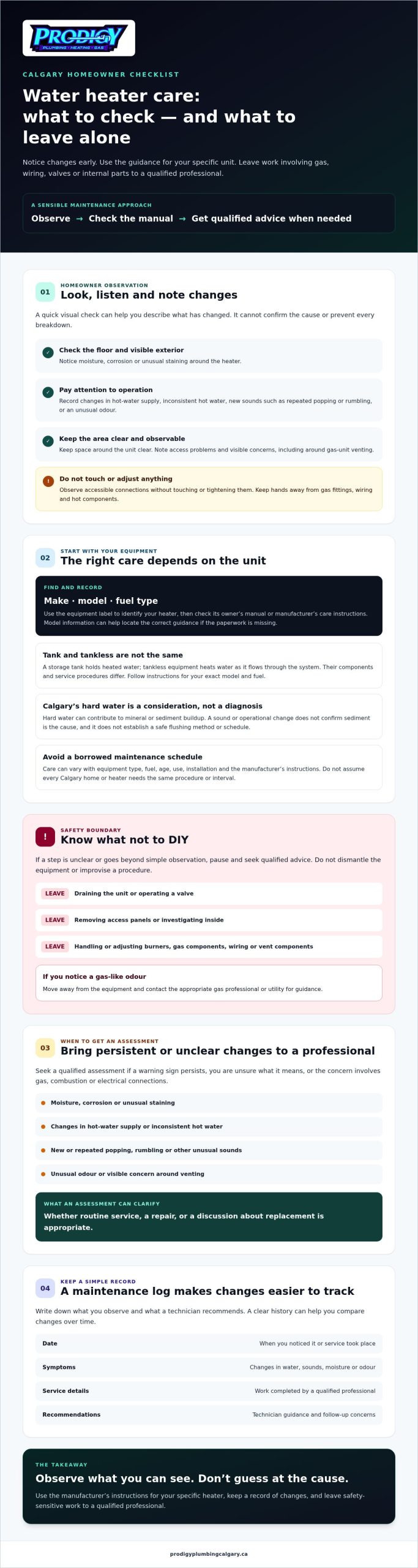
A practical water heater maintenance checklist for Calgary homes
A simple record makes changes easier to track and can help focus a professional assessment. Follow this sequence for water heater maintenance Calgary homeowners can manage safely: identify the unit, observe, record, consult the manual, then arrange service if needed. Use the manufacturer’s instructions for timing and procedures. There’s no single schedule that applies to every model.
Record the equipment details and changes
- Identify: Note the make, model, fuel type, and any visible age information on the equipment label. Record where you keep the manual, or save a copy with your household records.
- Observe: Look for visible moisture, staining, or corrosion, and note changes in hot-water supply, unusual sounds, or error indicators. Don’t remove covers or operate unfamiliar controls to investigate.
- Record: Write down the date, what you noticed, when it began, and whether it happens intermittently or persists. Keep this log with past service records and technician recommendations.
- Consult: Check the manual for guidance that matches your exact model and installation. Don’t apply a procedure or interval simply because it was recommended for a different heater.
- Arrange service if needed: If a concern continues, or the manual calls for work you’re not qualified to perform, contact a qualified professional for advice.
A useful log can be as simple as: Date | Symptom or observation | Service completed | Technician recommendation. Add an entry after each notable change or service visit. Over time, this helps distinguish a one-time observation from a recurring issue.
Prepare for a professional assessment
Share the equipment details, your notes, and any visible changes with the technician. Ask what was inspected, what needs attention, and whether the recommendation follows the manufacturer’s instructions. You can also ask what signs to monitor and which work should be left to a professional. Clear answers help you understand the next step without guessing.
For active leaks, gas concerns, or another unsafe condition, don’t wait to complete a routine log. Move away from the affected equipment as appropriate and seek prompt guidance from a qualified professional or the relevant utility. Don’t touch fittings, wiring, hot components, or unfamiliar controls.
If an assessment indicates that repair or replacement may be worth discussing, the Calgary plumbing and heating guide offers related service context. For a heater-specific concern, share your records with a professional who can explain the findings and appropriate options. You can also discuss hot water tank repair or replacement based on the assessment.
When to contact a Calgary plumber about water heater maintenance
Not every unusual sound or one-time change calls for immediate service. If there’s no active leak or safety concern, note what you observed and check whether it happens again. A recurring change in hot-water supply, persistent moisture, visible corrosion, or an error indicator that keeps returning is a good reason to seek professional advice. For water heater maintenance Calgary homeowners should distinguish what they can monitor from problems that need a qualified assessment.
Act promptly if you notice an active leak, smell gas, or believe the equipment is unsafe. Don’t touch fittings, wiring, hot components, or unfamiliar controls. Move away from the affected area as appropriate and seek guidance from a qualified professional or the relevant utility.
A technician can assess the heater’s condition and explain whether the findings point to a repair or whether replacement should be discussed. A sign of wear alone doesn’t settle that decision. Prodigy Mechanical lists hot water tank repair, installation, and replacement among its services. Its published service information doesn’t confirm a separate maintenance inspection or maintenance plan, so ask whether the specific assessment you need is currently available.
What to ask before approving water heater work
Before agreeing to work, ask the technician to explain which findings support the recommendation and whether repair is an option. Request a clear scope of work, including what is and isn’t included, before proceeding. If the recommendation refers to the manufacturer’s instructions, ask how they apply to your heater’s make and model.
Keep the technician’s findings, service details, and recommendations with your maintenance log. That record gives you a useful reference if symptoms return or you need to compare future advice.
Get help with a Calgary hot water tank concern
When you contact a plumbing company, share the heater type, make and model if available, the symptoms, when they began, and whether they’re intermittent or persistent. Mention any visible water, staining, or corrosion. You can also ask whether the company can assess the particular concern before arranging a visit.
Prodigy Mechanical provides hot water tank repair, installation, and replacement in Calgary. For a water heater concern, contact Prodigy Mechanical about your water heater and describe what you’ve noticed. Clear details help focus the conversation on the issue at hand.
Keep your water heater checks simple and informed
Reliable care starts with knowing what’s normal for your specific heater. Follow its manual, keep a record of changes, and stick to visual checks you can make safely. Don’t open covers or attempt work on gas, electrical, valve, or internal components. A recurring symptom, persistent moisture, or safety concern calls for qualified guidance, not guesswork.
A practical water heater maintenance Calgary routine helps you share clear details with a professional: the heater type, what you’ve noticed, and when it began. An assessment can clarify the unit’s condition and whether repair or replacement should be discussed. Not every sign of wear means it’s time for a new tank.
Prodigy Mechanical reports more than 15 years of industry experience and lists hot water tank repair, installation, and replacement among its services. To discuss a concern, contact Prodigy Mechanical about your water heater. Describe the symptoms and share what you’ve observed to discuss an appropriate next step.
Frequently Asked Questions
How often should a water heater be maintained?
Follow the maintenance intervals in your water heater’s owner’s manual, since timing depends on the heater type and model. There isn’t one schedule that applies to every home. Keep a service log with dates, symptoms, and completed work so you can track the unit’s history. If the instructions are unclear or the heater’s details are hard to identify, ask a qualified technician to clarify the guidance for your specific model.
Can I flush my hot water tank myself?
Only consider flushing if the manufacturer’s instructions clearly describe it as a homeowner task and you’re confident you can follow them safely. Procedures differ by model and may involve hot water, pressure, or equipment controls. Don’t improvise or attempt a flush if the instructions are unclear. Ask a qualified technician for guidance if you’re unsure whether the procedure is suitable for your tank.
What are signs that a water heater needs maintenance?
Watch for inconsistent hot water, unusual sounds, visible moisture, corrosion, or an error indicator on the unit. These are observable changes, not a diagnosis, and they don’t confirm what’s causing the issue. Record when the symptom started and whether it comes and goes or persists. If a change continues, worsens, or raises a safety concern, arrange a professional assessment rather than opening or adjusting the equipment.
Does Calgary water affect hot water tank maintenance?
Water chemistry can influence a heater’s maintenance needs, but don’t assume a particular hardness level or procedure applies to your home. Check current City of Calgary water-quality information for local details, then compare the guidance with your heater manufacturer’s instructions. The unit’s design and model matter, too. If you’re unsure whether local water conditions affect a maintenance recommendation, ask a qualified technician to explain what applies to your equipment.
Is it safe to adjust a water heater’s pressure-relief valve?
Don’t adjust or test a pressure-relief valve if you’re unfamiliar with the procedure. This component relates to pressure and hot water, so handling it incorrectly can create a safety concern. Follow the instructions for your exact heater, and contact a qualified technician if you notice leakage or have questions about the valve. Don’t remove covers, force the control, or try to stop a leak yourself.
When should I repair or replace a water heater in Calgary?
The decision depends on the heater’s condition, professional repair findings, equipment type, and your household’s needs. Age alone doesn’t determine whether replacement is necessary. Ask for a clear assessment that explains the observed issue, whether repair is an option, and why replacement may be recommended. For more context, read this Calgary hot water tank replacement guide before weighing the next step.
Does Prodigy Mechanical offer water heater maintenance in Calgary?
If you’re searching “water heater maintenance Calgary,” confirm what specific work is available before arranging a visit. Prodigy Mechanical lists hot water tank repair, installation, and replacement among its services, but a separate maintenance package or inspection service isn’t confirmed here. Contact the company to ask whether it can provide the particular inspection or maintenance task you need. Share your heater type, symptoms, and any visible moisture or corrosion.