

You’re halfway through preparing dinner when you notice the water in the basin isn’t budging. Instead of a quick rinse, you’re stuck with standing water and a sour smell rising from the drain. Dealing with a clogged kitchen sink in Calgary is a common frustration that can bring your entire evening to a halt. It’s natural to feel a bit of panic, especially if you’re worried about using caustic cleaners that might damage your plumbing or fail to honour the integrity of your pipes.
We agree that a reliable, fast-draining sink is essential for a functional home. This article will teach you how to handle minor backups yourself and when it’s smarter to call a professional plumber to protect your property. We’ll cover the most common causes of local clogs, walk through safe DIY fixes like manual plunging, and preview the advanced mechanical cleaning methods used to restore your drain’s performance. By the end, you’ll know how to organize your maintenance to get your kitchen back in order and prevent future blockages from returning.
Key Takeaways
- Identify how Calgary’s hard water and kitchen grease combine to create stubborn mineral scale and blockages in your pipes.
- Learn the correct way to use a sink plunger to clear minor backups without relying on damaging chemical drain cleaners.
- Recognize the warning signs that a clogged kitchen sink in Calgary requires professional mechanical snaking rather than a simple home fix.
- Discover which starchy foods and fats to keep out of your garburator to protect your kitchen plumbing from recurring backups.
- Understand how a professional approach to drain cleaning ensures your pipes are cleared thoroughly without skipping essential steps.
Why Clogged Kitchen Sinks Are a Common Calgary Headache
A kitchen sink clog is rarely just a single event; it’s usually a gradual buildup. Most restrictions happen in the P-trap, which is the curved pipe directly under your basin, or further back in the branch line that leads to the main stack. When you experience a clogged kitchen sink in Calgary, you’ll often notice slow drainage first. This is frequently followed by gurgling noises as air struggles to pass the blockage, and eventually, unpleasant odours from trapped food debris. These symptoms indicate that the pipe’s interior diameter is shrinking, leaving less room for water to flow freely.
The Role of Calgary’s Hard Water
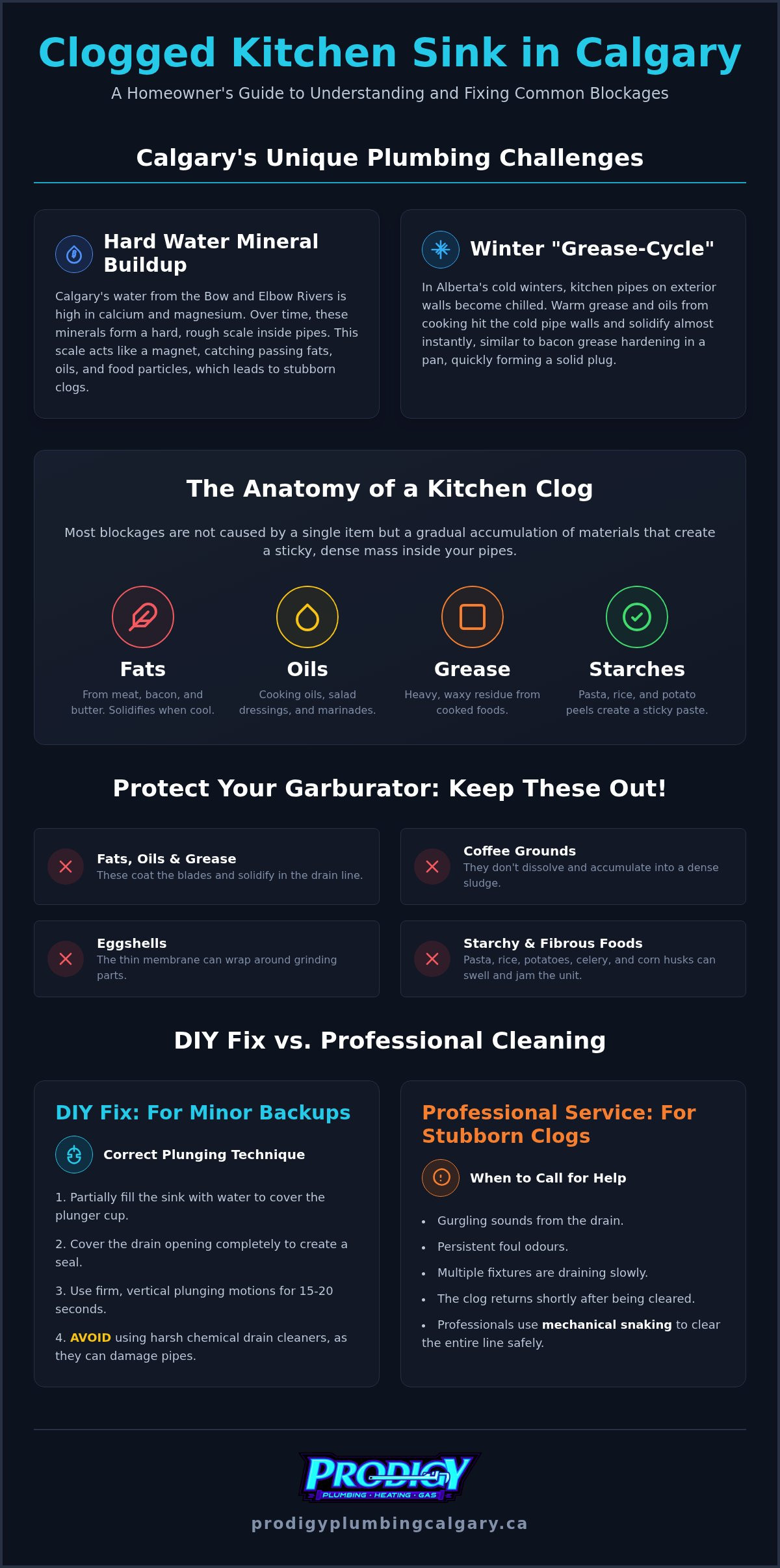
Calgary’s water supply comes from the Bow and Elbow River sources, which are naturally high in minerals. This hard water contains significant levels of calcium and magnesium. Over time, these minerals create a hard, rough scale on the inside of your pipes. This scale acts like a textured surface that catches passing fats, oils, and food particles. In older Calgary neighbourhoods with original cast iron or copper piping, this buildup is even more common because the pipes already have decades of internal wear. While some homeowners might try a retail drain cleaner to solve the issue, these chemicals often slide right over the mineral scale without removing the root cause. In some cases, they can even react with the mineral deposits and make the restriction harder to clear.
Weather Impacts on Your Kitchen Plumbing
Alberta winters add a unique challenge to your plumbing system. When temperatures drop below zero, the exterior walls of your home become incredibly cold. If your kitchen sink is located on an outside wall, especially a north-facing one, the pipes inside that wall stay chilled for months at a time. This creates a “grease-cycle” where warm fats and oils from your cooking hit the cold pipe walls and solidify almost instantly. It’s similar to how bacon grease hardens in a pan once it’s off the heat.
To help prevent a clogged kitchen sink Calgary homeowners should ensure their cabinets are left open during extreme cold snaps to let warm room air circulate around the plumbing. You should also avoid pouring any liquid fats down the drain, as they won’t make it very far before turning into a solid plug in the winter cold. Keeping the water moving and keeping the pipes as warm as possible are your best defences against weather-related backups.
The Anatomy of a Kitchen Clog: Grease, Food, and Garburators
Understanding what goes down your drain is the first step in preventing a clogged kitchen sink in Calgary. Most blockages are caused by F.O.G., an acronym for fats, oils, and grease. While these substances may look like harmless liquids when warm, they quickly solidify into a waxy coating inside your pipes. When you add starchy foods like pasta, rice, or potato peels to the mix, they create a heavy, sticky paste. This combination acts like a magnet for other food particles, eventually narrowing the pipe until water can no longer pass through.
There’s a big difference between a localized sink backup and a main stack issue. If you notice that water only stays in the kitchen basin, the restriction is likely within the first few feet of your kitchen plumbing. However, if multiple fixtures in your home are slow to drain at once, the clog is deeper in your system. For these more complex situations, finding expert drain cleaning near me ensures the entire line is cleared without damaging your home’s infrastructure.
The P-Trap: Your First Line of Defence (and Clogs)
The P-trap is the U-shaped section of pipe located directly under your sink. Its primary job is to trap a small amount of water, which creates a seal to block sewer gases from rising into your kitchen. Because of its sharp curve, it also naturally catches heavy debris like rings, small bones, or sediment. If your sink stops draining, this is usually the first place a plumber looks. If the water drains out of the trap but the sink is still backed up, the blockage is deeper in the wall.
Garburator Mishaps and Misconceptions
Garburators are convenient, but they aren’t meant for every type of food waste. Coffee grounds and eggshells are particularly hard on these units. Coffee grounds don’t dissolve; they accumulate in the trap and create a dense sludge. Eggshells have thin membranes that can wrap around the grinding components, causing the motor to seize. If your garburator is jammed, you might hear a low humming sound. Most models have a small red reset button on the bottom of the unit. Pressing this can sometimes restore power after you’ve safely cleared the obstruction. If you’re unsure how to handle a jammed unit, a quick consultation with Prodigy Mechanical can help you avoid burning out the motor.
DIY Fixes vs. Professional Drain Cleaning in Calgary
When you’re staring down a clogged kitchen sink in Calgary, the first instinct is often to reach for a plunger or a bottle of store-bought cleaner. While these tools have their place for minor surface issues, they rarely address the root cause of a deep blockage. A plunger works by using pressure to shift debris, but if the clog is composed of hardened grease or mineral scale, the plunger might only move the mess further down the line. Professional snaking, on the other hand, uses a mechanical cable to physically break apart the obstruction and clear the entire diameter of the pipe.
Most DIY efforts result in what plumbers call a “rebound” clog. You might punch a small hole through the grease, allowing water to flow temporarily, only for the hole to seal back up a few days later. If the water begins to back up into other basins or creates a major mess, you may need emergency plumbing Calgary services to prevent water damage to your cabinets and flooring. A professional technician can ensure the pipe is actually clear, rather than just temporarily flowing.
The Danger of Chemical Drain Cleaners
Many homeowners rely on caustic liquids to melt away blockages, but these chemicals are often more dangerous than the clog itself. In older Calgary homes, these substances can soften plastic pipes or accelerate corrosion in metal ones. They are particularly risky for homes with Poly-B or aging copper systems. Beyond the risk to your plumbing, these chemicals pose a safety hazard to any technician who has to work on the sink later. Coming into contact with a basin full of acidic water can cause severe burns. While baking soda and vinegar are safer, eco-friendly alternatives, they lack the chemical strength to break down the heavy grease and hard water scale common in local kitchens.
When the Plunger Isn’t Enough
If you’ve plunged for several minutes and the water hasn’t moved, it’s time to stop. Excessive plunging can actually damage the seals on your kitchen fixtures or loosen pipe connections under the sink. Professional mechanical cleaning is a safer, more thorough solution for a stubborn clogged kitchen sink in Calgary. An auger doesn’t just poke a hole; it clears the line. This provides the peace of mind that comes from knowing the job is done right. You won’t have to worry about the sink backing up again during your next meal prep because the entire restriction has been removed, not just shifted.
The moment you realize you have a clogged kitchen sink in Calgary, the first step is to stop the flow of water. If your dishwasher is running, cancel the cycle immediately. Dishwashers often drain into the same line as the kitchen sink, and continuing the cycle will only add more volume to the backup. Clear out any standing water in the basin using a small container and a bucket so you can see the drain and work effectively. This prevents the mess from spreading and gives you a clear view of the task at all times.
The Proper Way to Plunge a Kitchen Sink
Most people use a toilet plunger for their sinks, but these have a protruding flange that prevents a tight seal on a flat basin. You need a standard cup plunger with a flat rim. If you have a double-sink setup, you must seal the second drain with a stopper or a heavy, wet cloth. Without this, the pressure you create will simply escape out the other side rather than pushing against the clog. Ensure there is enough water in the sink to cover the rubber cup. Water is incompressible, making it a much more effective tool than air for creating the vacuum needed to shift debris. Rhythmic, firm thrusts for about 15 to 20 seconds should be enough to shift a minor blockage.
Checking the P-Trap Manually
If plunging fails, the next step is to inspect the P-trap. You will need a bucket, channel locks or pliers, and some old towels. Place the bucket directly under the trap to catch the “slug” of water held in the curve. Carefully unscrew the slip nuts at both ends of the U-shaped pipe. Once the pipe is removed, inspect the interior for debris like grease caps or trapped food. If the trap is completely clear but the sink is still backed up, the restriction is located further into the branch line inside the wall.
At this point, it is wise to stop the DIY effort to avoid a kitchen flood. Pushing a home-grade snake into the wall without professional experience can lead to punctured pipes or pushed-back clogs that are harder to reach. If you see water leaking from the cabinet base or backing up into the dishwasher, the situation has moved beyond a simple home fix. For a reliable, long-term solution to a clogged kitchen sink Calgary homeowners can trust, it is time to bring in a specialist. If the water won’t budge, contact Prodigy Mechanical to clear the line safely and restore your kitchen’s function.
Professional Kitchen Plumbing Services by Prodigy Mechanical
Prodigy Mechanical approaches every clogged kitchen sink in Calgary with a focus on precision and long-term results. We don’t believe in surface-level fixes that only solve the problem for a few days. Instead, our team performs a thorough assessment to identify whether the issue is a simple trap blockage or a deeper restriction in the branch line. With over 15 years of industry experience, we’ve navigated the unique plumbing challenges found in both historic Calgary bungalows and modern suburban homes. Our technicians are fully licensed and maintain the high standards for plumbing and heating Calgary residents expect from a professional trade service. We also prioritize transparency through our per-job fee structure. You’ll receive a clear price before any work begins, so you don’t have to worry about the uncertainty of hourly rates or unexpected costs.
Beyond the Clog: Fixture Swaps and Upgrades
Sometimes, a persistent drain issue suggests that your kitchen plumbing needs more than just a cleaning. We provide expert fixture swaps and upgrades that improve both the look and functionality of your space. Replacing an old, stained basin with a modern stainless steel or composite sink can revitalize your kitchen. We also handle the precise installation of new dishwashers and garburators, ensuring that every hose and electrical connection is secure. Our team makes sure that all new components are installed according to current Calgary building codes to prevent future leaks or drainage failures. Proper installation protects your investment and ensures your kitchen remains the functional heart of your home.
Why Calgary Trusts Steve and the Prodigy Team
Choosing an owner-operated business means you get a level of personal accountability that large franchises can’t match. Steve takes genuine pride in the reputation of Prodigy Mechanical and ensures that every job is handled with care. We understand that having a plumber in your home can be disruptive, so we work efficiently and always leave the workspace cleaner than we found it. Our commitment is to provide a service built on honesty and technical skill. We don’t cut corners or skip steps because we want your plumbing to operate smoothly for the long haul. Whether you’re dealing with a stubborn clogged kitchen sink Calgary or planning a complete kitchen rough-in, you can trust us to provide a dependable, professional solution.
Restore Your Kitchen’s Flow with Confidence
Managing a functional kitchen shouldn’t involve the stress of standing water or recurring backups. By understanding how Calgary’s hard water and cold winters impact your plumbing, you can take proactive steps to keep your drains flowing. While basic tools like a plunger can handle small restrictions, professional mechanical cleaning provides a level of thoroughness that DIY methods simply can’t match.
If you have a clogged kitchen sink Calgary plumbers from Prodigy Mechanical can clear the line safely and restore your peace of mind. Our licensed and insured technicians focus on providing long-term solutions with transparent per-job pricing, so you never have to guess about the final cost. With over 15 years of Calgary plumbing experience, we ensure the job is done right the first time.
Contact Steve at Prodigy Mechanical to clear your Calgary kitchen clog today and get back to using your kitchen with complete ease.
Frequently Asked Questions
Why does my kitchen sink smell like rotten eggs?
The smell of rotten eggs usually points to sewer gas entering your home or decomposing food trapped in the P-trap. If the trap is dry, the water seal that blocks gas is gone. In Calgary, mineral scale from hard water can catch food debris, allowing it to rot and create foul odours. Regularly flushing the drain with hot water and soap helps, but a persistent smell might require a professional deep clean to remove the source.
Is it safe to use boiling water to clear a clogged sink?
Boiling water is only safe if your home has metal pipes like copper or cast iron. If you have plastic PVC pipes or aging Poly-B systems, extreme heat can soften the material or damage the seals at the joints. This leads to leaks inside your cabinets or walls. Instead of boiling water, use hot tap water or a manual plunger to safely address a clogged kitchen sink Calgary without risking structural damage to your plumbing.
How much does a plumber charge to snake a kitchen sink in Calgary?
Most professional plumbing companies in the city vary their rates based on the complexity of the blockage. At Prodigy Mechanical, we prioritize transparency by using a per-job fee structure rather than an hourly rate. This means you’ll know the exact cost of the service before we begin the work. This approach removes the stress of hidden fees and ensures you pay a fair price for a thoroughly cleared and inspected kitchen drain line.
Can I put coffee grounds down my garburator?
You should never put coffee grounds down your garburator or kitchen drain. Unlike other food waste, coffee grounds don’t dissolve in water. They settle in the P-trap and combine with grease to create a thick, sludge-like paste that is very difficult to clear. Over time, this buildup will lead to a stubborn backup. It is always better to compost your coffee grounds or dispose of them in your green bin to protect your pipes.
Why is only one side of my double sink clogged?
If only one basin is backing up, the restriction is located in the individual tailpiece or the section of pipe before the two basins join at the tee. This is often caused by a localized buildup of food waste or a jammed garburator on that specific side. If both sides were backing up, the clog would be further down in the main drain line or the P-trap where the two lines finally merge together.
How do I know if the clog is in my pipes or the main sewer line?
A localized clog usually only affects one fixture, such as your kitchen sink. If you notice that water is backing up in your bathtub or basement floor drain while you run the kitchen faucet, the issue is likely in the main sewer line. Main line blockages are often caused by tree roots or significant debris further away from the house. For a clogged kitchen sink Calgary homeowners should check other drains to see if the problem is widespread.
How often should I have my kitchen drains professionally cleaned?
For most Calgary homes, a professional drain cleaning every one to two years is an effective preventative measure. This regular maintenance removes the mineral scale and grease buildup that naturally occurs over time. If you use your kitchen heavily or have older pipes, more frequent cleaning might be necessary. Staying ahead of these accumulations prevents the sudden inconvenience of a total backup and protects your plumbing system from long-term damage caused by corrosive debris.
What is the best way to prevent grease clogs in the winter?
The most effective prevention is to never pour liquid fats, oils, or grease down the drain. During cold Calgary winters, these substances solidify almost instantly upon hitting the chilled pipes in your exterior walls. Instead, wipe greasy pans with a paper towel and scrape all food scraps into the compost. Running hot water for a minute after washing dishes can also help move any residual oils through the system before they have a chance to harden.