

A moving water meter can point you to a hidden leak before damp patches appear. To find a water leak in your house in Calgary, turn off all taps and water-using appliances, then watch the meter; if it continues moving after 15-30 minutes, a leak is strongly indicated. This simple check can help you decide whether to investigate further or arrange a plumbing inspection.
A leak can be unsettling, especially when its source is hidden. A few careful checks can help narrow down the problem and limit further moisture. This guide explains what to do when you find a leak, how to check your water meter and test a toilet, and what affects the cost of professional leak detection.
You’ll also learn how soon water damage may appear, which warning signs to watch for, and when a hidden or recurring problem needs a plumber. These practical steps are suited to Calgary homes and help you decide what to inspect next.
Key Takeaways
- Turn off taps and water-using appliances, then watch the meter. Continued movement after 15-30 minutes strongly indicates a hidden leak.
- Check toilets, appliance connections, visible pipes and outdoor plumbing for clues before deciding where to investigate next.
- Leak detection costs depend on the leak’s location, how accessible it is and the methods needed to locate it.
- Water damage may show on walls within 1 to 24 hours, but moisture can travel behind surfaces before becoming visible.
- Recurring dampness, a musty smell or an unexplained water-bill increase calls for a closer look; plumbing repairs may involve fixture, kitchen or bathroom work.
Checking the water meter
Your water meter can show whether water is still flowing when taps and appliances are off. In Calgary, a moving meter under those conditions strongly suggests a leak somewhere in the house.
Meter Readings with Fixtures Off
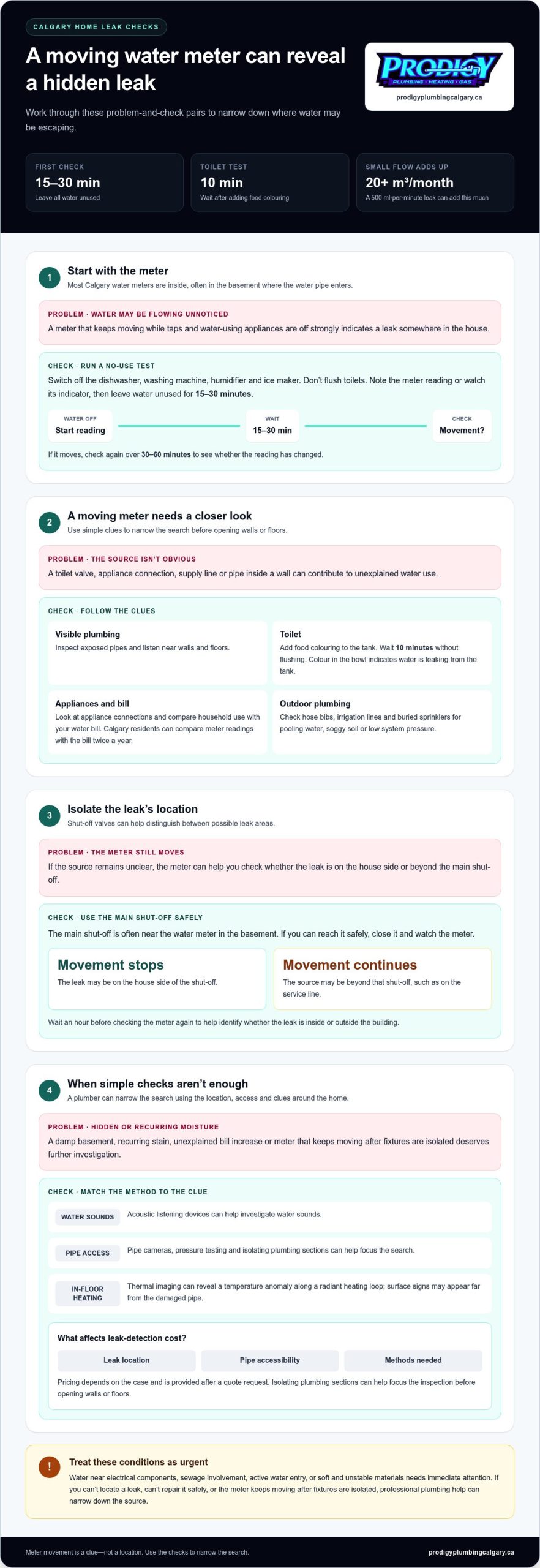
Most Calgary water meters are inside the house where the water pipe enters, often in the basement near the main shut-off valve. Turn off taps and water-using appliances, then note the meter reading or watch its indicator. Leave water unused for 15-30 minutes. Continued movement strongly indicates a hidden leak; check again over 30 to 60 minutes to see whether the reading has changed.
Before testing, switch off devices that use water, including a dishwasher, washing machine, humidifier or ice maker. Don’t flush toilets during the test. Even a small flow matters: a leak filling a 500 ml bottle in one minute can add over 20 cubic metres of water usage per month, on top of regular household use.
Use the test alongside your bill. An unexplained increase in household water use can point to a toilet valve, appliance connection, supply line or pipe inside a wall. Calgary residents can compare meter readings with their bill twice a year to spot discrepancies. Homeowners can also use the meter to check for a supply-side leak before arranging a leak-detection visit.
Using the Meter to Spot Hidden Leaks
If the meter moves while indoor fixtures and appliances are off, inspect visible plumbing and listen near walls and floors. A toilet is a common source: add food colouring to the tank, wait 10 minutes without flushing, then check the bowl. Colour in the bowl indicates water is leaking from the tank.
Look outdoors around hose bibs, irrigation lines and buried sprinklers. Pooling water, soggy soil or low system pressure can signal an outdoor plumbing leak. If you suspect a leak, close the home’s main shut-off and watch the meter. This can help distinguish a leak inside the house from one on the service line. Wait an hour before checking the meter again to help identify whether the leak is inside or outside the building.
If you suspect a leak, start with the household meter and compare usage with your bill. If the meter continues moving when water is not in use, the reading gives a useful starting point for finding the problem. These checks can help you understand how to find a water leak in your Calgary house and decide what to inspect next.
How much does leak detection cost in Calgary?
Leak detection costs depend on where the leak is, how accessible the pipe is, and which locating methods are needed. The price depends on the case and is given after a quote request. Isolating plumbing sections can narrow the search before opening walls or floors, helping focus the inspection on the affected area.
In many Calgary homes, the main water shut-off valve is near the water meter, often in the basement where the supply pipe enters. If you can reach it safely, closing the valve can help determine whether water is escaping inside the house. Watch the meter after shutting off the supply. If movement stops, the leak may be on the house side; if it continues, the source may be beyond that shut-off.
A plumber can isolate plumbing sections by closing valves that serve individual fixtures or systems, then checking whether the suspected flow changes. For example, if shutting off a toilet’s supply stops the meter, inspect its valve and connection. If the meter keeps moving, the source may be elsewhere, such as an appliance line or a pipe concealed behind a wall. This step-by-step process narrows the search.
Leaks in radiant floor heating need a different approach. An in-floor heating loop can leak beneath the floor, and surface signs may appear far from the damaged pipe. Thermal imaging can help locate the leak by revealing a temperature anomaly along the loop. The affected area, system access and need for further testing all influence the work involved.
An untreated leak can increase your water bill and damage finishes, insulation or framing. Water near electrical components, sewage involvement, active water entry, or soft and unstable materials needs immediate attention. A damp basement or recurring stain also deserves investigation, especially if the source is unclear or moisture appears in several areas.
Call a plumber if you can’t locate the leak, can’t repair it safely, or the meter keeps moving after you isolate fixtures. If a faucet or appliance connection is leaking, shut its water supply valve and arrange a repair. For an unexplained leak, professional plumbing help can narrow down the source and identify the next step.
Prevention starts with regular checks. Inspect exposed pipes in unheated spaces such as garages, crawlspaces and basements, and insulate them to help reduce leak risks. Leak detectors can alert you to moisture in key areas. Flush the water heater annually to help limit sediment-related overheating and internal tank corrosion.
Residential leak detection in Calgary and Alberta
Professional leak detection can locate hidden plumbing problems without relying on visible stains alone. The inspection method depends on the pipe, access and signs around the home.
Professional Leak Detection Services
A licensed Calgary plumber may use acoustic listening devices, pipe cameras, pressure testing or thermal imaging. Each method helps investigate a different clue, such as water sounds, pressure loss or a temperature change. Share where you first noticed moisture, whether it returns, and whether a bathroom fixture or appliance was recently used. Those details help focus the inspection.
Pricing and Repair Scope
Leak detection pricing depends on the suspected location, access to the plumbing and methods needed to identify the source. The price depends on the case and is given after a quote request. Detection and repair are separate steps: locating a leak identifies the affected area, while repair scope depends on the damaged pipe or connection and access required.
Ask for a clear explanation of what the inspection covers and which repairs are proposed. A leak behind a finished wall may need different access from a visible connection beneath a sink. Repairing water damage may also involve surrounding materials beyond the plumbing work.
Acoustic and Thermal Detection
Acoustic equipment amplifies the sound of water escaping from a pressurized pipe. A specialist can compare sounds at different points to narrow down the likely source, including leaks concealed behind walls or floors. This is useful when the sound is faint or difficult to trace by ear.
Thermal imaging shows surface temperature patterns. It can help identify a temperature anomaly along an in-floor heating loop and guide further investigation. The camera shows temperature differences, not the damaged pipe itself, so findings are considered alongside other clues and tests.
Leak Detection and Repair in Calgary
A Calgary inspection may combine pressure testing with acoustic listening or a pipe camera. The method depends on the plumbing layout and whether the suspected leak is accessible. A specialist can explain the suspected source, the evidence supporting it and the repair needed to stop the leak.
Keep track of changes before the visit: note when a stain appears, whether it grows after shower use, and any unusual water-bill increase. A toilet dye test can help identify a leaking flapper: add food colouring to the tank, wait 10 minutes without flushing, then check the bowl for colour.
Alberta home insurance coverage depends on the policy and the cause of the leak. Review your policy wording and contact your insurer to understand whether leak detection, resulting damage or both are covered.
How quickly does water damage become evident on walls?
Water damage may become visible on walls within 1 to 24 hours, but timing varies with the leak and surrounding materials. Water can travel behind walls, under flooring and through insulation before a stain appears. A clean-looking wall does not rule out hidden leaks elsewhere in the assembly.
Look for discolouration, cracking or peeling paint, swollen wallpaper, dripping sounds or a musty odour. Note when each sign appears. A stain that grows after a shower may point to bathroom plumbing; one that appears after dishwasher use may relate to an appliance connection. Changes after rain or snowmelt can instead suggest an exterior or drainage source.
Calgary weather can help explain when moisture appears. Frozen pipes may start leaking as temperatures rise. Rapid snowmelt can reveal drainage problems, while storms can cause small roof or exterior leaks that aren’t immediately obvious. Basement dampness that returns during spring thaw or heavy rain deserves attention, especially if the affected area grows or appears in more than one place.
Trace the timing and location before assuming the wall is the source. Check the room directly above a stain, nearby plumbing and the other side of the wall. A ceiling mark below an upstairs bathroom may relate to a supply line or fixture. A stain that becomes more noticeable after rain may point to a roof, window or exterior route instead.
Polybutylene, often called Poly-B, is another Calgary-specific consideration. Homes built roughly from 1978 to 1995 often have these supply pipes, and fittings are a common failure point. If a home from that period shows recurring moisture near visible plumbing, record the location and look for signs around accessible fittings. A qualified plumber can assess the pipe and help locate the leak.
Don’t cover a water stain before checking whether the material behind it is dry. Paint or wallpaper can hide a recurring mark without addressing the moisture source. Take a photo, note the date and track whether the area changes after rainfall, a shower or appliance use. These details can help distinguish a recurring plumbing leak from weather-related seepage.
Act promptly if water is actively entering, sewage is involved, electrical components are affected, or materials feel soft or unstable. For moisture that keeps returning, has an unclear source, or may have reached walls, insulation, flooring or framing, professional restoration help may be appropriate. A licensed plumber can investigate suspected plumbing leaks; roof or window damage may also need attention at its source.
Damp areas and condensation
A damp patch can come from plumbing, exterior seepage or condensation. Note where it forms and what was happening nearby. Moisture beneath a bathroom sink may point to a supply connection, while droplets on a cold window may indicate condensation. A musty smell alone doesn’t establish mould, but it is a reason to check for moisture.
Check whether the area feels wet, whether the mark is growing and whether it returns after drying. Note nearby appliances, taps and the water heater. A stain below a dishwasher connection, for example, may appear after a wash cycle. A ceiling mark near an upstairs bathroom may relate to plumbing above, while a mark that changes after rain may have another source.
Condensation tends to form on cool surfaces, including windows, exterior walls and cold pipes. Look for droplets across a surface rather than a single spreading stain. Wipe the area dry and observe whether moisture returns during normal household activity. If dampness remains concentrated around a pipe joint, appliance hose or water heater, suspect a plumbing leak and arrange an inspection.
Basement concrete can show efflorescence, a white, chalky powder left when moisture moves through masonry and minerals remain as it dries. This points to moisture movement but doesn’t identify the entry point. Compare the affected area with nearby walls and floors, then note whether dampness becomes more noticeable after rain or snowmelt.
Don’t paint over a water mark or cover it with wallpaper before checking whether the material behind it is dry. Covering the sign can hide a recurring problem without stopping the moisture. Photograph the stain, record when it changes, and check the surrounding ceiling, baseboard and flooring. A growing mark or soft material needs prompt attention.
Use a simple inspection routine: look beneath sinks, around appliance connections, beside the water heater and along basement walls. Check for fresh droplets, discolouration, peeling paint, swollen trim or a persistent damp smell. If an area gets wet after a specific appliance runs, record the connection and timing. These clues help distinguish condensation from a plumbing leak.
If moisture returns, spreads across several surfaces or appears near electrical components, address the source rather than the stain. A plumber can investigate a suspected plumbing leak; a water heater that is leaking and needs replacement may call for hot water tank replacement and installation. Keep the affected area visible until it has been assessed and dried.
Prodigy Mechanical: Fixture Swaps
Prodigy Mechanical can help when a leak points to a fixture or its plumbing connection. If a tap, sink or bathroom fixture is leaking, Fixture Swaps and Bathroom Plumbing can address the fixture work. For a leak around a kitchen sink or connected plumbing, Kitchen Plumbing may be the right next step. Identifying the source first helps clarify whether the issue involves a fixture or a concealed pipe.
Share where you noticed moisture, when it appears and whether using a fixture changes the signs. This gives Prodigy Mechanical a practical starting point. Commercial Plumbing addresses plumbing needs in commercial properties. If the leak is actively spreading, shut off the relevant water supply when safe and arrange plumbing help promptly.
For fixture or kitchen and bathroom plumbing concerns, contact Prodigy Mechanical to discuss the next step.
Take the Next Step Toward a Dry, Working Home
Knowing how to find a water leak in your house in Calgary is a useful start. Next, turn what you’ve observed into a clear repair plan. Note which fixture or room is involved, when the moisture appears and what has changed since you first noticed it. These details help focus the conversation and distinguish fixture work from a leak that needs further investigation.
Prodigy Mechanical handles Fixture Swaps, Kitchen Plumbing and Bathroom Plumbing. These services can help when a tap, sink or bathroom fixture needs attention. If the source appears concealed behind a wall or floor, describe the signs you’ve found so the plumbing issue can be assessed appropriately.
Share the details of the problem and contact Prodigy Mechanical to discuss a practical next step. With the source addressed, you can move forward with greater confidence in your home.
Frequently Asked Questions
What to do when you find a leak?
Stop the water flow first by closing the nearest fixture or appliance valve. If water continues, use the home’s main shut-off if it’s safe to reach. Move belongings away from the wet area and keep people clear of slippery floors. Take photos before cleanup and note which fixture or appliance was operating. If water is near electrical equipment, don’t touch the equipment or enter standing water.
How dangerous is a leaking pipe?
A leaking pipe can damage drywall, flooring, insulation and framing, especially when water remains hidden. The immediate risk increases if water reaches electrical equipment, sewage is involved, or building materials become soft or unstable. Keep clear of affected electrical areas and arrange prompt help for active water entry. A small drip can also worsen at a joint or connection, so don’t rely on a bucket as a lasting repair.
What If You Notice One of These Signs?
Match the sign to what was happening nearby, then act on the likely source. A wet cabinet floor after running the dishwasher points to its hose and connections. A ceiling mark that appears after rainfall suggests checking roof or window areas, not just plumbing. If the sign returns, spreads or appears alongside a persistent musty smell, photograph it and arrange an inspection rather than covering it.
Will you have to cut open my walls?
Not always. A plumber can first use acoustic listening, pressure testing, a pipe camera or thermal imaging to narrow down a hidden leak. These methods guide the inspection, but a repair may still require access to the affected pipe. The access point depends on the plumbing layout and leak location. Ask for the reason and proposed scope before wall or ceiling materials are opened.
What are the common signs of a water leak inside a Calgary home?
Common clues include fresh discolouration, peeling paint, swollen wallpaper, a dripping sound or an unexplained musty odour. Look under sinks, around the water heater and near appliance connections for droplets or damp surfaces. A toilet that runs between flushes can also waste water without leaving a visible puddle. Compare the affected spot with nearby surfaces and note whether it changes after fixture use or weather.
How can you check your Calgary water meter for a hidden leak?
Record the meter reading when the house is quiet, then avoid using taps, toilets and water appliances during the comparison. Check that automatic devices, such as an ice maker, aren’t drawing water. Return to the meter and compare its reading or flow indicator. Movement suggests water is flowing somewhere on the connected system. If the result is unclear, repeat the check when household activity is easier to control.
How can you locate a leak in walls, ceilings, floors, or under a concrete slab?
Start by mapping the damp area against plumbing fixtures, appliances and rooms above it. A plumber can use acoustic equipment, pressure testing, pipe cameras or thermal imaging to narrow the search. Many Calgary homes have basements, so under-slab supply leaks may be less likely than some search results suggest. A restoration team can use moisture meters and thermal imaging to assess which surrounding materials are wet.
What should you do immediately if you find a water leak in your house?
Close the nearest shut-off valve if you can reach it safely, then protect people and belongings from the water. Keep away from electrical equipment and don’t step into standing water near outlets or cords. If the leak continues, shut off the home’s main supply when safe. Record the location and take photos. For active water entry, sewage, electrical impacts or unstable materials, get help right away.