

A sharp bang when a tap or appliance shuts off can mean moving water is stopping too abruptly in the pipes. Water hammer diagnosis and repair in Calgary starts by identifying when the noise occurs and checking likely causes, such as loose piping, pressure issues or a faulty valve. The right repair depends on what the inspection finds.
The noise can be unsettling, and it makes sense to find and address the cause rather than mask it. Depending on the diagnosis, a repair may involve securing a pipe, correcting a pressure issue or installing a water hammer arrestor.
This guide explains what symptoms can indicate, how a plumber assesses the system, which repairs may be appropriate and what affects the cost in Calgary. You’ll also learn what to expect from a professional diagnosis so you can decide on a practical next step.
Key Takeaways
- Notice when the banging happens; its timing can help narrow down which fixture or valve is involved.
- A plumber may inspect pipe supports, valves and water pressure before recommending a targeted repair.
- The repair cost depends on the cause, the work involved and access to the affected plumbing.
- Learn when a water hammer issue may call for plumbing repairs and when hot water tank replacement or installation may be relevant.
Repair recommendations and system condition
The right repair depends on what is causing the impact, which pipes are affected and the condition of nearby components. A plumber traces the noise to its trigger before recommending an adjustment, repair or replacement.
When comparing plumbers in Calgary, look for licensed trade credentials and a clear explanation of the diagnostic process and proposed work. A useful scope identifies the noisy fixture, suspected cause, recommended repair and any parts involved. This makes it easier to compare approaches without assuming every bang needs the same fix.
Code Requirements for Water Hammer Arrestors
Whether an arrestor is required depends on the fixture or appliance installation, not simply on hearing a bang. A plumber assesses the applicable Calgary and Alberta plumbing-code requirements for the specific connection before recommending one. The assessment may distinguish a noisy appliance valve from an impact heard across several fixtures. The sound alone does not establish whether an arrestor is needed.
Pressure Testing and Regulation
To assess pressure, a plumber connects a gauge at a suitable plumbing point and observes the reading during normal use. They compare pressure behaviour when the noise occurs with what happens as fixtures are closed. If high pressure contributes to the impact, the plumber may inspect the pressure-reducing valve and adjust or replace it as needed. This testing helps distinguish a pressure issue from a loose pipe or fast-closing valve.
Water Hammer Causes and Damage
Water hammer occurs when moving water stops or changes direction abruptly. A fast-closing appliance valve, worn fixture valve or unsecured pipe can cause a sharp knock. Repeated impacts may stress joints and connections, loosen pipe supports and contribute to leaks. A plumber also checks nearby valves and appliance connections for wear, corrosion or movement. For example, a knock at a washing-machine valve points to a different location than a sound near a kitchen tap. The condition of the affected parts helps determine whether repair or replacement makes sense. Records of previous plumbing maintenance can also help show whether a recurring issue has changed over time.
Typical Calgary repair costs
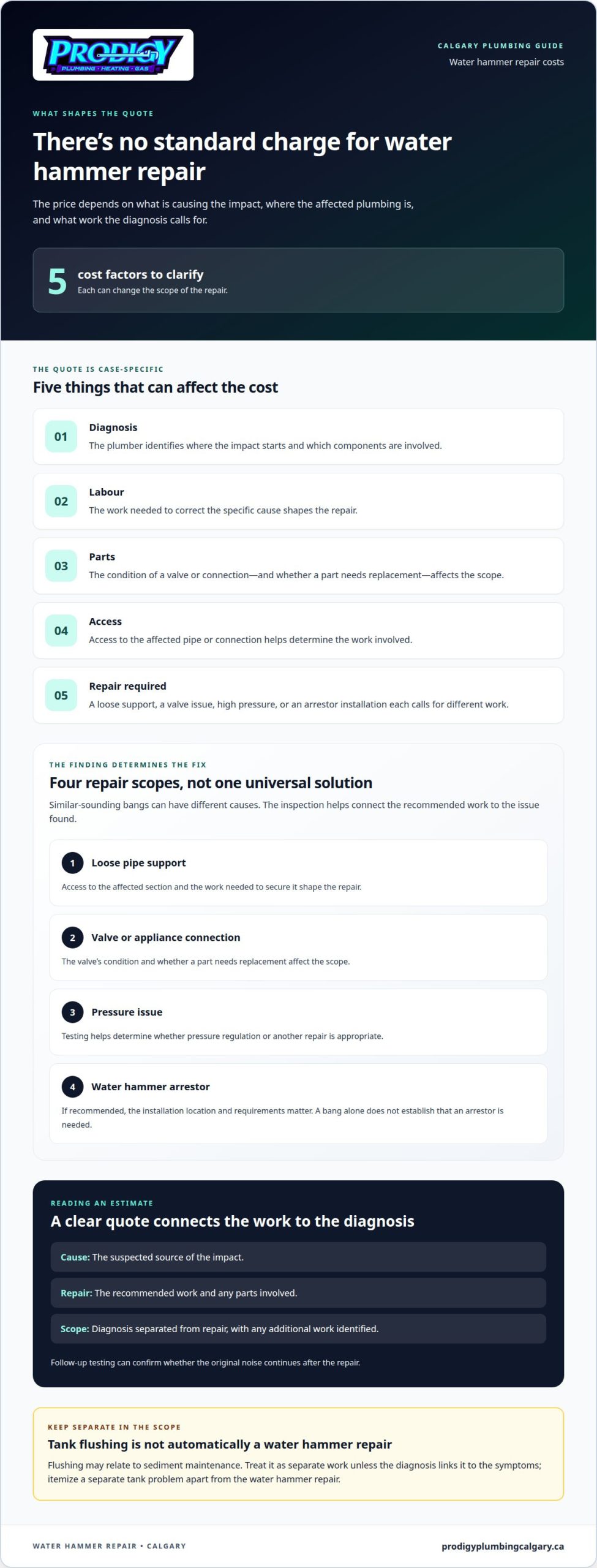
There isn’t one standard charge for water hammer repair in Calgary. The actual work depends on the cause, the location and the condition of the plumbing. Price depends on the case and is given after a quote request, with the main factors being diagnosis, labour, parts, access and the repair required.
A plumber first identifies the source of the impact and the components involved. A loose pipe support may need a different repair from a fast-closing appliance valve. If testing points to high pressure, the work may involve inspecting or adjusting a pressure-reducing valve. Because each finding changes the scope, similar-sounding bangs do not always call for similar work.
- Pipe support: Access to the affected section and the work needed to secure it shape the repair.
- Valve or appliance connection: The valve’s condition and whether a part needs replacement affect the scope.
- Pressure issue: Testing helps determine whether regulation or another repair is appropriate.
- Water hammer arrestor: The location and installation needs matter if an arrestor is recommended.
A clear estimate should identify the suspected cause, recommended repair, parts and any additional work. It should distinguish diagnosis from repair so you can see what the quoted work covers. Installing an arrestor, securing a loose pipe and addressing pressure are different jobs. Follow-up testing can confirm whether the original noise continues after the repair.
Tank flushing may be relevant to sediment maintenance, but it is separate from correcting water hammer. It should not be treated as the repair unless the diagnosis links it to the symptoms. If a plumber identifies a separate tank problem, ask for that work to be itemized apart from the water hammer repair. This makes the scope clear and ties the work to the problem found.
What causes water hammer in household plumbing?
Water hammer begins when moving water stops suddenly, sending a pressure shock through the pipe. A quickly closed tap can create the familiar bang, while a quieter impact may come from an appliance valve or a pipe shifting against framing. The sound’s location and timing help a plumber trace it to a particular branch or connection.
Automatic valves are common triggers because they can shut off flow quickly. A washing machine, for example, may cause a knock at the end of its fill cycle, while a dishwasher can make a similar sound as its inlet valve closes. A toilet fill valve may create noise near the tank when it shuts. These examples help focus the inspection, but the sound alone does not identify the faulty part.
- Fast-closing valve: The impact may happen as an appliance finishes filling.
- Loose pipe support: A pipe may move and strike a joist when flow changes.
- Fixture valve: A tap or toilet valve may cause a local knock as it closes.
- Pressure conditions: The force of the moving water can make an abrupt stop more noticeable.
Pipe routing also affects how sound travels. A pipe secured near a fixture may still transmit a knock along a longer run, so the loudest point may not be the source. A plumber can follow the sound while operating fixtures and appliances in sequence. Comparing a toilet refill with a washing-machine cycle may show whether one connection or several parts of the system are involved.
Repeated noise deserves attention because impacts can stress joints, valves and appliance connections over time. An inspection checks for movement, wear, leaks and corrosion near the likely source. The recommended repair then addresses the cause instead of treating every bang with the same part. A loose support, for instance, needs a different correction from a valve that closes abruptly.
Can high water pressure cause water hammer, and how do plumbers test and regulate it?
Yes. High water pressure can make water move with greater force, so a fast-closing valve may create a sharper impact. Pressure is only one possible cause. A plumber checks the reading alongside the pipework, valves and timing of the noise before recommending an adjustment.
Testing starts with a pressure gauge connected to a suitable plumbing point. The plumber records the static reading while fixtures are closed, then observes pressure as taps or appliances operate. A reading that changes during a washing-machine cycle, for example, may help identify a pressure-related issue. Comparing readings under different conditions helps distinguish a system-wide concern from a local valve or pipe problem.
If the results point to excessive pressure, the plumber inspects the pressure-reducing valve, which controls incoming pressure before water reaches household fixtures. A faulty, incorrectly adjusted or worn valve may need adjustment or replacement. The plumber considers the valve’s condition and pressure behaviour at multiple fixtures, rather than treating one noisy tap as proof of a whole-house problem.
- Gauge readings: Static and operating readings show how pressure behaves during use.
- Fixture checks: A plumber compares taps and appliances to locate a pattern.
- Valve inspection: The pressure-reducing valve is assessed for operation and condition.
- Follow-up test: Readings and noise are checked again after any adjustment or repair.
Pressure regulation should address the measured cause without overlooking loose supports or a fast-closing valve. If gauge readings remain consistent but one appliance still triggers a bang, the plumber investigates that connection. If readings indicate a pressure-control issue, an adjustment or valve replacement may be appropriate. A final test checks how the system responds during ordinary fixture use.
For a professional assessment, request water-pressure testing to help identify whether pressure contributes to the noise.
Prodigy Mechanical: Hot Water Tank Replacement / Install
Prodigy Mechanical installs and replaces hot water tanks when an assessment shows the tank needs replacing. Water hammer alone does not mean the tank is at fault. If the noise is tied to a fixture valve or pipe movement, the repair should address that cause instead. When the tank itself needs replacement, a new installation can restore dependable hot water as part of the plumbing work.
When requesting help, describe where the noise occurs and whether it coincides with hot-water use. That context helps determine whether tank replacement is relevant or another plumbing issue needs attention.
For hot water tank replacement or installation, contact Prodigy Mechanical.
Take the next step toward quieter plumbing
Make the next conversation useful by noting when the noise occurs, which fixture or appliance is running, and whether it happens with hot or cold water. These details give a plumber a practical starting point for assessing the system. Water hammer diagnosis and repair in Calgary should address the cause, not just quiet the sound temporarily.
Prodigy Mechanical also handles fixture swaps, kitchen plumbing and bathroom plumbing. These services can be relevant when the noise is tied to a fixture or its connection. A clear assessment helps identify the repair that fits the condition of the affected parts, rather than treating every bang as the same problem.
If you’re ready to discuss the plumbing issue and its next steps, contact Prodigy Mechanical. A clear starting point can make it easier to move toward a lasting repair.
Frequently Asked Questions
How can a plumber diagnose water hammer in a Calgary home?
A plumber narrows down the source by matching the sound to a fixture, appliance cycle or change in water use. For water hammer diagnosis and repair in Calgary, note whether the sound happens with hot or cold water and where it seems loudest. A bang tied to a dishwasher cycle, for example, gives the plumber a practical starting point for inspection.
What water hammer symptoms require urgent plumbing repair?
Arrange prompt plumbing attention if banging occurs alongside a visible leak, water escaping from a connection or a sudden loss of normal flow. These signs may indicate a separate plumbing failure as well as the noise. If water is actively leaking, use an accessible shutoff only if you can do so safely, keep clear of wet electrical equipment and describe the leak’s location when requesting help. In situations where sudden failures or severe leaks occur outside regular hours, round-the-clock providers such as Plomberie Urgence 24/7 show how dedicated emergency dispatch can help homeowners quickly address urgent plumbing risks.
How do professionals fix water hammer, and what should homeowners do before a plumber arrives?
The repair should follow a diagnosis of the cause. Work may involve securing pipework, addressing a faulty valve, regulating pressure or installing a suitable arrestor. Before the visit, note which fixture was running and what happened just before the sound. Avoid opening walls or dismantling valves, as this can obscure the original condition or create additional problems.
When should a plumber install water hammer arrestors, and which types work best?
A plumber may install an arrestor when the diagnosis identifies rapid valve closure and an arrestor suits the connection. The right type depends on the fixture or appliance, its connection and the available installation space. A dishwasher connection, for instance, may need different placement from a washing-machine line. The plumber can select and install an option suited to the setup.
How much does water hammer repair cost in Calgary in 2026?
Water hammer repair cost in Calgary depends on the diagnosed cause and work required. For water hammer diagnosis and repair in Calgary, pricing depends on the case and is provided after a quote request. A straightforward adjustment differs from replacing a valve or reaching concealed pipework. Labour, parts, access and repair scope affect the estimate, which should clarify the work addressing the diagnosed issue.
What do Calgary plumbers charge for service calls and emergency water hammer repairs?
Charges depend on the service and repair required, and whether the work is an emergency call-out. Prodigy Mechanical bills plumbing work per job and emergency plumbing per call-out. The estimate reflects the issue and work involved. When requesting one, describe the symptoms, their location and whether water is leaking so the required work can be clearly understood.