

A rotten-egg odour near your water heater raises an important question: is it coming from the hot water, or could it be a gas leak? If you’re searching “rotten egg smell from water heater Calgary,” start by treating an uncertain odour as a possible gas leak. Leave the area and contact your gas utility from a safe location.
It’s understandable to be concerned, especially when the smell seems to come from an appliance that uses gas. A water-related odour is often limited to hot water and may be linked to bacteria reacting with the tank’s magnesium anode rod. If the smell is also present in cold water, or you notice it around the appliance, the source may be different and needs careful attention.
This guide explains how to narrow down where the odour is coming from, what common water-heater causes may be involved, and which next steps are safe. You’ll also learn when maintenance may help and when a qualified technician should assess the tank and recommend repair or replacement based on its condition.
Key Takeaways
- If the odour’s source is uncertain or it’s near gas piping, leave the area and contact your gas utility from a safe location.
- Compare hot and cold water at more than one fixture, and note whether the smell appears right away or after the water runs.
- A rotten egg smell from water heater Calgary homeowners notice may have several causes; the odour alone can’t confirm what’s happening.
- Keep your checks to observing the water and odour pattern. Don’t open or dismantle the heater.
- A technician can assess the tank and determine whether monitoring, maintenance, repair, or replacement is appropriate.
Rotten egg smell from a water heater in Calgary: check safety first
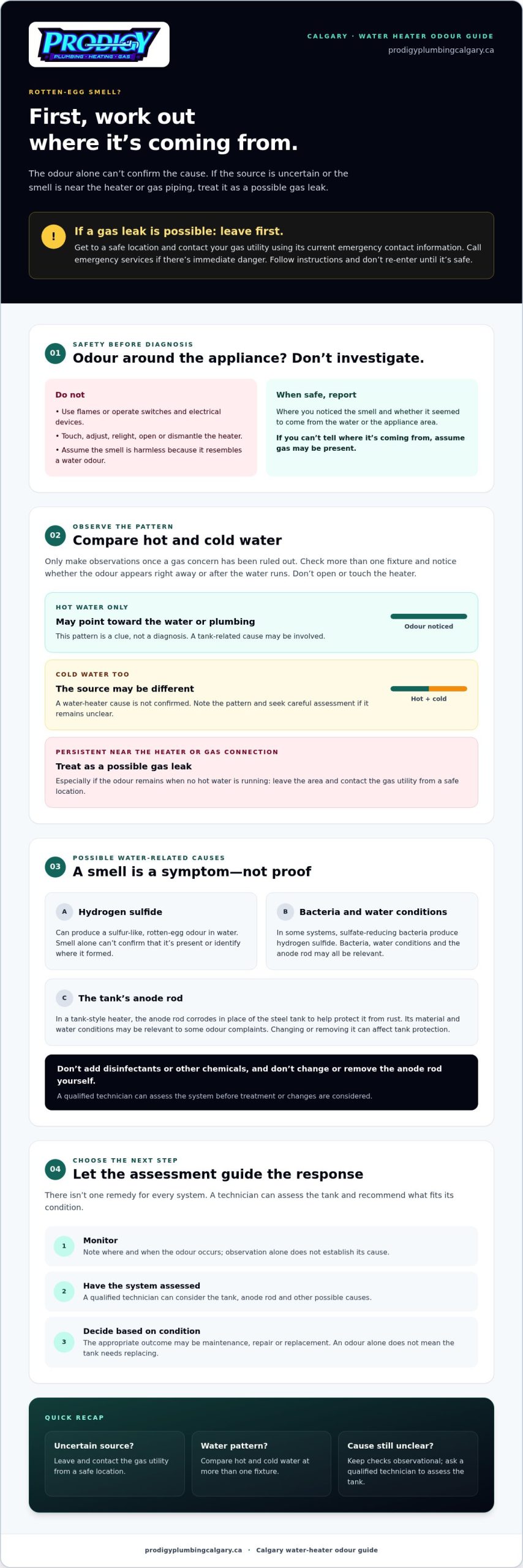
A rotten-egg odour needs a careful check, but the smell alone doesn’t confirm its source. If it appears only while hot water is running, it may come from the water or plumbing. If it’s persistent around the water heater, gas piping, or appliance area, treat it as a possible gas leak. Natural gas is given a distinctive odour to help people detect leaks, and a suspected leak should never be dismissed.
Hydrogen sulfide can produce a rotten-egg smell in water, but odour isn’t enough to confirm that it’s present. A scientific overview of hydrogen sulfide explains its properties and how it can be produced by bacteria. The immediate priority is still to rule out a possible gas leak before investigating a water-related cause.
Does the smell come from the water or the appliance area?
Notice when the odour occurs without opening or touching the heater. If it’s present only when hot water flows from a tap, that points toward the water or plumbing, but it isn’t a diagnosis. A smell that remains near the heater or gas connection, including when no hot water is running, calls for immediate caution. If you can’t tell where it’s coming from, assume gas may be present.
What to do if you suspect a gas leak in Calgary
Leave the area and get to a safe location. Don’t use flames, operate light switches or other electrical devices, or do anything that could create a spark. Don’t relight, adjust, or dismantle the water heater. From a safe location, contact your gas utility using its current emergency contact information, or call emergency services if there’s immediate danger. Follow their instructions and don’t re-enter until it’s safe.
- Don’t investigate the heater or piping while a leak is suspected.
- Don’t assume the odour is harmless because it resembles a water-related smell.
- Do report where you noticed the smell and whether it seemed to come from the water or appliance area.
Once a gas concern has been ruled out, you can narrow down whether the odour is limited to hot water. For a rotten egg smell from water heater Calgary households notice, that distinction helps guide the next step, but a technician’s assessment may be needed if the source remains unclear.
Why Calgary homeowners may notice a rotten-egg smell in hot water
After ruling out an immediate gas concern, the pattern at your taps can help narrow down a water-related odour. Hydrogen sulfide can cause a sulfur-like, rotten-egg smell, but smell alone can’t confirm the chemical is present or identify where it formed. The cause may involve conditions inside the tank or plumbing, and it can’t be determined from the odour alone.
Bacteria can contribute. In some water systems, sulfate-reducing bacteria produce hydrogen sulfide; in a hot-water tank, the interaction between bacteria, water conditions, and the anode rod may be part of the problem. The Wellowner.org overview of sulfur-reducing bacteria describes how these factors can contribute to odorous water. This is general information, not proof that a particular Calgary home has a specific bacterial or water-chemistry issue. The smell is a symptom to investigate, not a diagnosis.
How bacteria and water chemistry can affect hot-water odour
Water conditions can affect whether odour develops in a tank or plumbing. The same symptom can have different causes in different homes, so don’t assume bacteria are responsible based on smell alone. Avoid adding disinfectants or other chemicals to the water heater. A qualified technician can assess the system and recommend an appropriate next step before any treatment is attempted.
Could the water heater anode rod be involved?
In a tank-style heater, the anode rod is designed to corrode in place of the steel tank, helping protect it from rust. Its material and the conditions in the water may be relevant to some odour complaints. But changing or removing the rod can affect the tank’s protection, so don’t attempt it without checking the manufacturer’s guidance and having the system assessed.
A technician can inspect the tank and consider the anode rod alongside other possible causes. There isn’t one remedy that suits every system, and an odour doesn’t automatically mean the tank needs replacing. If the source remains unclear, a hot water tank assessment can help establish whether maintenance or repair is appropriate. That’s a more reliable basis for deciding what to do than treating the water based on smell alone.
Compare the smell at hot and cold taps to narrow down the source
Once it’s safe to check the water, compare hot and cold taps at more than one fixture. This simple observation can help separate a hot-water pattern from one that affects the home’s cold supply or a single tap. It won’t confirm the cause, but clear notes can help a technician decide where to investigate.
A safe hot-versus-cold water check
Skip this check if the odour is noticeable around the water heater or gas piping. Otherwise, use clean glasses to collect hot and cold water separately from two or more fixtures, such as a bathroom sink and a kitchen sink. Compare the odour without tasting the water. Note whether it’s present immediately, fades or appears after the water runs, or occurs only at one tap.
Keep the check simple. Don’t open the heater, handle pipes, or adjust equipment. The Vermont Department of Health explains that comparing hot and cold water can help assess whether a water heater may be involved. Its guidance is useful for narrowing the pattern, not for diagnosing a Calgary home.
What the pattern may suggest, and what it can’t prove
Use the results as clues rather than conclusions. Hot-only odour can focus attention on the water heater or hot-water plumbing. If both hot and cold water smell, the source may extend beyond the tank. If only one fixture is affected, that fixture or nearby plumbing may need a closer look. None of these patterns proves a specific cause.
- Hot water at several taps: Record whether the odour is consistent or changes as the water runs.
- Hot and cold water: Note which fixtures are affected, and whether the smell is similar in both temperatures.
- One tap only: Include the fixture in your notes, even if other taps seem normal.
For example, if hot water smells at a bathroom and kitchen tap but cold water doesn’t, share that pattern with the technician. If only one sink has an odour, mention that too. These details help guide an assessment, but smell and tap comparisons can’t identify the cause on their own.
People searching for a rotten egg smell from water heater Calgary homes experience can use this check to organize what they’ve noticed. Write down the affected taps, water temperature, and when the odour appears. If the smell is near the appliance, stop checking and follow gas-leak safety guidance instead.
Safe next steps for a smelly water heater: monitor, repair, or call a plumber
Once you’ve noted which taps are affected, keep your checks to observation. Don’t remove panels, adjust controls, drain the tank, or try to change the anode rod. Those steps can create safety risks or interfere with the heater’s protective components. A persistent odour, visible leak, unusual operation, or uncertainty about safe use calls for a prompt professional assessment.
What information to share when booking a Calgary service call
A clear description helps a technician understand the pattern before inspecting the system. Share whether the smell is near the appliance or only noticeable in water, which fixtures are affected, and whether it occurs in hot water, cold water, or both. Note when you first noticed it and whether it changes after the water runs. Mention any visible leaks, changes in heater operation, or recent plumbing work. Don’t attempt repairs to gather more information.
If the odour is mild and limited to water, your notes can help guide the next step. If the smell is around the appliance or gas piping, stop investigating and follow gas-leak safety guidance. Don’t treat an uncertain appliance-area odour as something to monitor.
When repair may be assessed before replacement
An odour by itself doesn’t prove that a tank has failed or needs replacing. The technician’s recommendation should reflect the inspection findings, the identified cause, and the heater’s overall condition. Depending on what they find, maintenance or a targeted repair may be appropriate. Replacement is a consideration if the unit is found to be failed, unsafe, or unsuitable for continued use.
If the tank’s age or condition becomes part of the decision, review a guide to hot water tank replacement in Calgary to understand what factors may matter. The right choice depends on the specific equipment, not the smell alone. For a rotten egg smell from water heater Calgary homeowners can’t explain after safe checks, professional assessment is a sensible way to avoid guessing.
Request help assessing your water heater if the odour persists or you’re unsure what to do next.
Choosing a Calgary water-heater solution after the cause is assessed
Once the source has been assessed, the next step depends on what the inspection finds. A temporary odour doesn’t automatically mean the water heater has failed. Continued monitoring may be reasonable if the equipment is operating normally and a technician advises it. Maintenance or a targeted repair may suit a system with a serviceable tank and an identifiable issue. Replacement is worth considering if the unit is found to be failed, unsafe, or unsuitable for continued use.
How to weigh a targeted repair against replacement
Base the decision on the confirmed cause, tank condition, performance, and technician’s findings, not on the smell alone. Ask what was found, what work is recommended, and whether the existing heater can continue operating safely. If replacement is being considered, a Calgary hot water tank replacement guide can help you review broader factors alongside the technician’s assessment.
| Option | When it may fit | Who should assess it |
|---|---|---|
| Monitor | The odour has stopped or a technician recommends watching for a change. | You can record the pattern; contact a technician if it returns or worsens. |
| Maintenance | An inspection indicates routine care may be appropriate. | A qualified technician should confirm the work suits the heater. |
| Repair | A specific issue is identified and the unit remains suitable for use. | A technician should diagnose the cause and recommend a targeted repair. |
| Replacement | Inspection finds the unit has failed, is unsafe, or is no longer suitable. | A technician can assess the heater and explain replacement considerations. |
What to expect from professional help
A technician can assess the heater and related plumbing before recommending work. Share the observations you’ve collected, including which taps are affected and whether the smell occurs in hot water, cold water, or both. Prodigy Mechanical’s technicians handle plumbing, heating, and gas service work, with more than 15 years of industry experience. The assessment helps establish an appropriate next step, without assuming in advance that repair or replacement is needed.
If you’re still noticing a rotten egg smell from water heater Calgary homes experience, contact Prodigy Mechanical to discuss plumbing or hot-water tank service in Calgary. Contact Prodigy Mechanical about your water heater.
Take the next safe step for your water heater
If you notice a rotten egg smell from water heater Calgary homes can experience, first rule out a possible gas leak. If the source is uncertain or the odour is near the appliance or gas piping, leave the area and contact your gas utility from a safe location.
If the smell is limited to water, compare hot and cold taps at more than one fixture and note what you find. Hot-only odour may point toward the heater or hot-water plumbing, while a smell in both temperatures or at one tap may suggest another source. These patterns are useful clues, not a confirmed diagnosis.
A technician can assess the heater and related plumbing, then recommend monitoring, maintenance, repair, or replacement based on the findings. Prodigy Mechanical offers plumbing, heating, gas, repair, and hot water tank services, with more than 15 years of industry experience, according to the company’s summary.
For a careful assessment and a clear next step, contact Prodigy Mechanical about your Calgary water-heater concern. With the source identified, you can move forward with greater confidence.
Frequently Asked Questions
Is a rotten-egg smell from hot water a gas leak?
Not necessarily. If the odour occurs only while hot water runs, it may come from the water or hot-water plumbing. But a smell near the heater, gas line, or appliance area could indicate a gas leak. If you suspect one, leave the area and contact your gas utility or emergency service from a safe location. Don’t operate switches, use flames, or try to relight the appliance.
Can a water heater make hot water smell like rotten eggs?
Yes. A tank or connected hot-water plumbing can be associated with a sulfur-like odour. Possible contributors include water conditions, bacteria, or an interaction involving the tank’s anode rod. These are possibilities, not a confirmed diagnosis. Compare hot and cold water safely at more than one fixture, note which taps are affected, and arrange a professional assessment if the smell persists or the cause isn’t clear.
How do I tell whether the smell is in the water or coming from the water heater?
Compare hot and cold water at more than one fixture using clean glasses, and don’t taste the water. Note whether the odour follows hot water, is also present in cold water, or seems strongest around the appliance. These observations can help a plumber focus an inspection, but they can’t confirm the source. If the smell is near the heater or gas piping, stop checking and treat a possible gas leak as urgent.
What happens if only the hot water smells like rotten eggs?
A hot-water-only pattern can help focus an assessment on the tank or hot-water plumbing, but it doesn’t identify the cause on its own. Record which taps are affected and whether the odour is constant or occasional. Don’t open the heater or add chemicals. If you’re concerned about a rotten egg smell from water heater Calgary homes may experience, a plumber can assess the system and recommend an appropriate next step.
Can I flush or disinfect a smelly water heater myself?
Don’t assume flushing or disinfection is suitable for every heater or cause. The wrong procedure may create equipment, scalding, or water-quality risks, and chemical treatment can require specific product and manufacturer instructions. Avoid dismantling the unit or adding chemicals without qualified guidance. Instead, describe the odour and its pattern to a plumber, then ask what assessment or maintenance is appropriate for your particular system.
Does a rotten-egg smell mean I need to replace my water heater?
No. Odour alone doesn’t prove the tank has failed or needs replacement. The appropriate option depends on the confirmed source, the heater’s condition, and the technician’s findings. An assessment may point to maintenance or repair, or show that replacement should be considered because the unit has failed, is unsafe, or is unsuitable for continued use. Ask what was found and why a particular recommendation fits your system.
How much does it cost to fix a rotten-egg smell from a water heater in Calgary?
The cost depends on the cause and the work an inspection identifies. Maintenance, repair, and replacement are different jobs, so there’s no reliable one-size-fits-all figure. Prodigy Mechanical charges per job for its services, with the scope depending on the work required. When requesting service, describe the affected taps, timing, and any heater concerns, then ask the provider to explain the recommended work before it begins.