

A low estimate doesn’t tell you the full cost of a plumbing job. The most useful questions to ask a plumber before hiring cover qualifications, the work included, pricing, parts and labour, warranty terms, and emergency response. Clear answers help you understand what you’re agreeing to before work begins.
It’s reasonable to expect a clear explanation of the price and process. A plumber should explain how they assess the problem, what the estimate includes, and how they’ll discuss any unexpected work before proceeding.
This guide walks through the questions to raise before hiring, from confirming relevant experience and written warranty terms to understanding how emergency calls are handled. You’ll also learn what to look for in an estimate and how to clarify whether a diagnostic fee applies, so you can make a decision with a clearer picture of the work and costs.
Key Takeaways
- Ask about relevant credentials, insurance, and experience with the type of plumbing work you need.
- Clarify what a warranty covers, including labour, parts, and conditions that could void it.
- Get the work scope and charges in writing, and ask whether diagnosis is billed separately and what could change the estimate.
- For urgent problems, establish how emergency calls are handled, expected response timing, and any rate changes outside regular business hours.
1. Checking plumber licensing and credentials
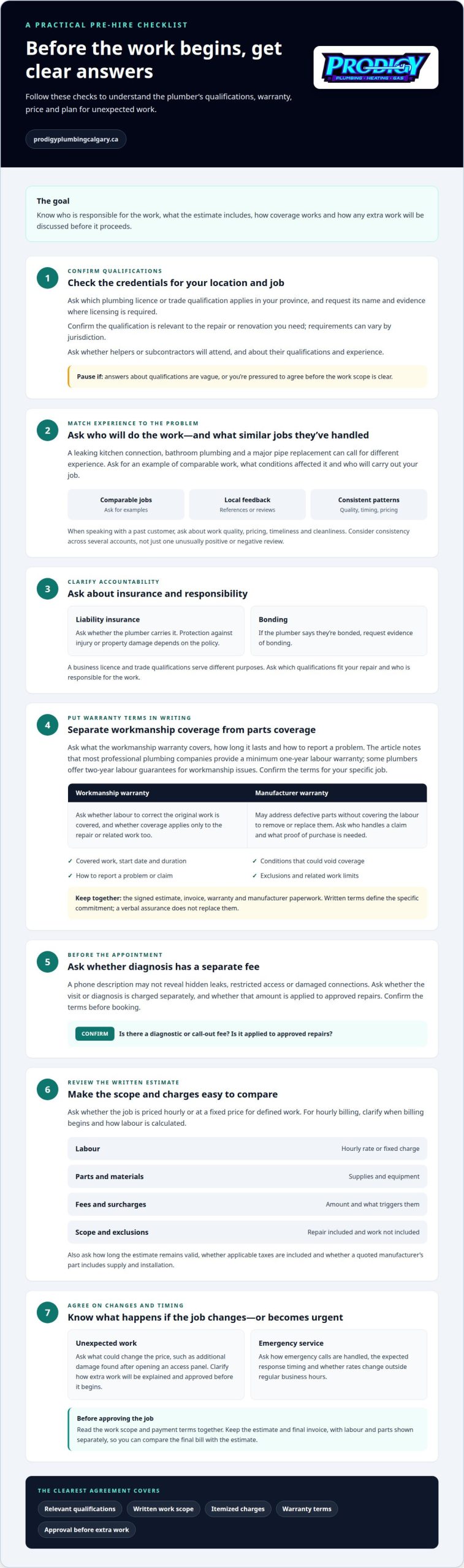
In Canada, ask which plumbing licence or trade qualification applies to the work in your province. Request the credential’s name and evidence where licensing is required. Requirements and qualifications can vary by jurisdiction, so make sure the answer relates to your location and the plumbing work involved.
For a specific plumbing problem, ask whether the plumber has handled similar repairs or renovations. A leaking kitchen connection differs from bathroom plumbing or a major pipe replacement. Ask what work they completed, what conditions affected the job, and who will carry it out. A clear example helps you assess relevant experience.
Ask for recent local references, reviews, or examples of comparable jobs. When speaking with a past customer, ask about work quality, pricing, timeliness, and cleanliness. Online reviews can also help reveal patterns in reliability and how a plumber responds when problems arise. Look for consistency across several accounts, rather than relying on one unusually positive or negative review.
Ask whether the plumber carries liability insurance and, if they say they’re bonded, request evidence of bonding. Insurance may help protect against injury or property damage, depending on the policy. If helpers or subcontractors will enter your home, ask about their qualifications and experience too. Knowing who will attend makes responsibility clearer.
A business licence and trade qualifications serve different purposes. Ask which qualifications are relevant to your repair and request evidence where appropriate. Vague answers, reluctance to explain qualifications, or pressure to agree before the scope is clear are reasons to pause. Be cautious if a plumber asks for the full project cost upfront.
Keep the conversation focused on the person responsible for the work, the qualifications relevant to your repair, and proof of insurance. Ask how guarantees are handled, but don’t treat a verbal assurance as a substitute for clear terms. These steps give you a practical basis for assessing experience and accountability before work begins.
2. Workmanship and manufacturer warranties
Before approving a repair, ask what the workmanship warranty covers and how long it lasts. Most professional plumbing companies provide a minimum one-year labour warranty. One year of workmanship coverage can suit minor repairs, while some plumbers offer two-year labour guarantees for workmanship issues. Treat these as coverage terms to understand, not as assumptions about every job.
Ask for the warranty terms in writing, either in the estimate or agreement. A clear document identifies the covered work, start date, duration, and process for reporting a problem. For example, if a repaired connection leaks, the terms should explain whether labour to correct the original work is covered. Ask whether coverage applies only to the repaired area or includes related work.
Parts may have separate manufacturer warranties. These generally address defective parts and may not cover the labour needed to remove or replace them. Ask who handles a manufacturer claim, what proof of purchase is needed, and whether the plumber’s workmanship coverage still applies during a parts claim. The answers help distinguish a product defect from a workmanship issue.
- Does the warranty cover both labour and supplied parts?
- What conditions could void coverage, such as damage or unauthorized changes?
- How do you report a claim, and what response process applies during business hours?
- Are guarantees included in the estimate, or documented separately?
Read exclusions as carefully as coverage. A warranty may not apply to unrelated plumbing problems, existing components, or damage caused after the repair. Ask the plumber to explain any technical wording and identify which job details affect coverage. References and reviews can offer context about how a business handles warranty concerns, but written terms define the specific commitment.
Keep the signed estimate, invoice, warranty, and manufacturer paperwork together. If an answer changes during the conversation, ask for the final terms in writing before work starts. For a clearer view of the work involved, review these plumbing service details alongside the warranty terms.
3. Estimates, diagnostic fees, and written quotes
Ask the plumber to assess the problem before preparing a full estimate. A phone description can’t reveal hidden leaks, restricted access, or damaged connections. Before booking, ask whether the visit or diagnosis has a separate charge and whether that amount is applied to approved repairs. Confirm the terms before the appointment.
When considering what questions to ask a plumber before hiring, clarify how the job is priced. Plumbers may charge by the hour or quote a fixed price for defined work, with resources like sos-plombiers.com outlining transparent cost breakdowns for specialized services such as sump pump installations and repairs. Ask when hourly billing begins and how labour is calculated. For emergency service, ask whether the pricing differs outside regular business hours. The total depends on the scope, access, materials, and timing.
A written estimate should describe the proposed work and explain the price. Ask for separate details on:
- Labour, including the hourly rate or fixed charge
- Parts, materials, and equipment
- Diagnostic or call-out fees
- Possible surcharges and the situations that trigger them
A clogged drain and a leaking pipe require different steps and materials. The estimate should identify the problem, the repair included, and any excluded work. Ask what could change the price, such as additional damage found after opening an access panel. Clarify how you’ll approve extra work before it begins.
Ask how long the written estimate remains valid and whether it includes applicable taxes. If the work involves a manufacturer’s part, clarify whether the quoted amount covers supply and installation. A detailed invoice should separate labour from parts, making it easier to compare the final bill with the estimate. Keep both documents for your records.
Before agreeing, read the scope and payment terms together. Check that the estimate describes the repair discussed, not a broader project. Ask for a revised version if a line is unclear or the work changes. Clear written pricing gives you a sound basis for deciding whether to proceed.
4. Emergency availability and response times
For an urgent leak or failed water heater, ask how emergency calls are handled and what response window to expect. A four-hour arrival window is described as reasonable, but the timing depends on the situation and current calls. Confirm whether the service operates outside regular business hours, including weekends and holidays, similar to round-the-clock emergency contractors like Plomberie Anjou.
Ask about the expected timeline for arrival, diagnosis, repair, and likely completion. Find out how the plumber will notify you about delays or unexpected problems, and who to contact if the arrival timing changes. If opening a wall reveals another issue, expect an explanation of the revised work before repairs continue.
Emergency availability also means understanding the charge structure. Ask whether after-hours, weekend, or holiday rates differ from regular rates, and whether a call-out or diagnostic fee applies. Request the expected charges before authorizing work. The estimate should distinguish urgent steps, such as stopping active water flow, from any follow-up repairs.
Parts availability can affect the timeline. A plumber may need to identify a component before confirming whether it’s on hand or must be ordered. Replacing a water heater, for example, involves different steps from repairing a leaking valve. Ask what can be completed during the visit, what depends on parts, and how updates will be shared.
- What response window should I expect, and how will delays be communicated?
- How are emergency calls handled outside regular business hours?
- Do emergency rates or call-out charges differ by timing?
- Could parts availability affect the repair or require another visit?
Before work begins, confirm who is attending and what the repair plan includes. Qualifications matter during urgent repairs, as does clear communication. After the work, review the invoice against the agreed scope and ask about any added line. Keeping the estimate and invoice helps clarify emergency work and follow-up repairs.
For urgent plumbing needs, request emergency plumbing service and share the issue, its urgency, and any access details.
Prodigy Mechanical
Prodigy Mechanical provides plumbing services for homes, businesses, and strata properties in Calgary. For a fixture replacement, kitchen or bathroom plumbing issue, or commercial plumbing project, describe the problem and the outcome you need. That gives the conversation a practical starting point.
Use these questions to discuss the work, estimate, warranty terms, and timing before deciding how to proceed. Clear expectations make it easier to understand the proposed repair or installation and the next steps.
Contact Prodigy Mechanical to discuss your plumbing needs and the work you’re considering.
Choose the next step with confidence
Knowing what questions to ask a plumber before hiring gives you a stronger starting point for a clear conversation. Describe the work you need and discuss what a practical solution involves. It may be a fixture swap, kitchen or bathroom plumbing for your home, or plumbing work for a commercial property.
Prodigy Mechanical can help you understand the work involved and plan the next steps around your plumbing needs in Calgary. Share the issue, the outcome you’re looking for, and any timing concerns. Contact the team to discuss your project and request an upfront estimate.
Contact Prodigy Mechanical today to discuss your plumbing needs. Take the next step when you’re ready, with a clearer sense of what you need from the work.
Frequently Asked Questions
How can I verify a plumber’s licence, insurance, and workers’ compensation coverage in my province?
Use your province’s trade regulator or apprenticeship authority to find its credential lookup, then compare the plumber’s name and status. Ask for proof of liability insurance and workers’ compensation coverage, including whether it applies to everyone working on-site. Prodigy Mechanical lists Red Seal Gas Fitter B, Red Seal Plumber, Cross-Connection / Backflow Prevention, and Heat Link Installer Certificate. Requirements vary by province and work type.
What should a plumbing quote include, and should I get multiple written estimates?
A plumbing estimate should identify the job location, work description, exclusions, parts, labour, taxes, and allowances for unknown conditions. If you’re comparing estimates, make sure they cover the same scope rather than comparing totals alone. For example, check whether each includes removing and reconnecting the same fixture. Ask how a revised scope will be documented before approving changes.
What questions should I ask about warranties on plumbing work, parts, and fixtures?
Ask who provides coverage for each part of the job: the plumber for workmanship or the manufacturer for a product defect. Find out what information a claim requires, such as a receipt, model number, or installation record, and who handles it. Ask whether coverage transfers to a future homeowner and whether repairs by another contractor affect it. Get the applicable terms in writing.
Will the plumber obtain required permits and arrange inspections for the work?
Ask the plumber whether permits or inspections apply to your specific project and who will coordinate them. If the plumber handles the process, ask how you’ll receive permit details and the inspection outcome. A renovation involving changed plumbing may require different coordination from replacing an existing fixture. Keep permit records and inspection documents with your renovation paperwork.
What questions should I ask about cleanup, property protection, and disposal of old materials?
Before work starts, agree on how the work area and nearby finishes will be protected. Ask who will move belongings, cover floors, contain dust or water, and clean the area afterward. If a fixture or pipe is removed, clarify whether disposal is included and what happens to reusable parts. A written scope can record these expectations alongside the repair details.