

Don’t wait for the first hard freeze to protect your outdoor taps. To learn how to winterize your plumbing in Calgary, start in early fall when overnight temperatures reach 5°C to 12°C, and finish before they regularly fall below 0°C. Disconnect garden hoses, shut off the indoor supply to outdoor taps, drain the line and leave the exterior tap open for winter.
Calgary’s sudden cold snaps can put exposed plumbing at risk, especially in unheated spaces and exterior walls. Insulate vulnerable pipes, keep warm air around plumbing and prepare outdoor lines before freezing weather arrives. A faucet cover adds protection, but it does not replace shutting off and draining the water line.
This guide covers what to do before and during a Calgary cold snap, where pipe insulation helps and how to prepare outdoor taps. You’ll also learn what a drop in water flow may signal and how to respond promptly to reduce the risk of a leak.
Key Takeaways
- Identify pipes in exterior walls, crawlspaces and other unheated areas, then protect exposed sections with suitable insulation.
- During a cold snap, keep warm air moving around vulnerable plumbing and watch for reduced water flow, an early sign of a possible frozen pipe.
- Prepare outdoor taps before freezing weather settles in, and remember that an insulated cover alone doesn’t drain the water line.
- Learn which additional plumbing, such as irrigation lines or taps in unheated sheds, may need separate winter preparation.
1. How do I protect my pipes during a Calgary cold snap?
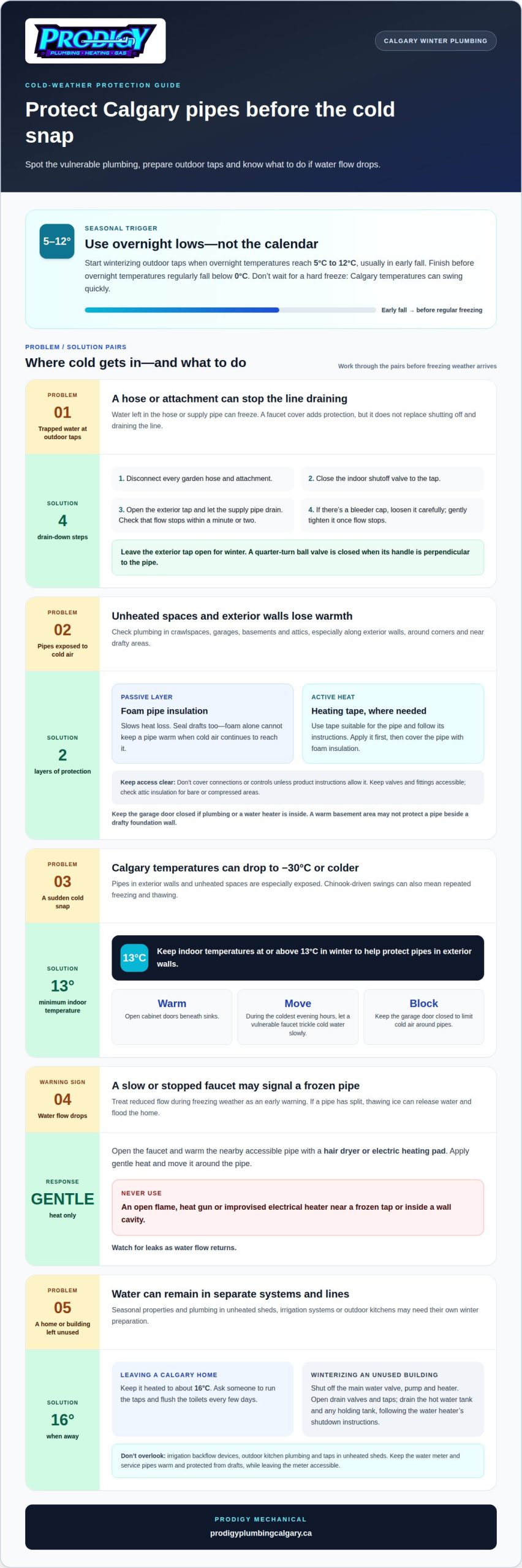
Learning how to winterize your plumbing in Calgary starts outdoors, before freezing temperatures arrive. Disconnect every garden hose and attachment, since trapped water can freeze and stop an outdoor faucet from draining. Close the indoor shutoff valve for the tap, then open the exterior faucet to drain the supply pipe. Check that the steady flow stops within a minute or two.
If the shutoff valve has a bleeder cap, loosen it carefully to drain any remaining water. Gently tighten the cap once the flow stops. A quarter-turn ball valve is closed when its handle is perpendicular to the pipe. Leave the outdoor faucet open for winter. An insulated cover protects the tap, but it does not replace shutting off and draining the line.
To prepare indoor plumbing in an unused building, shut off the main water valve, water pump and heater. Open drain valves and taps to release water from the system. Drain the hot water tank and any holding tank as part of winterizing the property. Follow the water heater’s shutdown instructions before draining it.
Keep the water meter and service pipes warm and protected from cold drafts, and leave the meter accessible. For homeowners planning how to winterize their plumbing in Calgary, protecting these indoor components is a separate task from draining outdoor lines.
Before leaving a seasonal property unused through freezing weather, shut off and drain its water system. Remember separate lines, such as outdoor kitchen plumbing, irrigation backflow devices and taps in unheated sheds, which may need their own preparation. If water flow drops during a cold snap, treat it as a possible early sign of a frozen pipe.
2. Insulating pipes against winter cold
Pipes lose heat quickly in unheated spaces. In Calgary homes, inspect plumbing along exterior walls and in crawlspaces, garages, basements and attics. Foam pipe insulation slows heat loss, but cannot keep a pipe warm if cold air continues to reach it. Seal drafts and keep nearby heated rooms comfortably warm.
Foam insulation provides a passive first layer without an electrical connection. Heating tape supplies active heat where pipes remain vulnerable, but it must be suitable for the pipe and installed according to its instructions. On exposed pipes in unheated areas, apply heating tape first, then cover the pipe with foam insulation. Do not cover connections or controls unless the product instructions allow it.
In an unheated garage, crawlspace or basement, follow the water supply along exterior walls and around corners. Insulate exposed sections and check for gaps where cold air enters. A warm basement utility area may not protect a pipe running beside a drafty foundation wall. Keep the garage door closed if plumbing or a water heater is inside.
Check attic insulation for bare or compressed areas above rooms with plumbing. Pipes near the roof or routed through an exterior wall may face colder conditions than pipes inside heated rooms. Restore insulation coverage while keeping valves and fittings accessible. If you are unsure whether a pipe also needs heating tape, consider how exposed it is to drafts and whether the area stays heated.
An insulated exterior faucet cover can shield the tap from cold weather, but it doesn’t replace draining the line. Remove any hose or attachment first, since trapped water can stop a frost-free faucet from draining. If keeping indoor spaces warm is part of your cold-weather plan, heating support can help address the home’s heating needs.
3. Calgary winter temperatures and frozen pipes
Calgary winter temperatures can drop to -30 °C or colder, and sudden cold snaps raise the risk of frozen pipes. Chinook-driven temperature swings can also make water in plumbing freeze and thaw repeatedly. Pipes in exterior walls and unheated spaces are especially exposed because they receive less warmth from indoors. A Calgary home needs steady heat through changing weather, not just during the coldest nights.
Keep indoor temperatures at or above 13 degrees Celsius in winter to help protect pipes in exterior walls. Open cabinet doors beneath sinks so warm air can reach plumbing tucked inside. During the coldest evening hours, a slow trickle of cold water from a vulnerable faucet can keep water moving. Keep the garage door closed, particularly if the water heater is in the garage, to limit cold air around pipes.
Before leaving a Calgary home in winter, keep it heated to about 16 degrees Celsius. Ask someone to run the taps and flush the toilets every few days while you’re away. These steps help maintain warmth and water movement. If a furnace stops heating properly, indoor temperatures can fall and exposed plumbing can become more vulnerable.
Reduced water flow can be an early sign of a frozen pipe. If a faucet slows or stops during freezing weather, open it and warm the nearby pipe with a hair dryer or electric heating pad. Apply gentle heat, moving it around the accessible pipe. Never use an open flame, heat gun or improvised electrical heater near a frozen tap or inside a wall cavity. If a pipe has split, thawing ice can release water and flood the home, so watch for leaks as flow returns.
Whether Alberta home insurance covers frozen or burst pipes, and which prevention steps it requires, depends on the policy wording. Keep the home heated and follow any policy conditions for maintenance or an unoccupied property.
4. When to winterize outdoor taps in Calgary
Use overnight temperatures, not the calendar alone, to time outdoor tap winterization in Calgary. Start when overnight lows reach 5°C to 12°C, usually in early fall, before freezing temperatures and the first major snowfall. Complete the work before overnight temperatures regularly fall below 0 C. That window gives you a clear seasonal trigger, even when daytime weather still feels mild.
Do not wait for a forecast of a hard freeze. Calgary’s temperatures can swing quickly, and a cold overnight low may arrive after a mild stretch. Disconnect hoses and attachments, close the indoor shutoff, drain the outdoor line, then leave the tap open. An insulated cover adds protection, but does not replace shutting off and draining the supply.
Consider how the property is used as well as the forecast. A seasonal home, outdoor kitchen line, irrigation backflow device or tap in an unheated shed may need separate preparation before the property is left vacant. General property winterization is carried out from September through April in regions that can fall below freezing. In Calgary, use local overnight lows as your practical cue.
Set the indoor thermostat to maintain heat during cold weather, especially if plumbing runs near an exterior wall. A special frost-free tap still needs its hose removed so water can drain; its exterior portion must slope downward. If the tap continues running steadily after the indoor valve is closed, the line may not be draining as intended. Taking action before a freeze can help avoid a burst pipe and disruptive repairs. For help with an outdoor plumbing repair, book plumbing repair service.
Prodigy Mechanical
Prodigy Mechanical can help when winter checks reveal a plumbing issue that needs repair or attention. If a kitchen or bathroom fixture is leaking, damaged or no longer working properly, its plumbing services and fixture swaps can address the problem. Commercial property owners can also turn to the team for commercial plumbing support. These services are a practical next step when cold-weather preparation uncovers a concern beyond routine checks, such as a fixture that needs repair before freezing weather arrives. For an issue outside these areas, focus first on the preventive steps in this guide. Contact Prodigy Mechanical to discuss the plumbing concern at your property.
Make winter plumbing checks part of your home routine
Make seasonal preparation part of your home-maintenance routine. Keep a note of pipes, fixtures or cold areas that need attention so you can plan the next check before freezing weather returns. If you are deciding how to winterize your plumbing in Calgary, a record of recurring concerns can help you describe the issue and organize the next steps.
Some problems need more than seasonal prevention. A damaged fixture or plumbing issue in your kitchen or bathroom may require professional repair or replacement. Prodigy Mechanical provides Fixture Swaps, Kitchen Plumbing and Bathroom Plumbing to address these concerns.
Contact Prodigy Mechanical today to discuss a plumbing issue at your property. A steady plan can make cold-weather preparation feel more manageable.
Frequently Asked Questions
How do I protect my pipes during a Calgary cold snap?
Keep the heat steady and check vulnerable areas when temperatures drop sharply. Watch for reduced flow at taps, damp patches near exposed plumbing or unusual sounds when water runs. Know where the main shutoff is and keep it accessible before a leak occurs. If a pipe appears frozen or water starts escaping, close the main valve and arrange prompt plumbing help.
Should I leave the heat on overnight in freezing weather?
Yes. Keep the furnace running overnight during freezing weather, and set the thermostat to 20°C to help reduce the risk of frozen pipes. A steady setting is more useful than turning the heat down sharply while everyone sleeps. If a room has plumbing in an exterior wall, keep its door open so warmer air can circulate through the space.
What temperature should I keep my house at during winter?
Keep your Calgary home at or above 13 degrees Celsius in winter to help protect pipes in exterior walls. This is a baseline for reducing freezing risk, not a substitute for insulating exposed plumbing or maintaining heat during a cold snap. If one room is colder than the rest, pay particular attention to pipes near its outside walls.
When should you start to winterize your house in Calgary?
Begin outdoor winter preparation in early fall, when overnight temperatures reach 5°C to 12°C. That timing leaves room to prepare before overnight lows regularly fall below 0 C or the first major snowfall. If you’re leaving a seasonal property unused, winterize its water system before departure rather than relying on a later warm spell.
How do you winterize outdoor faucets and garden hoses in Calgary?
Disconnect the garden hose and any attachment, shut off the indoor supply to the outdoor faucet, then drain the line. Leave the exterior tap open afterward. A frost-free faucet still needs its exterior section clear to drain, so a connected hose can interfere with its design. An insulated cover adds protection but does not replace draining the line.
What temperature should a Calgary home be kept at in winter to prevent frozen pipes?
Keep the home at or above 13 degrees Celsius through winter, and maintain 20°C overnight during freezing weather. For a winter absence, keep the home heated to about 16 degrees Celsius. These settings help limit the risk, especially for pipes near exterior walls. A room with weak heat or a cold draft may need added attention even when the thermostat reads normally.