

A steam shower is more than a shower with extra heat: its generator creates vapour, while a sealed enclosure helps contain moisture. For plumbing for a steam shower in Calgary, generator placement is part of the plan, with the unit located within 25 feet of the shower stall. Controls set the temperature and session length.
The comfort is simple; the planning takes care. Plumbing for a steam shower in Calgary involves a fully enclosed, vapour-proof space and plumbing and valves suited to the layout and intended use.
This guide explains how the generator works, what to plan for in the space and enclosure, and how pressure-balancing and thermostatic valves support a comfortable installation. You’ll also see how Calgary bathroom plumbing fits into the project, so you can understand the key decisions before work begins.
Key Takeaways
- Generator placement, plumbing connections and control locations shape how a steam shower works in daily use.
- Plan the enclosure as a complete vapour-proof space, including its ceiling and moisture-resistant details.
- Valve selection depends on the shower layout, water pressure changes and whether multiple shower heads are planned.
- Professional bathroom plumbing helps coordinate the installation details for a Calgary steam shower project.
What is a Steam Shower and Generator?
A steam generator heats water into vapour, while controls set the temperature and session length. Planning plumbing for a steam shower in Calgary also means coordinating the enclosure, fixtures and electrical work.
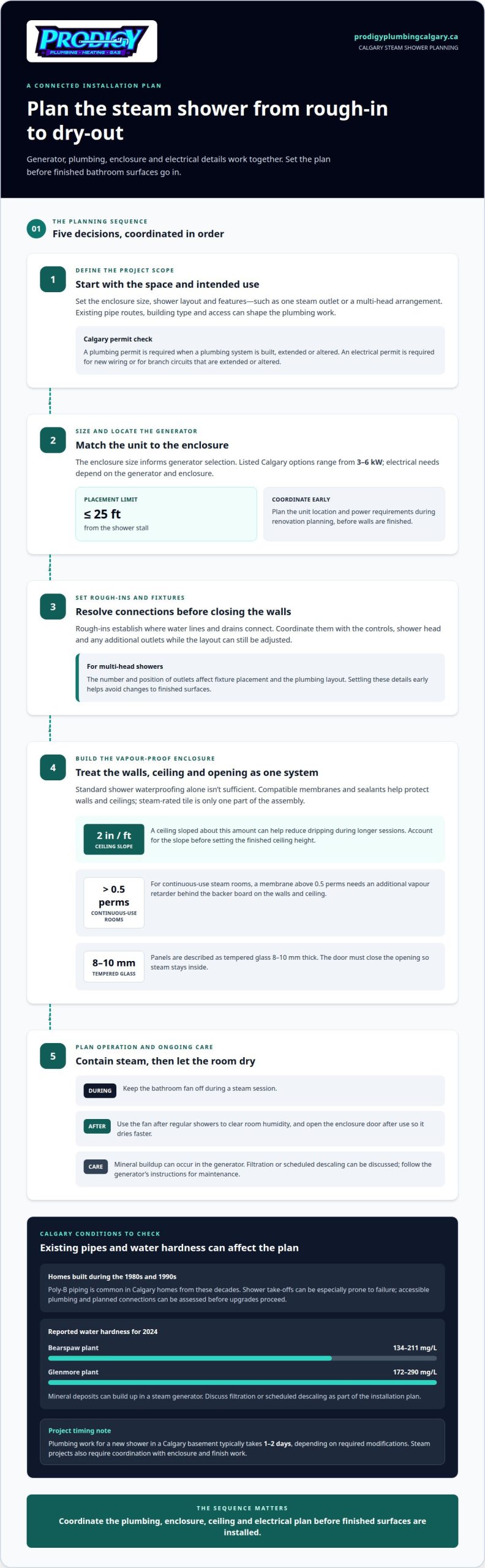
In Calgary, a steam shower project may require electrical and plumbing permits. The City of Calgary requires an electrical permit for new wiring or for branch circuits that are extended or altered. A plumbing permit is required whenever a plumbing system is built, extended or altered.
Steam Generator Sizing and Placement
A professional sizes steam generators to the enclosure and plans a location within 25 feet of the shower stall. Listed generator options for Calgary steam showers range from 3-6 kW, but the enclosure size informs the selection. Electrical needs also depend on the generator and enclosure, so power and unit placement must be coordinated during renovation planning.
Rough-Ins, Fixtures, and Multi-Head Systems
Rough-ins establish where water lines and drains connect to the planned shower layout. Before the walls are closed, the installer coordinates those connections with the controls, shower head and any additional outlets. For a multi-head system, the number and position of outlets affect fixture placement and plumbing layout. Settling these details early helps avoid changes to finished bathroom surfaces.
A steam enclosure needs a vapour-proof system; standard shower waterproofing alone isn’t sufficient. Steam-rated tile is only one part of that assembly: membranes and sealants help protect walls and ceilings from moisture. The enclosure must be fully enclosed, and a sloped ceiling can reduce dripping during longer sessions. A tile discount doesn’t mean installation is included, so material suitability and installation scope are separate project considerations.
For a new shower in a Calgary basement, plumbing work typically takes 1-2 days, depending on required modifications. Steam projects also involve coordinating enclosure and finish work. Common problems include leaks, moisture escaping through weak seals, and mineral buildup in the generator. Careful rough-ins, vapour-proof detailing and maintenance guided by the generator’s instructions help prevent these issues.
Professional planning for steam shower space, ceiling height, and enclosure
A professional plans the enclosure, ceiling and service routes as one bathroom renovation. In Alberta, the applicable plumbing requirements depend on the work; in Calgary, the City of Calgary requires a plumbing permit whenever a plumbing system is built, extended or altered. A steam shower also needs a fully enclosed, vapour-proof assembly to contain moisture.
Inside the shower, ceiling shape affects how condensed steam behaves. A ceiling sloped about 2 inches per foot can help reduce drips during longer sessions. The professional accounts for that slope before setting the finished ceiling height, so it fits the planned enclosure without compromising usable space.
Walls and ceilings need more than standard shower waterproofing. A vapour-proof system uses compatible membranes and sealants to protect surfaces behind the tile. For continuous-use steam rooms, a membrane above 0.5 perms needs an additional vapour retarder behind the backer board on the walls and ceiling. Membrane selection should therefore match the intended use.
Glass and door details complete the enclosure. Steam shower panels are described as tempered glass 8-10 mm thick, and the door must close the opening so steam stays inside. The layout also needs to accommodate the generator and electrical planning. Generator electrical needs depend on the unit and enclosure size, so its placement and power requirements are coordinated before walls are finished.
Plan ventilation for both the steam session and the bathroom afterward. Keep the fan off during a steam session, then use it to clear room humidity after regular showers. Opening the enclosure door after use helps it dry faster. These steps support moisture control without relying on the fan to contain steam.
For Calgary-area bathroom plumbing planning, the enclosure, plumbing changes and electrical coordination need to align before installation begins. That sequence gives the finished surfaces a properly planned space behind them.
Calgary-area service availability
Calgary projects range from bathroom renovations in detached homes to plumbing work in commercial and strata properties. The building type, existing pipe layout and planned steam features shape the work. Outline your comfort goals, such as a single steam outlet or a custom multi-head arrangement, so the plumbing plan reflects how you intend to use the shower.
Existing pipes are a key consideration in Calgary homes built during the 1980s and 1990s, when Poly-B piping is common. Shower take-offs can be especially prone to failure. A professional assesses accessible plumbing and the planned connections before an upgrade proceeds. This helps identify whether the project needs localized changes or broader plumbing work before finished surfaces are installed.
Water conditions also affect steam equipment planning. Calgary water hardness reported for 2024 ranged from 134 to 211 mg/L at the Bearspaw plant and 172 to 290 mg/L at the Glenmore plant. Mineral deposits can build up in a steam generator, so filtration or scheduled descaling can be discussed as part of the installation plan. These details matter for homeowners choosing equipment and planning ongoing care.
For a bathroom renovation, connect plumbing changes with the enclosure, ceiling, finishes and electrical coordination in the project scope. A basement project may have different access and routing constraints from an existing ensuite. Commercial and strata projects also need a plumbing layout suited to the property’s use and construction. Defining these conditions early helps establish a clear work sequence and reduces late changes to the finished bathroom.
Plan the work around the project’s location and scope, not just the fixture choice. In Calgary, this may mean plumbing for a new steam shower, an upgrade or changes to existing bathroom connections. The plumbing work should suit the building and planned enclosure rather than treating every installation as identical.
Pressure-balancing and thermostatic valves
A shower valve controls how hot and cold water reach the shower head. A pressure-balancing valve responds to changes in supply pressure, helping limit temperature swings when another fixture draws water. A thermostatic valve controls temperature separately from water volume. In Calgary, the right choice depends on the shower layout, the number of outlets in use and the control arrangement.
For a single shower outlet, pressure balancing can help keep water temperature steadier when supply pressure shifts. Thermostatic valves maintain an exact temperature regardless of pressure changes. They are required for multiple shower-head installations, making them an important part of planning a multi-head system. Coordinate valve placement with the controls and outlets so the finished layout is practical to use.
Mineral deposits can affect moving parts over time. Pressure-balancing valves in Calgary homes commonly fail after 12-15 years. Mixing-valve cartridges are recommended for replacement every 8-10 years, before deposits cause them to seize. Annual testing of pressure-balancing valves helps identify changes in operation. A valve that feels stiff, delivers uneven temperature, or responds inconsistently needs attention before the shower’s performance declines further.
Valves and enclosure protection serve different purposes. The valve manages water flow and temperature; waterproof membranes and sealants protect the walls behind the finished surface. Because steam adds humidity, vapour control remains essential even with a correctly selected valve. Valve selection does not replace sound waterproofing or careful fixture connections. For a renovation, settle the valve type, outlet count and placement before the walls are closed.
For help planning valve selection or a replacement, arrange professional plumbing support for your shower layout.
Prodigy Mechanical
Prodigy Mechanical helps Calgary homeowners plan bathroom plumbing for a steam shower, including the plumbing layout and connections for the finished space. Its bathroom plumbing and custom plumbing work support projects that need changes to an existing layout or new rough-ins.
Discuss the planned shower layout, generator location and fixture choices early. These details help define the plumbing scope before walls and finishes are completed. For a renovation, Prodigy Mechanical can plan the work around the existing bathroom and the changes the project requires.
If you’re planning a steam shower or updating bathroom plumbing, contact Prodigy Mechanical to discuss your project.
Make the next planning step count
Before the renovation moves forward, bring the planned layout, fixture choices and project priorities together. A clear scope helps align plumbing work with the finished bathroom and gives the installation team a practical starting point. It also keeps decisions about changes and finishes organized as the project progresses.
If you’re planning plumbing for a steam shower in Calgary, Prodigy Mechanical provides bathroom plumbing, fixture swaps and kitchen plumbing. The right scope depends on what your home needs, from a fixture change to broader plumbing work. Share your project details and planned changes with Prodigy Mechanical to discuss the next steps.
Contact Prodigy Mechanical to discuss your plans and take the next step with confidence.
Frequently Asked Questions
What plumbing is required for a residential steam shower?
A residential steam shower needs plumbing connections for the generator, shower outlets and drainage, plus controls and a valve suited to the fixture layout. The rough-in must match the selected generator and shower configuration before walls close. In Calgary, according to the City of Calgary, a plumbing permit is required whenever a plumbing system is built, extended or altered. The scope depends on the existing bathroom layout.
How much does steam shower plumbing installation cost in Calgary?
The cost depends on the project and is provided after a quote request. Factors include the existing supply and drain locations, required plumbing changes, fixture count and how the renovation connects with the enclosure and generator. A layout that keeps existing connections may require different work from one that relocates outlets or changes the bathroom configuration. A project-specific estimate reflects those details.
Does a steam shower require a dedicated drain, water line, or electrical circuit?
The shower needs water supply and drainage, while the generator needs electrical power. Whether existing water lines and the drain suit the new layout depends on their positions and the planned fixtures. The generator’s electrical needs depend on the unit and enclosure, so power must be coordinated with its placement. In Calgary, the City requires an electrical permit for new wiring or altered or extended branch circuits.
Can an existing Calgary bathroom be converted to a steam shower, and what plumbing changes are needed?
An existing Calgary bathroom can be converted if its layout accommodates the planned plumbing and enclosure. Assess the supply lines, drainage, valve and outlet positions, and access for the generator. Moving the shower footprint or adding outlets can mean rerouting plumbing. If the work builds, extends or alters the plumbing system, the City of Calgary requires a plumbing permit.
What waterproofing, vapour barrier, and ventilation requirements apply to steam showers?
A steam shower needs a vapour-proof enclosure, since standard shower waterproofing alone isn’t sufficient for prolonged steam exposure. For continuous-use steam rooms, a membrane above 0.5 perms needs an extra vapour retarder behind the wall and ceiling backer board. Keep the ventilation fan off during steam sessions; after use, a 20-30-minute timer can help clear humidity. Opening the enclosure door also helps it dry.
What are the Alberta plumbing code requirements for steam shower installation?
Applicable plumbing requirements depend on the work. In Calgary, a plumbing permit is required whenever a plumbing system is built, extended or altered, and the steam shower must have a fully enclosed, vapour-proof assembly.