

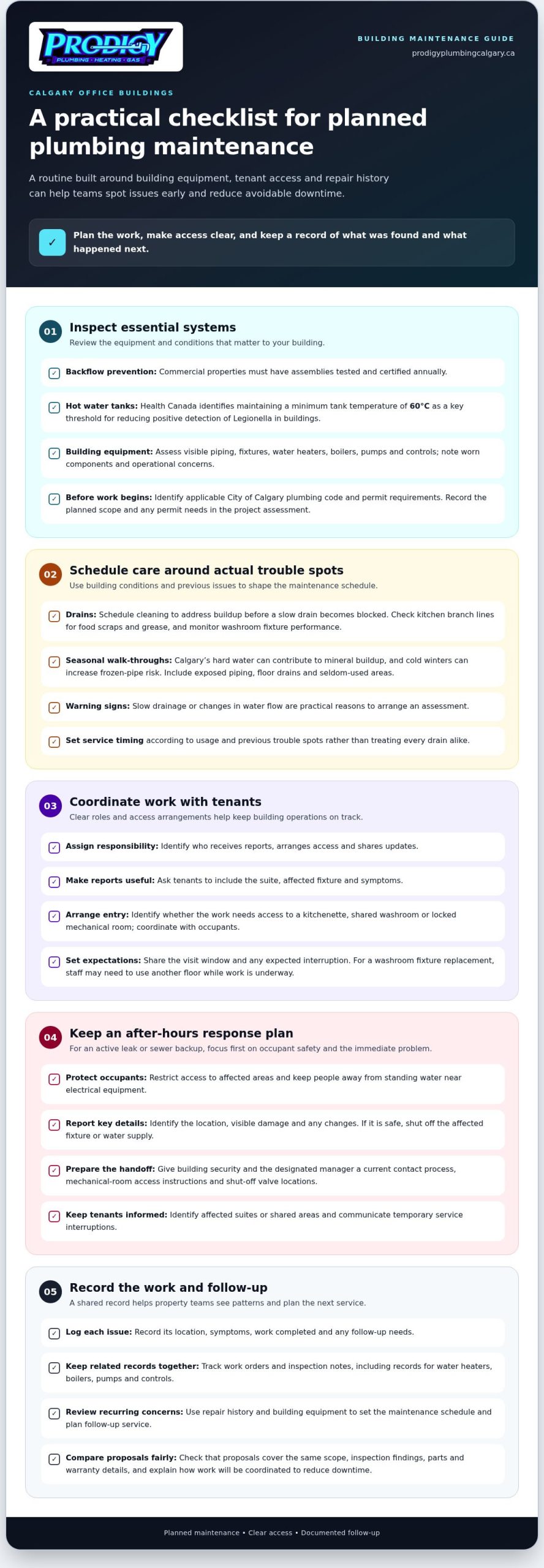
Office building plumbing maintenance in Calgary works best as a planned routine, not a scramble after a leak. Commercial properties need their backflow prevention assemblies tested and certified annually. Health Canada identifies 60°C as a key threshold: maintaining hot water tank temperature at that level helps reduce positive detection of Legionella in buildings.
Plumbing problems can disrupt tenant comfort and daily operations, so commercial properties need a clear maintenance plan. For Calgary office buildings, that means tracking recurring issues, coordinating access for repairs and knowing how to respond when a problem arises.
This guide covers practical plumbing and heating considerations for Calgary offices, including the effects of cold winters and hard water. You’ll also learn how to plan routine maintenance, coordinate service with tenants and manage urgent plumbing issues after hours.
Key Takeaways
- Organize routine maintenance around building needs, tenant schedules and access to plumbing equipment.
- Set a clear after-hours response process so staff can report the issue, affected area and any immediate changes.
- Keep tenants informed about service access and timing, and record completed work and follow-up needs.
- For fixture changes or kitchen and bathroom plumbing work, coordinate with a commercial plumbing provider to keep building operations on track.
Plumbing for office complexes and other commercial properties
Commercial plumbing maintenance includes drain care, fixture upkeep and essential building equipment. A planned approach helps Calgary offices spot potential leaks and blockages early and reduce avoidable downtime.
Inspections and System Assessments
A commercial assessment can review visible piping, fixtures, water heaters, boilers, pumps and controls. In hotels, kitchens and guest washrooms add heavy daily demand, so inspection notes should identify worn components and operational concerns. The City of Calgary requires commercial properties to have backflow prevention assemblies tested and certified annually. Health Canada identifies maintaining a minimum hot water tank temperature of 60°C as a key threshold for reducing positive detection of Legionella in buildings.
Before work begins, identify the applicable City of Calgary plumbing code and permit requirements. The scope matters: replacing a fixture is different from changing a pipe layout or major equipment. Document the planned work and any permit requirements in the project assessment.
Drain Cleaning and Scheduled Maintenance
Scheduled drain cleaning can address buildup before a slow drain becomes blocked. In office kitchens, food scraps and grease can collect in branch lines; washrooms may need attention when frequent use affects fixture performance. Record each issue’s location, symptoms, work completed and any follow-up. Set service timing according to usage and previous trouble spots rather than treating every drain alike.
Calgary’s hard water can contribute to mineral buildup, while cold winters can increase the risk of frozen pipes. Include exposed piping, floor drains and seldom-used areas in seasonal walk-throughs. Slow drainage or changes in water flow are practical signs to arrange an assessment.
Preventive Plans and Emergency Repairs
Preventive maintenance gives property teams a record of inspections, recurring concerns and planned upkeep. Emergency repairs address active problems, such as a leak affecting an occupied office or a blocked shared drain. Scheduled care supports planning and helps teams spot issues before they disrupt tenants; emergency work focuses on the immediate fault and limiting disruption. Both have a role in a building maintenance plan.
For Calgary offices, define how staff report problems, who can access mechanical rooms and how tenants receive updates. A clear process helps distinguish an urgent leak from an item that can be scheduled. Keep records for water heaters, boilers, pumps and controls as well as plumbing repairs.
Choosing Licensed Commercial Plumbers
When planning commercial plumbing work in Alberta, confirm the licensing and permit requirements that apply to the project. Compare proposals by checking that they cover the same scope, inspection findings, parts and warranty details. A useful plan also explains how work in shared washrooms, kitchens or mechanical rooms will be coordinated to reduce downtime.
Set a maintenance schedule based on the building’s equipment, occupancy and repair history. Keep inspection notes and work orders together so property managers can track recurring problems and plan follow-up service.
Emergency and after-hours plumbing response
During a leak or sewer backup, protect occupants, restrict access to affected areas and report the problem promptly. If you can safely identify the source, shut off the affected fixture or water supply, then record the location, visible damage and any changes. Keep staff away from standing water near electrical equipment and arrange an urgent plumbing assessment.
After-hours incidents need a clear handoff. Give building security and the designated manager a current contact process, mechanical-room access instructions and the locations of shut-off valves. For example, if a washroom supply line leaks overnight, the person reporting it should identify the floor and room and say whether water is still flowing. Those details help the response team understand the issue.
Emergency plumbing work starts by controlling the active problem. A plumber may need to isolate a leaking line, clear a blocked drain or repair a damaged connection before assessing related fixtures. In a complex office, identify affected suites or shared areas and tell tenants about any temporary service interruption. Keep repair notes for follow-up, especially when the same drain or fixture has caused trouble before.
Preventive work can help catch overlooked issues before they become emergencies, though it cannot prevent every failure. Review repair records, note recurring leaks or slow drains, and include vulnerable fixtures in scheduled checks. Calgary’s cold winters can contribute to frozen pipes, so include exposed or unheated areas in building walk-throughs. Clear reporting and timely maintenance can also help limit downtime.
For a practical response plan, document reporting steps, access details and who updates tenants. Managers comparing services in Calgary can look for a clear repair scope and communication process. Calgary plumbing services can be part of the plan for addressing urgent plumbing needs.
Maintenance coordination for property managers and tenants
Clear roles help Calgary office buildings manage maintenance and keep tenants informed. An office building plumbing maintenance plan in Calgary should assign a property manager to receive reports, arrange access and share updates. Give tenants a simple reporting route, such as a service request form, and ask them to include the suite, affected fixture and symptoms.
Before booking an inspection, identify the areas that need access. A plumber may need entry to a tenant kitchenette, shared washroom or locked mechanical room. Coordinate access with the occupant, then share the visit window and any expected interruption. For example, replacing a washroom fixture may mean directing staff to another floor while the work is underway.
Keep a central maintenance log for each work order. Record the date, location, reported issue, inspection findings, completed repair and follow-up. If the same suite reports a recurring leak, the notes help the property manager connect the reports and plan a focused assessment. Add relevant heating or water-system details when they relate to the issue.
For larger projects, divide the work into clear stages. A pipe replacement may require access planning, notices to affected suites, coordination and a final review. Tell tenants which area is affected, what they need to move and whom to contact if conditions change. This coordination is a practical part of office building plumbing maintenance in Calgary, especially when work affects shared kitchens or washrooms.
Use the same process for commercial and residential properties only where it fits the building. Office tenants may have different access hours and business needs than residents, so schedule visits around occupancy and operations. After each visit, close the work order with a summary and outstanding tasks. That record gives the next manager or contractor a useful history instead of relying on memory.
Office building and corporate facility plumbing
Office plumbing connects tenant fixtures, shared washrooms and mechanical equipment throughout a building. A fault in a shared line can affect several suites, so map shut-off points and note which valves serve each area. This helps staff isolate a problem without unnecessarily cutting water to other spaces. For office building plumbing maintenance in Calgary, keep the map accessible to property staff and update it after plumbing changes.
Calgary’s cold winters can contribute to frozen pipes, especially near exterior walls or in underheated service areas. Add these locations to seasonal walk-throughs and record insulation concerns or signs of condensation. Hard water can also contribute to mineral buildup in pipes and equipment. Track changes in flow, recurring fixture problems and inspection findings to identify patterns before they cause damage.
Backflow prevention needs specific attention. In Calgary, reduced pressure zone and double check backflow prevention assemblies must be tested by a certified tester. Keep each assembly’s location and test documentation with the building records. For office building plumbing maintenance in Calgary, noting which suites depend on each assembly can help coordinate access and follow-up.
Keep clear operating records for hot water systems. Note which water heaters serve tenant areas, shared washrooms or staff kitchens, and log reported changes in temperature or supply. For buildings with boilers, pumps and controls, record equipment locations and related plumbing concerns. These details help facility teams distinguish a localized fixture issue from a wider system problem.
The practical takeaway for Alberta office properties is to connect system records with building operations. Map valves, document equipment and direct staff to report changes promptly. These details help commercial plumbing services assess the right area and plan work around occupied spaces. If your facility needs an assessment or repair, arrange commercial plumbing support.
Prodigy Mechanical: Fixture Swaps
Prodigy Mechanical helps Calgary property managers with fixture swaps and commercial plumbing. Turn to the team when a worn or damaged fixture needs replacing, or when kitchen and bathroom plumbing work affects tenant spaces. Share the fixture details, location and access requirements to help define the work and coordinate it with building operations.
For office buildings, planned fixture changes can be organized around tenant access and shared washroom use. Kitchen plumbing work can also support the day-to-day needs of staff areas. Contact Prodigy Mechanical to discuss your building’s plumbing needs, or visit prodigyplumbingcalgary.ca.
Set a clear next step for your building
For your next property meeting, assign someone to review plumbing work orders and identify the next priority. A short, current record gives managers a useful starting point and keeps maintenance decisions connected to tenant needs. A practical Calgary plan for office building plumbing maintenance can grow from this routine, with clear responsibility for each follow-up.
Prodigy Mechanical handles fixture swaps, kitchen plumbing and bathroom plumbing for updates or repairs in tenant and shared spaces. Provide the location, issue and access arrangements so the work can be planned around your building’s operations.
Contact Prodigy Mechanical today to discuss plumbing work for your Calgary property. A considered next step can help your team move forward with confidence.
Frequently Asked Questions
How often should office building plumbing systems be inspected in Calgary?
Set inspection timing according to equipment condition, building use and repair history. One interval will not suit every pipe, fixture or water heater. Backflow prevention assemblies in commercial properties must be tested and certified annually. A building with recurring leaks or changing water flow may need a targeted assessment sooner. Use maintenance records to set priorities and schedule work around operating needs.
Who is responsible for plumbing maintenance in Calgary commercial leases: landlord or tenant?
Commercial lease terms and maintenance clauses usually define how responsibilities are divided. A landlord may handle shared pipes and building equipment, while a tenant may be responsible for fixtures within its leased space. The exact wording matters. Record who reports problems, arranges access and approves work before scheduling repairs to reduce confusion.
How can Calgary office buildings prevent frozen pipes and water damage in winter?
Protect vulnerable plumbing by keeping service areas heated and addressing cold drafts near pipes before winter. During a vacancy or renovation, include water lines in the building’s shutdown and restart procedures. Make sure staff know how to report unusual dampness, a sudden loss of water or visible frost. Where practical, keep valuable equipment and stored documents away from areas prone to leaks.