

A loud bang doesn’t automatically mean a pipe is about to fail. The sound and its timing can offer useful clues. People searching for “noisy pipes when water is running Calgary” often want to know whether a sound points to a leak or another plumbing problem. Banging just after a tap or appliance shuts off can fit the pattern of water hammer. Whistling or rattling during water flow may point to a restriction, valve issue or loose pipe. The sound alone can’t confirm the cause, but it helps narrow down what to observe.
This guide explains what common pipe sounds may indicate, what you can safely check at home and when to call a Calgary plumber. Note which fixture is running, when the noise starts and whether you see signs of a leak. Don’t take pipes apart or adjust plumbing components. Prodigy Mechanical serves Calgary homes, businesses and strata properties, and can assess the sound and accessible pipework before recommending next steps.
Key Takeaways
- Tell water hammer apart from noise during water flow by noting when the sound starts and how it repeats.
- Consider a home’s age and plumbing layout as context, not as a diagnosis.
- Record which fixture is running and when the noise starts, without taking plumbing apart.
- For noisy pipes when water is running Calgary, match your next step to the clues and stop checking if you notice a leak or water damage.
- A plumber can try to reproduce the sound, inspect accessible pipework and recommend a repair based on the confirmed cause.
Noisy Pipes When Water Is Running in Calgary: What the Sound Can Tell You
Pipe noise can have several possible causes. A bang or hum isn’t proof that a pipe is damaged. Sound travels through plumbing and nearby building materials, so a noise that seems to come from a wall or floor may have started somewhere else.
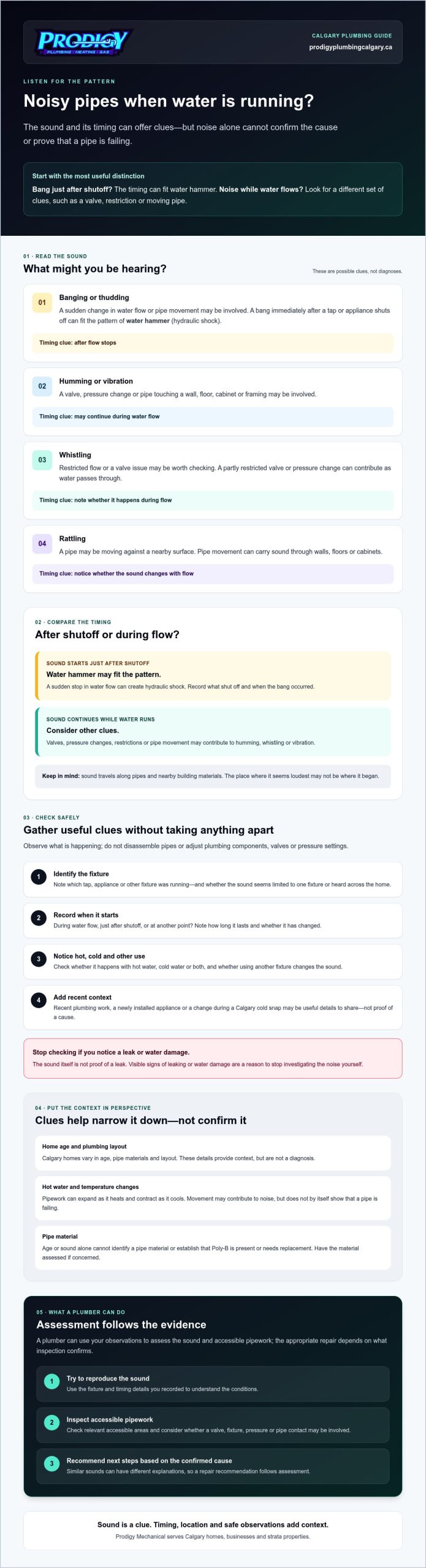
Timing is a useful first clue. A noise that continues while water flows may have a different cause from a bang just after a tap or appliance shuts off. That sudden stop can create hydraulic shock, also known as Hydraulic shock (water hammer). Since sound can travel along pipes, where it seems loudest may not be where it began.
The phrase “noisy pipes when water is running Calgary” describes a symptom, not a diagnosis. Start by noting the sound, what was running and when the noise occurred.
| Sound or timing | Possible clue, not a diagnosis |
|---|---|
| Banging or thudding | A sudden flow change or pipe movement |
| Humming or vibration | A valve, pressure, or pipe contact may be involved |
| Whistling | A restriction or valve issue may be worth checking |
| Rattling | A pipe may be moving against a nearby surface |
What do banging, humming, whistling, and rattling pipes suggest?
A bang or thud is a reason to note whether water flow changed suddenly or pipework seemed to move. A steady hum or vibration may relate to a valve, water pressure or a pipe touching a wall or framing. Whistling can suggest restricted flow or a valve issue. Each sound can have more than one explanation, so don’t treat a sound label as a confirmed cause.
When and where does the noise happen?
Notice whether the sound occurs at one fixture, across the home or near an appliance. Check whether it happens with hot water, cold water or both. Record what was running, whether the noise began during flow or after shutoff, how long it lasted and whether it has changed. Recent plumbing work or a newly installed appliance is useful context. These details help a plumber assess the conditions more efficiently.
Why Calgary Pipes Make Noise While Water Is Running
Several plumbing conditions can create similar sounds. A plumber may need to inspect the system and reproduce the noise to find its source. Calgary homes vary in age, pipe materials and plumbing layout, so a cause that fits one home may not fit another.
Water hammer usually makes a bang after flow stops. Noise that continues while water runs points to a different set of clues. Valves, pressure changes, restrictions and pipe movement may contribute to humming, whistling or vibration. Moen’s overview of diagnosing common pipe noises describes examples of how sounds may relate to plumbing conditions. Sound alone can’t confirm the cause.
Can water pressure, valves, or restrictions cause pipe noise?
Changes in water pressure or a partly restricted valve may contribute to a hum or whistle as water passes through. A plumber can check whether a valve, fixture or pressure-reducing valve (PRV) is involved. Don’t adjust valves or pressure settings to test a theory. Changing a setting without understanding the system could affect other fixtures or hide the original symptom.
A restriction may affect one fixture, while noise heard at several taps could point to a condition elsewhere in the system. These patterns are clues, not proof. Note where the sound seems loudest and whether it changes when another fixture is used.
Can loose pipes, hot water, or older materials create vibration?
Pipes that touch framing or lack firm support may vibrate as water moves, carrying sound through walls, floors or cabinets. Hot water can also make pipework expand, while cooling can make it contract. This movement may contribute to noise, but it doesn’t show by itself that a pipe is failing. If the sound changes during a Calgary cold snap, note when it occurs rather than assuming cold weather is the cause.
A pipe’s age or appearance can provide context, but noise alone can’t identify its material or establish that Poly-B is present or needs replacement. If you’re concerned about the piping, have the material assessed instead of drawing conclusions from sound.
If the noise persists, a Calgary plumbing assessment can help identify the operating conditions and accessible pipework involved. Calgary plumbing services from Prodigy Mechanical are an option for homeowners seeking an assessment. The appropriate repair depends on what an inspection confirms.
Is It Water Hammer or Another Plumbing Noise? Compare the Clues
Timing is the clearest distinction. Water hammer is a pressure shock that can occur when moving water stops suddenly, such as when a tap or appliance shuts off. It often sounds like a brief bang or thud after the flow ends. A hum or whistle that continues while a fixture is running is a different clue and may involve a valve, pressure, restriction or pipe contact. Neither pattern confirms a specific fault.
How does water hammer differ from continuous humming or whistling?
Listen for a single impact at shutoff versus a sustained noise during flow. A short bang after closing a tap may fit the pattern of water hammer. A steady vibration or whistle while water runs suggests another condition to investigate. Don’t assume a particular component, such as a water hammer arrestor, is the right fix before the system has been assessed.
| Sound and timing | Where it may be heard | Useful next step |
|---|---|---|
| Brief bang just after flow stops | Near the fixture, appliance or along connected pipework | Note what stopped the flow and whether the sound repeats |
| Humming or whistling during flow | At one tap or in more than one area | Record which fixtures trigger it and whether it changes with flow |
| Rattle or vibration during use | Near a wall, floor, cabinet or appliance | Note the apparent location without opening walls or securing hidden pipes |
| Noise only during hot-water use | At a hot tap or possibly near the hot-water tank | Record which hot-water fixtures are involved; have the tank assessed if other symptoms point to it |
What do fixture-specific and whole-home noises indicate?
A sound limited to one tap calls for different observations than a noise heard at several fixtures. Note whether another tap or appliance triggers the same sound, but don’t deliberately repeat a pattern that causes severe banging or visible leaking. If it happens only with hot water, record that detail. The hot-water tank may be one area for a plumber to assess, but hot-water-only noise doesn’t establish that the tank is at fault.
For a clearer assessment of noisy pipes when water is running Calgary homeowners can share a short record of what they observe:
- Which fixture or appliance was running, and whether the water was hot, cold or both.
- Whether the sound began during flow or just after shutoff.
- Whether it was a bang, hum, whistle or rattle, and how long it lasted.
- Whether the noise seemed isolated or could be heard elsewhere, and whether it began after plumbing work or an appliance change.
These details help a Calgary plumber narrow down where to investigate without treating the sound as a diagnosis.
What Calgary Homeowners Can Check Safely Before Calling a Plumber
A few careful observations can clarify what’s happening without taking plumbing apart. Keep checks simple. Don’t adjust valves, remove covers or disturb pipe supports to investigate a noise.
A short observation process
- Use one fixture at a time. Turn on a tap normally and listen for whether the sound starts during flow, changes as the flow changes or happens after you turn it off. Stop if the noise is severe or the check feels unsafe.
- Compare the pattern. Note whether the sound occurs with hot water, cold water or both. If it seems connected to an appliance, record which one was operating rather than moving or disconnecting it.
- Look only at accessible areas. From a safe, dry spot, check visible pipes and nearby surfaces for dampness, movement or signs of water damage. Don’t open walls or ceilings, touch wet electrical equipment or try to secure a pipe yourself.
- Write down what you hear. Record the fixture, sound, timing, duration and whether it happens in one area or across the home. Note any recent plumbing or appliance changes.
When should you stop troubleshooting and get professional help?
Stop investigating if you find an active leak, water damage or another unsafe condition. A sudden change in water flow alongside unusual noise also warrants professional attention. Don’t keep running fixtures to reproduce a sound if doing so could worsen a leak or cause damage.
Arrange an assessment if banging persists, vibration worsens, noise occurs at several fixtures or water flow has noticeably changed. One unfamiliar sound without other symptoms doesn’t automatically mean an emergency. How promptly to act depends on what accompanies it, especially leaking, spreading water damage or an unsafe condition.
If you’re hearing noisy pipes when water is running Calgary and the cause remains unclear, share your observations with a plumber rather than attempting a repair based on sound alone. Prodigy Mechanical serves Calgary homes, businesses and strata properties, and can assess operating conditions and accessible pipework before discussing suitable next steps.
Contact Prodigy Mechanical for a plumbing assessment if the noise persists or comes with other concerning symptoms.
How a Calgary Plumber Diagnoses and Resolves Noisy Pipes
A sound-based guess can lead to the wrong repair. A plumber will ask when the noise happens and what seems to trigger it. If appropriate, they may run the affected fixture or appliance to reproduce the sound and observe how it changes during use or at shutoff.
What information helps a plumber assess noisy pipes?
Your observations can help narrow the investigation. Share the sound type, where it seems loudest, how long it lasts and whether it happens at one fixture or several. Mention whether hot water, cold water or both are involved, and whether a particular appliance triggers the noise.
Recent fixture installations, appliance changes or plumbing work can also provide useful context. Point out any visible pipe movement, leaks or noticeable change in water flow. Don’t touch or adjust components to demonstrate a symptom. A clear description helps the plumber decide what to check safely.
How do assessment and repair options differ by cause?
During an assessment, a plumber may inspect accessible valves, pipe supports and pressure-related components while considering the conditions that produce the sound. The investigation can vary depending on whether the noise is isolated to one fixture, occurs across the home or appears only during hot-water use. If the suspected source is behind a wall or otherwise inaccessible, further investigation may be needed before a recommendation is made.
The next step depends on what the inspection confirms. A repair, adjustment or replacement may be appropriate, but none should be assumed from a noise label alone. For example, identifying a bang as possible water hammer doesn’t establish which component or repair is needed. Pipe noise also doesn’t prove that the home has Poly-B piping or that replacement is required.
A diagnosis-first approach ties the recommendation to the actual plumbing conditions. If you’re still hearing noisy pipes when water is running Calgary, ask a plumber to assess the sound, operating conditions and accessible pipework before deciding on a repair.
Contact Prodigy Mechanical about noisy pipes in Calgary if the sound persists or comes with other plumbing symptoms.
Choose a Clear Next Step for Noisy Pipes
Pipe noise is a clue, not a diagnosis. A brief bang after water stops may point to a different issue than humming or whistling during flow. Note which fixtures are involved, when the sound starts and whether you see other symptoms. These details help a plumber assess the conditions before recommending a repair.
If you’re dealing with noisy pipes when water is running Calgary and the sound persists, worsens or comes with a leak or change in water flow, arrange a professional assessment. Prodigy Mechanical serves Calgary residential, commercial and strata properties, with plumbing repairs, emergency plumbing and full Poly-B pipe replacement among its services. Pipe noise alone doesn’t mean Poly-B is present or that replacement is needed.
Contact Prodigy Mechanical about noisy pipes in Calgary to discuss your observations and possible next steps. An assessment can replace guesswork with a clearer plan.
Frequently Asked Questions
Why do my pipes make noise when water is running?
Pipes can make noise during water flow because of pressure changes, a partly restricted valve, loose pipe supports or contact with nearby framing. A hum, whistle or rattle offers clues, but can’t confirm the cause. Notice which fixture is running, whether the sound continues or comes and goes, and whether other taps are affected. A plumber may need to inspect accessible plumbing to identify the source.
Is water hammer the same as noisy pipes while water is running?
No. Water hammer is a pressure shock that commonly creates a brief bang when water flow stops suddenly, such as after a tap or appliance shuts off. Humming or whistling that continues during flow points to other possible causes. Timing helps distinguish the patterns, but doesn’t identify a specific fault. Don’t choose a repair based on the sound name alone.
Can high water pressure make pipes hum or whistle?
High water pressure may contribute to humming, vibration or whistling, though valves, restrictions and pipe contact can also cause similar sounds. A plumber can check the pressure and assess whether a pressure-reducing valve or another component is involved. Don’t adjust a valve or pressure setting yourself to test the theory. Note whether the noise happens at one fixture or across the home and share that detail during an assessment.
Should I worry if my pipes bang when water is running?
A bang doesn’t automatically mean a pipe is damaged, but note when it occurs and whether it’s getting worse. A short bang just after water stops can fit the pattern of water hammer. Repeated banging during flow needs assessment if it persists. Stop investigating and seek help if you also notice an active leak, water damage or a sudden change in flow. These accompanying symptoms help determine how promptly to act.
Can cold Calgary weather cause noisy pipes?
Cold weather alone doesn’t confirm why a pipe is making noise. Temperature changes can affect pipe movement, and a sound might change during a seasonal cold snap, but that timing doesn’t prove the cause. Note when the noise occurs, whether it’s limited to hot or cold water and whether it returns as conditions change. If you see leaking or water damage, stop checking and arrange professional help.
When should I call a plumber for noisy pipes in Calgary?
Contact a plumber if the noise persists, banging becomes more frequent, vibration worsens, several fixtures are affected or water flow changes. Seek prompt help if you see an active leak or water damage, and don’t keep running fixtures to reproduce a concerning sound. Prodigy Mechanical serves Calgary residential, commercial and strata properties, with plumbing repairs and emergency plumbing among its services. Share when and where the noise happens to help guide the assessment.