

A slow bathtub drain is usually a blockage to clear, not a reason to replace the tub. For a slow-draining bathtub fix in Calgary, start by cleaning the stopper and removing visible hair and soap residue. If water still pools, try plunging with the overflow covered. Gurgling, repeated slowdowns, or a clog that quickly returns can point to buildup farther along the drain or a plumbing issue.
It’s frustrating to watch bathwater linger, especially when the cause isn’t obvious. Hair and soap scum can collect around the stopper, while mineral deposits may narrow pipes over time. Cleaning the surface can help, but household mixtures may only partly open a blockage and might not clear it completely.
Work through the steps in order: clean the stopper, try a careful plunge, then look for signs the problem may need drain cleaning or repair. Simple prevention can also limit future buildup and help you decide whether a basic clean is enough or the drain needs a closer look.
Key Takeaways
- Check the stopper and drain opening first, where hair and residue can collect and slow water flow.
- Use a plunger with the overflow covered to create suction and help shift a small clog.
- Notice whether other fixtures drain slowly or make unusual sounds, as these clues can point beyond the bathtub drain.
- Clean the stopper carefully and watch how the tub drains afterwards to see whether the blockage has eased.
- Repeated clogs or ongoing slow drainage may need a closer plumbing assessment rather than another surface clean.
Why is My Bathtub Draining Slowly?
Hair, soap residue, and mineral deposits can narrow a bathtub drain and slow water flow. A slow-draining bathtub fix in Calgary starts with determining whether the obstruction is near the opening or farther inside the plumbing.
-
Apply Baking Soda and Vinegar
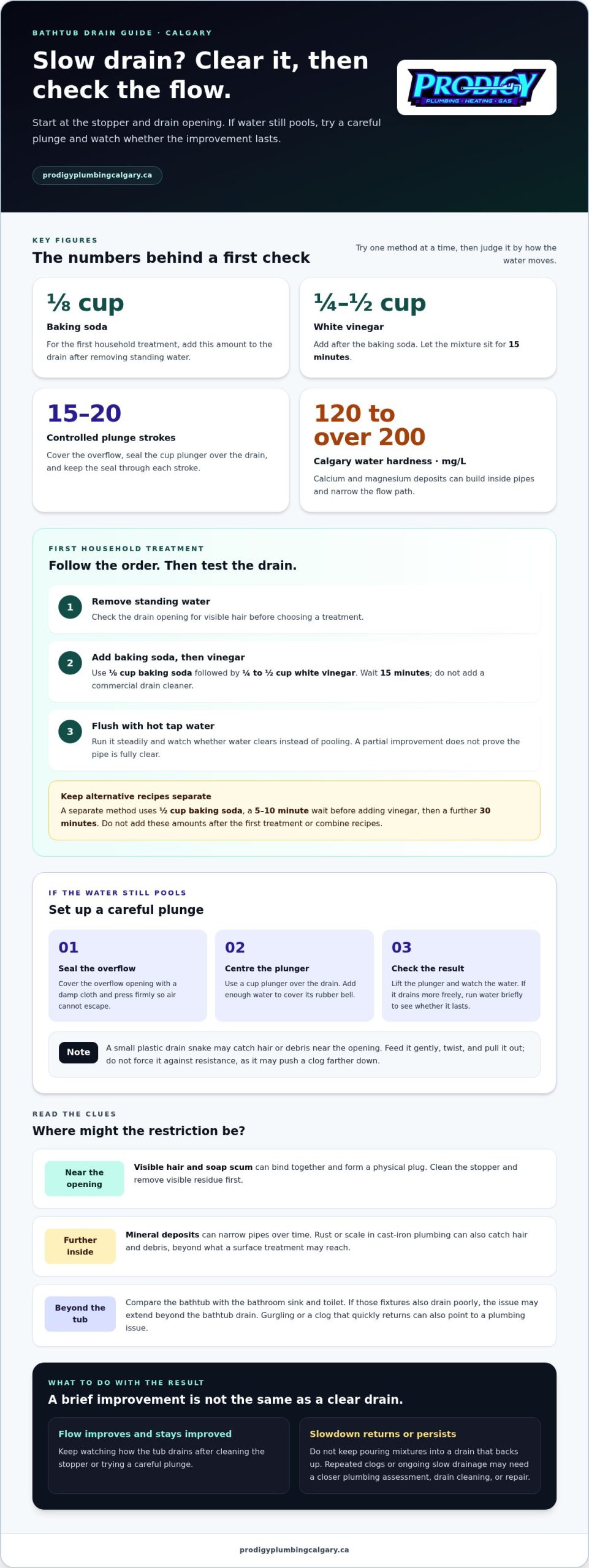
Remove standing water, then pour 1/8 cup of baking soda into the drain. Add 1/4 to 1/2 cup of white vinegar and let the mixture sit for 15 minutes. Keep the amounts in this order, and don’t add a commercial drain cleaner. This household treatment may loosen residue, but it can only partly open a blockage. Check whether water begins moving more freely before trying anything else.
-
Flush with Hot Water
After the 15-minute wait, flush the drain with hot tap water. Run it steadily and watch whether water clears instead of pooling around the tub. Don’t treat this as proof that the pipe is fully clear. Baking soda, vinegar, and hot water may loosen some residue without removing compacted hair. A slow draining bathtub fix Calgary homeowners try at home should include checking the drain’s response, not just pouring in a mixture.
-
Keep Alternative Recipes Separate
Household instructions use different quantities and wait times, so don’t combine recipes. One separate method calls for ½ cup of baking soda, waiting 5-10 minutes before adding vinegar, then leaving the mixture for 30 minutes. Don’t add these amounts after the first treatment. Using one recipe at a time makes it easier to judge whether the approach helped or the blockage remains.
-
Consider What May Be Blocking the Drain
Check the drain opening for visible hair before choosing a treatment. Hair can bind with soap scum and form a physical plug. Calgary tap water is hard to very hard, with calcium and magnesium typically ranging from 120 to over 200 mg/L. Mineral deposits can build inside pipes, so a surface treatment may not reach the narrowing. Rust or scale in cast-iron plumbing can also catch hair and debris.
-
Check the Flow Before Repeating Treatment
Run hot tap water and check whether the tub empties more smoothly. If the improvement is slight or short-lived, the obstruction may be farther along the pipe, or mineral scale may be restricting flow. Don’t keep pouring mixtures into a drain that continues to back up. Some Calgary residents try boiling water in two or three stages to loosen grease and soap residue, but a persistent blockage may need another clearing method.
Using a plunger with the overflow covered
A plunger can shift a small bathtub clog by creating suction at the drain. Cover the overflow first, then use controlled strokes and check whether the water moves more freely.
-
Cover the Overflow
Find the overflow opening on the bathtub wall, usually below the faucet, and seal it with a damp cloth. Press the cloth firmly over the opening so air can’t escape while you plunge. If your tub has an overflow plate, cover its opening with the cloth rather than assuming the plate seals it. A poor seal weakens suction and makes plunging less effective.
-
Dislodge Clogs with a Plunger
Place a cup plunger directly over the bathtub drain, then add enough water to cover its rubber bell. Keep the bell centred and pressed flat against the tub surface. Push down and pull up firmly 15-20 times, maintaining the seal through each stroke. The repeated movement creates pressure that can loosen a small clog near the drain.
-
Check the Water Flow
Lift the plunger and watch the standing water. If it drains more freely, run water briefly to see whether the improvement lasts. If the tub remains full or drains just as slowly, don’t keep plunging without a clear result. Remove any debris that rises to the opening, then reassess the flow before trying another method.
-
Use a Drain Snake Carefully
A small plastic drain snake can collect hair or debris near the opening. Feed it gently into the drain, twist it, then pull it out to remove material. A snake may push a clog farther down instead of clearing it, so don’t force it against resistance. Plunging and snaking work differently: suction shifts a blockage, while a snake tries to catch it.
-
Stop if the Clog Keeps Returning
Note whether the bathtub improves after plunging, then slows again during regular use. A recurring blockage can sit beyond the reach of a cup plunger or plastic snake. Repeated attempts may not remove the full obstruction. If the drain still struggles after these steps, professional drain cleaning and repair can address a slow draining bathtub fix Calgary that needs a closer plumbing assessment by Prodigy Mechanical.
Set up the plunger so its bell is covered by water and sits firmly over the drain. The water helps create a seal, while the plunging motion creates suction that may dislodge a small, reachable clog. A plunger won’t clear every type of blockage, so don’t assume it has worked unless the water drains more freely.
Work in order: ensure the plunger bell is covered by water, place it over the drain, and plunge to create suction. If the clog doesn’t shift, remember that a plunger can dislodge some small clogs but won’t clear every blockage. Check how the water moves afterward, and don’t assume the problem is resolved if the drain remains slow.
Blocked vent pipes and sewer-line problems
- Compare the bathtub with other fixtures before treating the drain again. Run the bathroom sink, then flush the toilet and note what happens. If only the tub drains slowly, the restriction is more likely near that fixture. If the sink and toilet also drain poorly, the issue may extend beyond the bathtub drain. Note which fixtures are affected and whether they slow at the same time.
- Listen for gurgling as water leaves a sink or toilet. A plumbing vent allows air into the drainage system, and a blocked vent can disrupt that airflow. Bubbling at the bathtub drain when the toilet flushes is a useful detail to report. Gurgling alongside slow drainage may point to shared plumbing rather than hair near the tub opening.
- Watch for standing water in more than one fixture. If the tub fills while another fixture runs, stop using water and observe whether the level changes. One slow tub is different from several fixtures backing up together. Note the sequence, such as a toilet flush followed by bubbling in the tub. These details help distinguish a local clog from a broader drainage problem.
- Look for a pattern before trying another home remedy. A blocked vent can affect drainage and cause gurgling, while a sewer-line obstruction can affect several connected fixtures. A tub and nearby sink slowing together deserve more attention than one sluggish tub. Don’t expect plunging the bathtub to fix a problem affecting the larger drainage system.
- Keep people away from wastewater if a toilet or floor drain backs up. Avoid running taps, flushing toilets, or starting appliances that send more water into the plumbing. Note which drains are affected and whether the water is rising or receding. A backup at multiple fixtures is different from a bathtub that simply drains slowly, and that distinction helps identify the repair needed.
- Share your observations if symptoms involve several fixtures, return after clearing the tub, or include gurgling and backups. Describe whether the sink, toilet, or floor drain is affected, and what was running when the sound began. A plumbing assessment can help trace whether the issue involves a vent, shared drain, or sewer line. Avoid repeated plunging when other fixtures show the same symptoms.
Prevention can reduce debris, but it won’t resolve a shared-system problem. Clean mesh drain strainers weekly to catch debris before it enters the pipes. Monthly baking soda and vinegar treatments may help prevent blockages, but these mixtures may only partly open an existing bathtub clog. If symptoms recur, don’t rely on a home treatment to clear the cause.
Hard water flows through pipes in about 60% of homes. The page recommends annual professional drain cleaning to identify plumbing problems before they become serious. Hercules Glug® Bath Liquid Drain Opener is described as safe for plastic pipe, porcelain, and metal pipes other than aluminum.
Cleaning bathtub drain stoppers
Hair and soap residue often collect around the stopper, restricting water before it reaches the drainpipe. Clean the stopper first, then test the tub’s flow before trying a deeper drain-cleaning method.
Chemical drain cleaners aren’t safe for every bathtub pipe or septic system. Check the product label for compatibility with your plumbing and septic system. Never mix cleaners or add one after another treatment.
- Identify the stopper style. Look at the drain before turning or removing anything. A lift-and-turn stopper has a knob on top, while a push-pull style usually lifts from the drain. Some bathtub stoppers connect to a trip lever on the overflow plate. Identifying the mechanism helps you avoid pulling against connected parts or forcing something that should unscrew.
- Remove the stopper gently. For a lift-and-turn or push-pull stopper, try turning the knob or cap counter-clockwise while holding the stopper steady. If it doesn’t release easily, stop rather than using excessive force. A trip-lever assembly may require access through the overflow plate, so don’t pull hard on its metal linkage. Keep small screws and parts together for reassembly.
- Clear hair and residue. Remove visible hair from the stopper and drain opening with gloved fingers or a tissue. Wipe away soap film with a cloth and mild household cleaner, then rinse the parts. Don’t push debris down the drain. Hair wrapped around the stopper can restrict its movement, while buildup underneath can narrow the opening and slow drainage.
- Clean the drain opening and reassemble. Use a small brush to clean around the rim and underside of the stopper. Check for remaining hair before returning the stopper to its original position. Turn or press it gently to confirm it opens and closes. Run water and watch how it drains. Cleaning the stopper won’t resolve a blockage farther inside the plumbing.
- Prevent the next buildup. Place a hair catcher over the drain and empty it after use. Clean a mesh drain strainer weekly to stop hair and debris from accumulating beneath it. A weekly flush with boiling water may help remove minor buildup, but handle hot water carefully. If the stopper is clean and the tub still drains slowly, the blockage may need more than surface cleaning.
Slow bathtub drains and repair
A clean stopper and drain opening don’t rule out a problem farther inside the plumbing. Use the signs below to decide whether another home attempt makes sense or repair is the better next step.
Cleaning a stopper or clearing a simple clog is maintenance, not a plumbing alteration. If a repair involves changing drain piping, permit requirements depend on the work’s scope under Calgary rules. Determine what the repair involves before work begins.
- Track how often the drain slows again. After clearing a blockage, note whether the tub drains freely during regular use. If it clogs again within a week or two, the remaining obstruction may be deeper in the drain. Repeating a surface clean may remove new hair without clearing the original cause. Recurring symptoms are a sign the problem needs more than stopper cleaning.
- Compare the symptom with the likely cause. Hair causes 90% of bathtub clogs, and it can bind with soap residue near the drain. Mineral deposits can also build up inside pipes, narrowing the passage and slowing water. A stopper covered in hair suggests a local blockage. A clean stopper with persistent slow flow points toward a restriction farther along the pipe.
- Watch for signs of a developing clog. Gurgling or slow drainage can warn that a blockage is forming. Note whether the sound comes from the bathtub or occurs when another fixture drains. A tub that gurgles as a nearby sink empties may involve plumbing beyond the tub opening. Several affected fixtures or repeated backups make a simple stopper problem less likely.
- Choose repair before replacement for a small fault. A slow drain or leaky faucet may call for repair rather than bathtub replacement. Separate the drain symptom from other issues, such as a dripping faucet or visible leak. If the tub itself is in good condition, focus on the specific plumbing problem. Replacing the tub is a bigger decision than clearing or repairing a drain.
- Arrange drain cleaning and repair when symptoms persist. A plumbing assessment can identify whether hair, mineral scale, or another restriction is affecting the drain. Share when the slowdown began, what you’ve tried, and whether the tub improved before clogging again. If the problem continues after basic cleaning, arrange drain cleaning and repair to address the obstruction and determine whether further plumbing work is needed.
Prodigy Mechanical: Fixture Swaps
Prodigy Mechanical can help when a slow bathtub drain points to a plumbing issue beyond stopper cleaning. Its Bathroom Plumbing service addresses bathroom plumbing needs, while Fixture Swaps can replace a fixture that is damaged or no longer working properly. A recurring drain problem may need cleaning or repair rather than a fixture replacement, so the next step depends on the symptoms.
If the tub keeps draining slowly after basic cleaning, or you’ve noticed a leak or a faulty fixture, contact Prodigy Mechanical to discuss your bathroom plumbing needs. You can also visit prodigyplumbingcalgary.ca.
Take the Next Step Towards a Freely Draining Tub
A slow drain that keeps returning can make it hard to tell whether the issue is limited to the tub or needs plumbing repair. If basic cleaning hasn’t solved the problem, a professional assessment can identify the next practical step. For a slow-draining bathtub fix in Calgary, contact Prodigy Mechanical about Bathroom Plumbing or Fixture Swaps. Its Kitchen Plumbing service can also help with plumbing concerns elsewhere in your home.
Share what you’ve noticed, including when the drainage slows and whether other fixtures are affected. That gives the team useful context about the problem and helps guide the conversation. Contact Prodigy Mechanical for help with your bathroom plumbing needs. With a clear next step, you can move towards a bathroom that works comfortably again.
Frequently Asked Questions
What causes a bathtub to drain slowly, and how can I diagnose the blockage?
Hair, soap residue, and mineral scale are common causes of slow bathtub drainage. Check whether the stopper lifts fully and whether debris is visible at the opening. Then compare the tub’s drainage with a nearby sink. If the sink drains normally, the restriction may be closer to the bathtub; if both are slow, mention that pattern when arranging a plumbing assessment.
How do I remove hair and debris from a bathtub drain safely?
Put on gloves, remove the stopper if it lifts out easily, and use a flashlight to inspect the drain opening. Pull visible hair upward with your fingers or a plastic drain tool rather than pushing it farther into the pipe. Wipe the stopper and rim before reinstalling them. Avoid sharp metal tools, which can scratch the tub or damage drain components.
When should I use a drain snake or remove the bathtub drain stopper?
Remove the stopper when hair is tangled around it or blocking the opening beneath it. Use a small plastic drain snake if debris is just beyond reach and the stopper is clear. Feed the tool gently, then withdraw it to collect material. Stop if it catches or meets firm resistance. A trip-lever stopper may have connected linkage, so don’t pull hard on its parts.
When does a slow bathtub drain indicate a main sewer line problem?
A main sewer-line concern becomes more likely when several fixtures have problems together, such as a bathtub and toilet backing up around the same time. A single slow tub, with other drains working normally, more often points to a local restriction. If wastewater rises through a floor drain or multiple fixtures back up, stop running water and arrange a plumbing assessment to locate the problem.