

A tankless water heater isn’t automatically the right upgrade for every Calgary home. The deciding factors include whether the system can meet your household’s hot-water demand and whether the home’s gas supply, venting and plumbing suit the installation. This guide to hot water on demand installation Calgary homeowners can use starts with those practical fit questions.
A steady supply of hot water, more usable space and lower energy use can all be appealing. But efficiency claims alone don’t tell you how a particular system will perform when several taps or appliances are running at once. The right choice depends on your household’s routines and the conditions at the installation site.
Here, you’ll learn how tankless systems compare with storage tanks, what affects their capacity and which Calgary home conditions can shape the installation scope. You’ll also get a clear picture of the work involved, from assessing gas and venting needs to planning plumbing changes. Prodigy Mechanical’s licensed technicians bring more than 15 years of industry experience to hot-water system installations, with an approach tailored to each property.
Key Takeaways
- A continuous supply of hot water doesn’t mean a tankless unit can serve unlimited fixtures at once.
- Assess household hot-water habits, fuel, venting and available space to determine whether a system suits your home.
- Compare tankless and storage-tank systems by delivery, space, installation scope and upkeep, not efficiency claims alone.
- Prepare for hot water on demand installation Calgary by reviewing demand, assessing site conditions, confirming the project scope and planning the work.
- Prodigy Mechanical’s licensed technicians bring more than 15 years of experience to installations planned around the property.
What Is a Hot Water on Demand System, and How Does It Suit Calgary Homes?
A hot water on demand system heats water as it passes through the unit instead of keeping a tank full of heated water ready for use. The compact equipment is typically mounted on a wall, which can free up floor space and reduce the amount of stored hot water in the home. For Calgary homeowners considering hot water on demand installation Calgary, the key question is whether the system’s output matches the home’s needs.
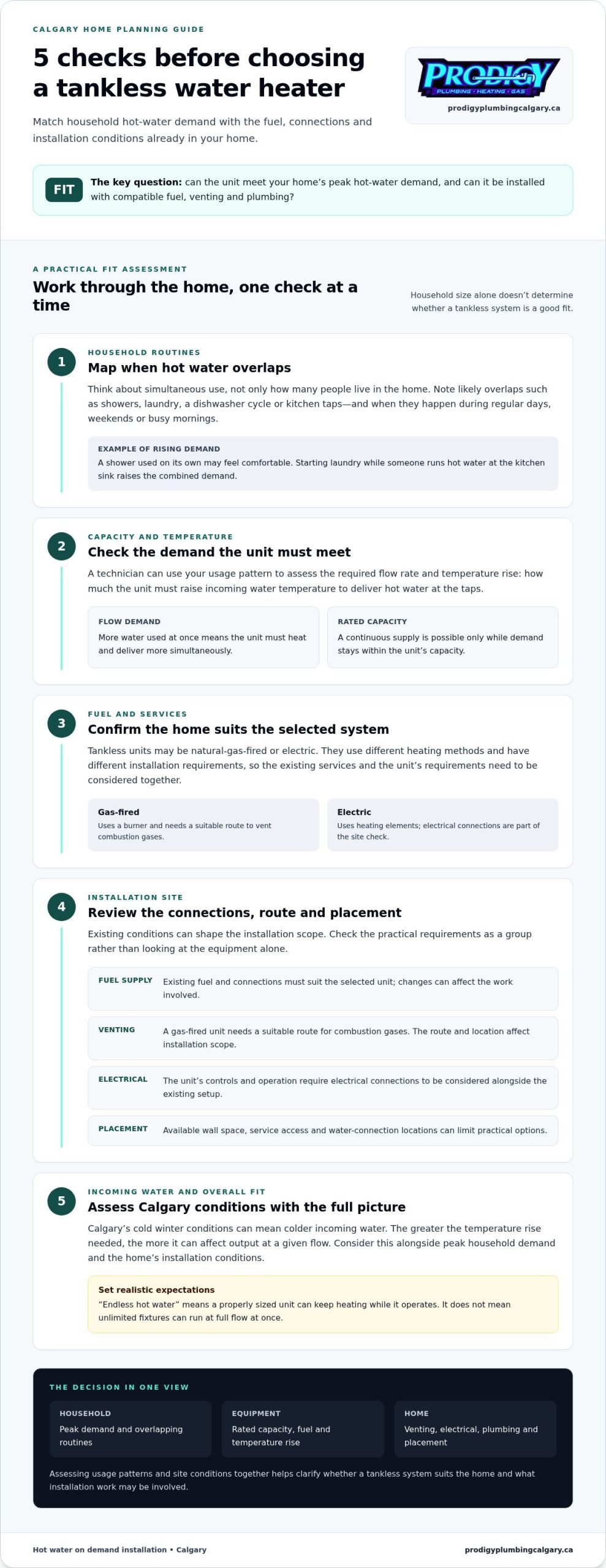
A tankless system can provide a continuous supply of hot water, but it can only heat and deliver water within its rated capacity and the household’s flow demand. “Endless hot water” describes how long a properly sized unit can keep heating water while it operates. It doesn’t mean the unit can serve any number of taps at full flow at once.
How does a tankless water heater produce hot water?
Opening a hot-water tap starts the process. Water flows into the unit, a sensor detects the flow and activates the heating system. In a natural-gas-fired model, a burner heats the heat exchanger, which transfers warmth to the water as it passes through. The heated water then travels through the home’s pipes to the open tap.
Electric models use heating elements rather than a gas burner. The two types differ in fuel source and installation requirements, so they aren’t interchangeable for every home. The existing services, the unit’s requirements and the installation location all matter. For a broader overview of how tankless systems work, see What is a tankless water heater?
What does ‘endless hot water’ really mean?
A tankless unit heats water continuously while hot water is flowing, provided demand stays within its rated capacity. Because there’s no storage tank to run empty, the supply can continue as long as the unit can meet the household’s demand. Its output is still limited. The more water the household draws at once, the more the unit must heat and deliver simultaneously.
For example, a shower may be comfortable when used on its own. If someone starts laundry while another person runs hot water at the kitchen sink, total demand rises. Depending on the unit and combined flow, the available hot-water flow or temperature may be affected. Household size alone doesn’t determine fit. Routines, fixtures and overlapping use also shape demand.
In Calgary homes, wall-mounted equipment and less stored hot water can be appealing, particularly where floor space is limited. The practical benefit depends on matching the system to real use, not relying on the promise of unlimited hot water. Assessing household flow and installation conditions helps set realistic expectations before work begins.
How to Tell Whether a Tankless Water Heater Fits Your Calgary Home
A useful fit assessment starts with more than the number of people in the home. Two households of the same size can have very different hot-water needs. One may spread showers and laundry throughout the day; another may run several hot-water fixtures during the same busy period. Fuel supply, venting and available installation space also affect whether a tankless system is practical.
Tankless suitability depends on peak household demand, incoming-water temperature and whether the home has compatible fuel, venting and plumbing connections. If the unit needs substantial changes to those connections, the added work may reduce the appeal of a compact, on-demand system. A site assessment helps clarify these trade-offs before you choose.
How should you assess household hot-water demand?
Think about when hot water is used together, not just how many people live in the home. List likely overlaps, such as showers, laundry, a dishwasher cycle or kitchen taps. Note when these uses typically happen during a regular day and whether routines change on weekends or busy mornings.
A technician can use that pattern to assess the required flow rate and temperature rise, which is how much the unit must raise the incoming water temperature to deliver hot water at the taps. These requirements help determine whether a particular system can serve the home’s peak demand.
Which home conditions can affect tankless installation?
The existing setup can shape the work as much as household routines. Before planning hot water on demand installation Calgary, consider these site factors:
- Fuel supply: The home’s existing fuel and connections must suit the selected system. Changes can affect the installation scope.
- Venting route: A gas-fired unit needs a suitable way to vent combustion gases. The route and installation location affect the work involved.
- Electrical needs: The unit’s controls and operation require electrical connections, which should be considered alongside the existing setup.
- Placement: Available wall space, service access and the location of water connections can limit practical installation options.
- Incoming-water conditions: Calgary’s cold winter conditions can mean colder incoming water. The greater the temperature rise needed, the more this can affect output at a given flow.
Use this checklist to organize what you know about your home, then have the equipment and site assessed together. If a storage tank may better suit your routines or existing connections, compare the options in a hot water system installation assessment with Prodigy Mechanical. Its licensed technicians bring more than 15 years of industry experience to Calgary plumbing, heating and gas work, with recommendations shaped around the property and household demand.
Tankless vs. Storage Tank: Compare Performance, Space, and Ownership
Neither system is right for every home. A tankless unit heats water as it flows, while a storage tank keeps a supply of heated water ready for use. The better fit depends on household routines, available space, the existing setup and the work required to install the system.
| Consideration | Tankless system | Storage tank |
|---|---|---|
| Hot-water delivery | Heats water as needed, within the unit’s rated capacity and the home’s flow demand. | Supplies hot water from the stored volume; available supply depends on tank capacity and use. |
| Storage | Doesn’t hold a large volume of hot water in a tank. | Keeps a reservoir of heated water ready for household use. |
| Space | Wall-mounted equipment can free up floor space, depending on placement. | Requires room for the tank and access to its connections. |
| Installation scope | May involve changes to fuel supply, venting, electrical connections or plumbing, depending on the home and system. | A replacement may be more straightforward when the existing setup is compatible with the new tank. |
| Upkeep | Maintenance needs depend on the system and water conditions. | Maintenance needs depend on the tank and manufacturer’s guidance. |
These are general differences, not performance guarantees. Model specifications, installation conditions and household use all affect the result. Tankless doesn’t automatically mean lower operating costs in every home. Actual use patterns and the installed system matter, so broad efficiency claims alone can’t predict household savings.
When can a tankless system be the better fit?
A tankless system may suit a home where floor space is valuable and existing services can support the installation without extensive changes. It can also work well for households whose routines benefit from heating water as it’s needed, provided the system is sized for peak demand. If hot-water use is spread through the day, continuous heating may fit how the home operates. If several fixtures often run together, capacity deserves close attention.
When might a storage tank remain the practical choice?
A storage tank offers a familiar arrangement: hot water is heated and held until the household draws from it. That stored capacity can appeal to homeowners who prefer a conventional setup or whose routines suit a ready reservoir. Replacing a tank with a compatible unit may involve a different scope from changing fuel type or reworking venting for a tankless conversion. For a storage-system replacement, consider the home’s needs alongside hot water tank replacement in Calgary planning.
For homeowners weighing hot water on demand installation Calgary, compare the options against the home’s actual requirements. Consider space, peak-use habits and installation work together before choosing between continuous heating and stored capacity.
What to Prepare Before Hot Water on Demand Installation in Calgary
A clear plan starts with how your household uses hot water and what the existing installation can support. Fuel supply, venting, plumbing connections, equipment location and the condition of the current system can all affect the work. Reviewing these details helps define the project before installation day, so you know what needs attention and what to expect.
Use this four-step sequence to prepare for hot water on demand installation Calgary:
- Review demand. Note when hot water runs short and which showers, taps or appliances tend to be used at the same time.
- Assess the site. Consider the current water heater, available wall or floor space, nearby connections and access to the equipment.
- Confirm the scope. Review any changes that may be needed to fuel supply, venting, electrical service or plumbing, based on the home.
- Plan the installation. Agree on the work sequence, preparation around the equipment and how applicable permit, inspection and code requirements will be verified.
What does a tankless installation assessment consider?
An assessment brings household use and site conditions together. A licensed technician reviews the existing equipment, recurring hot-water concerns, available installation space and the locations of water and fuel connections. For a gas-fired system, the gas supply and venting route also need attention. The work required depends on the property and the selected system.
This review helps define a scope specific to the home. A compatible existing setup can call for different work than a location where connections or venting need to change. The installation plan should be based on the actual site conditions.
How can homeowners prepare for the installation visit?
Before the visit, write down when shortages occur and which hot-water uses overlap. For example, note whether the issue happens during back-to-back showers or when laundry and kitchen use coincide. These details describe the household’s routine more accurately than a general estimate based on household size.
Clear a safe path to the current water heater and nearby service areas. Move stored items away from the equipment and make the connections easy to see. This helps the installer review the conditions and explain the work sequence, access needs and site-specific expectations before work begins.
Permit, inspection and code requirements can depend on the work involved. For a Calgary project, include verification of applicable requirements with the relevant authority in the planning process. This avoids treating a general rule of thumb as a confirmed requirement for your property.
For a clear, property-specific discussion of the work, discuss your Calgary hot-water installation with Prodigy Mechanical. Its licensed technicians bring plumbing, heating and gas experience to each installation plan.
Plan Your Calgary Hot Water on Demand Installation with Prodigy Mechanical
A tankless system should suit both the household’s hot-water needs and the conditions at the property. Prodigy Mechanical provides plumbing, heating and gas services in Calgary, with licensed technicians handling hot-water system installations and replacements. The company’s more than 15 years of industry experience supports a careful, practical approach to each project.
The next step is a discussion centred on your home: how hot water is used, what equipment is already there and what the installation may involve. Connecting the system choice to everyday demand and existing site conditions is more useful than relying on general efficiency claims or assumptions about household size.
What should homeowners expect from Prodigy Mechanical?
The discussion starts with the home and its routines. Be ready to describe when hot water is used most, any recurring shortages and which fixtures or appliances tend to run together. The existing equipment, available space and connection locations also help shape the assessment.
Licensed plumbing and gas expertise supports a practical review of the installation conditions. Prodigy Mechanical tailors the proposed scope to the property and work involved, with attention to clear expectations and careful installation. Equipment details and connection needs are considered for the specific project.
How to take the next step
Use the website’s contact options to describe your home and what you need from a hot-water system. Mention the existing equipment, your typical usage and any concerns about space or installation changes. These details give the project discussion a useful starting point.
The scope depends on the property and installation requirements, so the work is considered on a per-job basis. For hot water on demand installation Calgary homeowners can plan around their household’s needs and site conditions, a direct discussion is a practical next step.
- Share when demand is highest and which fixtures are often used at the same time.
- Describe the current water heater and any known concerns with its operation.
- Include space or access considerations around the existing equipment.
When you’re ready to discuss a project, request a Calgary hot-water installation assessment. Prodigy Mechanical can help you understand the installation scope for your home and plan the work.
Make the Next Step a Clear One
Choosing a hot-water system is easier when you move from general benefits to the realities of your property. A project discussion can turn what you’ve learned into a practical plan, including the work your home may need and the details that need assessment. That way, hot water on demand installation Calgary becomes a decision based on your household and site, not just a product-page promise.
Prodigy Mechanical works with residential, commercial and strata properties in Calgary. Share the details that matter most to you, such as recurring hot-water concerns, existing equipment and the changes you’re hoping to make. The team can use that context to discuss an installation scope suited to the property.
To take the next step, request a Calgary hot-water installation assessment and start a practical conversation about your home. A clear plan is a good foundation for comfortable, dependable hot water.
Frequently Asked Questions
How much does hot water on demand installation cost in Calgary?
There isn’t one fixed cost for every Calgary installation. Prodigy Mechanical handles work on a per-job basis, and the scope depends on the home and installation requirements. A straightforward replacement may involve different work from a conversion requiring changes to gas supply, venting or plumbing connections. Assessing the existing equipment and site conditions helps establish what the job involves before the project plan is set.
Does a tankless water heater provide hot water instantly at every tap?
No. A tankless unit heats water as it flows, but hot water still has to travel through the home’s pipes. A tap close to the unit may receive hot water sooner than one on another floor or at the far end of the house. Pipe length, the amount of water left in the line and the fixture can affect how long you wait after opening a tap.
Can a tankless water heater work during a power outage?
Usually, it can’t operate normally without electricity, even if it uses natural gas for heat. Many gas-fired units need power for electronic controls and ignition, while electric tankless models need electricity to heat water. The exact behaviour depends on the unit and its setup. Check the manufacturer’s instructions for the specific system in your home, and don’t assume a gas connection means hot water will continue during an outage.
Does a tankless water heater need regular maintenance?
Yes. Maintenance helps keep the unit operating as intended. Calgary’s hard water can contribute to mineral scale inside a tankless system, which may affect performance over time. Follow the manufacturer’s maintenance guidance, including any flushing or descaling schedule for the specific unit. If you notice a change in temperature or flow, have the system assessed rather than assuming it will clear on its own.
Will a tankless water heater work in a Calgary winter?
Yes, a properly selected and installed system can serve a Calgary home through winter. Colder incoming water means the unit must raise the temperature further to reach the desired hot-water setting. That can affect how much hot water it can deliver at once. The assessment should account for winter conditions, expected household use and the chosen unit’s capacity, rather than relying on mild-weather performance alone.
Can a tankless water heater replace an existing hot water tank?
Yes, a tankless unit can replace a storage tank, but the work may involve more than removing one heater and connecting another. The existing gas supply, venting route, plumbing connections and proposed location all affect the conversion. Reviewing these conditions helps identify the installation scope and whether changes are needed. The right replacement plan depends on the home, not simply the type of heater being removed.
How long does tankless water heater installation take?
A typical tankless installation in Calgary takes about 4 to 8 hours, though the time depends on the job. A replacement with compatible existing connections may take less work than a conversion that requires changes to gas supply, venting or plumbing. Access and site-specific requirements can also affect the schedule. The installer can outline the expected work sequence once the equipment and conditions at the home have been assessed.