
A furnace tune-up is more than a quick filter change. If you’re asking what is included in a furnace tune-up in Calgary, a professional visit typically checks the filter, burners, blower, thermostat, electrical components and safety controls. Annual maintenance is recommended, ideally in September or October, before you rely on the furnace every day.
Before booking, it helps to know what the appointment covers. A thorough tune-up assesses how the system is operating, checks for wear and developing issues, and reviews heating performance. This guide explains how often to service a furnace, what a professional may check and how routine maintenance can support efficiency and reduce strain on furnace parts. It also covers signs that need attention before the next scheduled visit.
Key Takeaways
- Regular maintenance can ease strain on furnace parts and help catch small issues before they grow.
- A professional inspection looks beyond the filter to ignition, burners, safety controls and other key components.
- Temperature rise, airflow and cycling checks help show how steadily the furnace is heating your home.
- Learn what a tune-up covers, including when filter replacement may be an additional charge.
What are the benefits of annual furnace maintenance?
Arrange professional furnace maintenance annually, ideally in September or October in Calgary. This gives a technician an opportunity to assess the system before winter brings daily heating demand. Natural Resources Canada recommends regular professional maintenance to support safe, efficient operation, while ATCO Energy says high-efficiency condensing furnaces require yearly maintenance.
Regular service can reduce strain on furnace parts, support efficiency and help identify minor issues before they become larger repairs. A well-maintained furnace can last 15 to 20 years or more, though maintenance cannot prevent every breakdown. Routine upkeep may also support warranty conditions and indoor air quality. Check the furnace manufacturer’s maintenance instructions for any specific warranty requirements.
Between appointments, check the furnace filter monthly. Many disposable filters need replacement every one to three months, depending on the filter type and household conditions. Follow the manufacturer’s instructions, use the correct size, and point the airflow arrow toward the furnace. Keep supply registers and return-air grilles clear, since blocked vents can disrupt airflow. Homes with pets may need more frequent filter checks.
For a registered home, ask whether a scheduled maintenance rate applies, what the appointment covers, and whether filter replacement or repairs cost extra. Price depends on the furnace type, service-plan status, repairs required, and whether additional heating components need checking; it’s provided after a quote request. Also ask how the technician will report any concerns found during the inspection.
Calgary homeowners should clarify the scope of a tune-up before scheduling: which checks are included, whether filter replacement is part of the visit, and how the technician will explain repair recommendations. A clear scope helps separate preventive maintenance from corrective work on a furnace that is not operating properly. Schedule before the heating season, follow the manufacturer’s filter guidance and keep vents unobstructed between visits.
What’s included in professional furnace inspections?
A tune-up is preventive maintenance, an inspection assesses the furnace’s condition, and a repair corrects a fault. A professional inspection checks the heat exchanger, burners, ignition system and safety controls.
Ignition, Burner, and Safety Checks
The technician inspects the ignition system, burners and safety controls to assess operation. They check the heat exchanger for cracks or corrosion and include carbon monoxide in the safety assessment. These parts work together during heating: ignition starts the burner, while controls monitor the system. Ask for a clear explanation of any concern and the component that needs attention.
Bearings, Belts, and Lubrication
A professional furnace inspection examines blower bearings, belts and lubrication points. The technician checks for wear and whether moving parts need lubrication, following the equipment’s requirements. These components affect how the blower moves air through the system. A worn belt or bearing may indicate a developing issue, so ask which part is affected and what the inspection found.
Thermostat and Duct Connections
The technician calibrates the thermostat so its temperature reading aligns with the furnace’s heating operation. They also inspect duct connections for gaps or loose sections that can affect airflow into indoor spaces. For homeowners, this check connects the temperature setting to the heat delivered through the ducts. Ask what the technician found if a room feels colder than the thermostat setting suggests.
Electrical Connections and Components
The inspection evaluates electrical components and connections alongside other furnace parts and safety controls. The technician looks for conditions that may affect operation and identifies concerns that need follow-up. This is professional work, not a homeowner repair task: electrical and combustion components require careful handling. A clear summary should distinguish routine observations from repairs addressing a specific fault.
If the inspection points to a heating issue, professional heating service can help address it.
Temperature rise, blower, and cycling performance checks
A technician measures temperature rise and reviews airflow, pressure readings and furnace cycling. These checks can reveal performance issues, including possible heat exchanger damage or a blower problem.
Air and Gas Pressure Readings
Air and gas pressure readings help assess whether the furnace is operating as intended. The technician considers them alongside airflow and other operating conditions, rather than interpreting one measurement on its own. An unusual reading may point to a condition that needs closer inspection. Ask for a clear explanation of any finding and its relevance to furnace operation.
Temperature Rise and Cycling
Temperature rise shows how much the air warms as it passes through the furnace. The technician compares the measurement with the furnace’s operating requirements and observes its cycling: whether the system starts, runs and shuts off steadily. Repeated starts and stops, or uneven heating during Calgary’s winter, can signal an issue that deserves attention.
The technician checks the heat exchanger for cracks or corrosion. Damage can affect safe furnace operation, so its condition needs professional assessment, not just a temperature reading. The inspection may also identify components that need cleaning or closer examination. A clean filter supports airflow, but it does not replace these system checks.
Blower and Inducer Motor Checks
The blower moves heated air through the home, so the technician assesses its operation and calibration. Weak airflow or unusual blower noise can signal a problem affecting comfort or performance. The inducer motor is checked as part of the furnace’s operation, alongside gas pressure and other relevant readings. These checks help connect a symptom with the component that may need attention.
A tune-up can identify restricted airflow, unusual pressure readings, irregular cycling and visible heat exchanger concerns. If the technician finds a safety issue or component fault, they can explain the finding and distinguish maintenance from repair. Do not attempt gas, electrical, combustion or venting repairs yourself; experienced HVAC contractors like Peters Heating & Cooling emphasize that system diagnostics and mechanical repairs always require qualified professional attention.
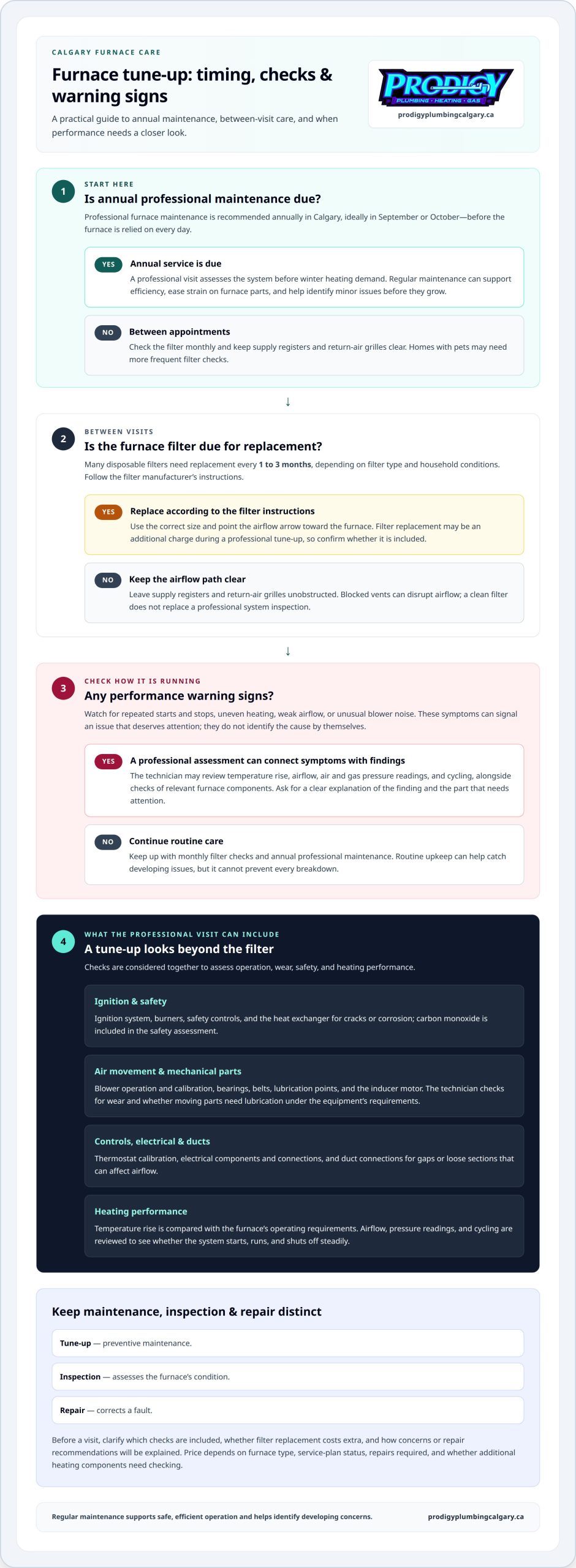
What a furnace tune-up includes
A professional tune-up combines operating checks, cleaning and a review of key safety components. The exact work depends on the furnace, but a useful service summary should state what the technician inspected, cleaned and found.
A typical visit includes a system assessment, filter inspection, burner and flame sensor cleaning, blower examination, thermostat check and evaluation of electrical components. The technician also checks ignition, safety controls, airflow and the heat exchanger. These steps assess how the heating system operates, not just whether it turns on.
Filter replacement may be included in some tune-up services, but the appointment may cover inspection only. Clarify whether a replacement filter is part of the work. Filter size and household conditions affect which replacement is suitable. A clogged filter can restrict airflow, so its condition matters to system operation and indoor air quality.
Cleaning focuses on components such as burners and the flame sensor. The technician examines the blower and lubrication points, checks the thermostat setting, and evaluates electrical connections. Safety checks include carbon monoxide considerations and an inspection of the heat exchanger for cracks or corrosion. Carbon monoxide alarms should be installed and tested according to the manufacturer’s instructions and local requirements.
Many tune-ups take about one hour, though the furnace and work required can extend the appointment. A routine tune-up checklist does not determine whether maintenance is required by a particular regulation or insurance policy. Any maintenance condition relevant to coverage depends on the wording of the applicable policy.
Before the technician leaves, the service summary should make clear which checks were completed and whether any repair was recommended. A tune-up is preventive maintenance; a repair addresses a furnace that is not functioning properly. That distinction helps homeowners understand what the visit accomplished and what work, if any, remains. For a professional furnace tune-up appointment, book service before heating demand rises.
Prodigy Mechanical
Prodigy Mechanical helps Calgary property owners make informed decisions about mechanical work in their homes and buildings. After a furnace inspection, a clear service summary can help you understand what the technician observed and whether the next step is routine maintenance or a separate repair. For other property needs, Prodigy Mechanical handles fixture swaps, kitchen plumbing, bathroom plumbing and commercial plumbing. The right service depends on the issue and the property, so it helps to describe the work you need and share any relevant inspection findings. That gives the conversation a practical starting point without confusing a furnace tune-up with unrelated plumbing work. For questions about your property’s plumbing needs, contact Prodigy Mechanical.
Make your next heating decision with confidence
Knowing what a furnace tune-up in Calgary includes gives you a clearer basis for discussing your heating system’s condition. After service, use the technician’s findings to decide whether the furnace needs routine attention or a separate repair. Keep the service record with your home documents, especially if you need to refer back to a maintenance visit or warranty terms.
If you’re still deciding what a professional appointment should cover, focus on the scope of the work and the findings provided afterward. A straightforward explanation can help you understand the next step without treating every observation as an urgent repair. For heating service or help with another mechanical need, contact Prodigy Mechanical. A clear conversation is a practical place to start, and you can move forward at a pace that suits your home.
Frequently Asked Questions
How often should I have my furnace serviced?
Arrange professional furnace maintenance once a year. ATCO Energy says high-efficiency condensing furnaces require yearly maintenance. Annual service gives a technician an opportunity to assess the system even if it seems to be running normally. If you notice repeated starts and stops, weak airflow or new unusual noises between appointments, contact a heating professional rather than waiting for your next scheduled visit.
What does the HVAC service tech need from me?
Provide clear access to the furnace, thermostat and any areas where heating feels uneven. Tell the technician about recent changes, such as unusual sounds, repeated cycling or rooms that stay cold. If you have the furnace manual or past service notes, keep them handy; they can help identify the equipment and its maintenance history. You do not need to perform gas, electrical or combustion checks yourself.
When Should You Book Furnace Maintenance in Calgary?
Book in September or October, before Calgary homes need daily heating and seasonal service demand increases. An early appointment leaves time to address findings before winter operation becomes routine. If the furnace develops a problem before then, do not treat a future maintenance booking as a substitute for addressing it. Repeated cycling, weak airflow or new unusual noises are reasons to contact a heating professional promptly.
What does a standard furnace tune-up include in Calgary?
A standard tune-up typically combines a system assessment with checks and cleaning of key operating components. For Calgary homeowners asking what is included in a furnace tune-up, expect attention to the filter, burners, flame sensor, blower, thermostat and electrical components. The visit also includes safety checks. Clarify whether filter replacement is part of the service.
What steps do Calgary HVAC technicians perform during a furnace inspection and cleaning?
Technicians generally assess the furnace, inspect its filter and operating parts, then clean components such as the burners and flame sensor. They evaluate the blower, ignition, thermostat, electrical components and airflow, and review relevant safety controls. The technician can explain findings and distinguish routine upkeep from a repair recommendation. The steps may vary with the furnace type and work required.
How do technicians test furnace safety controls and carbon monoxide levels in Calgary?
During a professional inspection, technicians check furnace safety controls and include a carbon monoxide check in the safety assessment. Ask for a plain-language explanation of the findings and any concerns identified. Carbon monoxide alarms should be installed and tested according to the manufacturer’s instructions and local requirements. If you suspect carbon monoxide in your home, leave and contact emergency services or the appropriate utility provider.