

An outdoor kitchen is easier to enjoy when its gas connection is planned safely. In Calgary, a permanent outdoor gas line serving a grill requires a permit under Alberta’s Safety Codes Act. Before installation, the existing gas line and meter capacity must also be assessed for the added appliance.
A properly planned natural gas connection lets you grill without relying on propane tanks, provided the appliance is designed for natural gas. This guide explains Alberta’s permit requirements, how gas-line and meter capacity affect the installation, and what certified gas fitting involves. It also covers the details to prepare so the line can be planned safely and coordinated with the rest of your outdoor kitchen.
Key Takeaways
- Plan for a permit for a permanent outdoor gas line, and account for the applicable Alberta safety requirements before installation begins.
- A professional assesses the gas line and meter against the demands of existing and planned appliances to determine whether the system has capacity.
- Underground line materials and installation details must follow applicable requirements, including CSA B149.1.
- Certified gas fitting includes load assessment and pressure testing, helping establish that the new connection is ready for service.
What Permits and Safety Codes Are Required in Alberta?
A permanent outdoor gas line in Calgary requires a permit, including work on a refurbished installation. The Alberta Safety Codes Act and applicable gas code requirements also govern the installation and appliance connections.
Calgary Gas Permit Requirements
In Calgary, gas installations require permits, including work on an existing installation. A permanent line serving an outdoor grill, fireplace, or patio heater needs a permit under Alberta’s Safety Codes Act. This applies whether the connection serves one appliance or an entire outdoor kitchen. Plan the permit before work begins so the scope and required inspection steps are clear.
Alberta Permits and Safety Inspections
The permit identifies the authorized work and connects it to the relevant safety review. The installation plan must include the required inspection before the work is considered complete. This is especially important when the gas connection is part of a larger outdoor kitchen project involving electrical service or water. Changes to an existing gas installation also require a permit.
Gas Code Requirements
Gas-line work and appliance connections in Alberta must comply with the Alberta Safety Codes Act and applicable gas code requirements. The appliance and its location help determine the installation scope. Calgary’s permit process covers the gas work, and the inspection reviews the completed installation against applicable safety requirements.
Natural Gas or Propane
A dedicated natural gas line supplies a compatible barbecue without the need for propane tanks. Propane is still an option for appliances designed to use it, but the appliance and fuel supply must match. A permanent gas line for an outdoor grill requires a permit. The gas utility service and meter capacity also matter: the existing system must be assessed for the planned demand.
The installation price depends on the line’s route and length, site access, and whether the existing gas system can support the added appliance. The outdoor kitchen’s location and the work required to make the connection also shape the job. These factors are assessed before pricing is provided.
How a professional assesses existing gas-line and meter capacity
A gas fitter begins by identifying the gas appliances already connected to the property, such as the furnace, water heater, range, and fireplace, as well as the planned outdoor grill. Appliance nameplates provide the input ratings used to estimate total demand. This matters because an existing line can be extended only if the system has enough capacity.
Next, the gas fitter reviews the meter and the route from the supply to the outdoor kitchen. The assessment compares the grill’s rated input with the combined demand of existing appliances. It also considers the proposed line’s route and length, which affect the design. If the meter or line cannot support the added load, further work may be needed before connecting the appliance.
- Document the appliances: Record the existing gas loads and the model and input rating of each planned appliance.
- Review the supply: Compare the total demand with the capacity of the meter and existing gas piping.
- Assess the route: Consider the distance and path to the outdoor kitchen when planning the extension.
Heating equipment is part of the assessment. A furnace and water heater, for example, may already draw from the same gas supply as the proposed grill. Considering these appliances together helps determine whether the system can support the added demand during normal use. The plan should account for the outdoor appliance and the property’s existing gas loads.
Share the grill model, other planned appliances, and the intended kitchen location during project planning. Those details help the professional assess the proposed load and line route. If the project also involves changes to household heating, review the heating service information alongside the outdoor kitchen plan.
CSA B149.1 installation requirements
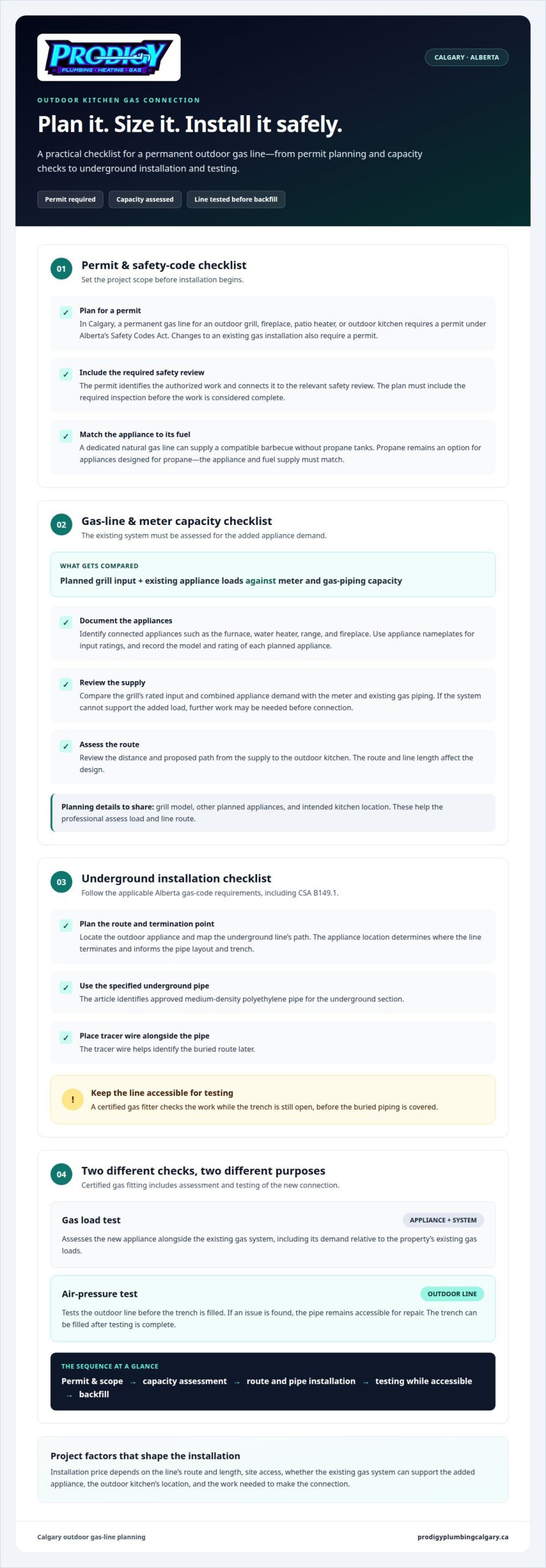
CSA B149.1 is the installation standard named for gas work in Alberta. For an underground outdoor gas line, the specified material is approved medium-density polyethylene pipe, with tracer wire placed alongside it. The wire helps identify the buried route later. The line’s path should be planned around the outdoor kitchen and connected appliance, such as a grill or fireplace.
A certified gas fitter plans the route, installs the line, and tests the completed work. The appliance location determines where the line terminates, while the route informs the pipe layout and trench. The fitter connects the line to the gas system and checks the work while the trench is still open, keeping buried piping accessible for testing.
- Plan the route: Locate the outdoor appliance and map the underground line’s path.
- Install the pipe: Use approved medium-density polyethylene pipe for the underground section.
- Place tracer wire: Run it alongside the buried pipe to mark the route.
- Test before backfill: Apply air pressure to the outdoor line before filling the trench.
Testing before backfill is an important installation step. The gas fitter tests the outdoor line with air pressure while the trench is open. If the test reveals an issue, the pipe is still accessible for repair before it is covered. After testing is complete, the trench can be filled.
When adding a gas fixture, the fitter also performs a gas load test. This assesses the new appliance alongside the existing gas system. The load test and air-pressure test serve different purposes: one checks the added appliance’s demand, while the other tests the outdoor line before it is buried.
Certified gas fitting
A certified gas fitter assesses the planned appliance and completes the required gas-line checks. Testing while the outdoor line is accessible helps identify installation issues before the pipe is covered or used.
Working with a Certified Gas Fitter
When a new gas fixture is added, a gas fitter performs a load test to assess its demand against the existing system. The fitter also tests the outdoor line with air pressure before the trench is filled. Keeping the trench open during testing leaves the pipe accessible if a problem is found.
A grill adds demand to the appliances already connected to the home’s gas supply. The load test assesses total system demand, while the pressure test checks the outdoor line itself. Both checks support a reliable installation and should be coordinated with the permit and inspection process.
Risks of DIY Installation
DIY gas-line work can leave sizing or connection problems undiscovered if the system is not assessed and tested. Without a load test, the new appliance’s demand may not be considered alongside existing appliances. Without an air-pressure test before backfilling, a line problem may be harder to locate once the trench is filled.
Faulty gas work can create serious risks, including gas leaks and unsafe appliance operation. In Calgary, a permanent outdoor gas line requires a permit, including work on an existing installation. Certified gas fitting includes assessing the added load and testing the line before it is buried.
Before work begins, give the gas fitter the outdoor appliance details and planned location. This helps establish the connection point and line route. The fitter can then assess the load, test the installation, and coordinate the applicable permit and inspection steps.
Arrange professional gas-line installation for your outdoor kitchen.
Prodigy Mechanical
Prodigy Mechanical provides kitchen plumbing for outdoor kitchen projects that include a sink or other plumbing work alongside the gas connection. Its Kitchen Plumbing service can address that part of the setup. Including plumbing needs early helps coordinate the overall layout with the appliances and planned gas line.
Share the intended kitchen layout and appliance plans when discussing the plumbing work. This provides useful context for how the plumbing fits into the outdoor space. For the gas connection, plan for the permit, capacity assessment, and certified fitting steps described above.
Contact Prodigy Mechanical to discuss kitchen plumbing for your outdoor kitchen project.
Plan the outdoor kitchen before construction begins
Plan the project as a coordinated build, not simply a grill purchase. Before construction starts, align the kitchen layout, hardscape, cabinetry, and utility routes with the people responsible for each part. Sequencing the work helps prevent finished surfaces from blocking planned gas routes or service access.
For an outdoor kitchen gas line installation in Calgary, start with how you intend to use the space. A compact cooking area and a larger entertaining space may need different layouts. Consider movement between cooking, seating, and the home, and keep service points accessible. Careful coordination makes the finished space more practical to use.
When you’re ready to plan the plumbing side, talk with Prodigy Mechanical. A well-planned project can bring your outdoor kitchen vision together with care.
Frequently Asked Questions
Are outdoor kitchens easy to install and maintain?
Settle the layout and utility needs before construction. Installation complexity depends on features such as a built-in grill, sink, or refrigeration, as well as access for utility connections. For an outdoor kitchen gas line installation in Calgary, share proposed appliance locations early so the gas route can be coordinated with the design. Follow each appliance’s care instructions and keep service access clear.
Can I include a built-in grill and refrigeration?
Yes. An outdoor kitchen can include both a built-in grill and refrigeration, but their utility connections need separate planning. Share the appliance models and proposed locations during the design stage so the layout accounts for each unit. This also helps coordinate cooking space, storage, and access without treating every appliance as a gas connection.
Is a municipal permit mandatory for outdoor gas line installations?
Yes. Calgary requires permits for gas installations, including work on an existing installation. A permanent outdoor gas line serving a grill, fireplace, or patio heater requires a permit under Alberta’s Safety Codes Act. Include the gas work in the project plan before installation begins so the permitted scope and required inspection can be coordinated with the rest of the work.
Do I need a Calgary licensed gas fitter for outdoor kitchen gas line installation?
Use a qualified gas fitter to install and test an outdoor gas line. When a new gas fixture is added, the fitter performs a load test and pressure-tests the outdoor line before the trench is filled. Prodigy Mechanical’s technicians hold the Red Seal Gas Fitter B certification. These checks address both appliance demand and the installed line.
How does a professional size a gas line for an outdoor kitchen grill and appliances?
A gas fitter considers the input ratings of the planned grill and other appliances, then assesses them alongside the home’s existing gas loads. For example, adding a grill to a home with a furnace and water heater means accounting for all three appliances. The meter, existing piping, and proposed route also inform the design. Providing appliance details helps make the assessment specific to the project.
How does a professional select materials and burial depth for outdoor gas lines in Calgary?
An underground outdoor gas line uses approved medium-density polyethylene pipe, with tracer wire placed alongside it. The gas fitter plans the route around the outdoor kitchen and selects a burial depth that meets applicable installation requirements and site conditions. The line is pressure-tested before the trench is filled, keeping the pipe accessible during testing and leaving a traceable underground route.