
Age alone doesn’t decide whether a furnace needs replacing. Most furnaces last 15-20 years with proper maintenance, and a furnace over 15 years old may warrant an inspection or replacement. Signs you need a new furnace in Calgary can include cold rooms, thermostat problems, unusual noises and frequent cycling, but these symptoms can also point to a repairable fault.
It’s reasonable to want a clear answer before deciding whether to replace your furnace. A system that struggles to heat your home may need attention, but the right next step depends on what’s causing the problem and how well the furnace is performing.
This guide explains what common warning signs can mean and when to consider repair or replacement. You’ll also learn how issues such as restricted airflow affect comfort, helping you make a more informed decision about your furnace.
Key Takeaways
- Cold rooms can point to airflow problems as well as an ageing furnace, so the cause matters before deciding on replacement.
- Thermostat issues may affect heating even when the furnace itself is repairable; notice whether it responds to the set temperature.
- New banging, squealing or rattling can help identify what needs attention, especially when the noise persists.
- Frequent starts and stops can have several causes, including restricted airflow, so look at the pattern before weighing repair against replacement.
1. Inconsistent heating and cold rooms
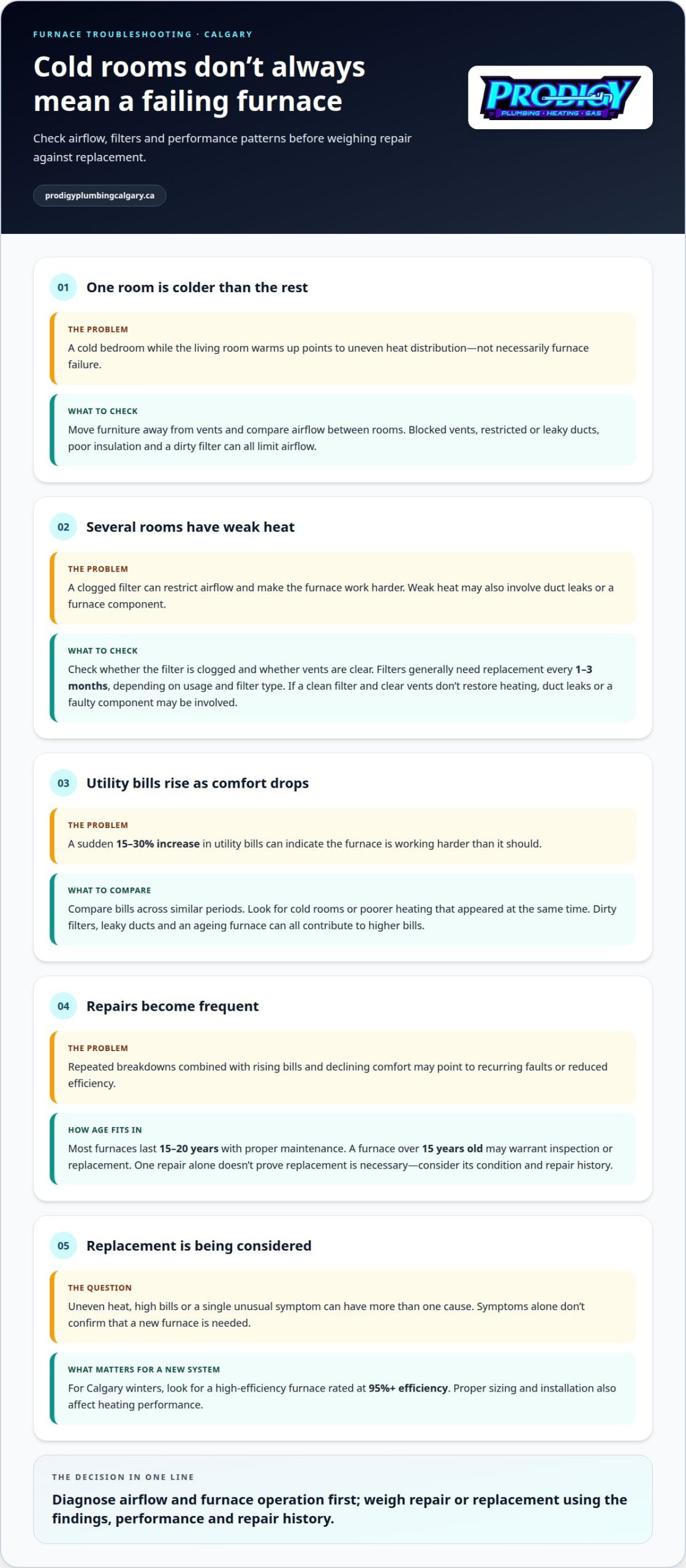
In a Calgary home, a bedroom that stays cold while the living room warms up points to uneven heat distribution. It doesn’t necessarily mean the furnace has failed. Blocked vents, restricted or leaky ducts, poor insulation, and a dirty filter can all limit airflow. Move furniture away from vents and compare airflow between rooms.
If several rooms receive weak heat, check whether the furnace filter is clogged. Filters generally need replacement every 1-3 months, depending on usage and filter type. A blocked filter restricts airflow, making the furnace work harder. If a clean filter and clear vents don’t restore heating, duct leaks or a faulty furnace component may be involved.
A sudden 15-30% increase in utility bills can indicate that the furnace is working harder than it should. Dirty filters, leaky ducts, and an ageing furnace can all contribute to higher bills. Compare bills across similar periods, then consider whether cold rooms or poor heating performance appeared at the same time.
Frequent repairs combined with rising bills suggest the furnace may be losing efficiency or developing recurring faults. A single repair doesn’t prove replacement is necessary, but repeated breakdowns and declining comfort make a broader assessment useful. Most furnaces last 15-20 years with proper maintenance; a unit over 15 years old may warrant inspection or replacement.
For Calgary winters, look for a high-efficiency furnace rated at 95%+ efficiency. Modern high-efficiency models achieve that rating, while proper sizing and installation also affect heating performance.
Cold rooms can have several causes, so diagnosis matters before you choose repair or replacement. A technician can assess airflow, duct condition, the filter, and furnace operation together. Mention any squealing or other unusual sounds during the assessment, especially if they occur alongside uneven heating.
2. Thermostat problems
If the thermostat reading doesn’t match the room temperature, winter heating can become uncomfortable. Compare the displayed temperature with the setting and confirm the thermostat is set to heat. If the furnace doesn’t respond when the set temperature is reached, the thermostat may be faulty, or another component may be stopping the system. Some signs you need a new furnace in Calgary can also come from faults that are repairable.
Weak heat can result from a clogged filter or burner problem, not just a thermostat fault. A furnace that won’t start or stay on may have a faulty ignition system, tripped circuit breaker, clogged filter, or blocked vents. These issues can produce similar symptoms, and repeatedly resetting the system won’t reveal the cause.
If the furnace starts and stops soon after a thermostat adjustment, note when it happens. A professional can assess the thermostat, ignition, airflow, and other components to determine whether repair is appropriate. Regular maintenance can help identify developing problems before Calgary’s winter brings sustained demand. Recurring faults that continue despite appropriate repairs are another sign you need a new furnace in Calgary.
Gas furnaces use gas, while electric furnaces use electricity. In a Calgary home, compare the existing fuel and electrical connections, equipment requirements, and operating needs rather than assuming one option suits every property.
There’s no single age that makes every furnace too old. A furnace over 15 years old may warrant inspection or replacement, while its condition and repair history help guide the decision.
The City of Calgary lists furnaces and gas appliances among projects that require permits. Since May 1, 2017, the Government of Alberta has required replacement furnaces to be isolated from spaces undergoing renovation, protecting operation from construction byproducts.
Furnace replacement doesn’t automatically qualify for rebates. Incentives depend on the active program’s eligibility rules and qualifying equipment, so factor one into your decision only if those terms apply.
For persistent thermostat or startup issues, a furnace heating assessment can help identify whether repair or replacement is the sound next step.
3. Unusual furnace noises
A furnace may make routine operating sounds, but new banging, popping, squealing, or rattling deserves attention. Noise can result from loose or broken components, blower motor problems, or ignition issues. When the sound occurs and whether it persists can help a technician narrow down what to inspect. Noise alone doesn’t confirm that replacement is necessary.
A loud bang as the furnace starts may signal delayed ignition, a serious safety hazard. Banging or popping can also point to dirty burners or gas building up before ignition. Arrange a prompt professional inspection rather than treating repeated startup bangs as normal. A technician can assess the ignition system and burners before recommending repair or replacement.
Squealing or screeching may indicate a blower motor problem or loose belt. Rattling can come from loose panels or other parts that need tightening or replacement. A broken component may affect how smoothly the furnace runs, even if it still heats the home. An inspection can distinguish a repairable issue from broader deterioration.
Note when a sound begins: at startup, during steady operation, or at shutdown. Record whether it changes with airflow or seems to come from one area of the furnace. This gives a technician useful context without requiring you to open the cabinet or handle electrical parts. Leave internal checks to a qualified professional.
Persistent noise lasting several hours can indicate a larger problem. If an unusual sound continues, arrange an assessment rather than waiting for it to disappear. A technician can check the blower, belt, panels, burners, and ignition components, then explain whether repair will address the cause.
Replacement becomes a consideration when noise accompanies repeated breakdowns, poor heating, or other signs of declining performance. A single loose panel may need tightening, not a new furnace. Weigh the inspection findings alongside the furnace’s condition and repair history. A clear diagnosis supports a practical decision about efficiency, reliable operation, and the next repair.
4. Frequent furnace cycling
A furnace that repeatedly starts and stops may be short cycling. That’s different from normal operation, when the system runs, warms the home, then shuts off. In Calgary, frequent cycling can waste energy and put extra strain on mechanical components. Note whether it happens during a heating call, after a thermostat adjustment, or throughout the day.
A dirty filter or restricted airflow can cause overheating and trigger repeated shutdowns. Check whether the filter is clogged and replace it if needed. Blocked vents or ductwork can also restrict airflow. Dust and debris on the blower motor or internal parts may contribute, so an inspection should assess the furnace rather than assume age is the cause.
A malfunctioning thermostat can signal the furnace to stop too soon or restart repeatedly. An oversized furnace may heat the space quickly, then cycle off before running steadily. Improper installation can cause similar behaviour. Because these problems require different fixes, short cycling alone doesn’t mean replacement is necessary.
Consider what else happens alongside short cycling. Uneven heat, rising bills, repeated repairs, or a new banging sound can help a technician assess the system as a whole. If cleaning or correcting an airflow issue doesn’t resolve the pattern, a professional inspection can examine the thermostat, blower, installation, and other mechanical components.
Replacement may be worth considering if frequent cycling continues alongside recurring faults or poor performance. A repair can be appropriate when inspection identifies a specific, correctable cause. Keep a brief note of when cycling starts and stops, and mention any thermostat changes or unusual sounds. This gives the technician practical details for diagnosis. Arrange a furnace inspection to find the cause and discuss the next step.
Prodigy Mechanical
Prodigy Mechanical helps Calgary homeowners understand furnace problems and choose a practical next step. Cold rooms, thermostat issues, unusual sounds, and frequent cycling can have different causes. A clear assessment can distinguish a repairable fault from signs that replacement deserves consideration.
When describing the problem, details such as when the furnace starts cycling, which rooms stay cold, and when a noise occurs can help clarify the issue. The decision should reflect the furnace’s condition and performance, not one symptom alone. This makes it easier to weigh comfort and reliable heating alongside repair needs.
For guidance with a furnace concern, contact Prodigy Mechanical.
Make your next furnace decision with clarity
Before choosing repair or replacement, focus on the evidence: the furnace’s condition, how consistently it heats, and whether the same fault keeps returning. Signs you need a new furnace in Calgary don’t all carry the same weight, so a clear assessment can separate a correctable issue from a larger concern. This gives you a practical basis for planning ahead, especially before the next stretch of cold weather.
Prodigy Mechanical also provides fixture swaps, kitchen plumbing, and bathroom plumbing for other home projects. For a furnace concern, start with a conversation about what you’re noticing and what decision you’re trying to make. Contact Prodigy Mechanical today to discuss your next step. A clear plan can make the choice feel more manageable.
Frequently Asked Questions
Should You Repair or Replace Your Furnace?
Repair the furnace when an assessment finds a specific fault and the rest of the system is operating reliably. Consider replacement when the same problems keep returning, comfort remains poor, or several components are declining. In Calgary, weigh the furnace’s condition, repair history, and heating performance together rather than treating one symptom as proof that replacement is necessary.
What are the most common signs a furnace needs replacement?
Common warning signs include persistent cold rooms, weak heating, repeated breakdowns, frequent starts and stops, and unusual noises. A single symptom may have a repairable cause, so consider how problems combine and whether they continue after maintenance. For example, recurring faults alongside poor comfort may call for a broader assessment of the furnace’s condition and performance before you decide on replacement.
When is furnace repair more cost-effective than replacement?
Repair is often the practical choice when an inspection identifies one isolated, correctable fault and the furnace otherwise heats consistently. The decision changes when repairs keep recurring or several components are deteriorating. Consider the system’s performance, repair history, and expected reliability after the work. A technician’s diagnosis can clarify whether fixing the specific fault will address the underlying problem or leave ongoing issues unresolved.
What furnace noises, smells, or heating problems signal a safety risk?
A loud bang during startup can indicate delayed ignition, while a rotten-egg smell near the furnace may signal a gas leak. If you smell gas, leave the home immediately and call the gas company and a professional technician. A yellow, flickering, or frequently extinguished pilot light also needs immediate professional attention. Have banging or popping sounds checked promptly.
What are the signs of a cracked furnace heat exchanger or carbon monoxide leak?
Sound or heating performance alone can’t reliably confirm these problems; a professional inspection is needed. Rust at furnace pipe connections or the flue is a warning to take seriously. A yellow, flickering, or repeatedly extinguished pilot light may signal a carbon monoxide concern or gas-mixture imbalance. A possible carbon monoxide concern warrants prompt professional attention. Don’t rely on visual clues alone.