

A kettle isn’t the only way to get near-boiling water on demand. An instant hot water dispenser is a compact under-sink system that keeps a small tank of water heated and delivers it through a dedicated faucet. For instant hot water dispenser installation in Calgary, the existing sink setup helps determine the work involved.
The installation depends on practical details such as access to a cold-water supply, an electrical outlet under the counter and a suitable faucet opening. This guide explains how the dispenser works, what affects installation and energy use, and how a hot-only setup differs from one that also filters water. You’ll also learn what to consider when deciding whether it suits your kitchen.
Key Takeaways
- Installation cost depends on the under-sink space, access to a cold-water line and an electrical outlet, and whether the faucet needs a new opening.
- Understand how the compact heated tank supplies near-boiling water and what proper plumbing connections involve.
- Consider how standby heat affects energy use and how your household’s hot-water habits shape potential utility-bill savings.
- Choose between a hot-only setup and a filtered-water configuration by weighing your kitchen needs, available space and upkeep.
How much does installation cost?
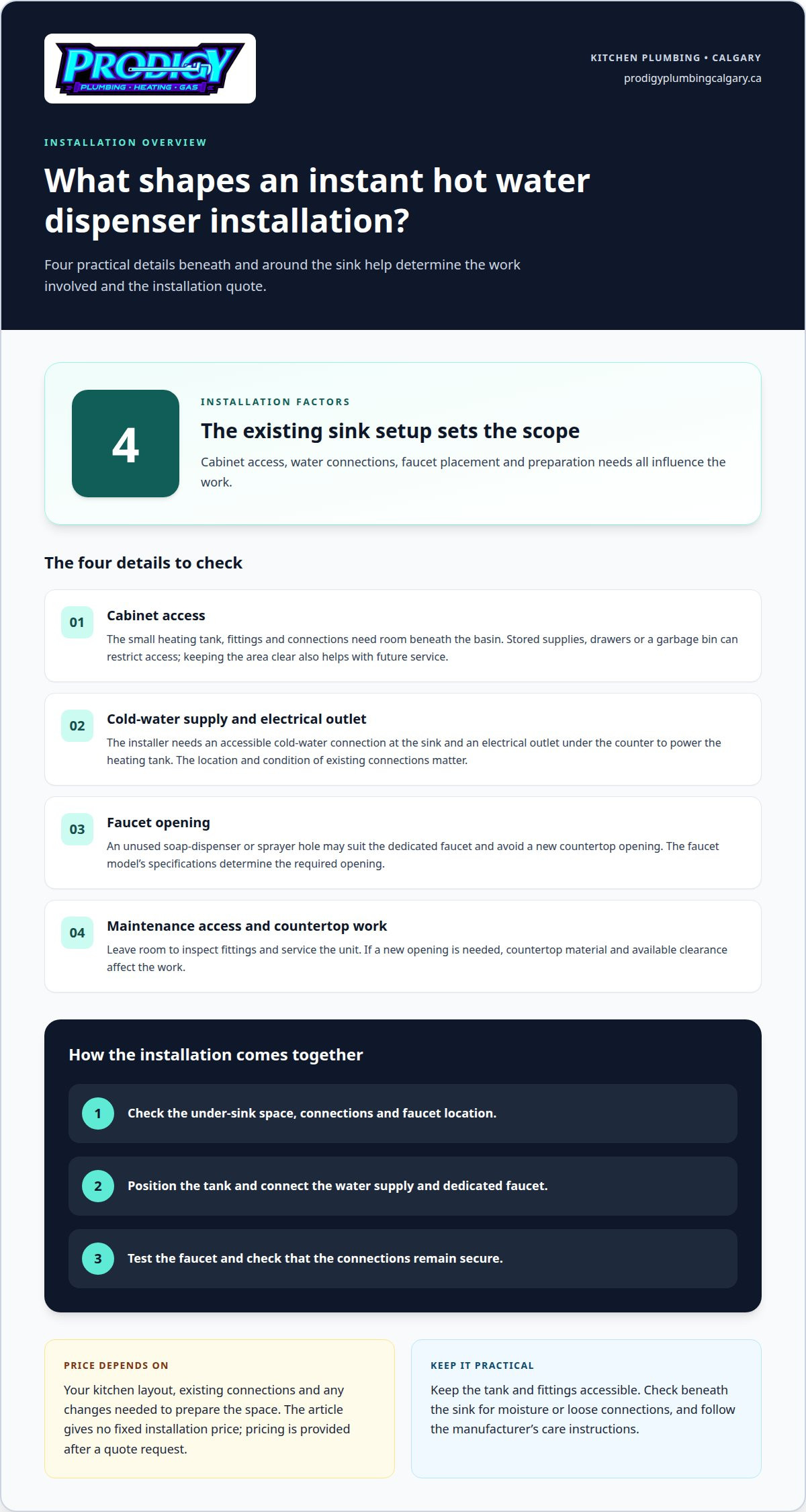
The installation price depends on your kitchen setup and is provided after a quote request. Key factors include cabinet access, existing water connections, faucet placement and any changes needed to prepare the space. For instant hot water dispenser installation in Calgary, the work often differs depending on whether suitable connections are already in place or the sink area needs adapting.
Under-sink space matters because the small heating tank and its connections need room beneath the basin. Stored cleaning supplies, drawers or a garbage bin can limit access. Clearing the cabinet makes it easier to position the tank and reach its plumbing connections for maintenance. The installer also needs an accessible cold-water supply and an electrical outlet under the counter.
The faucet may fit an existing opening. For example, an unused soap-dispenser or sprayer hole could avoid drilling a new countertop opening. If the chosen location needs a new opening, the countertop material and available clearance affect the work. These details, along with the condition of existing connections, shape the quote.
- Cabinet access: Space for the tank, fittings and future service.
- Water supply: The location and condition of the cold-water connection.
- Faucet opening: Whether an existing hole suits the dedicated faucet.
- Maintenance access: Room to inspect fittings and service the unit.
Keep the tank and fittings accessible for maintenance. Check beneath the sink for moisture or loose connections, and clean the faucet as directed by its manufacturer. For a filtered setup, follow the filter maker’s replacement instructions. A leak, reduced flow or change in heating performance can indicate that the system needs attention.
The tank reheats water as it is drawn, but a large volume may require a short recovery period. Regular checks can help identify connection issues early, while following the manufacturer’s care instructions supports reliable operation. Discuss the cabinet layout and planned upkeep during installation so the setup remains practical afterward.
What Is an Instant Hot Water Dispenser?
An instant hot water dispenser keeps a small tank heated beneath the kitchen sink and sends near-boiling water through a separate faucet. A kettle heats water in batches, while a tankless hot water tap heats it as it flows. The under-sink tank offers quick access, but a large draw may require a short recovery period.
Standard installation requires an electrical outlet under the counter and an accessible cold-water supply at the sink. The installer connects the tank to the water supply, positions the dedicated faucet and tests the connections. The outlet powers the heating tank, which reheats water as it is drawn. These requirements affect the work and the installation quote.
The faucet needs a suitable opening in the sink or countertop. An unused soap-dispenser or sprayer hole may provide a practical location without drilling. There is no single opening diameter for every dispenser: the faucet model’s installation specifications determine what is required. Countertop material and access beneath the sink also shape the installation.
Installation time in Calgary depends on the existing connections, outlet location and faucet opening. A straightforward setup differs from one that requires additional countertop work or plumbing changes. The price depends on the installation details and is provided after a quote request.
A named example is the AIRHOP AH-WD1, a countertop hot-water dispenser with an upper temperature range of 212 °F. Models differ in installation style and features, so the product’s specifications determine whether it suits an under-sink or countertop arrangement.
During installation, the work proceeds from checking the available space to connecting the water supply and faucet, then testing the system. That final test helps confirm the faucet operates and the connections remain secure. For related kitchen plumbing work, a plumber can assess how the dispenser fits the sink setup.
Energy efficiency and potential utility-bill savings
An instant hot water dispenser keeps a small tank heated between uses. This standby heat requires electricity, even when nobody uses the dedicated faucet. Each draw removes hot water, and the tank reheats as needed. Its energy use therefore depends on both standby time and how often the household draws water.
Compare the dispenser with your usual kettle routine. A kettle heats water when switched on, while an under-sink tank keeps water ready. If you regularly boil more water than you use, a dispenser may reduce that particular waste. If you rarely draw hot water, keeping a tank heated adds standby consumption. Your usage pattern matters more than convenience alone.
To assess potential effects on your bill, track how often you use the dispenser and what it replaces. Note, for example, whether it replaces a kettle boil for tea, cooking or another small task. Don’t count every use as a saving: the kettle also uses electricity, and the dispenser has standby demand. Compare your overall routine rather than a single heating cycle.
Settings and maintenance also affect operation. Follow the manufacturer’s instructions for temperature adjustment, and keep the tank accessible for inspection. A leak or poor connection can waste water and disrupt normal performance. For a filtered configuration, include filter care in your maintenance routine. The filter itself does not determine how much electricity the heating tank uses.
Tankless water heaters work differently from under-sink dispensers. They heat water on demand rather than storing it in a tank. ENERGY STAR is relevant when comparing tankless water heaters: Calgary homeowners can look for ENERGY STAR models with high energy ratings. That guidance does not automatically apply to countertop or under-sink dispensers.
For a realistic household comparison, use the dispenser’s product information to note its standby use and heating demand, then compare those figures with the kettle’s use. Include how often each appliance runs. This helps show whether the dispenser’s ready-to-use faucet suits your routine, without assuming it will lower your utility bill.
Hot-only and filtered-water configurations
A hot-only setup focuses on one task: dispensing heated water through its dedicated faucet. It suits kitchens where the priority is quick access for tea, cooking or other small amounts. The under-sink tank heats and holds water, while the dispenser faucet provides a separate point of use.
A filtered-water configuration adds filtration to the drinking-water path. Depending on the system design, filtered water may come from a separate outlet or a combined faucet. The filter treats water as it passes through its cartridge. It doesn’t replace the dispenser’s heating tank, and different filters do not necessarily remove the same substances.
Choose a configuration based on how you use the sink. A household that wants near-boiling water for drinks may prefer hot-only. One that also wants filtered drinking water may value a combined arrangement. Before installation, check the selected system’s instructions for its connections, faucet layout and filter compatibility.
- Hot-only: Heated water from a dedicated dispenser faucet.
- Filtered: Drinking water passes through a compatible filter.
- Combined: One installation accommodates both functions, if designed for them.
Cabinet space affects both configurations. The hot-water tank needs accessible space, and a filtered setup also needs room for its filter and service access. Keep the filter reachable for cartridge changes. Follow the manufacturer’s replacement schedule, since filter life and care instructions vary by product. Clear access also makes it easier to inspect the system’s fittings.
During installation, the connections must suit the chosen layout. The faucet opening, water-supply routing and cabinet arrangement all matter. A combined system may need more components beneath the sink than a hot-only model, affecting equipment placement and access for future maintenance.
If you’re planning both heated and filtered water, arrange the kitchen plumbing installation to suit the selected configuration and sink layout.
Prodigy Mechanical: Hot Water Tank Replacement / Install
Prodigy Mechanical handles kitchen plumbing work in Calgary, including plumbing related to an instant hot water dispenser, as well as household hot water tank replacement and installation. These are different systems: an under-sink dispenser supplies a dedicated faucet, while a household tank serves the home’s hot-water needs. Identifying which one you’re planning helps define the work.
For a dispenser project, kitchen plumbing details matter, including water connections, faucet placement and access beneath the sink. If the main hot water tank is the concern, replacement or installation may be the relevant service. Sharing clear information about the appliance and planned work helps establish the next step.
For help with your planned plumbing work, contact Prodigy Mechanical.
Plan your next kitchen upgrade
Planning an instant hot water dispenser installation in Calgary is also a chance to consider how your kitchen works as a whole. Think about whether the faucet location will be comfortable to use, whether cabinet storage will remain practical and whether other sink changes belong in the same project. A clear plan helps align the installation with your daily routine.
Prodigy Mechanical’s kitchen plumbing and fixture swap services can help with related sink work. If your project also involves a bathroom fixture, bathroom plumbing is available too. Considering connected plumbing tasks together can make it easier to plan work around your home.
Before moving ahead, decide which setup suits your household and what you want the sink area to do. Then discuss your installation with Prodigy Mechanical as a practical next step. A well-planned upgrade can make everyday kitchen tasks feel simpler.
Frequently Asked Questions
Are There Any Considerations?
Yes. Consider how the dispenser will fit into your kitchen routine and under-sink layout. A cleaning caddy or pull-out bin can obstruct access to the tank or filter. Faucet placement matters too: a spot near the main sink basin is convenient for filling cups and pots. If you rent, get permission before altering a countertop or cabinet.
Does it need electricity?
Yes. The dispenser’s heating tank needs electricity to keep water ready and reheat it after use. A standard setup requires an outlet beneath the counter, near the tank’s planned position. The outlet’s location can affect how the installer arranges the unit and connections. Unlike a kettle, the dispenser remains powered between draws.
What types of instant hot water dispensers can be installed in Calgary homes?
Calgary kitchens can use under-sink tank systems with a dedicated hot-water faucet, hot-only configurations, and setups that also filter water. Countertop dispensers are another format. The right type depends on its intended use, available cabinet space and whether you also want filtered drinking water. Product instructions determine the required faucet arrangement and compatible connections.
How much does instant hot water dispenser installation cost in Calgary?
The price depends on the installation details and is provided after a quote request. Factors include access beneath the sink, the condition and position of water connections, and whether the faucet can use an existing opening. A new countertop opening or changes to the sink area can affect the work. The quote reflects your specific kitchen setup, not a universal rate.
Which Calgary plumbers install instant hot water dispensers?
Prodigy Mechanical handles kitchen plumbing in Calgary, including plumbing work relevant to fitting a dispenser at a sink. The job involves coordinating the faucet and water connections with the kitchen layout. If the project also includes a separate fixture change, Fixture Swaps may be relevant. The required work depends on the selected dispenser and existing setup.
What is included in a Calgary instant hot water dispenser installation?
A typical installation involves assessing the sink area, connecting the dispenser to the water supply, fitting its faucet and testing operation. The installer considers the available outlet, cabinet access and faucet opening. Any changes needed at the planned location affect the work. The final arrangement should leave the tank and connections accessible for service.