

A small plumbing change can trigger a permit when it alters more than the fixture itself. Calgary plumbing permit requirements call for permits for plumbing installations, including renovation work, while replacing an existing faucet or fixing a leak generally doesn’t require one. Moving a toilet, adding a sink, or replacing Poly B lines inside walls requires a permit.
It’s reasonable to expect a like-for-like fixture replacement and a larger plumbing alteration to follow different rules. The key question is whether the work changes the plumbing system, including its location, drainage, or venting.
This guide explains which projects need a permit in Calgary, which code applies, and what can happen if regulated work proceeds without approval. It also clarifies how routine fixture swaps differ from plumbing changes that require a permit.
Key Takeaways
- Learn which Alberta code and legislation frame plumbing work in Calgary, and how they relate to renovation requirements.
- Understand why permitted work needs a rough inspection before plumbing is concealed and a final inspection after fixtures are installed.
- See how unpermitted work can lead to enforcement and added costs, and why the homeowner may still be responsible.
- Know when a straightforward fixture swap is different from work that changes the plumbing system, and where Prodigy Mechanical’s Fixture Swaps fit.
Alberta legislation and the applicable plumbing code
Calgary plumbing work is governed by Alberta’s Safety Codes Act and the National Plumbing Code of Canada 2020 Edition. The plumbing code came into force in Alberta on April 1, 2023. It sets technical requirements for plumbing system installations and alterations, including work connected to fixtures, drainage, and venting.
Residential construction in Calgary is governed by the National Building Code – 2023 Alberta Edition, which came into force in Alberta on May 1, 2024. Renovations can also involve Alberta building requirements and local zoning bylaws. A basement project, for example, may raise building and plumbing permit questions. Plumbing drawings should clearly show the planned work, while renovation documents may also cover walls, windows, and other changes.
The Safety Codes Act Permit Regulations require homeowners to apply for permits and receive authorization before certain plumbing work in their homes. Calgary homeowners can apply for most permit types, but not gas permits. The application route depends on who does the work: homeowners must perform the permitted work themselves to apply for a homeowner permit. If a contractor does the work, the contractor must apply for the permit.
Include the information and documents requested for the application. Calgary may refuse an application if adequate requested information and documentation aren’t supplied within 90 days of receipt. If the City gives written notice that a permit may be refused, the applicant has 30 days to resubmit missing information.
Online and in-person steps differ by permit type. Homeowners can book plumbing permit inspections through Calgary’s 311 online services using their permit number. A homeowner applying for a gas permit must apply in person with proof of qualifications, and may do so only as an Alberta-certified journeyman gasfitter working on a single-family home where they reside or intend to reside. Replacing fixtures without changing plumbing is a different scope from altering the system, so describe the actual work in the application.
What Plumbing Work Requires a Permit in Calgary in 2026?
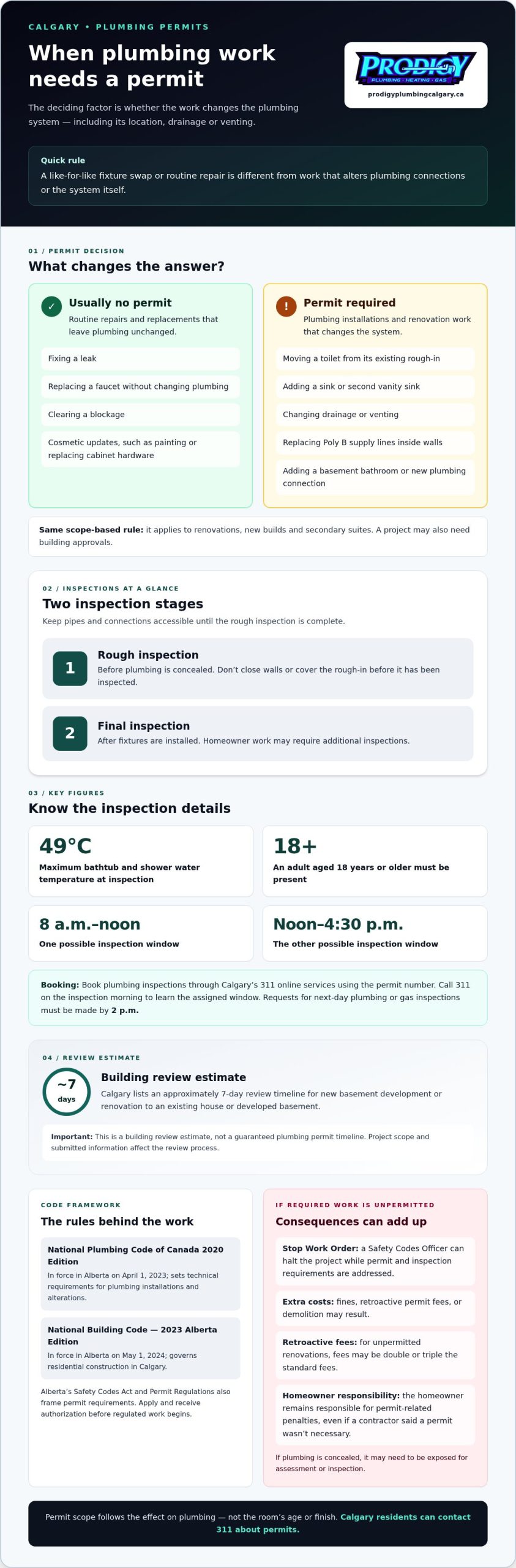
In Calgary, plumbing installations and renovation work require permits, with exceptions for routine repairs such as fixing a leak or replacing a faucet without changing the plumbing. Moving a toilet from its existing rough-in, adding a second vanity sink, or replacing Poly B supply lines inside walls requires a permit.
The same plumbing permit rules apply to renovations, new builds, and secondary suites, based on the work involved. The project may also need building approvals. Basement development usually requires a permit, and basement plumbing inspections may include rough-ins. A new bathroom or a drainage change adds plumbing work to the review.
There isn’t one permit review timeline for every project. Calgary lists an approximately 7-day review timeline for new basement development or renovation to an existing house or developed basement. That’s a building review estimate; project scope and submitted information affect the review process.
A Calgary plumbing permit requires two inspections: a rough inspection before the plumbing is concealed, then a final inspection after fixtures are installed. Homeowner work may require additional inspections. Keep pipes and connections accessible until the rough inspection is complete.
Book plumbing inspections through Calgary’s 311 online services using the permit number. An adult aged 18 years or older must be present. Inspection windows are 8 a.m. to noon or noon to 4:30 p.m.; call 311 on the inspection morning to learn the assigned window. Requests for next-day plumbing or gas inspections must be made by 2 p.m.
At inspection, bathtub and shower water temperature must not exceed 49 degrees Celsius. This applies alongside checks of the permitted installation. For planned plumbing changes, plumbing work in Calgary can be arranged with the inspection stages in mind. Don’t cover the rough-in before it has been inspected.
Consequences of unpermitted work
Cosmetic updates in Calgary usually don’t require a permit if they leave the plumbing unchanged. Painting a bathroom or replacing cabinet hardware doesn’t alter plumbing connections. Adding a basement bathroom, changing drainage, moving a toilet, or replacing supply lines inside walls does require a plumbing permit. The deciding factor is the effect on the plumbing system, not the room’s age or finish.
Obtain any required permit before starting regulated plumbing work. The City of Calgary issues permits to check that work meets code. If plumbing work proceeds without a required permit, a Safety Codes Officer can issue a Stop Work Order. This can halt the project while permit and inspection requirements are addressed.
Unpermitted work can also lead to fines, retroactive permit fees, or demolition under Calgary bylaws. Retroactive permit fees for unpermitted renovations may be double or triple the standard fees.
Concealing plumbing behind drywall can make corrections more involved. If unpermitted pipes or a new connection are covered, the work may need to be exposed for assessment or inspection. The response depends on the work and what an inspection can establish. A licensed plumber can help complete the plumbing work safely and keep its scope clear.
The homeowner remains responsible for permit-related penalties, even if a contractor said permits weren’t necessary. Before renovation work begins, confirm which changes affect plumbing, drainage, or venting. Calgary residents can contact 311 to speak with a safety code officer about permits. For basement work, clarify the plumbing scope before walls close, so required inspections aren’t missed.
Calgary plumbing permit requirements
Calgary requires permits for plumbing and gas installations, including work done during renovations. Routine maintenance is different: fixing a leak, replacing a faucet without plumbing changes, or clearing a blockage doesn’t require a plumbing permit. Replacing a toilet in the same location with the same drain connection is also exempt. The key distinction is whether the work installs, alters, or extends a system.
Some specialized projects require their own trade permits. Calgary requires a hydronic permit to install, alter, or add to a hydronic heating system. Installing or replacing a cross connection control device requires a CCCD permit. A water reuse system requires a water reuse permit, while replacing water or sewer lines in or around a home requires a plumbing permit.
Gas and venting work can have separate permit requirements. Gas work may require a permit when it involves changes to a gas system. Plumbing permits apply to gas lines upstream from a water heater shut-off valve and to venting system size and design. Installing a solar hot water system requires a solar thermal permit.
Construction can involve several approvals at once. A secondary suite needs a building permit, and applicable plumbing and electrical trade permits are additional. The City of Calgary’s Water Utility Bylaw, section 16, requires low-water-use fixtures in homes and commercial construction, including renovations. If a project includes electrical work, that work may require a separate electrical permit; a building permit doesn’t replace trade permits.
Fireplace work has a specific boundary: Calgary requires a gas fireplace installation permit for a fireplace insert, but that permit doesn’t include the gas connection. Homeowners may apply for a fireplace installation permit if they live in the home and will install the fireplace themselves. A safety code officer can clarify which approvals apply when a project combines plumbing, gas, electrical, and building work.
Prodigy Mechanical: Fixture Swaps
Prodigy Mechanical handles fixture swaps when a tap, sink, or other plumbing fixture needs replacing. A like-for-like replacement that leaves the existing plumbing unchanged generally doesn’t require a Calgary plumbing permit. If the work changes a connection, adds a fixture, or relocates plumbing, a permit may be required.
For larger projects, Prodigy Mechanical also provides kitchen plumbing, bathroom plumbing, and commercial plumbing. These services cover fixture work and plumbing changes in homes and commercial properties. Distinguishing a simple replacement from an alteration helps clarify permit requirements before work begins.
Contact Prodigy Mechanical to discuss your fixture swap or plumbing project in Calgary.
Plan your next plumbing project with clarity
Before replacing a fixture or planning a larger renovation, define the scope of work. Note what will be replaced, whether plumbing will move, and which parts of the system may change. This gives you a practical way to apply Calgary’s plumbing permit requirements to your project, rather than judging by the room or fixture alone.
For fixture swaps, kitchen plumbing, or bathroom plumbing, Prodigy Mechanical can carry out the work. Clearly describing the intended changes helps keep the project focused and makes it easier to plan next steps around the work involved.
Move forward with a straightforward plan for your home or property. Contact Prodigy Mechanical to discuss your plumbing project and take the next step with confidence.
Frequently Asked Questions
Do you need a permit?
Yes. In Calgary, a permit is needed for plumbing installations and changes to the plumbing system. Adding a sink or changing a drain line requires approval, while a like-for-like fixture replacement without plumbing changes is generally exempt. A hot water tank replacement may require a permit if the tank type or venting system changes. Describe the planned work accurately when applying.
Do I need a permit for minor repairs or cosmetic updates?
Usually not, if the work is limited to cosmetic finishes or routine maintenance. Painting a bathroom, replacing cabinet hardware, fixing a leak, or changing a faucet without altering its plumbing connection generally doesn’t require a plumbing permit. The distinction is whether the work affects water supply, drainage, venting, or fixture location. Even a small visible change can require approval if it alters one of these systems.
How much will it cost?
Permit fees depend on the permit and project scope. That’s the homeowner’s permit fee, not a universal fee for every plumbing project. Calgary trade permit fees increase annually on January 1, so the applicable amount depends on the permit and timing.
Interior Renovations: What Triggers a Permit?
A renovation may require a permit if plumbing locations or systems change. Examples include moving a toilet, adding a second sink, changing venting, or altering water and sewer lines. A new basement bathroom also involves plumbing work that needs approval. Kitchen and bathroom renovations may need separate building or trade permits, depending on the full scope, so account for plumbing changes in the broader renovation plans.
What Happens If Renovation Work Was Done Without Permits?
Unpermitted renovation work can lead to a Stop Work Order, fines, retroactive permit fees, or required demolition. If finished walls cover plumbing, an inspection may require access to the concealed work. The homeowner remains responsible for permit-related penalties, even if a contractor said approval wasn’t needed. Keep records of the renovation and its plumbing scope to clarify what work was completed.
What are the rules?
Alberta’s Safety Codes Act and the National Plumbing Code of Canada 2020 Edition govern plumbing work in Calgary. The permit requirement depends on whether the work installs, alters, or adds to plumbing. A hot water tank replacement may be exempt when the tank type and venting stay unchanged; altered venting or tank type can trigger a permit. Separate gas requirements may apply to gas-system changes.