

Calgary’s freeze-thaw conditions make commercial heating a matter of both comfort and building operation. Commercial heating solutions in Calgary may include furnaces, boilers, heat pumps and radiant systems. The right fit depends on the building’s size, layout, insulation and use. Gas connections and permit requirements should also be considered during project planning.
Before choosing equipment or planning gas work, it helps to understand the options and what a heating assessment considers. This guide explains how building use, system type, gas connections and permits factor into a commercial project.
You’ll also learn how local service and routine maintenance support reliable operation, and why Calgary’s changing winter conditions make freeze-thaw protection worth considering alongside heating performance.
Key Takeaways
- Match heating equipment to the building’s size, layout, insulation and business use, then compare efficiency to guide the selection.
- Plan regular inspections, cleaning and tune-ups to help identify heating issues early and support indoor air quality.
- Weigh how furnaces, boilers, heat pumps and radiant systems distribute heat, and consider whether a system needs backup in extreme cold.
- Account for Calgary’s freeze-thaw conditions in heating and plumbing plans; Prodigy Mechanical’s commercial plumbing service can help with related plumbing work.
Commercial heating system selection and energy efficiency
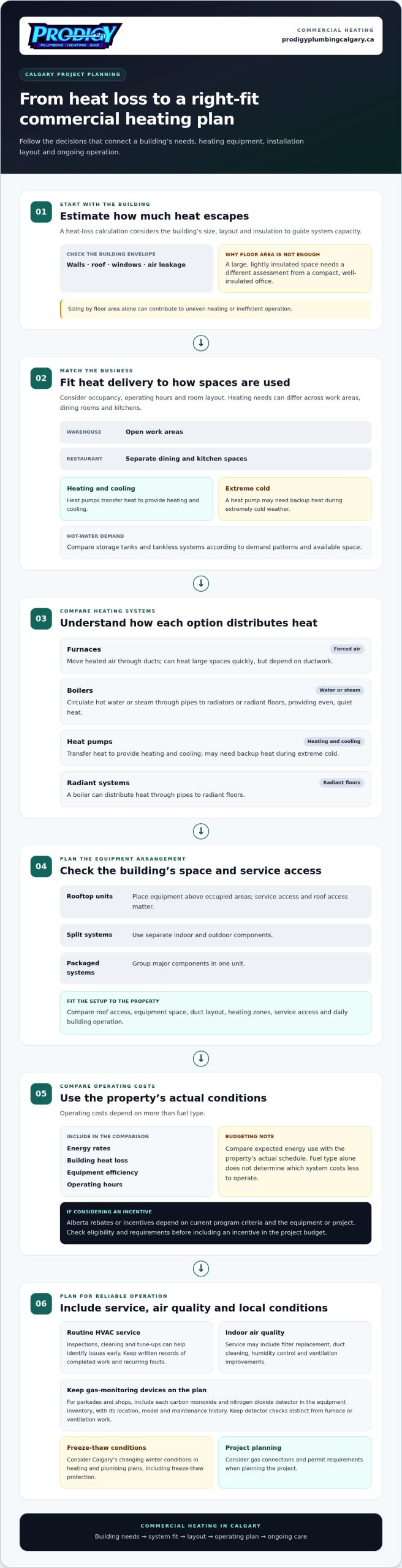
When comparing commercial heating solutions for Calgary businesses, start with the building’s heat requirements and how it is used. Consider equipment type, energy efficiency and hot water demand before choosing a design.
Heat-Loss Calculations and System Sizing
A heat-loss calculation estimates how quickly warmth escapes through a building’s walls, roof, windows and air leakage. It uses details such as size, layout and insulation to guide system capacity. A large, lightly insulated space needs a different assessment from a compact, well-insulated office. Floor area alone can overlook these differences, contributing to uneven heating or inefficient operation.
Systems Tailored to Business Needs
Match the system to occupancy, operating hours and room layout. A warehouse with open work areas has different needs from a restaurant with separate dining and kitchen spaces. Heat pumps provide heating and cooling by transferring heat, but may need backup heat during extremely cold weather. For hot water, compare storage tanks and tankless systems according to demand patterns and available space.
Rooftop, Split, and Packaged Systems
Rooftop units place equipment above occupied areas. Split systems use separate indoor and outdoor components, while packaged systems group major components in one unit. Roof access, equipment space, duct layout and heating zones help determine a suitable arrangement. Compare energy-efficiency ratings, service access and how each setup fits the building’s daily operation.
Operating Costs and Upgrade Incentives
Operating costs for gas, electric, heat pump and boiler systems depend on energy rates, building heat loss, equipment efficiency and operating hours. When evaluating commercial heating solutions in Calgary, compare expected energy use with the property’s actual schedule. Fuel type alone does not determine which system will cost less to operate.
Alberta rebates or incentives depend on current program criteria and the equipment or project. Include eligibility in upgrade planning, and compare program requirements with the proposed work before factoring an incentive into the project budget.
Commercial HVAC service in Calgary and surrounding areas
Commercial HVAC maintenance can include inspections, cleaning and tune-ups to identify issues early. In Calgary’s changing climate, plan service around equipment condition, building use and seasonal weather. A written record helps property teams track completed work and recurring faults.
Indoor air quality also depends on how air moves through occupied spaces. Service may include filter replacement, duct cleaning, humidity control and ventilation improvements. For example, a building that keeps windows sealed during winter needs a ventilation plan that supports fresh-air circulation. Advanced filters can help trap fine particles from wildfire smoke.
Parkades and shops may also have carbon monoxide and nitrogen dioxide detectors. Include each CO/NO2 device in the site’s equipment inventory, with its location, model, and maintenance history. Keep detector checks distinct from furnace or ventilation work, so the service plan accounts for both heating equipment and gas-monitoring devices.
For properties throughout Calgary, define the service scope by building address, equipment type and access requirements. A parkade, workshop and office each have different layouts and operating patterns. A clear scope identifies the systems covered, planned inspection tasks, maintenance records and how issues will be documented. This helps coordinate work across multiple properties.
Choose a commercial HVAC service plan that reflects the equipment on site, rather than relying on a generic checklist. Compare the stated inspection and cleaning tasks with the building’s maintenance records. Confirm that the scope includes relevant filters, ventilation components, and gas-monitoring equipment. For adjacent pipe or water-system work, commercial plumbing services address a separate part of building maintenance.
Commercial furnaces, boilers, and rooftop heating units
Furnaces move heated air through ducts, while boilers circulate hot water or steam through pipes to radiators or radiant floors. Rooftop units keep equipment outside occupied areas. Heat pumps can provide heating and cooling, but may need backup during extreme cold.
Boiler and Furnace Repairs
Repair work starts with the reported fault and the equipment’s operating symptoms. For a furnace, technicians can assess whether heated air is moving through the duct system as intended. For a boiler, they can examine water or steam distribution and connected heating components. Note when the problem occurs, which areas lose warmth and whether ventilation changes along with the temperature.
Boiler and Furnace Servicing
Planned servicing helps identify wear, operating problems, and maintenance needs before they disrupt building comfort. Furnace maintenance supports indoor air quality, while boiler checks focus on the equipment and its heat-distribution components. Commercial boilers can last up to 50 years. With a maintenance contract, their components can be inspected and maintained every couple of months, helping property teams track condition over time.
Rooftop Units, Furnaces, Boilers, and Heat Pumps
Each option has practical trade-offs. Furnaces can heat large spaces quickly and distribute warmth through ducts, but they depend on ductwork. Boilers provide even, quiet heat through hot-water or steam pipes, though their distribution system differs from forced air. Rooftop units place equipment outside occupied areas, but service access and building layout matter. Heat pumps can provide heating and cooling, though they may need backup heat in extreme cold. Compare existing distribution, ventilation needs, noise considerations and service access before selecting equipment.
Heating and plumbing considerations for Calgary’s freeze-thaw conditions
Calgary winters can bring sub-zero temperatures, so reliable heating also helps protect plumbing from frozen pipes. Consider cold-prone areas as part of the building’s heating plan. Map rooms with exterior walls, loading bays and service corridors, then note where plumbing runs through those spaces.
Use that map to review heating coverage and pipe exposure together. An office may feel comfortable while a service room or perimeter zone stays colder. Check how heat reaches those areas, whether doors are often left open and whether pipes sit near exterior walls. These details can help tailor maintenance and building-use plans to the property.
Calgary buildings also need to balance winter warmth with ventilation. Sealed windows can make planned fresh-air movement important for indoor air quality. Filter selection matters too: advanced HVAC filters can trap fine particles from wildfire smoke. Smoke entering a building can worsen respiratory issues, including asthma and allergies. Include filters and ventilation in the same building review as heating equipment.
A practical seasonal review can follow three steps: identify vulnerable plumbing runs, confirm heating reaches the spaces around them, and record areas needing attention. For a commercial property, include mechanical rooms, receiving areas and seldom-used spaces. Residential properties have different layouts, but the same connection between cold spaces, heating coverage and plumbing deserves attention.
Keep the review tailored to the building’s actual use and winter conditions. If a plumbing concern needs attention, arrange commercial plumbing support as part of the property’s maintenance plan.
Consider the type of business when assessing commercial heating needs, since different uses can create different requirements. This keeps the heating review relevant to the property’s day-to-day operation.
Prodigy Mechanical: Fixture Swaps
Prodigy Mechanical can help with plumbing work that comes up alongside a commercial property’s heating plans. Fixture Swaps are useful when worn or outdated fixtures need replacing. For example, a business refreshing washrooms while planning building upgrades can address fixture needs as part of the wider property work.
Commercial Plumbing supports plumbing work in business properties, while Kitchen Plumbing and Bathroom Plumbing address needs in those specific spaces. These services can be relevant when a heating project coincides with a kitchen renovation, washroom update or plumbing concern. Details about the affected fixtures and areas help define the work.
For plumbing work at your Calgary business, contact Prodigy Mechanical to discuss the next step.
Plan the Next Step for Your Calgary Property
A heating project is a useful time to consider how the building’s spaces work together. Before planning changes, note which areas need attention, how the business uses them and whether plumbing work is part of the same project. This gives the next conversation a clear, practical starting point.
For commercial heating solutions in Calgary, focus on the property’s operating needs and the project scope. Prodigy Mechanical also handles related plumbing needs, including Fixture Swaps, Kitchen Plumbing and Bathroom Plumbing. These services can be useful when a business updates washroom or kitchen fixtures alongside other property work.
Share the areas you’re planning to address and the outcome you need. Contact Prodigy Mechanical to discuss plumbing work for your business property. A clear first step can help you move forward with confidence.
Frequently Asked Questions
Do you handle commercial gas connections and permits?
Prodigy Mechanical provides heating and gas services for Calgary commercial properties, including gas connection work. Include permit coordination in project planning and clarify its scope before work begins. The work involved and property details shape permit requirements, so distinguish connection work from permit administration.
How do these heating systems perform in extreme cold?
Furnaces and boilers provide heat through ducts or water-based distribution, while heat pumps transfer heat and may need backup in extremely cold weather. For Calgary properties, consider which rooms need dependable warmth during the coldest conditions and how heat reaches them. A backup plan can be important for a heat-pump system serving a building with critical occupied areas.
How is commercial HVAC pricing different from residential?
Commercial HVAC costs depend on the building and project scope, not just the equipment. A multi-zone workplace, rooftop unit or system serving varied occupancy patterns can involve different labour and design considerations from a single-family home. Access, existing ductwork or piping, controls and operating schedules also shape the work. Compare estimates using the same equipment and task scope.
What commercial heating systems are available in Calgary?
Calgary businesses can consider furnaces, boilers, rooftop units, heat pumps and radiant heating. Each distributes warmth differently, so match the option to the building’s existing ducts or hydronic piping, available equipment space and room use. For example, radiant heating may suit spaces where warmth from floors or other surfaces fits the layout better than ducted air.
How much does commercial heating installation cost in Calgary?
Commercial heating installation costs depend on the project. Key factors include the building’s heat requirements, selected equipment, fuel connection, distribution changes, access and installation scope. Replacing equipment within an existing setup differs from changing the system layout. Share building plans and current equipment details to help define the estimate.
Which commercial heating contractors serve Calgary and what services do they offer?
Prodigy Mechanical serves Calgary businesses with heating, gas, and commercial plumbing services. For a property project, those services can address heating work alongside related plumbing needs, such as a fixture change in a staff washroom or kitchen. The company also handles heating and gas work for commercial properties. Describe the building and the work area when outlining your project.