

Poly-B does not automatically have to be replaced before you sell. According to the City of Calgary, it can remain in place if there have been no problems. A plumbing inspection checklist for selling a house in Calgary should still record the pipe material, visible fittings, signs of leaks and related documents, so buyers can understand the home’s plumbing condition.
It’s understandable to have concerns about Poly-B: its condition may affect a buyer’s plans and insurance options. But the presence of Poly-B alone doesn’t tell the whole story. A careful inspection reviews visible plumbing and how it works, while clear access and repair records help make that review more straightforward.
This checklist explains what a home inspector typically examines, how to prepare plumbing areas and paperwork, and what to consider before deciding whether Poly-B replacement makes sense. It also covers Calgary-specific checks for areas more vulnerable to freezing, with practical steps to help the inspection go smoothly.
Key Takeaways
- Make visible supply lines, drains, fixtures, the water heater and water pressure easy to inspect, including plumbing near exterior walls and garage ceilings.
- Clear access to the main water shutoff and mechanical equipment, and leave any needed keys or remotes where they can be found.
- Gather maintenance, warranty, permit and repair records so the inspector can review the history of plumbing work.
- Empty under-sink cabinets and make exterior hose bibs accessible so leaks, condition and winterizing details can be assessed.
- Poly-B does not automatically require replacement: according to the City of Calgary, it can remain if there have been no problems, though fittings and visible condition still matter.
Plumbing components examined during a home inspection
A buyer’s home inspection typically reviews visible supply lines, drains, fixtures, the water heater and water pressure. In the kitchen, inspectors may run taps, operate the sink drain and look under the cabinet for moisture. They also check bathroom fixtures, exposed pipes and signs of active leaks. The review helps buyers identify concerns, but it isn’t destructive, so plumbing hidden behind drywall generally can’t be seen.
A separate plumbing inspection is not automatically part of a buyer’s home inspection. Sellers can use the buyer’s inspection for the transaction, then arrange a plumber’s assessment if it identifies a leak, recurring blockage or another specific concern before listing. A plumber can assess plumbing components and make repairs; the buyer’s inspector reviews visible condition as part of the broader property inspection.
A plumbing inspection is not generally described here as a legal requirement for selling a home in Calgary or Alberta. A buyer may still include a home inspection in the purchase process, and plumbing work can involve separate permit or code considerations.
Look over the water heater for visible leaks, corrosion or unusual operating signs, and gather its maintenance history. Backflow prevention and cross-connections depend on the plumbing setup and how water connects to other systems. Check visible devices and connections for damage or leaks. Don’t remove covers or alter equipment for an inspection.
Common repair concerns include leaking supply lines, dripping taps, slow or blocked drains, loose toilets, damaged fixtures and visible water-heater leaks. The repair depends on the defect and its location. For example, a slow kitchen sink may need drain cleaning, while a wet cabinet floor calls for locating the leak before repairing the affected connection.
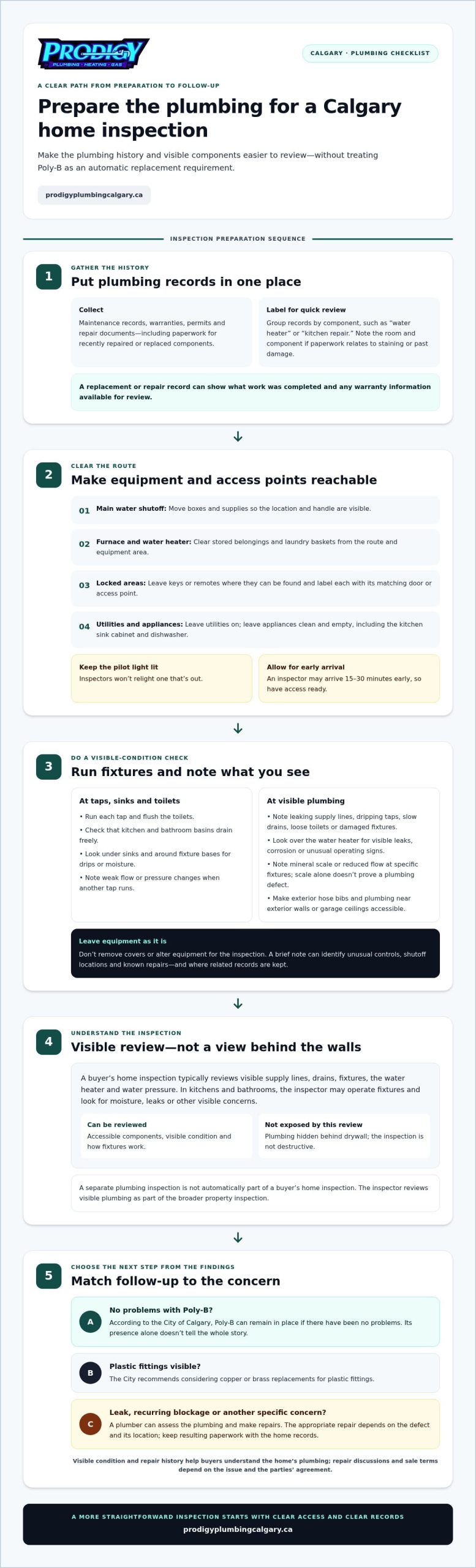
Before listing, run each tap and flush the toilets, then look for drips under sinks and around fixture bases. Check that water drains freely from the kitchen sink and bathroom basins, and note weak flow or pressure changes when another tap runs. In Calgary homes with Poly-B, look for grey pipes marked “PB.” According to the City of Calgary, Poly-B doesn’t need replacement if there have been no problems; the City recommends considering copper or brass replacements for plastic fittings.
Keep utilities on, clear access to the water heater and main shutoff, and leave appliances clean and empty for testing. Leave a brief note about unusual mechanical controls, shutoff locations or known plumbing repairs, including where related records can be found. Keep the pilot light lit; inspectors won’t relight one that’s out. An inspector may arrive 15-30 minutes early, so have access ready.
Mineral scale on taps, showerheads or inside a kettle can signal deposits worth noting, but it doesn’t prove a plumbing defect. Record reduced flow or scale at specific fixtures so the inspector can consider it alongside pressure and drainage. Leaks, persistent drainage problems or visible pipe damage may lead to buyer discussions about repairs, timing or sale terms. The outcome depends on the issue and the parties’ agreement.
Leaving maintenance, warranty, permit, and repair documents accessible
Gather plumbing records before the buyer’s home inspection, and make relevant equipment easy to reach. A clear route to the main water line, furnace and water heater helps the inspector review visible conditions and access controls without moving stored belongings.
- Gather maintenance records, warranties, permits and repair documents in one folder. These records help show what work was completed and give the inspector useful context about the plumbing’s condition.
- Include paperwork for recently repaired or replaced components. A water-heater replacement record, for example, can identify the work completed and any warranty information available for review.
- Keep the main water shutoff accessible. Move boxes, cleaning supplies and other stored items away so the location and handle can be seen without clearing the area during inspection.
- Clear a path to the furnace and water heater. Remove laundry baskets or stored belongings that block the equipment, allowing the inspector to view accessible surfaces and controls.
- Leave utilities on for the inspection. Working utilities allow the inspector to operate systems and appliances, including the stove, dishwasher and furnace, as part of the property review.
- Leave appliances clean and empty. Clear the kitchen sink cabinet and empty the dishwasher so the inspector can operate appliances and observe accessible plumbing connections.
- Set out keys or remotes for locked areas. Label each one with its matching door or access point, such as a locked mechanical room, so the inspector can reach relevant equipment.
- Write a brief note about home-specific mechanical systems. Identify an unusual shutoff, control or operating step, and include a phone number where you can be reached during the inspection.
Keep documents together and label them by component, such as “water heater” or “kitchen repair.” If a record relates to visible staining or past damage, note the room and component. This makes it easier to connect the paperwork with conditions noted in the inspection report.
If a plumbing issue needs repair before the inspection, professional plumbing repair can help address the affected system. Keep the resulting paperwork with the other home records for the inspector to review.
Buyer attendance and inspection questions
For a Calgary home inspection, sellers are generally advised to leave while the buyer and inspector review the property. This lets the buyer focus on the inspector’s observations without feeling watched or rushed. If you attend, make sure your presence won’t make the buyer uncomfortable. Answer factually, then let the inspector complete the assessment.
Buyers may ask about a visible leak, slow drain, Poly-B piping or older water heater. Answer based on your records and point them to relevant repair documents. If you don’t know when a component was installed, share what you do know, such as “the kitchen tap was replaced during our renovation.” Don’t guess at dates or promise that a system won’t need attention.
- Let the inspector lead the visit. Don’t operate fixtures or equipment while they’re examining it, since this can interrupt the inspection sequence.
- Keep questions focused on observed conditions. Ask which fixture, pipe or connection the report refers to, so you can understand the specific concern.
- Separate plumbing from other systems. A question about a bathroom receptacle concerns electrical work, while a dripping tap concerns plumbing.
- Share repair details without arguing over conclusions. A dated invoice or maintenance record provides more useful context than a disagreement about what the inspector should report.
- Give buyers room to discuss the report privately. They may be buying the property with plans to replace a fixture or complete a renovation.
An inspection report records observed conditions; it doesn’t automatically set the purchase terms. For example, it may identify a loose toilet or a leak below a sink. The buyer and seller can discuss the finding as part of the purchase process. A reported concern alone doesn’t require the seller to replace a fixture or complete a repair.
Keep communication calm and specific. If a buyer asks whether a plumbing concern was repaired, point to the matching document and explain the work it describes. If no record exists, don’t present an estimate as a completed repair. In Alberta, the inspection discussion is separate from the buyer’s decision about the home and any terms negotiated between the parties.
After the inspection, review plumbing items in the report one at a time. Match each observation to its location, such as the upstairs bathroom or kitchen, and note whether it describes active leakage, restricted drainage or visible wear. This gives you a clear basis for discussing next steps without confusing plumbing findings with electrical or other inspection issues.
Exterior hose bib freeze protection
Calgary cold snaps can reach -30°C, so exterior hose bibs deserve a careful check before a buyer’s inspection. Water left in an exposed line can freeze, expand and damage the pipe or fitting. A seller can make the area easy to inspect and explain how each outdoor tap is winterized.
Start with every exterior faucet, including hose bibs at the front, back and garage. Look for a loose handle, visible corrosion, a cracked connection or water staining on nearby siding. Turn each tap on briefly, check its flow, then shut it off and watch for continued dripping. Visible water damage inside the adjoining wall or basement also deserves attention.
- Disconnect garden hoses before freezing weather. A hose left attached can hold water at the outlet and interfere with drainage.
- Find the indoor shutoff valve for each exterior tap. Label the valve by location, such as “rear patio,” so owners and buyers can match it to the correct hose bib.
- Close the indoor valve and drain the exterior line where the plumbing has a shutoff and drain arrangement. This removes trapped water from the section exposed to cold.
- Check whether each hose bib is frost-free. Buyers should ask about frost protection and how to winterize the specific faucet.
- Keep the faucet outlet clear after winterizing. A closed cap or attached hose can obstruct drainage from some hose bib arrangements.
- Make the shutoff and hose bib accessible. Move stored items from the utility room or garage so the inspector can see the plumbing and controls.
- Record any repair or winterizing instructions. Put the documents with the property’s maintenance records so buyers can understand the system and its care.
A frost-free hose bib still needs to be used properly. Remove the hose before cold weather, because water trapped in an attached hose can stop the faucet from draining as intended. The design also depends on the faucet being installed with its draining end positioned correctly. An inspection can identify visible concerns, but concealed pipework may remain out of view.
If a hose bib leaks after being shut off, won’t close fully or shows damage, note its exact location and keep the area clear. Don’t hide a drip with a cover or leave a hose attached to mask it. A clear note helps the inspector connect the exterior fixture with any interior shutoff or visible staining.
For a real estate sale, explain the practical winterizing steps you use and point buyers to the relevant valve. This gives the next owners a useful starting point and helps them reduce the chance of freeze-related water damage during Calgary’s cold weather.
Making under-sink areas visible for inspection
Clear the cabinet beneath every kitchen and bathroom sink before the Calgary home inspection. Inspectors look for drips, corrosion, water staining and loose connections. A cleaning bottle or storage bin can hide a slow leak at a shutoff valve or drain joint. Remove stored items, but leave the plumbing undisturbed so its visible condition can be assessed.
Use a dry cloth to check the cabinet floor and pipe connections, then run the tap briefly. Look for fresh moisture around supply lines, shutoff valves and the drain trap. Check the cabinet’s back corners for swollen material or discolouration, which can point to past water damage. Don’t tighten fittings or cover stains just before the inspection. Note known repairs and keep the paperwork accessible.
- Empty each sink cabinet. Include the kitchen, ensuite and basement bathroom, even if those fixtures are used infrequently.
- Check visible supply lines and valves. Look for drips, green or white deposits, rust and dampness around connections.
- Run water and observe the drain. Watch the trap and drain joint while the basin empties, and note slow drainage or a leak.
- Look at nearby appliance connections. If a dishwasher is installed beside the kitchen sink, make its accessible water line and drain connection visible.
- Leave the cabinet dry and clear. A dry surface makes fresh moisture easier for the inspector to identify.
- Flag hidden or recurring issues. Note the location and explain any repair history using the matching document.
Also check beyond the cabinet if the sink backs onto an exterior wall. Calgary plumbing near exterior walls, garage ceilings and cantilevered areas can face freeze risk; visible insulation and air sealing around nearby pipe routes matter. Don’t remove insulation or open drywall. Instead, clear access to the visible area and note any history of freezing or leakage.
If an upstairs laundry is beside a bathroom vanity, check the cabinet and the ceiling below for moisture. A washer leak can damage floors, walls and ceilings beneath it. If a stain appears below the laundry area, record its location and any known repair rather than assuming the sink is the source. Keep nearby ventilation grilles clear.
Clear cabinets before the inspection, and leave the furnace or basement mechanical area accessible if it contains a plumbing shutoff or visible pipe route. If an installed kitchen appliance needs plumbing attention, arrange kitchen appliance installation before listing so its connections can be reviewed in place.
Prodigy Mechanical: Fixture Swaps
Prodigy Mechanical can help when an inspection identifies a leaking, damaged or outdated fixture that needs replacement. Its Fixture Swaps offer a practical next step for sellers preparing a kitchen or bathroom for buyer review. Replacing a fixture can also address one that no longer works as intended, while unrelated plumbing concerns may need separate assessment.
For issues around a kitchen sink or bathroom fixture, Prodigy Mechanical also provides Kitchen Plumbing and Bathroom Plumbing. Share the inspection finding and the fixture’s location so the work can be considered in context. A fixture swap may suit a worn tap or similar fitting, but it does not replace Poly-B piping throughout a home.
Contact Prodigy Mechanical to discuss a fixture swap or related plumbing need.
Turn inspection findings into a clear next step
Use a plumbing inspection checklist for selling a house in Calgary to turn observations into a practical plan. Separate items needing attention from routine wear, then decide which concerns to address before listing and which records to share with buyers. This keeps your next steps focused on the property rather than assumptions about what an inspection finding means.
If a report points to a worn tap or fixture, Prodigy Mechanical offers Fixture Swaps. Its Kitchen Plumbing and Bathroom Plumbing services can address plumbing needs in those areas. The right work depends on the specific finding, so keep the report’s wording and location details handy when discussing next steps.
For a plumbing issue that needs attention before your sale, contact Prodigy Mechanical for plumbing help. A clear plan can help you move toward listing with greater confidence.
Frequently Asked Questions
Does Poly-B have to be replaced?
No. According to the City of Calgary, Poly-B doesn’t need replacement if there have been no problems. The decision depends on its condition, visible fittings, leak history and any insurance requirements connected with the property. The City recommends considering copper or brass replacements for plastic fittings. Keep records of past repairs and address buyer concerns using the home’s documented plumbing history.
Does finding Poly-B mean the plumbing is going to fail?
No. Finding Poly-B identifies the pipe material, not a confirmed failure or a prediction that a leak will occur. Its visible condition, fittings, signs of leakage and maintenance history provide more useful context. A buyer may also consider insurance conditions when assessing the home. If the inspection identifies a specific concern, distinguish that observation from assumptions about the entire plumbing system.
Does the year a home was built tell me whether it has Poly-B?
No. A build year can suggest when Poly-B might be present, but it doesn’t prove which pipes were installed or whether later renovations replaced them. Polybutylene was installed in Canadian homes approximately from 1978 to 1995, and Calgary homes built between 1985 and 1998 may warrant closer checking. Look for grey pipe marked “PB” in accessible areas, then compare findings with renovation records.
What if Poly-B turns up at the home inspection?
Ask the inspector to identify where the visible pipe appears and record any noted fittings, leakage or damage. Compare those observations with repair records and the home’s insurance information. The City of Calgary says problem-free Poly-B doesn’t require replacement, while recommending consideration of copper or brass fittings instead of plastic. Some insurers may require replacement within one year as a condition of coverage.
When should the inspection happen?
Arrange access for the buyer’s inspection during the purchase process, and prepare the home before the appointment. Before listing, use a plumbing inspection checklist for selling a house in Calgary to note concerns that may need attention. This gives you time to understand an issue and organize supporting documents. Keep utilities operating so the inspector can test accessible plumbing and appliances.
Who should use this checklist?
Calgary homeowners preparing to sell can use this checklist to organize access, documents and visible plumbing areas before an inspection. It can also help executors or representatives managing an estate locate records and make mechanical areas accessible. It’s especially useful for older homes, properties with Poly-B, or homes with past leaks or plumbing renovations.
What plumbing issues do home inspectors check when selling a house in Calgary?
Inspectors generally examine visible supply lines, drains, fixtures, water heaters and water pressure. They may note active leaks, corrosion, slow drainage, loose fixtures or water staining. In Calgary, they may also pay attention to plumbing near exterior walls, garage ceilings and cantilevered areas, where freeze protection matters. The inspection records visible observations; concealed pipes behind finished walls aren’t exposed during a standard visual review.
What plumbing permits and records should a Calgary home seller provide?
Provide available permits and records for plumbing work, along with maintenance notes, warranties and repair invoices. Useful examples include paperwork for a water-heater replacement, fixture installation or repair after a leak. Organize documents by room or system, and match each record to the work it describes. This helps buyers distinguish completed work from recommendations or observations in the inspection report.