

A gurgling sink is a clue, not a diagnosis. If you searched “gurgling kitchen sink drain Calgary,” you’re likely trying to tell whether the noise points to a blockage or something else in the drain. The sound can come from a restriction near the sink, a problem farther along the connected drain, or an issue affecting more of the plumbing system.
Some simple checks are low risk, but forceful or unsuitable drain treatments can make matters worse. This guide explains possible causes, what you can safely check, and which warning signs mean it’s time to have a Calgary plumber investigate.
Look for related symptoms, such as slow drainage or gurgling in other fixtures, and avoid pouring unsuitable products down the sink. A plumber can assess the trap, connected drain, and wider system, then recommend cleaning or repair if the findings support it.
Key Takeaways
- A gurgling kitchen sink drain Calgary homeowners notice can have several possible causes. The sound alone won’t confirm a blockage.
- Food residue and grease may restrict a kitchen drain, but other parts of the plumbing system may also need investigation.
- Check whether the noise is limited to the kitchen sink or occurs at other fixtures. This can help show how widely the issue may extend.
- Start by observing the symptoms and checking for visible debris around the stopper. Avoid risky drain treatments or forcing tools into the pipe.
- A plumber can assess the trap, connected drain, or wider system before recommending cleaning or repair.
What a Gurgling Kitchen Sink Drain in Calgary May Be Telling You
Gurgling is a sound caused by air or water moving through a drain system. It may happen as water leaves the sink or when another fixture is in use. A single brief noise, with the sink draining normally, is different from recurring gurgling paired with slow drainage, unpleasant odours, or water backing up. Those added symptoms make it more important to investigate.
The sound alone can’t confirm a serious blockage or show where a problem is located. A restricted drain may affect how water and air move, while changes in air pressure elsewhere in the plumbing can also contribute. Pipes and vents work together as part of a drain-waste-vent (DWV) system, so the noise can offer a clue without pinpointing the cause.
When does a kitchen sink gurgle?
Notice whether the sound occurs while the sink drains, after another fixture runs, or without an obvious trigger. Check whether water drains at its usual speed and whether the noise happens once or keeps returning. Also listen for similar sounds at a tub, toilet, or other sink. The pattern can help show whether the issue seems limited to the kitchen.
What does the sound tell you, and what does it not?
Gurgling can accompany restricted drainage or air-pressure changes in the plumbing. If it comes with slow draining or backup, those details are useful to share during an assessment. But a sound pattern can’t reveal whether the cause is near the sink, farther along a connected drain, or elsewhere in the system.
Gurgling is a symptom, not a confirmed cause. Treat it as a reason to observe, not as proof that a particular pipe is blocked. Note what was running, which fixtures made noise, and whether drainage changed. That record can guide a sensible next check or help a plumber assess the sink trap, connected drain, or wider system.
Common Causes of a Gurgling Kitchen Sink Drain
Several plumbing conditions can produce a gurgling sound. A kitchen drain may be partly restricted, air may not be moving smoothly through the plumbing, or the issue may involve a connected section of pipe. The noise alone can’t confirm which cause is present. The location and pattern of other symptoms help narrow down what needs attention.
Could a partial kitchen drain blockage cause gurgling?
Food scraps, grease, soap residue, and other material can build up inside a kitchen drain and reduce the space available for water to flow. Water may then drain more slowly or linger in the sink, sometimes with bubbling or gurgling. If the home has a garburator, material caught in or beyond that unit may also affect drainage.
Visible debris near the stopper is different from a restriction farther inside the pipe. You may be able to remove loose material around the stopper, but a sink that remains slow or noisy may need closer assessment. A gurgling sound can point to a clog, but it doesn’t establish that diagnosis.
Could the P-trap, vent, or connected drain be involved?
The P-trap is the curved section of pipe beneath the sink. It holds water and forms part of the drain connection. A restriction around the trap or in the branch drain connected to it can affect how water moves away from the sink. The location can’t be confirmed from the sound alone, particularly if the pipework isn’t accessible.
Drain venting supports air movement through the plumbing system. If air pressure isn’t balancing smoothly, gurgling may occur even when the visible sink drain appears clear. That possibility doesn’t confirm a vent problem. Inspection and testing need to account for the plumbing layout and symptoms.
Pay attention to whether the noise is limited to the kitchen. If a bathroom sink, tub, or toilet also makes unusual noises or drains poorly, a shared drain or vent system may warrant investigation. A plumber can assess the sink trap, connected drain, and wider system before recommending cleaning or repair.
Recurring gurgling paired with slow drainage deserves closer investigation. Note when the noise occurs and which fixtures are affected. If the pattern keeps returning, professional drain cleaning and repair may be worth discussing with a Calgary plumber after the cause has been assessed.
How to Compare Sink-Only Symptoms with a Wider Drain Problem
The symptom pattern can help you describe what’s happening, even though it can’t identify the cause on its own. Check whether the gurgling stays at the kitchen sink or appears at other fixtures too.
| Symptom pattern | Possible area to investigate | Sensible next step |
|---|---|---|
| Only the kitchen sink gurgles, especially as it drains | The sink drain or its connected section | Note how quickly the sink drains and whether the sound recurs. |
| The kitchen sink is slow, and another nearby fixture also drains poorly | Connected plumbing serving more than one fixture | Record which fixtures are affected and when symptoms occur. |
| A toilet, tub, or sink in another area also gurgles or drains slowly | A wider section of the drain system may need assessment | Arrange a professional assessment rather than assuming the kitchen sink is the only issue. |
| Wastewater backs up, or foul odours persist | An issue affecting the drain system needs attention | Stop using the affected fixtures and seek professional assessment. |
Use the table to organize observations, not to diagnose the plumbing. Similar symptoms can have different causes, and an on-site assessment is needed to determine what’s happening.
What if only the kitchen sink is gurgling?
Note whether the sink drains at its usual speed, how often the sound occurs, and whether it follows sink use. A localized drain restriction is one possibility, but a sink-only sound doesn’t prove that’s the cause. If the gurgling persists, drainage gets slower, or water backs up, arrange a professional assessment.
What if several Calgary fixtures gurgle or drain slowly?
Symptoms across a sink, tub, toilet, or other fixture may justify checking connected plumbing beyond the kitchen. Before contacting a plumber, list each affected fixture and note what was happening when the noise or slow drainage occurred. This record can help guide the assessment. For an overview of professional service, see the Calgary drain-cleaning guide.
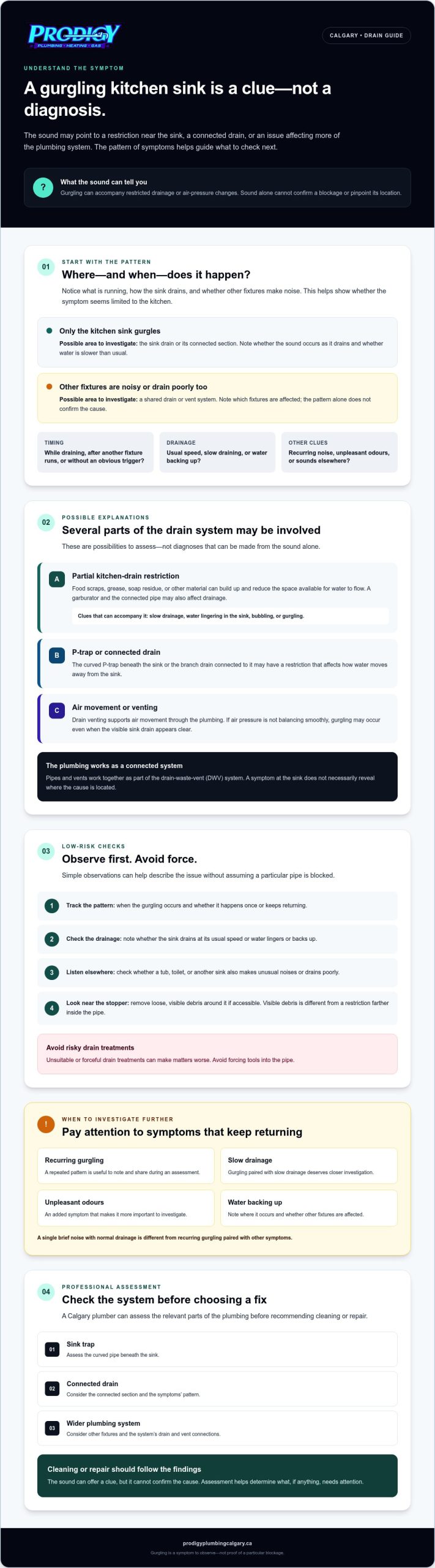
Safe Checks to Try Before Calling a Calgary Plumber
Start with what you can observe. These checks can help you describe a gurgling kitchen sink drain, but they won’t confirm what’s happening inside the plumbing. Avoid chemical drain cleaners and forceful tools, especially if water is already backing up.
- Note the symptoms. Record when the gurgling happens, whether the sink drains normally, and whether other fixtures make noise or drain slowly. Notice any odour, leak, or water backup.
- Check the visible opening. Look around the stopper for accessible food scraps or other debris. Remove only what you can reach easily, without pushing tools into the pipe.
- Stop if the problem continues or worsens. Don’t dismantle plumbing or keep applying drain products if the water remains slow or the gurgling returns.
Don’t mix chemical cleaners. If one product hasn’t helped, adding another can create additional risks and won’t establish where a restriction is located. Leave the P-trap and other plumbing connections intact unless you’re comfortable with the work and understand how to manage them safely.
What can you check without taking plumbing apart?
Listen for whether the sound follows water draining from the sink or starts after another fixture runs. Compare the sink’s drainage speed with what’s normal for it. A quick look around the stopper may reveal visible debris, but a clear opening doesn’t rule out a restriction farther inside the drain. Keep your checks to accessible areas.
When should you stop troubleshooting and get help?
Stop using affected fixtures if wastewater backs up, symptoms spread to other fixtures, or the drain becomes less usable. Several affected fixtures or wastewater backup call for professional assessment. When requesting service, describe which fixtures are affected and mention any odour, leak, or change in drainage. If you’re concerned about urgent water damage, review this emergency plumbing guidance in Calgary and confirm service availability directly.
If the gurgling persists or drainage is getting worse, request Calgary drain cleaning and repair so the cause can be assessed before a fix is chosen.
What to Expect from Professional Drain Assessment in Calgary
A gurgling kitchen sink drain can have more than one possible explanation. A plumber starts by asking when the sound occurs and which fixtures are affected. Those details help guide an assessment, but they don’t confirm the cause before the plumbing is inspected.
The assessment may include checking accessible components, such as the sink trap and connected drain, and observing how water drains. Inspection and testing depend on the symptoms and which parts of the plumbing can be accessed. If other fixtures are involved, that pattern can help determine whether a wider section of the system needs attention.
How does a plumber narrow down the cause?
The plumber will review the symptom history, drainage behaviour, and any odours, leaks, or backups you’ve noticed. They may inspect accessible plumbing and test drainage as appropriate. The next step depends on what those checks show. Drain cleaning may be suitable if an obstruction is found; a repair may be considered if inspection points to a damaged or poorly functioning component.
Neither the method nor the outcome can be confirmed in advance. A careful assessment helps avoid treating the sound as a diagnosis and connects any recommended work to the findings.
How do you prepare for a plumbing service request?
A short, clear description can help the plumber understand the issue. Before contacting a service provider, note:
- When the gurgling began and how often it occurs.
- Whether it follows sink use or another fixture running.
- Any slow drainage, persistent odour, leak, or water backup.
- Which other fixtures, if any, have similar symptoms.
Share what you’ve observed, including any changes over time. That gives the plumber useful context while leaving room for an on-site assessment to establish what the drain needs. Prodigy Mechanical provides kitchen plumbing and drain cleaning and repair in Calgary. To discuss a recurring sink noise or change in drainage, contact the team about your Calgary kitchen drain.
Take the Next Step Toward a Quieter Kitchen Drain
A gurgling sound is a clue to pay attention to, not a diagnosis on its own. The pattern of the noise, how the sink drains, and whether other fixtures are affected can help a plumber decide what to investigate. Keep your checks cautious, and avoid harsh or repeated drain treatments if the problem continues.
If “gurgling kitchen sink drain Calgary” describes what you’re dealing with, let the symptoms guide your next step. A professional assessment can help determine whether drain cleaning or repair is appropriate, rather than relying on guesswork. Sharing what you’ve noticed gives the plumber a useful starting point.
Prodigy Mechanical provides kitchen plumbing and drain cleaning and repair in Calgary. Its licensed technicians handle plumbing repairs and emergency responses, and the company has over 15 years of industry experience. Contact Prodigy Mechanical to discuss your Calgary kitchen drain.
Frequently Asked Questions
Is a gurgling kitchen sink drain a sign of a clog?
It can be, but gurgling alone doesn’t confirm a clog. A partial restriction may also cause slow drainage or water that lingers in the basin. Notice whether the sound returns, whether drainage is getting worse, and whether other fixtures are affected. If water backs up or the sink becomes harder to use, stop troubleshooting and arrange a professional assessment to determine where the issue may be.
Can a gurgling kitchen sink be caused by a plumbing vent?
A venting issue is one possible explanation, particularly if more than one fixture gurgles or drains poorly. However, a similar sound can have other causes, including a restriction in a drain. Note which fixtures are affected and when the noise occurs. A plumber can assess the connected plumbing and accessible vents as appropriate, rather than treating the sound as proof that a vent is at fault.
What should I do first when my kitchen sink drain gurgles?
Check whether the sink drains at its usual speed and whether the sound follows sink use or another fixture running. Look for debris you can easily reach around the stopper, but don’t force tools into the pipe or take plumbing apart. Avoid mixing drain chemicals. If the gurgling persists, drainage slows, or water backs up, contact a plumber and describe what you’ve observed.
Why does my kitchen sink gurgle when the washing machine drains?
If the sink gurgles as the washing machine drains, the timing may suggest that connected drainage or venting needs investigation. It doesn’t identify the cause by itself. Note whether the sink also drains slowly, whether the sound happens with other appliances or fixtures, and whether there are odours or backups. A plumber can assess the connected system and decide what further inspection or testing is appropriate.
Is a gurgling sink an emergency in Calgary?
Gurgling by itself doesn’t always indicate an emergency. Wastewater backing up, an active leak, or symptoms across several fixtures deserve prompt attention. Limit use of affected plumbing and contact a plumbing professional for guidance. Prodigy Mechanical provides emergency plumbing response in Calgary, but not 24/7 around-the-clock service. Contact the company directly to discuss the symptoms and confirm what response may be available.
Can I use a chemical drain cleaner for a gurgling sink?
It’s safer to avoid chemical drain cleaners when the cause is uncertain, and never mix drain products. Repeated applications may create handling risks without addressing a restriction farther inside the drain. Start by observing how the sink drains and checking only for visible debris around the stopper. If the gurgling continues or drainage is poor, ask a plumber to assess the drain before choosing a treatment.
When should I call a plumber for a gurgling kitchen sink drain?
Contact a plumber if the gurgling keeps returning, the sink drains slowly, an odour develops, or water backs up. Seek an assessment if other fixtures make similar noises or drain poorly, too. For a gurgling kitchen sink drain Calgary homeowners are monitoring, share when the sound occurs, what was running, and which fixtures are affected. These details help the plumber assess an appropriate next step.