
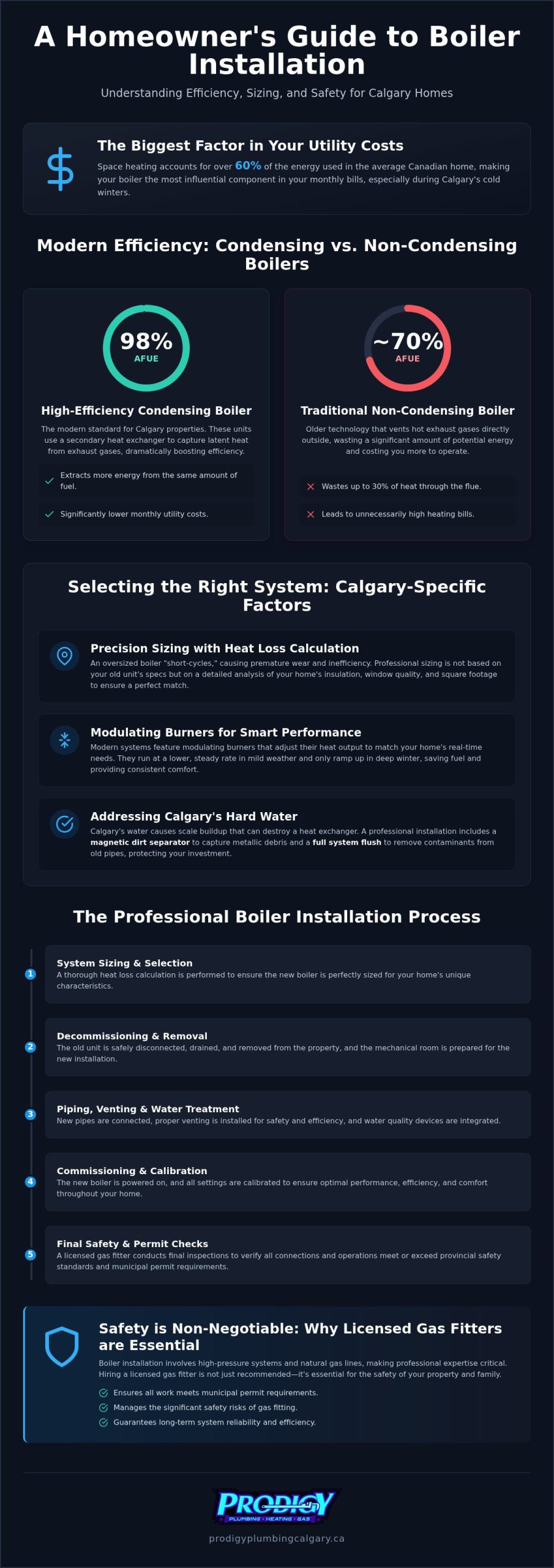
Space heating accounts for over 60 percent of the energy used in the average Canadian home, making your boiler the most influential factor in your monthly utility costs. When Calgary temperatures drop, an aging or poorly fitted system often results in uncomfortable cold spots and unnecessarily high bills. If you are dealing with uneven heat or safety concerns, a professional boiler installation is the most reliable way to restore comfort and efficiency to your property.
We recognize that a new heating system is a major investment in your home’s infrastructure. You need a system that operates quietly and meets all provincial safety standards. This guide explains everything involved in the process, from choosing a high-efficiency condensing unit to the final checks conducted by a licensed gas fitter. We will preview the latest 2026 efficiency regulations, the technical requirements for a precision setup, and how to ensure your new system delivers consistent, radiant heat for the long term. Our goal is to provide you with the clarity needed to make an informed decision for your home.
Key Takeaways
- Learn how modern high-efficiency condensing units differ from traditional models and why they are the current standard for Calgary properties.
- Discover how to size your system correctly and use water treatment to prevent scale buildup from Calgary’s hard water.
- Understand the specific steps involved in a professional boiler installation, including decommissioning old units and protecting your mechanical room.
- See how a boiler functions as the central hub for hydronic and in-floor heating systems to provide precise, comfortable warmth.
- Realize the importance of hiring licensed gas fitters to manage safety risks and ensure your project meets all municipal permit requirements.
Understanding Modern Boiler Systems for Calgary Homes
A boiler is a pressurized vessel designed to heat water or other fluids for space heating. Unlike a furnace that blows dry air through ducts, Modern Boiler Systems circulate warm fluid through pipes to radiators or in-floor tubing. This method provides a steady, radiant warmth that many Alberta homeowners prefer because it doesn’t circulate dust or create the dry, drafty feeling often associated with forced-air systems. In our region, where winter temperatures frequently drop below minus 20 degrees, the thermal mass of a hydronic system helps maintain a stable indoor climate.
During a boiler installation, you might also consider a “combi-boiler.” These compact units are designed to handle both your home’s space heating and your domestic hot water needs. They eliminate the need for a separate hot water tank, which saves significant space in your mechanical room while providing a reliable supply of hot water. This dual-purpose functionality is particularly useful for smaller residential properties or modern builds where utility space is limited.
Condensing vs. Non-Condensing Boilers
Traditional boilers were non-condensing, meaning they vented hot exhaust gases directly outside, wasting a significant amount of energy. Modern condensing boilers are different. They use a larger heat exchanger surface to cool the exhaust gases until the water vapour in the flue gas condenses. This process releases latent heat back into the system, allowing the unit to extract more energy from the same amount of fuel. High-efficiency units can realize AFUE (Annual Fuel Utilization Efficiency) ratings as high as 98 percent. For Calgary residents, prioritizing this efficiency is a practical way to manage monthly utility costs as energy prices fluctuate.
The Role of the Heat Exchanger
The heat exchanger is the heart of any boiler installation. It’s the component where the thermal energy from the burner is transferred to the water. Most modern systems use either stainless steel or aluminum exchangers. Stainless steel is often favoured for its superior resistance to corrosion and longer lifespan, while aluminum offers excellent heat transfer properties. A professional setup ensures the exchanger operates within its designed temperature range. If a system is poorly calibrated, the exchanger can become over-stressed, leading to premature failure and expensive repairs. Our focus is always on selecting a durable exchanger that can withstand the specific demands of your home’s heating load.
Selecting the Right System: Sizing and Calgary-Specific Factors
Choosing a unit for your boiler installation requires more than just looking at the BTU rating of your old equipment. A common mistake is assuming a larger boiler provides better performance. In reality, an oversized system leads to “short-cycling,” where the unit turns on and off too frequently. This causes unnecessary wear on components and reduces efficiency. Modern systems often feature modulating burners. These adjust their output to match the actual heat demand of your home, running at a lower, steady rate during mild weather and ramping up only when the Calgary winter truly sets in.
Before finalizing your choice, we always check the existing gas line capacity. High-BTU units may require a larger gas supply than what is currently available at your meter. Ensuring your infrastructure can support the new demand is a critical safety step. All high-pressure systems must also comply with Federal safety regulations for boilers to protect your property and family.
Calculating Your Heat Load
Professional sizing begins with a detailed heat loss calculation rather than just matching the old unit’s specs. We evaluate your home’s unique footprint, including insulation levels, window quality, and the high ceilings often found in older Calgary bungalows. This data-driven approach ensures the system is matched to the physical reality of the building. Proper sizing prevents the premature failure of expensive internal parts and ensures your home stays comfortable without wasting energy.
Addressing Calgary Water Quality
Calgary’s water is notoriously hard. This can lead to significant scale buildup inside a new boiler’s heat exchanger, which reduces heat transfer and eventually causes the system to fail. To protect your investment, we recommend installing a magnetic dirt separator during the boiler installation. This device captures metallic debris and sludge before it can damage the pump or exchanger. A full system flush is also necessary to remove contaminants from old radiators or piping before the new unit is commissioned. For systems with pipes located near exterior walls, maintaining correct glycol levels is essential to prevent the fluid from freezing during extreme cold snaps. If you are concerned about the state of your current pipes, our team can provide a professional assessment of your home’s hydronic health.
The Step-by-Step Boiler Installation Process
A professional boiler installation begins with meticulous site preparation. We start by clearing the mechanical room and laying down protective coverings to shield your floors from debris or tool traffic. Once the area is secure, we decommission the old unit by safely draining the system fluid and disconnecting all gas and water lines. This methodical approach ensures that the transition to your new equipment is clean and organized from the very first hour.
Securing the new unit is the next priority. Modern high-efficiency boilers are often wall-mounted to save space, though some larger models remain floor-standing. We connect the primary and secondary piping loops to ensure the heat moves correctly through your home. Because condensing units produce exhaust at lower temperatures, we install specialized PVC or polypropylene venting rather than traditional metal flues. This specialized venting is necessary to handle the moisture produced during the high-efficiency combustion process.
Gas Line and Electrical Connections
Precision is mandatory when handling the energy sources for your system. A licensed gas fitter must manage the high-pressure gas connection to ensure the pipe sizing matches the unit’s demand and that every joint is leak-tested. We also establish a dedicated electrical circuit for the boiler. This prevents other household appliances from causing interference with the sensitive electronic controls. Additionally, we install a condensate pump to safely manage the acidic runoff generated by high-efficiency models, directing it to a nearby drain according to local Calgary plumbing codes.
System Flushing and Chemical Treatment
Connecting a new boiler to old, dirty water is a mistake that compromises the entire system. We perform a comprehensive flush of your existing radiators or in-floor loops to remove sludge and metallic particles. After the system is clean, we add specialized chemical inhibitors to the water. These inhibitors create a protective barrier inside the pipes to prevent future internal corrosion and scale. Completing this step is essential to protect your investment and maintain the manufacturer’s warranty, which often requires proof of proper water treatment.
The final phase of the boiler installation is commissioning. This is a technical process where we fire the unit for the first time and use specialized tools to adjust the gas valve and combustion settings. We check the pump speeds and zone valves to confirm that heat is reaching every corner of your property. We don’t consider the job finished until we have verified that the system operates at peak efficiency and meets every safety standard required for Calgary homes.
Integrating Your Boiler with Hydronic and In-Floor Heating
A modern boiler installation functions as the central brain of your home’s thermal infrastructure. It manages the flow of heated fluid through a complex network of hydronic heating manifolds and pumps with high precision. One of the most effective features for our climate is the “outdoor reset” sensor. These sensors monitor the external temperature and signal the boiler to adjust its output before your home even begins to cool down. This proactive adjustment prevents the system from working harder than necessary when Calgary’s weather shifts from a chinook to a cold snap.
This integration ensures that the energy produced is used exactly where it’s needed. By coordinating with your home’s pumps and manifolds, the boiler maintains a steady temperature without the aggressive cycling seen in older equipment. To keep this integrated network running smoothly, you can refer to our boiler repair Calgary guide for long-term maintenance tips. If you are planning a new build or a major renovation, you can schedule a hydronic system consultation to ensure your layout is optimized for efficiency.
Managing Multiple Zones
The true strength of a boiler is its ability to manage multiple heating zones independently. A single boiler installation can simultaneously heat your basement’s in-floor tubing while keeping the radiators on your main floor at a different temperature. We use zone valves and smart thermostats to allow for this level of customization. Professional balancing is a vital part of this process. We adjust the flow rates to each zone so that every room reaches its target temperature without some areas becoming overheated while others stay chilly. This precision maximizes comfort and reduces wasted energy in rooms that aren’t frequently used.
Indirect Water Tanks
Your boiler can also provide your domestic hot water through an indirect water tank, sometimes called a side-arm tank. In this setup, the boiler fluid circulates through a heat exchanger inside a highly insulated storage tank. This is significantly more efficient than a standalone gas hot water tank because it leverages the high AFUE rating of your primary boiler. For large families, this configuration provides a virtually endless supply of hot water. Because the boiler has a much higher BTU capacity than a standard water heater, it can recover the tank temperature almost as fast as the water is used. It’s a dependable way to streamline your mechanical room while improving overall home performance.
Why Licensed Gas Fitters are Essential for Boiler Installation
In Calgary, every boiler installation requires a municipal gas permit. This is a legal mandate designed to protect your household and the surrounding community. Working with high-pressure gas lines and pressurized vessels involves inherent risks that only a qualified professional can safely manage. Attempting DIY work or hiring an unlicensed contractor can lead to catastrophic consequences, including gas leaks, fires, or carbon monoxide poisoning. At Prodigy Mechanical, we bring over 15 years of industry experience to every project. We handle the entire permit process and coordinate the final inspection with the City of Calgary. This inspection is a critical safety check where a municipal officer verifies that the gas piping, venting, and electrical work meet all provincial codes.
Hiring a licensed professional provides peace of mind that your system is installed to the highest standards of integrity. We ensure that all gas connections are leak-tested and that the boiler is integrated into your home’s infrastructure without compromising existing safety systems. Our team understands the specific nuances of the Calgary heating trade, from local building codes to the unique demands our climate places on mechanical equipment. This thoroughness ensures your system operates reliably for years to come.
The Importance of Proper Venting
Correct venting is one of the most technical aspects of the job. High-efficiency condensing boilers produce a cool, moist exhaust that must be directed away from the home using specific materials like PVC or polypropylene. If the venting is installed incorrectly, it can lead to flue gas recirculation. This happens when the boiler pulls its own exhaust back into the intake, starving the burner of oxygen and causing the system to soot up or fail entirely. In Calgary, we must also account for high winds and heavy snow loads. We ensure that exhaust vents are positioned at the correct height to stay clear of snow drifts and are placed at a safe distance from windows and fresh air intakes. This prevents dangerous fumes from being drawn back into your living space during the winter months.
Final Testing and Homeowner Orientation
Once the physical installation is complete, we perform a rigorous combustion analysis. This test uses a specialized electronic analyzer to measure the levels of oxygen, carbon monoxide, and carbon dioxide in the flue gases. This data allows us to tune the gas valve for peak efficiency and verify that the boiler is burning fuel cleanly. A system that is not properly calibrated can produce excessive carbon monoxide, which is a silent and deadly threat. After we are satisfied with the performance data, we take the time to walk you through your new system. We explain the control panel, show you how to monitor the pressure gauges, and ensure you understand the basic operation of your smart thermostat.
Ready to upgrade your home comfort? Contact Prodigy Mechanical for a professional boiler installation quote today.
Preparing Your Home for Long-Term Heating Efficiency
A new boiler represents a significant upgrade to your home’s comfort and energy performance. By selecting a high-efficiency unit and ensuring it is correctly sized for your specific floor plan, you avoid the common pitfalls of short-cycling and premature equipment failure. Protecting this investment requires proactive water treatment to combat Calgary’s hard water and a precise integration with your existing hydronic zones.
Safety remains the most critical factor in any boiler installation. Our team at Prodigy Mechanical brings over 15 years of experience as licensed gas fitters and Residential & Commercial Specialists to every project. We manage gas lines, venting, and municipal permits so you can enjoy reliable, radiant warmth without worry. We are here to ensure your mechanical room meets all safety standards while delivering the monthly savings you expect from modern technology.
If you are ready to secure a more dependable heating system for the years ahead, we invite you to Request a Professional Boiler Installation Quote. We look forward to helping you achieve a more comfortable and efficient home.
Frequently Asked Questions
How much does a new boiler installation cost in Calgary?
The total investment for a new system depends on the unit’s efficiency rating, the complexity of your piping, and whether you are adding new heating zones. While industry averages vary, homeowners should consider the long-term energy savings of high-efficiency models. Factors like gas line upgrades and municipal permit fees also influence the final amount. We provide transparent quotes after assessing your home’s mechanical requirements to ensure there are no surprises.
How long does it take to install a new boiler in a residential home?
A standard boiler installation typically takes one to two business days to complete. The first day involves decommissioning the old unit and preparing the site, while the second day focuses on mounting the new boiler and finishing the piping. If your project includes complex integrations like new in-floor heating manifolds or indirect water tanks, the timeline may extend. We always aim to minimize downtime to ensure your home stays warm.
Can I replace my furnace with a boiler system?
You can transition from a furnace to a boiler, but it requires installing a completely new heat distribution system. Since a boiler uses water rather than air, you would need to install radiators or in-floor heating loops throughout your home. This is a significant renovation often performed during major remodels. It offers superior comfort and eliminates the dust and noise typically associated with traditional forced-air furnace systems.
Are boilers being phased out in Canada or Calgary?
Boilers are not being phased out, but the regulations surrounding them have become stricter to promote energy efficiency. As of January 1, 2023, all new residential boilers installed in Canada must have an efficiency rating of at least 90 percent. This means that older, mid-efficiency models are no longer available for new installs. Modern condensing boilers remain a primary heating choice for Calgary homes, especially those utilizing hydronic or radiant heat.
How often should a newly installed boiler be serviced?
You should have your boiler serviced once a year by a licensed professional. Annual maintenance involves cleaning the heat exchanger, checking the pH levels of the system fluid, and verifying that the combustion settings remain optimal. Regular service is often a requirement to keep your manufacturer’s warranty valid. Consistent care prevents small issues from becoming expensive repairs and ensures the system operates safely throughout the demanding Calgary winter.
What is the lifespan of a high-efficiency boiler in Calgary?
A high-quality boiler typically lasts between 15 and 25 years when properly maintained. The lifespan depends heavily on the quality of the initial installation and the consistency of annual servicing. Factors such as Calgary’s hard water can shorten this window if a magnetic dirt separator or water treatment isn’t used. Investing in a stainless steel heat exchanger often provides better long-term durability against corrosion compared to other materials.
Do I need a permit for a boiler installation in Calgary?
Yes, a gas fitting permit from the City of Calgary is mandatory for every installation. This permit ensures that the work is performed by a licensed professional and that the system is safe for operation. After the work is finished, a City inspector must visit your home to verify that the venting, gas lines, and safety controls meet the Alberta Safety Codes Act. We handle this entire administrative process for our customers.
What happens if my boiler is installed incorrectly?
An incorrect installation poses serious safety risks, including carbon monoxide leaks and potential fire hazards from improper gas connections. Beyond safety, a poorly fitted system will operate inefficiently, leading to higher utility bills and uneven heating. It can also cause “short-cycling,” which wears out expensive components prematurely and may void your manufacturer’s warranty. Hiring a licensed gas fitter ensures the system is calibrated correctly for your home’s specific heat load.